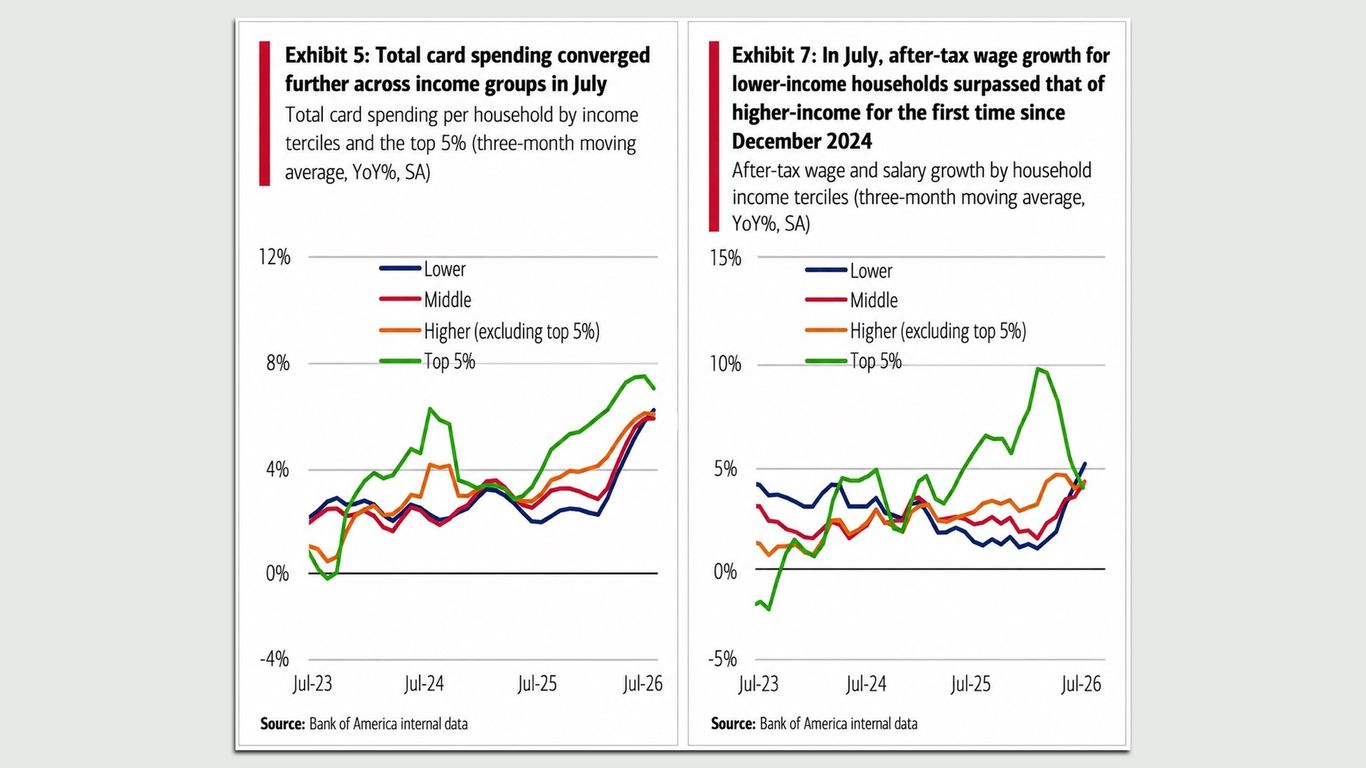
The K-shaped economy is over, according to Treasury Secretary Scott Bessent.Instead, he said we are now in a C-shaped economy, where wage growth for those at the bottom is outpacing wage growth for those at the top. But is that a fair characterization? Let’s first define the K-shaped economy.“We're talking about one economy with two different experiences, depending on where you fall in the income distribution,” said Breyon Williams, chief economist at the Groundwork Collaborative. “What that means is the top is pulling away and everyone else is treading water — in terms of paychecks, in terms of spending, in terms of wealth, in terms of how you're feeling about your finances.”So, is there evidence that this tale of two economies is in the past? “That's just not ringing true in most of the data,” Williams said.There are still big gaps in how people feel about the economy and how they’re spending, he said.Moody’s Analytics shows people who make over $200,000 a year have been spending more lately, while spending for everyone else is pretty flat. Data from the Federal Reserve Bank of Atlanta shows wages for the highest-paid workers are still climbing faster than wages for the lowest-paid workers. But Ryan Nunn, director of research at the Yale Budget Lab, said that gap has been narrowing some in the last few months.“I think we've seen a more even pattern recently in wage growth, but … I would like to see more data, particularly in the labor market looking at wage growth,” Nunn said.Before then, it’s hard to say with any confidence that the K-shaped economy is going away.
Is the K-shaped economy over?
“The K-shaped economy is over,” Treasury Secretary Scott Bessent declared on CNBC last week. Economists say the evidence is mixed at best.
269 words~1 min read