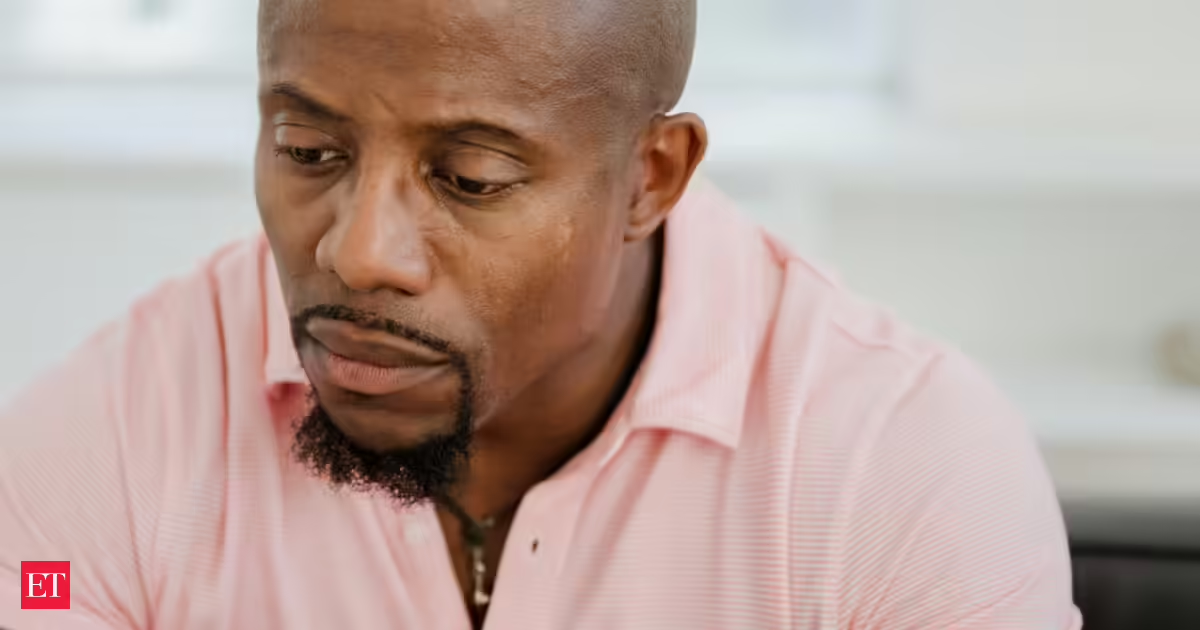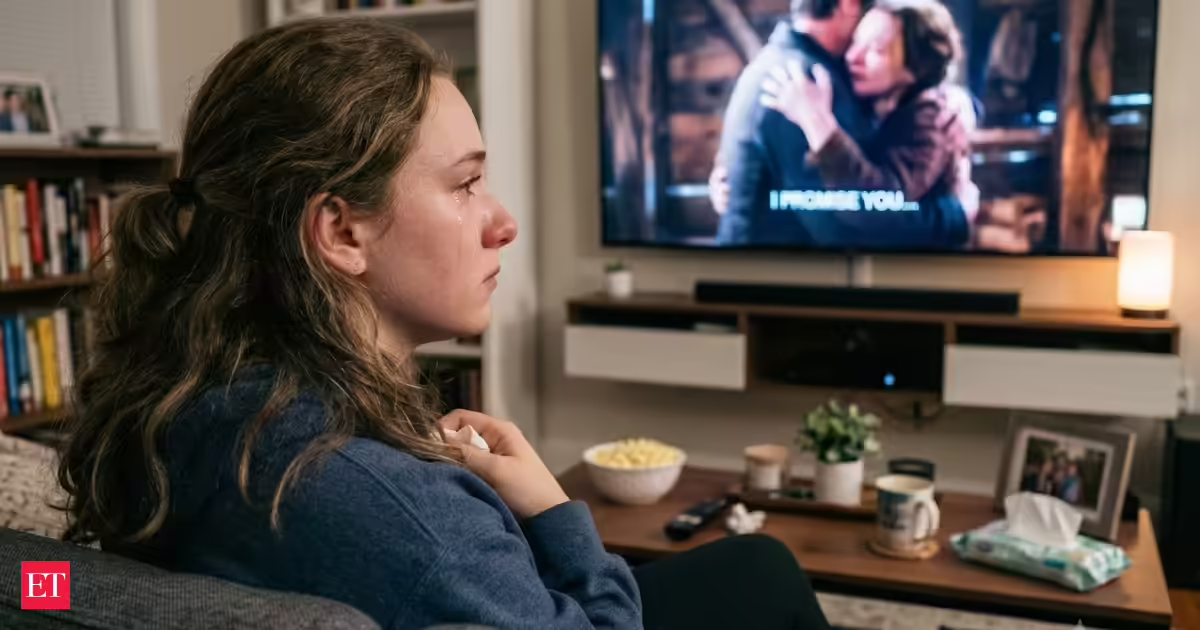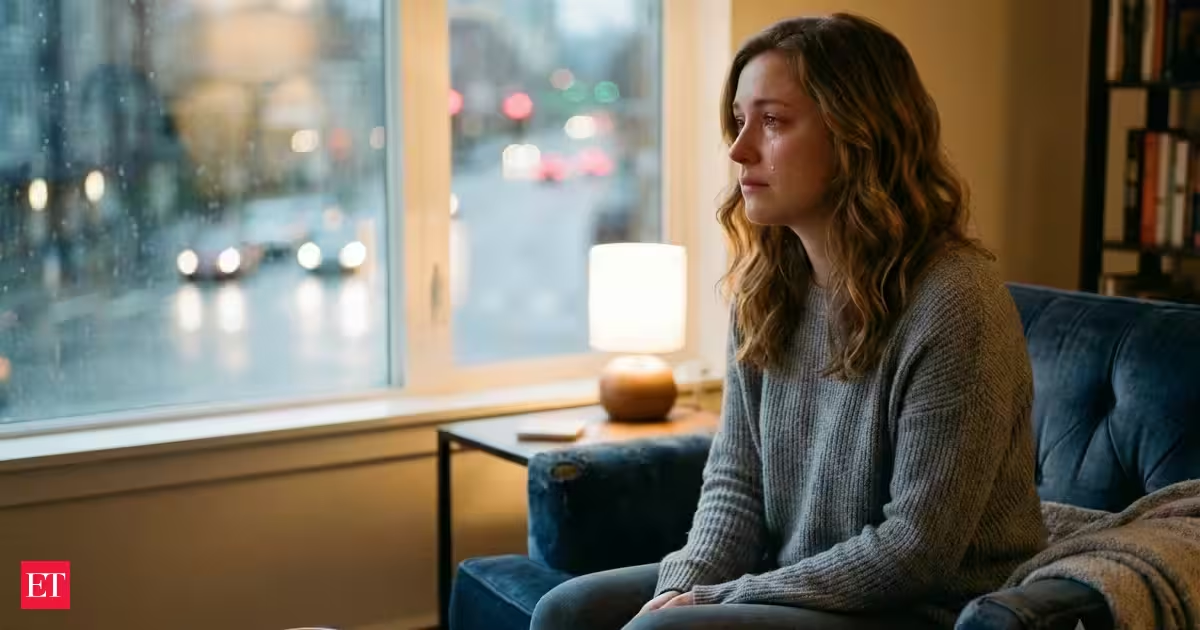
Psychology says people who never cry in front of anybody but can't hold onto tears when they are alone at times aren't necessarily weak, cold or unable to express emotions. Crying is one way people respond to stress, sadness, frustration and emotional pressure. Some people find it difficult to show these feelings around others. They may continue with their daily responsibilities and keep their emotions under control. When they finally have privacy, those emotions may come out through tears. This pattern can be linked to emotional regulation, fear of judgment, personal experiences and the way a person has learned to handle vulnerability.People who avoid crying in front of others may have learned to control their emotional reactions in social situations. This does not automatically mean that they do not feel emotions deeply.A person can experience sadness or stress while still appearing composed. They may continue working, talking to family members or helping other people even when they are struggling internally.For some people, showing emotion in front of others can feel unsafe or uncomfortable. They may worry that crying will change how others see them. They may also feel that their problems could become a burden for someone else.You Might Also Like:This can lead to a pattern where emotions are controlled during the day and released later when the person is alone. Solitude can therefore become a space where a person does not have to manage another person's reaction. There is no need to explain the tears, answer questions or worry about judgment.What Does This Mean?Crying alone can mean that a person has learned to separate emotional expression from social situations. Some people may hide their pain because they want to maintain peace. Others may believe they need to remain strong for their family, friends or colleagues. A person may think that showing sadness will create more problems. They may also believe that other people already have enough concerns of their own.This can create a routine:The person experiences stress or sadness.They control their reaction around other people.They continue with normal responsibilities.They reach a private place.The emotional pressure becomes harder to control.Tears come out when there is no audience.This does not mean every person who cries alone has the same psychological reason. Human behavior can have many causes.Why Is It Done?There are several possible reasons why someone may avoid crying in front of others.Fear of judgment: Some people worry that others will consider them weak, incapable or unable to handle pressure.Concern about becoming a burden: A person may avoid showing pain because they do not want friends or family members to worry about them.Putting others first: Some people spend much of their time supporting other people. They may postpone their own emotional needs until they have privacy.Past experiences: A person who was dismissed, criticized or ignored when expressing emotions in the past may become less willing to show vulnerability.Learned behavior: Family and social environments can influence how people express sadness. Someone who grew up in an environment where crying was discouraged may learn to suppress tears.Need for privacy: Some people simply prefer to process emotions alone. Privacy can help them think, reflect and regain control without outside attention.Which Psychology Theory Explains This Behaviour?Two psychological concepts can help explain this type of behavior, although neither should be used to diagnose a person based only on whether they cry alone.Attachment TheoryAttachment theory examines how early relationships can influence the way people approach closeness, support and emotional needs. Some people with avoidant attachment patterns may find it uncomfortable to depend on others or show emotional vulnerability. They may prefer to handle problems independently.This can contribute to a habit of hiding emotional needs and dealing with distress alone. However, attachment style is only one possible explanation. A person can cry privately for many other reasons without having an avoidant attachment style.Emotional Regulation TheoryEmotional regulation refers to the ways people influence, manage and respond to their emotional experiences. A person may regulate emotions differently depending on the situation. At work or around family members, they may focus on completing tasks and maintaining control.When they are alone, the need to maintain that public control may disappear. The emotion that was held back can then become easier to express. Crying may be part of that emotional response.This Psychology Study SaysResearch on emotional suppression has examined what can happen when people repeatedly try to hide or control emotional reactions. Suppressing emotions does not necessarily make the underlying emotion disappear. A person can stop themselves from crying while still experiencing sadness, stress or emotional discomfort.Research on emotion regulation also shows that the way people manage emotions can affect their thoughts, behavior and physical responses. This is why regularly hiding emotions may not always be helpful. If a person never has an opportunity to process difficult experiences, emotional pressure can continue to build.At the same time, crying itself should not be treated as proof that a person is psychologically healthy or unhealthy. The wider pattern matters, including how someone copes with stress and whether their daily life is affected.The Principle Behind ItOne way to understand this behavior is through the idea of psychological safety. People are often more willing to express emotions when they feel that they will not be judged, interrupted or criticized. For someone who feels uncomfortable showing vulnerability, being alone can provide that sense of safety.There is no need to maintain an image of being strong. There is no need to explain why the person is upset. There is also no immediate expectation to comfort someone else. This can allow emotions that were controlled earlier to come forward. The important point is that emotional control and emotional absence are not the same thing. A person who does not cry publicly can still experience strong emotions.What to Learn From It?Crying alone does not mean that someone is weak. It can show that a person has found a private way to release emotion. However, constantly carrying emotional pressure without support can become difficult.A person does not have to handle every problem alone. Sharing feelings with someone who is trusted can provide emotional support. There is also a difference between choosing privacy and feeling unable to seek help. If someone wants support but feels unable to talk to anyone, that may be worth examining.Some lessons from this behavior include:Emotional control does not mean emotional absence.Crying is a normal human response to many experiences.Privacy can make emotional expression easier for some people.Past experiences can influence how people show vulnerability.Asking for support does not automatically make someone weak.Regular emotional suppression may increase stress for some people.Trusted relationships can provide a place for honest emotional expression.Life Lessons From the BehaviorBeing strong does not mean never crying. Strength can also involve recognizing when something hurts and allowing yourself to process it. People who spend much of their time supporting others may also need support. They do not have to wait until they are completely alone before acknowledging their own feelings.Another lesson is that emotions do not always follow a schedule. A person may function normally for hours and then cry after reaching a quiet room. That reaction does not necessarily mean the person has suddenly become weaker. It may simply mean that the pressure has reached a point where emotional expression becomes possible.People can also learn to communicate their feelings before they become overwhelming. A conversation with a trusted friend, family member or mental health professional can provide another way to process difficult experiences.The goal is not to force anyone to cry in front of others. Emotional expression is personal. The goal is to avoid believing that emotions must always be hidden. A person can be responsible, dependable and emotionally strong while still having moments of sadness.The most useful lesson is simple: being strong does not require hiding every difficult emotion. People can care for others while also caring for themselves. They can give themselves the same care and understanding that they offer to the people around them.
Psychology says people who never cry in front of anybody but can't hold onto tears when they are alone at times aren't as emotionally strong as they appear: What the behavior reveals?
Psychology says people who never cry in front of anybody but can't hold onto tears when they are alone may be managing emotions in different ways depending on their surroundings. Public emotional control can come from fear of judgment, concern for others, past experiences or learned coping habits. Crying in private can provide a space where a person feels safe enough to process stress and emotion.
1,322 words~6 min read