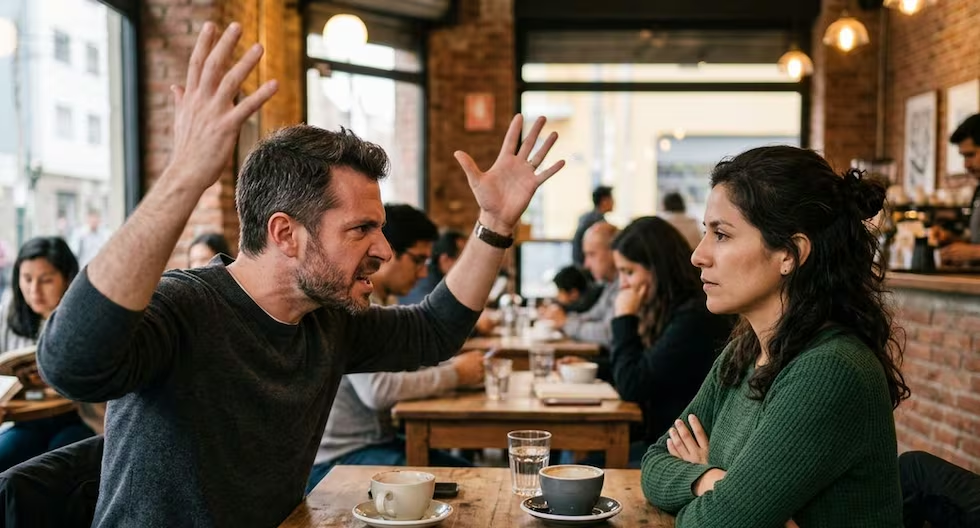
Have you ever hurt someone and noticed that they did not yell, argue, or defend themselves? Instead, they simply went quiet. Their texts became shorter. Their enthusiasm disappeared. They seemed emotionally distant, even though you knew they were deeply affected.Psychology says this reaction is far more common than most people realize. While society often assumes that anger is the natural response to emotional pain, many individuals respond in the opposite way. They withdraw, become quiet, and process their feelings internally.According to psychologists, silence after emotional hurt is often linked to self-protection, emotional regulation, attachment styles, and past experiences. In many cases, the person is not trying to punish others. They are trying to make sense of their emotions without creating more conflict.The Psychology of Emotional WithdrawalOne explanation comes from Attachment Theory, developed by psychologist John Bowlby.You Might Also Like:Research suggests that people develop different ways of coping with emotional distress based on their early relationships. Some individuals become confrontational when hurt. Others become avoidant and retreat into themselves.For these people, silence acts like an emotional shelter. Instead of expressing pain immediately, they step back to regain a sense of safety. Psychologists call this emotional withdrawal, a coping strategy that helps people regulate overwhelming feelings.Why the Brain Chooses Silence Over ConflictThe human brain is designed to protect itself from threats. Interestingly, emotional rejection activates some of the same brain regions involved in physical pain. When someone feels criticized, betrayed, ignored, or humiliated, their nervous system may enter what psychologists call the freeze response.Most people know about the fight-or-flight response. Less discussed is the freeze response, where the brain temporarily shuts down communication and emotional expression to avoid further harm.You Might Also Like:Psychology says people who go silent when they’re hurt are not weak, here’s why their brain may be asking them to shut downThis helps explain why some people become unusually quiet after a painful argument. Their silence may not be calculated. It may be an automatic psychological defense mechanism.Highly Sensitive People Often Process Pain InternallyResearch on high sensitivity, popularized by psychologist Elaine Aron, suggests that some individuals process emotional experiences more deeply than others.When highly sensitive people feel hurt, they often spend significant time analyzing conversations, replaying events, and searching for meaning. Instead of reacting immediately, they may retreat into reflection. A modern example can be seen in workplace conflicts.While one employee may openly challenge criticism during a meeting, another may remain completely silent, only to spend days thinking about the interaction afterward. Both individuals were affected. They simply processed the experience differently.Silence Is Sometimes Linked to Fear of RejectionAnother reason people become quiet is the fear that expressing their feelings will make the situation worse. Psychologists refer to this as rejection sensitivity.People who have experienced criticism, emotional neglect, bullying, or repeated invalidation may learn that speaking up does not lead to understanding.As a result, they choose silence. They may think: "What is the point of explaining myself?" "No one will understand anyway.""It's safer to keep it inside."Over time, this pattern can become automatic.The Difference Between Healthy Silence and Silent TreatmentPsychology makes an important distinction. Healthy silence is temporary and focused on emotional processing. The silent treatment, however, is often used as a form of punishment or control.One is self-protection. The other is manipulation. Psychologists emphasize that not every quiet person is trying to send a message. Many are simply trying to calm their nervous system before responding.Understanding this difference can prevent misunderstandings in relationships.Modern Life Encourages Internalized StressToday's world rewards emotional control. Many people feel pressure to appear calm, professional, and emotionally strong, even when they are struggling internally.Social media adds another layer. Instead of expressing hurt directly, some individuals disappear online, stop posting, avoid conversations, or retreat into isolation. From the outside, it may seem like they are unaffected. Internally, however, they may be carrying significant emotional distress.This gap between appearance and reality is one reason psychologists encourage healthy emotional expression rather than chronic suppression.What Psychology Really Says About People Who Go SilentPsychology does not view silence as weakness. In many cases, it is a coping strategy developed to manage emotional pain, reduce conflict, and restore a sense of control.Some people cry. Some people argue. Some people talk endlessly. Others become quiet. The key question is not whether someone goes silent when hurt. The key question is what happens afterward.People who eventually communicate their feelings tend to build healthier relationships and stronger emotional resilience. Silence can be a useful pause for healing, but when emotions remain unspoken for too long, misunderstandings often grow.Sometimes the quietest people are not the least affected. They may simply be carrying their pain where no one can see it.FAQsWhy do some people become silent when they are hurt?Psychologists say silence can be a coping mechanism that helps people process emotions, avoid conflict, and regain emotional stability.Is going silent a trauma response?Sometimes. Emotional withdrawal can be linked to past experiences, rejection sensitivity, or learned coping strategies developed after emotional pain.
Psychology says people who go silent when they’re hurt are not weak, here’s why their brain may be asking them to shut down
Psychology does not typically interpret silence as a sign of weakness. More often, it is seen as a coping mechanism that people use to navigate emotional distress, avoid escalating conflict and regain a sense of stability or control during difficult situations.
826 words~4 min read