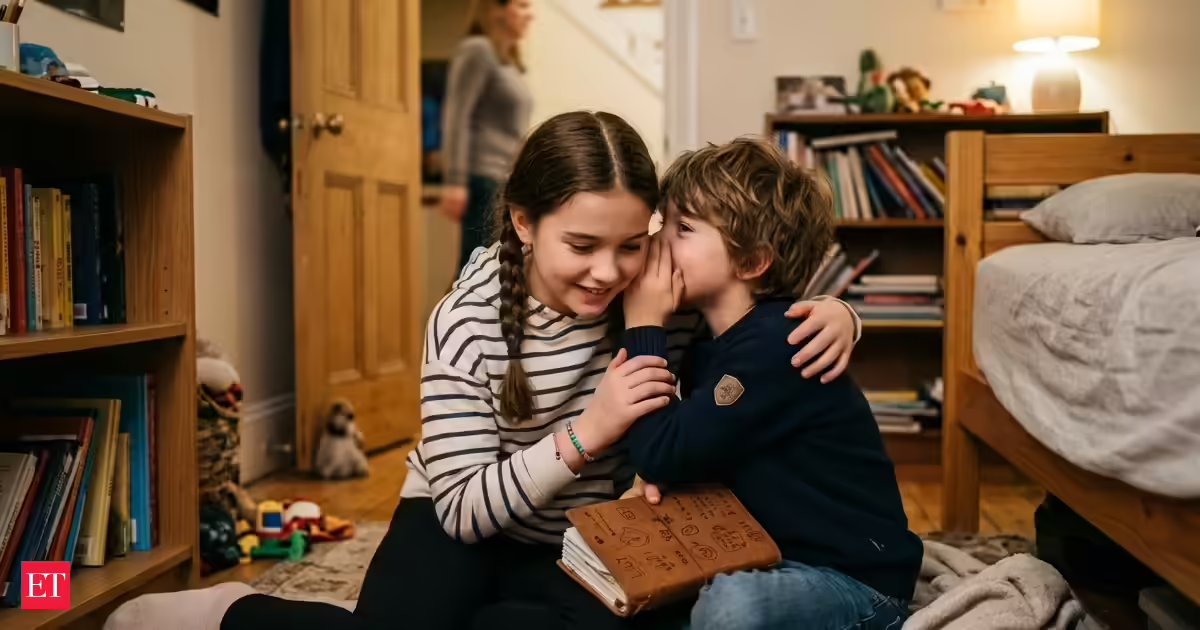
Psychology says people who don't share problems or tensions with their parents aren't necessarily hiding something or rejecting family support. Many children, teenagers, and adults choose not to discuss personal struggles for different psychological reasons. Some believe they should solve problems on their own. Others do not want their parents to worry. Past experiences, family communication patterns, and emotional comfort also influence this decision. Psychology suggests that silence does not always mean emotional distance. Instead, it may reflect a person's coping style, emotional regulation, or concern for family members. Understanding these reasons helps parents and children communicate with greater trust and mutual respect.Why some people stay silent about personal struggles?Many parents expect their children to share problems whenever they face stress. They often believe open communication strengthens family relationships. However, not everyone responds to pressure in the same way.Some people prefer to think quietly before discussing an issue. Others wait until they have found a solution. Some may never mention the problem because they believe it is their responsibility to handle it alone. Psychology explains that this behavior does not always show emotional distance. Instead, it may reflect how an individual has learned to deal with difficult situations throughout life.People often assume that silence means a lack of trust or affection. Psychology suggests this conclusion may not always be correct. Someone may love and respect their parents while choosing not to discuss personal stress. They may worry that sharing difficult news could increase their parents' anxiety. Some people believe protecting their parents from stress is also an act of care.Others feel they should become independent as they grow older. They may believe solving problems without help shows responsibility. For this reason, psychologists recommend understanding the reason behind silence before making judgments.You Might Also Like:What Psychology says?Psychology explains that every individual develops different coping strategies. Some people cope by talking openly with family members. Others process emotions internally before speaking. Neither approach is automatically right or wrong.Research in psychology shows that personality, childhood experiences, emotional security, and communication habits all influence how people respond to stress. People who avoid sharing problems may still have healthy emotional relationships. Their silence often reflects their preferred way of managing emotions rather than rejection of family support.What does this mean?Keeping worries private does not always mean someone feels disconnected from their parents.Instead, it can indicate that they:You Might Also Like:Prefer solving problems independently.Need time to understand their emotions.Want to avoid worrying family members.Feel uncomfortable expressing personal feelings.Believe they should remain strong during difficult situations.The meaning depends on each person's experiences and family environment.Why do some people behave this way?Many psychological and social reasons may influence this behavior. Some individuals grew up in homes where emotional conversations were uncommon. Others experienced situations where sharing feelings did not receive the response they expected. Some may worry about being judged or misunderstood. Others simply feel more comfortable discussing problems after they have found a solution.Common reasons include:Fear of making parents anxious.Desire to remain independent.Difficulty expressing emotions.Previous negative communication experiences.Habit of managing stress alone.Personal coping preferences.Concern about disappointing family members.These reasons often develop over many years.Which psychology theory explains this behaviour?One theory that helps explain this behavior is Attachment Theory, first developed by psychologist John Bowlby and later expanded by Mary Ainsworth. Attachment Theory suggests that early relationships influence how people seek support during stressful situations.People with secure attachment often feel comfortable asking for help. Others with different attachment patterns may prefer solving problems independently or hesitate before sharing emotions. The theory does not suggest one person cares more than another. Instead, it explains that different emotional experiences create different communication habits.Other psychological concepts also help explain this behavior. Self-determination theory suggests that people naturally seek independence and personal control. Emotional regulation theory explains that some individuals process feelings internally before discussing them with others.Together, these theories show that silence may simply reflect different coping styles.This psychology study saysMany psychological studies have found that emotional disclosure depends on trust, perceived support, personality, and previous experiences. Research has shown that people are more likely to discuss personal problems when they believe they will receive understanding rather than criticism.Studies also suggest that emotional suppression may reduce communication in the short term. However, long-term emotional wellbeing often improves when people eventually find safe and supportive ways to express their feelings. Psychologists therefore encourage healthy communication instead of forcing conversations.The principle behind this behaviourSeveral psychological principles help explain why some people remain quiet during stressful situations.These include:Emotional regulation.Self-reliance.Protection of loved ones.Personal boundaries.Individual coping styles.Learned communication habits.Emotional safety.Each principle affects how a person decides whether to discuss personal concerns with family members. Understanding these principles can reduce misunderstandings between parents and children.What can families learn from this?Parents often worry when children remain silent. However, repeated questioning may sometimes increase emotional pressure. Psychologists suggest creating an environment where conversations happen naturally.Helpful approaches include:Listening without immediate judgment.Respecting personal space.Asking open-ended questions.Showing patience.Offering support without pressure.Keeping conversations private.Responding calmly when someone shares concerns.These habits can gradually strengthen family communication.Life lessons from this behaviorThis behavior offers several important lessons.Every person manages stress differently.Silence does not always mean emotional distance.Trust develops over time.Listening can be more valuable than giving advice immediately.Families should avoid making quick assumptions.Emotional safety encourages honest conversations.Healthy communication requires patience and understanding.Recognizing these lessons helps both parents and children build stronger relationships without forcing emotional discussions.
Psychology says people who don't share problems or tensions with their parents aren't emotionally distant: What this behavior may actually mean?
Psychology says people who don't share problems or tensions with their parents aren't always trying to create distance in the relationship. Many people keep their worries private because they want to protect their parents, solve problems independently, or struggle to express emotions. Psychology explains that personal experiences, communication styles, attachment patterns, and coping methods can influence this behavior. Understanding these reasons can help families improve communication without making assumptions.
890 words~4 min read