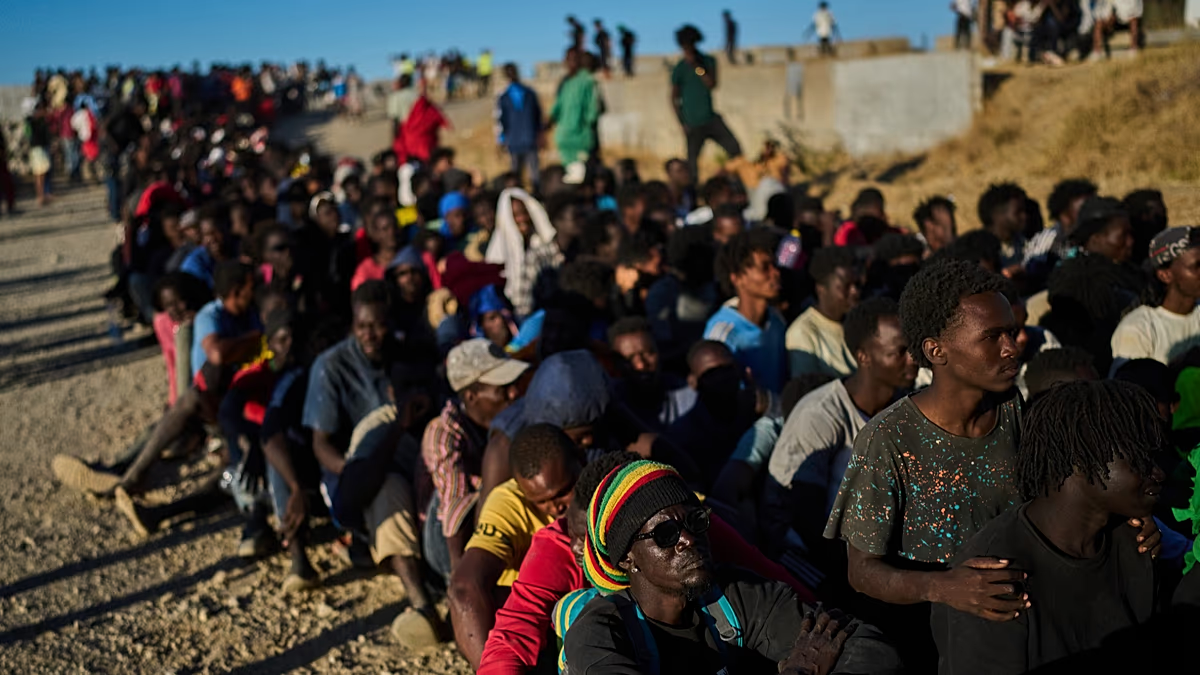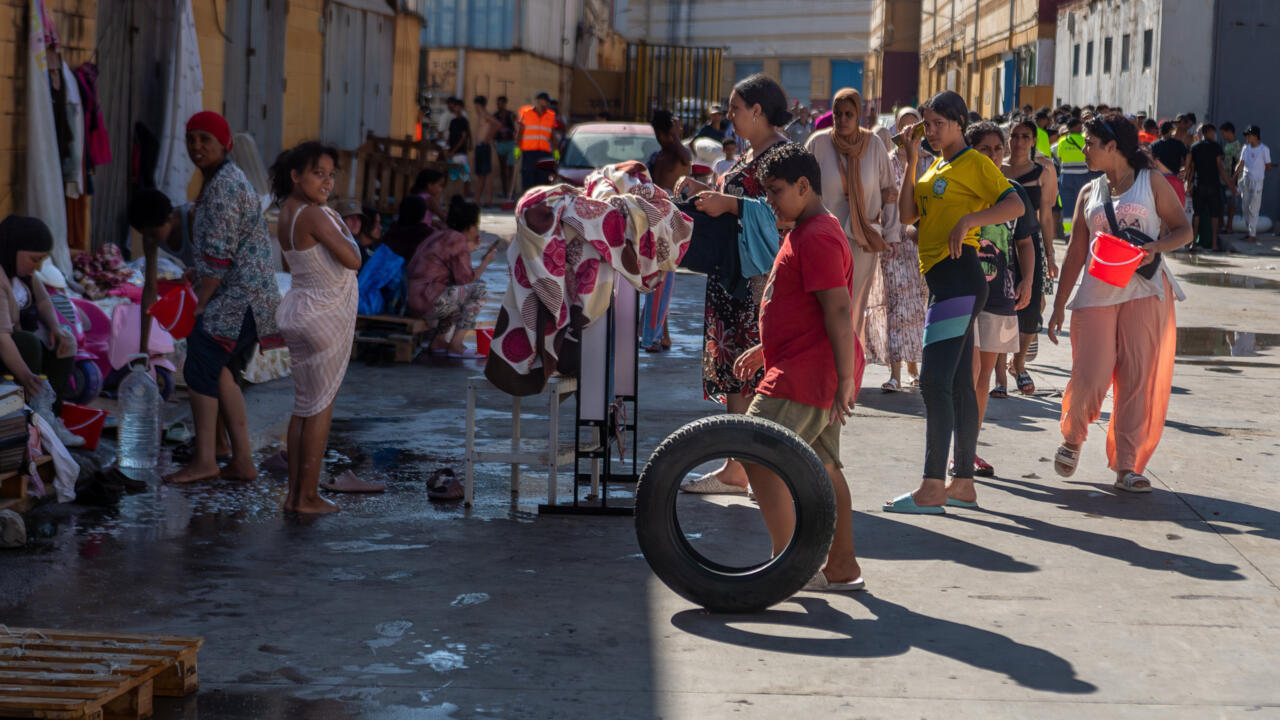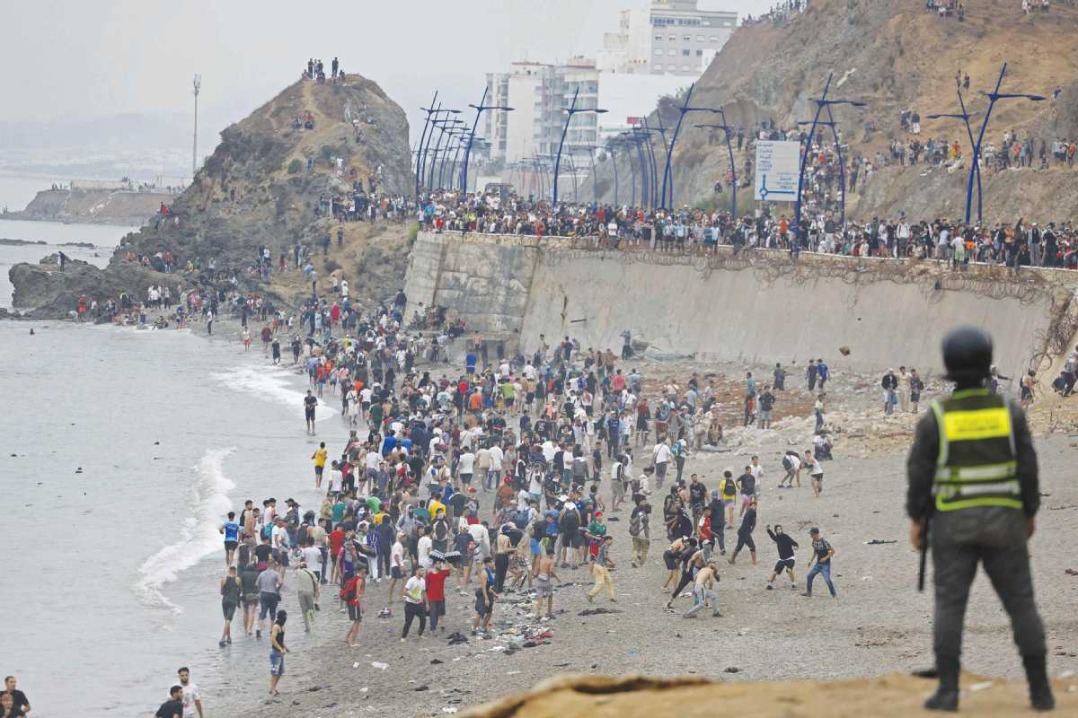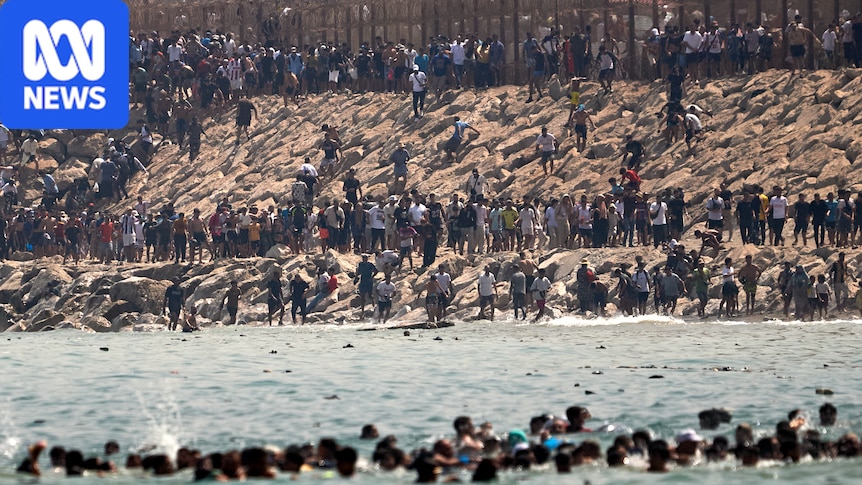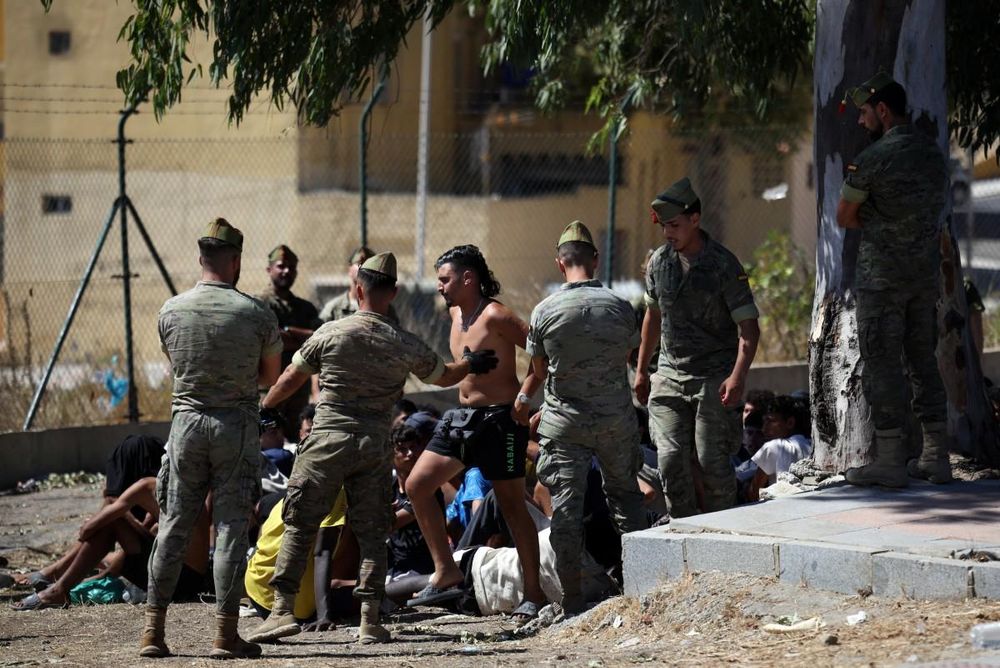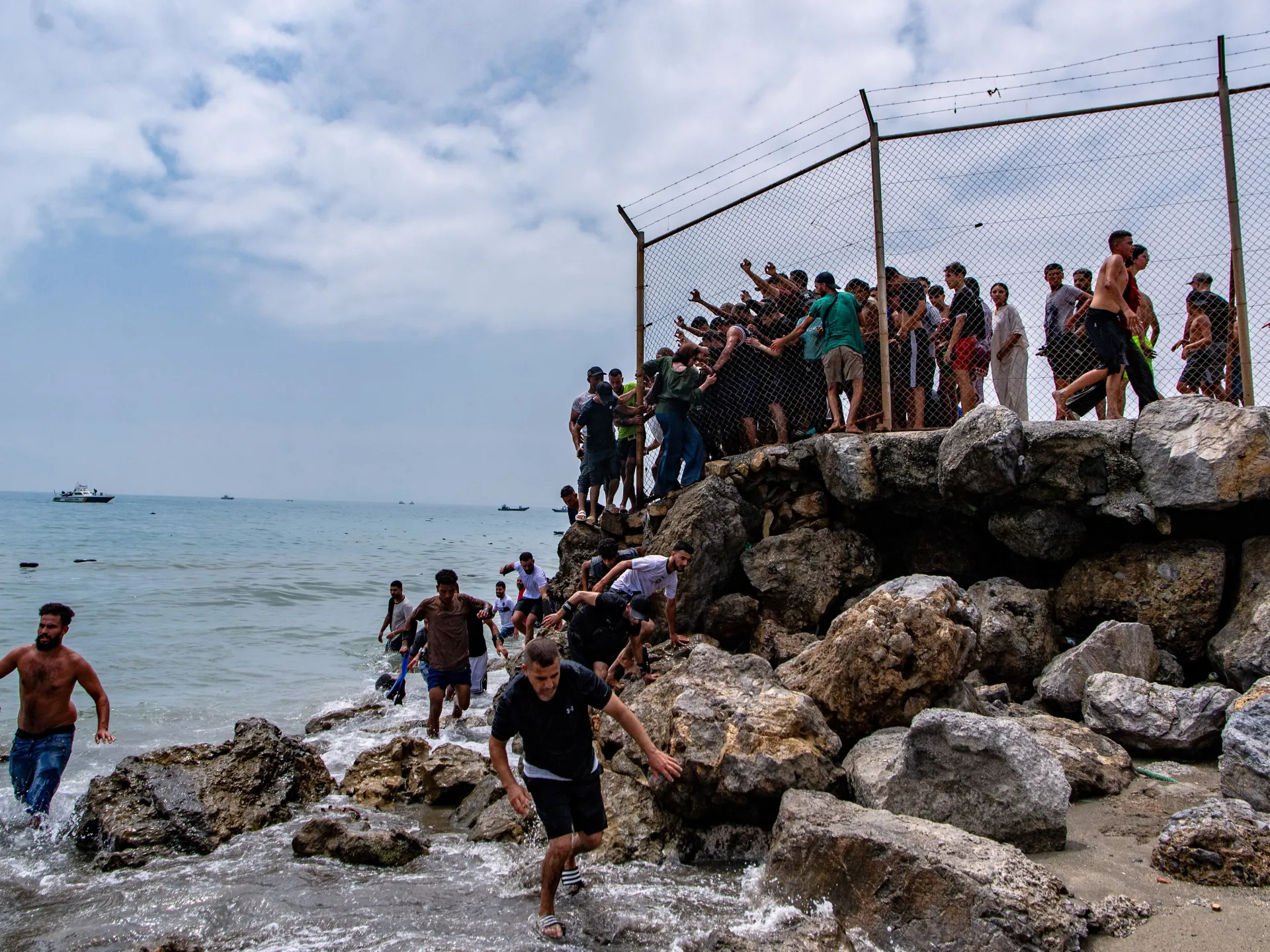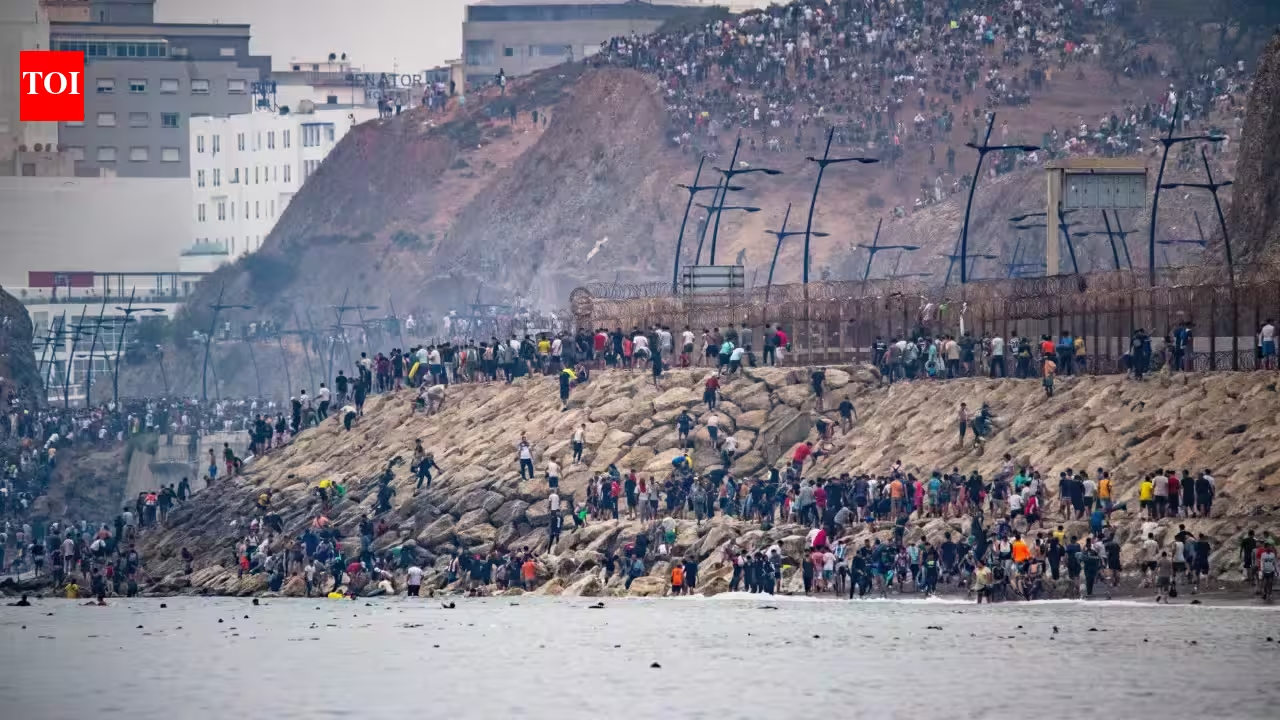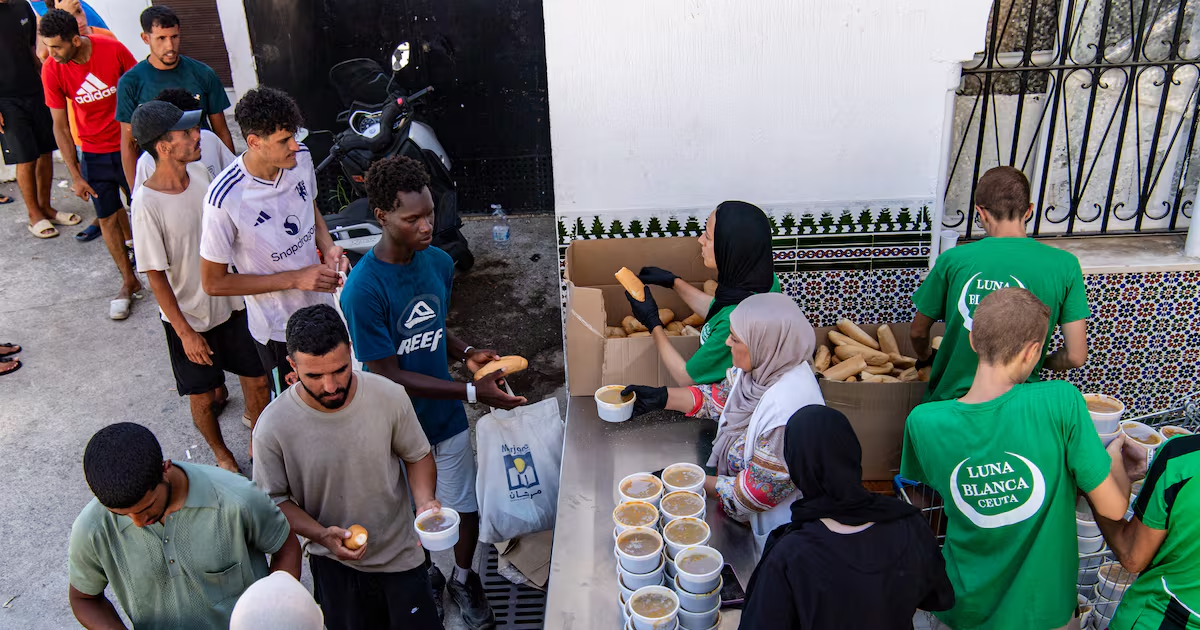
More than a week after tens of thousands of migrants crossed a land border into Spanish territory from Morocco, residents of the city of Ceuta are demanding a resolution of the crisis, amid fears of another mass crossing.On July 30th and 31st, an estimated 72,000 migrants reached Ceuta, a Spanish exclave on the North African coast, most of them having climbed over or swum around the border fence. Eighty-three people died during the rush, according to the Spanish authorities, although a Moroccan human rights organisation reported that the death toll was 141.While most of those who crossed returned to Morocco soon after arriving, hundreds of African migrants, many of them children, are still in Ceuta, which has a population of 84,000. Many are sleeping rough on beaches.On Sunday, thousands of people demonstrated on Ceuta’s streets, voicing concern at the migrants who remain in the city and demanding more institutional support.“Ceuta cannot face alone a situation that completely overwhelms its capacities and which affects Spain and Europe as a whole,” read a statement by the organisers, who represented the city’s Catholics, Muslims, Jews and Hindus.This is the second such mass arrival of migrants in Ceuta from Morocco in recent years. In 2021, several thousand people crossed the border in a similar fashion, an episode that was attributed to Morocco exerting pressure on Spain following tensions between the two countries linked to the territory of Western Sahara.However, it is still unclear what exactly caused the most recent mass crossing. Socialist prime minister Pedro Sánchez has described it as “a violation of Spain’s territorial integrity” and he blamed people-traffickers. He also cited as a cause a recent supreme court ruling that migrants who swim to Ceuta and fellow city Melilla cannot be directly sent back to Morocco.A report on the incident by an intelligence platform has ruled out the possibility that the mass crossings of July were spontaneous.“It was a co-ordinated, prepared and advertised operation,” said the document, published by Golden Owl, a company linked to the University of Alicante. The report detailed a complex recruitment web that operated on social media ahead of the crossing. Although it underlined some political themes in the social media chat, in particular “hostility towards the Moroccan state and the belief that emigrating is the solution”, no specific party was identified as being responsible.“The desperation [of young Moroccans] is real and is the fuel that drives the operation, but the fuel is not the engine,” the report read.Social media activity has also fed concerns about another mass crossing in the coming days, with August 15th specifically mentioned as a possible date. This has prompted the civil guard and armed forces to restrict leave temporarily for officers and soldiers in Ceuta and Melilla.On Monday, hundreds of migrant minors queued outside Ceuta’s police headquarters to register for eligibility to receive state support. About 1,400 migrant children are in the city, according to the government.Meanwhile, the developments in the city have caused a diplomatic row between Spain and Italy, which is affecting travellers from both countries. On Friday, Italy announced extra border controls for people arriving from Spain, citing concerns that undocumented migrants might be among them. Spain has responded with a reciprocal measure for travellers arriving from Italy.On Monday, Italian prime minister Giorgia Meloni and her Danish counterpart, Mette Frederiksen, reiterated concerns they had previously expressed after the Ceuta episode.“No one can deny the negative impacts of illegal immigration on our societies: rising crime rates, increasing pressure on public services and an erosion of public trust,” said the two leaders in a joint statement, in which they advocated repatriation centres in third countries as a solution.
Ceuta demands remedy after mass migrant crossing into Spanish enclave
Event has triggered spat between Spain and Italy
607 words~3 min read