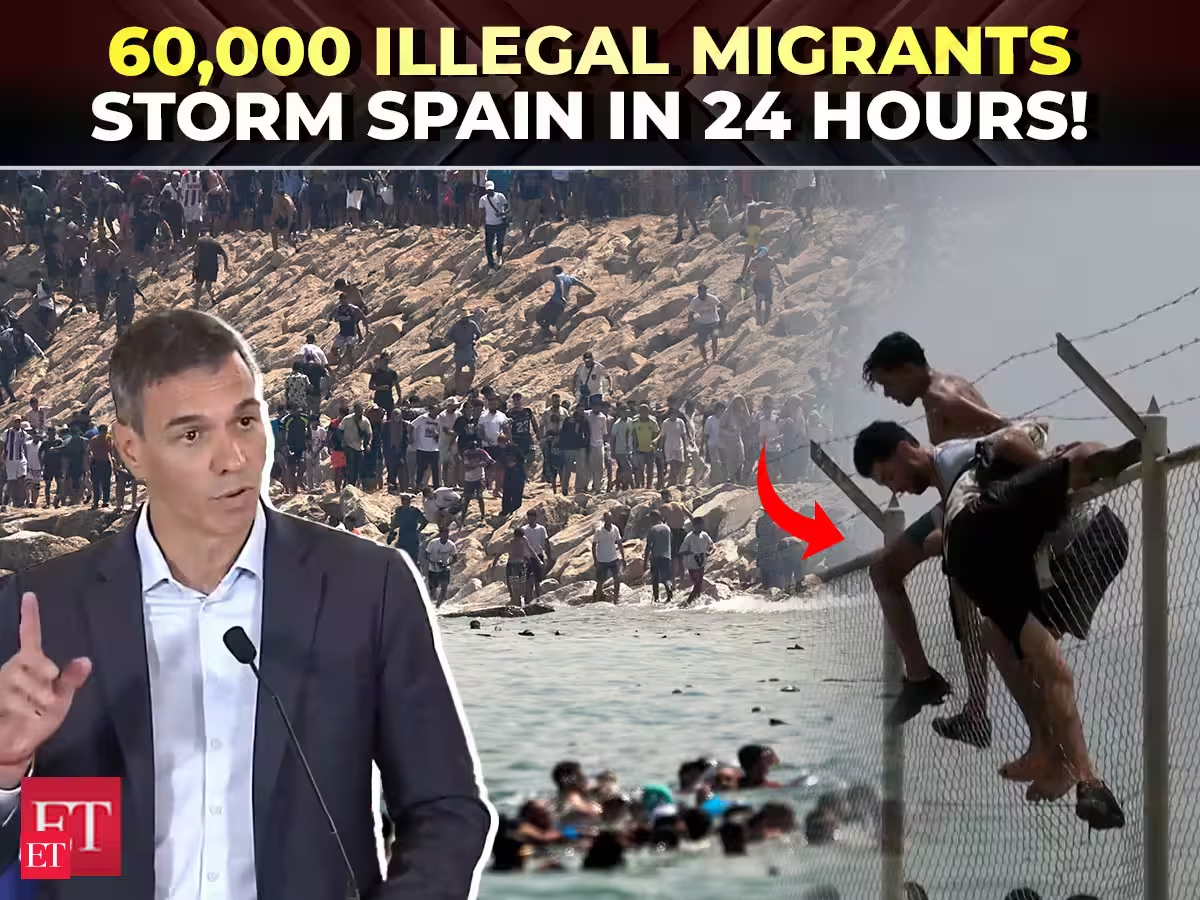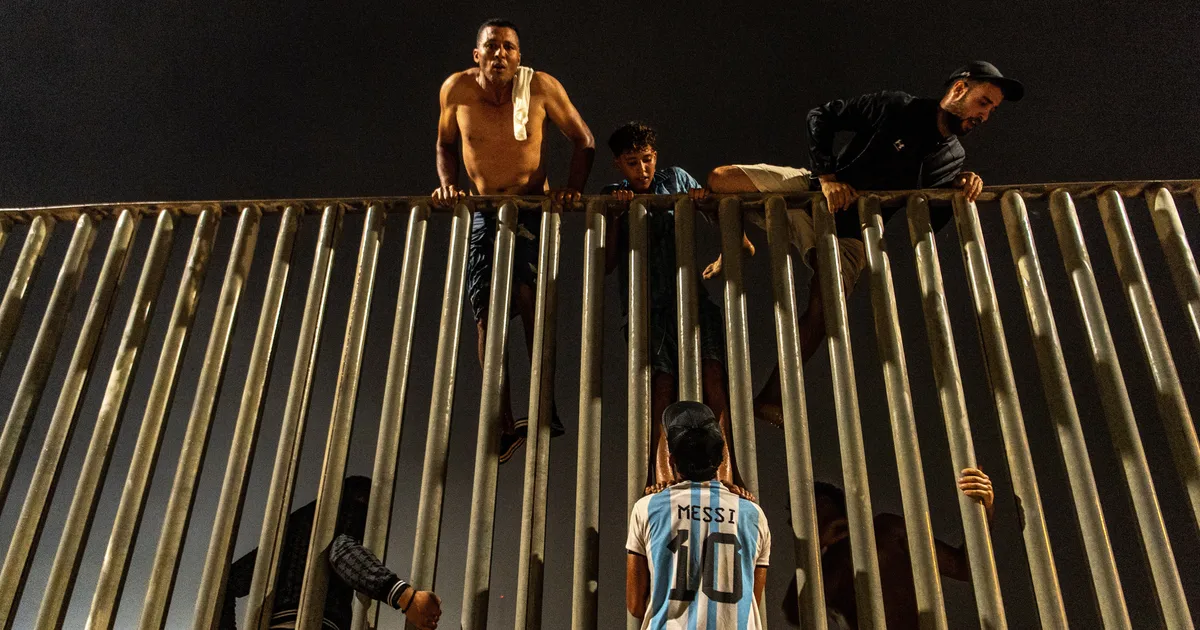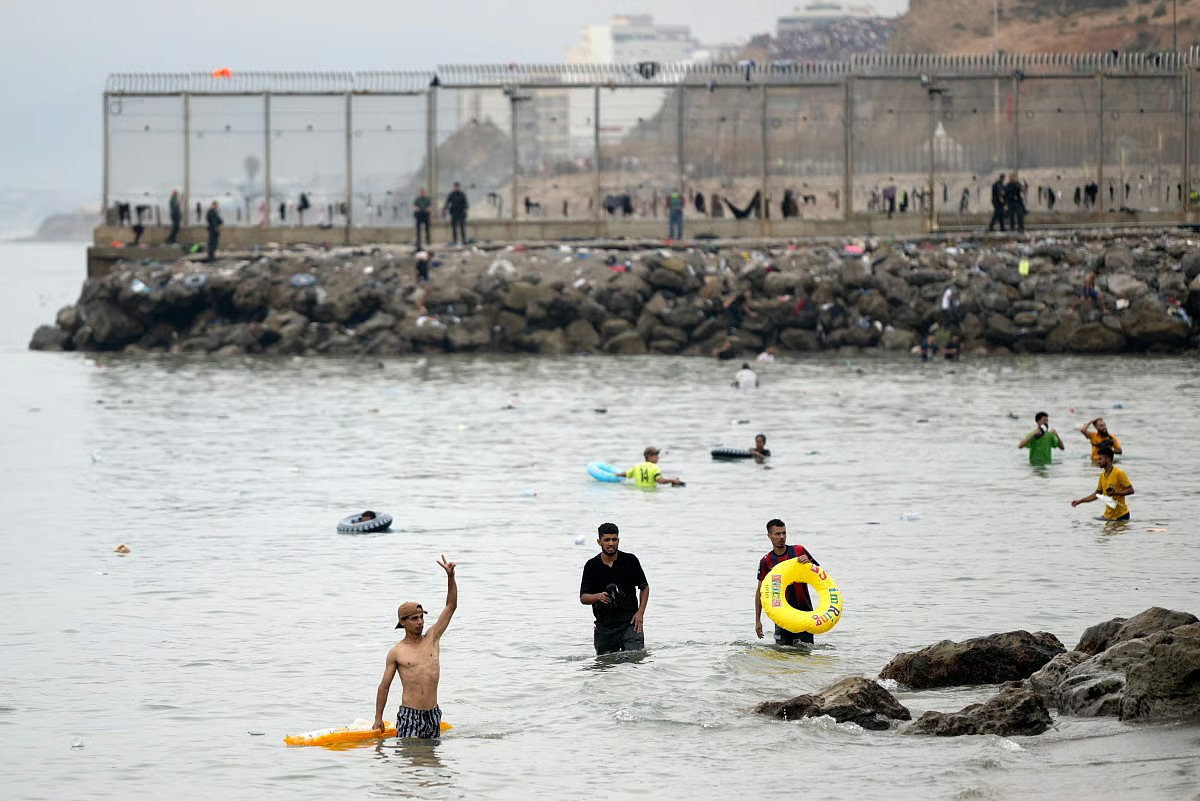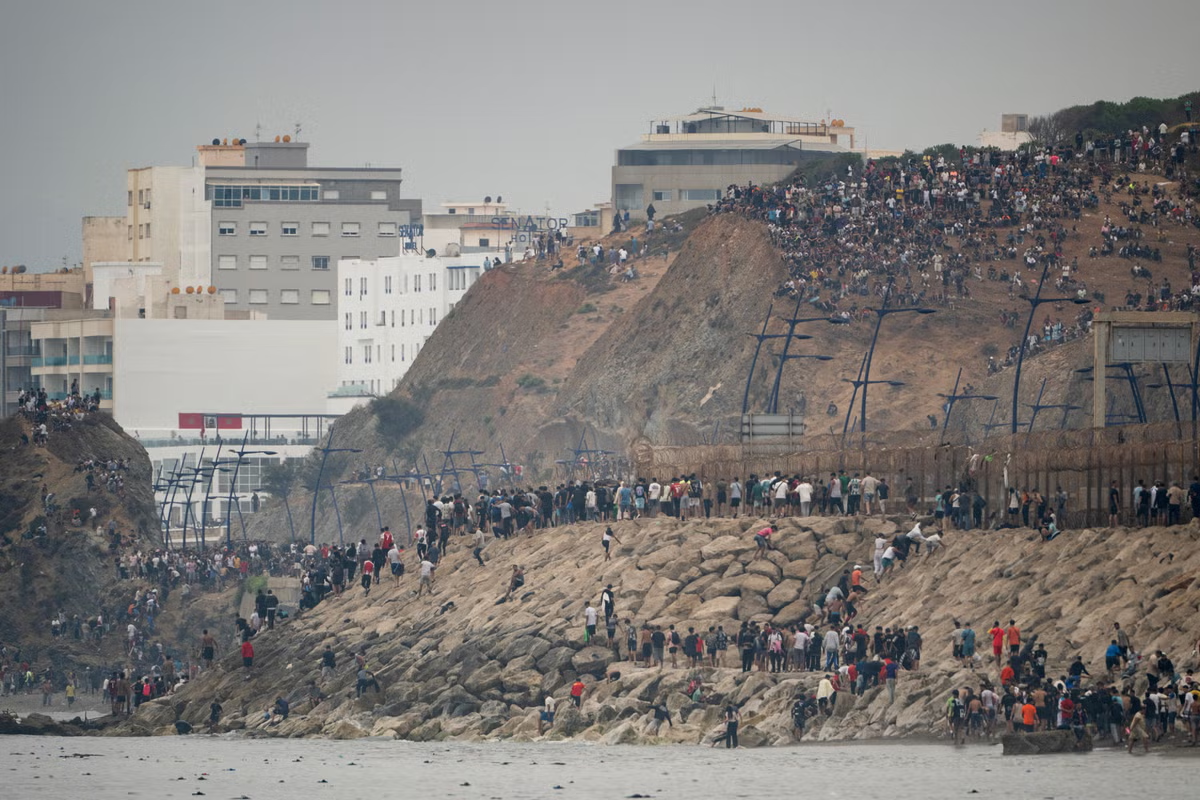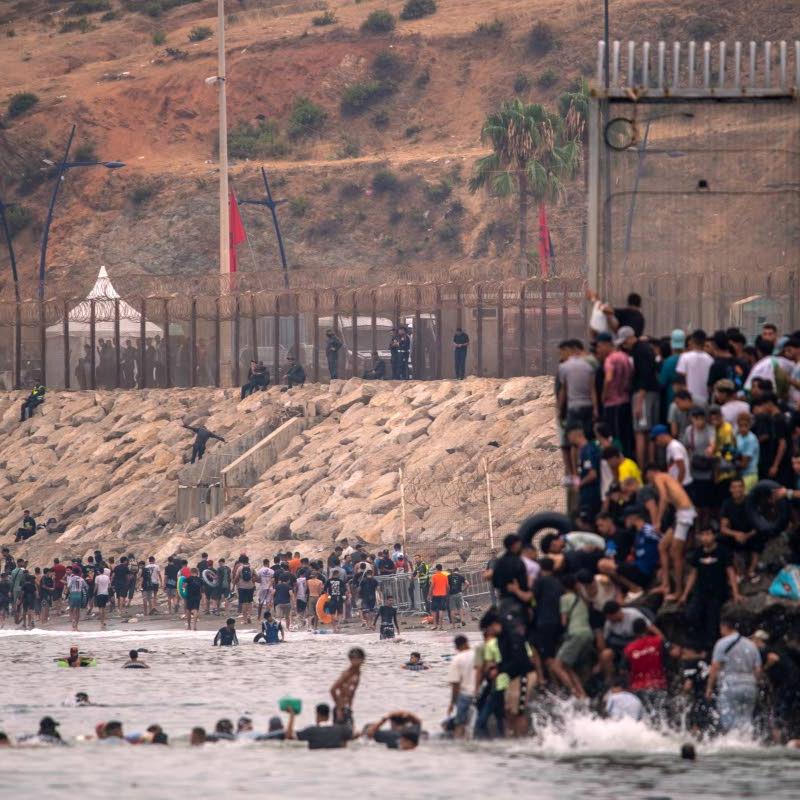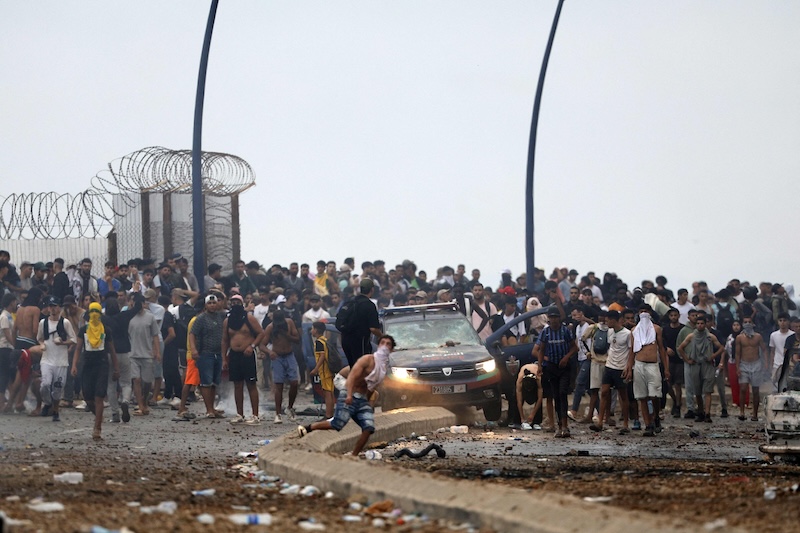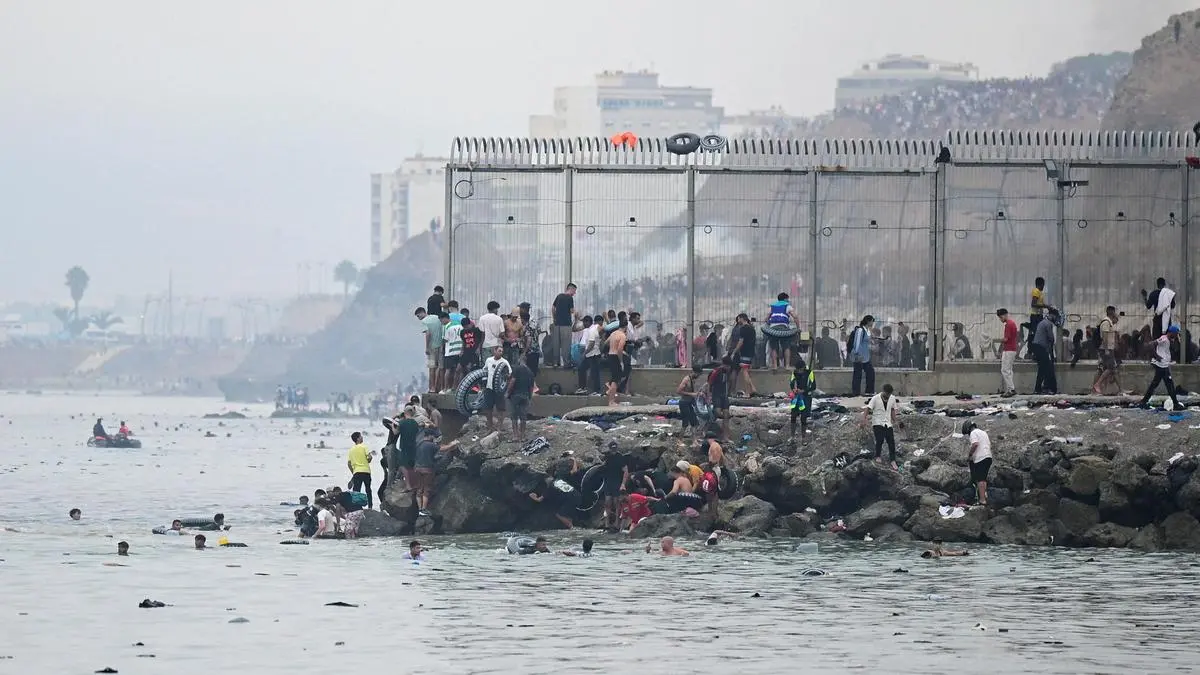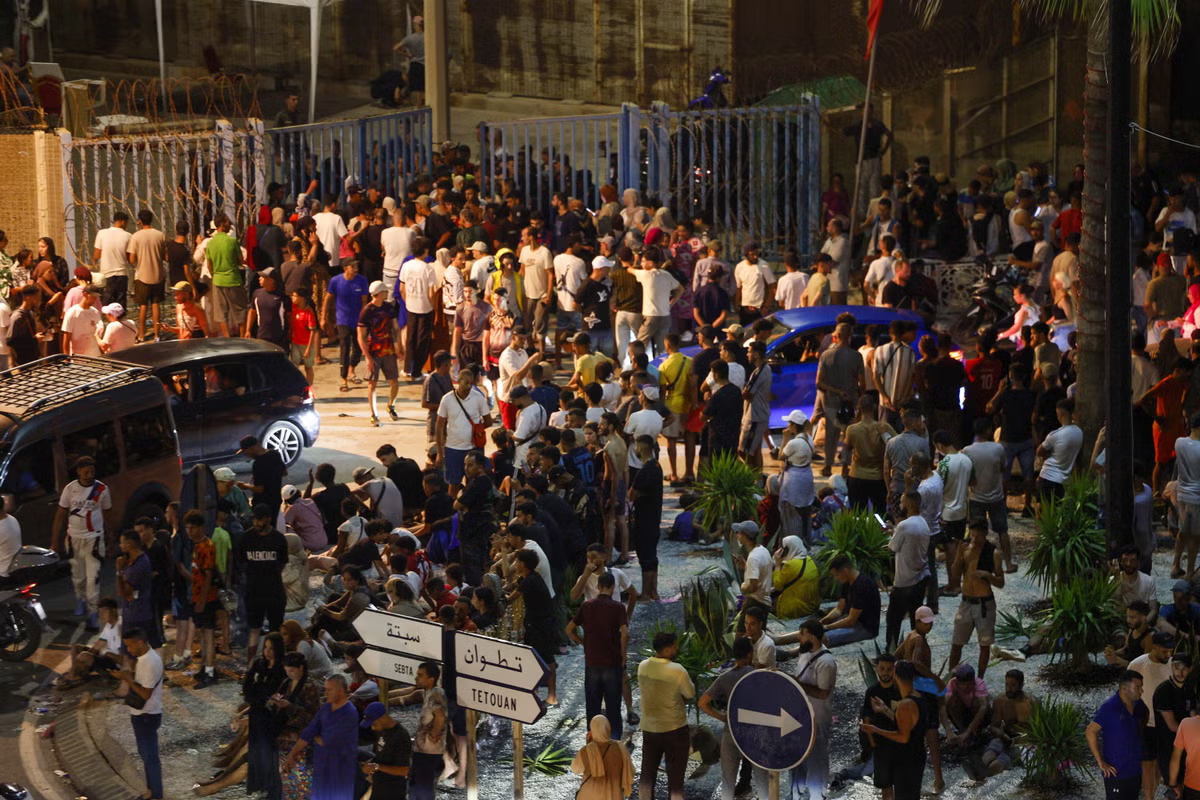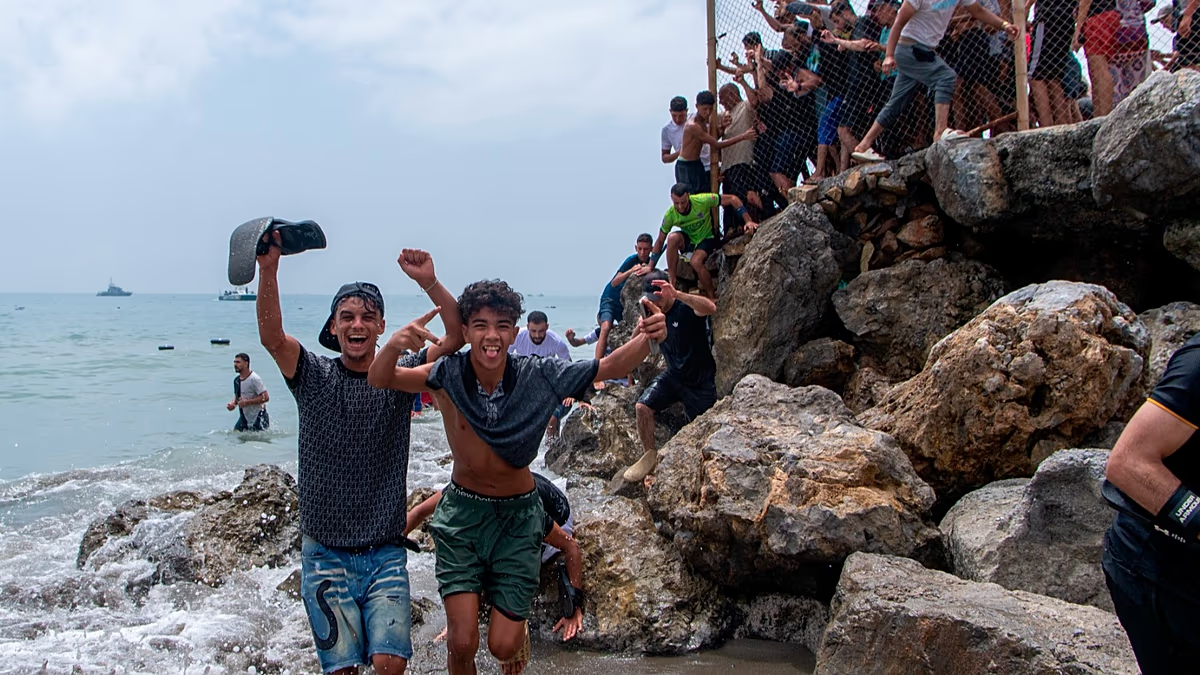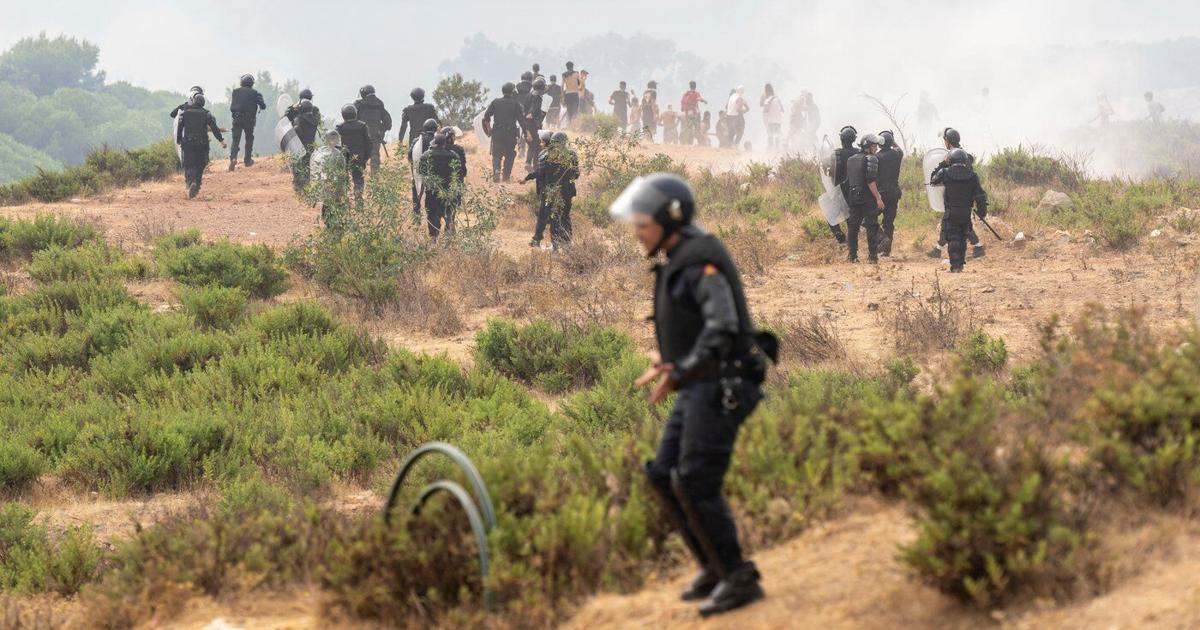
Spain is facing an unprecedented border emergency after around 60,000 migrants entered Ceuta from Morocco in just 24 hours, overwhelming the tiny Spanish enclave as chaotic crossings left dozens dead.Ceuta President Juan Jesús Vivas said the number of arrivals was equivalent to roughly 70 per cent of the city’s regular population of about 84,000.“The situation that Ceuta is going through is absolutely unsustainable,” Vivas said on Friday.At least 34 migrants have died amid the chaos, while thousands more — including unaccompanied children — have been left sleeping in parks and on pavements as authorities struggle to cope with the sudden influx.The Spain migrant crisis escalated dramatically on Thursday and continued into Friday, with migrants swimming from Morocco towards Ceuta even as security forces attempted to stop further crossings.Sánchez calls mass crossing a violation of Spain’s territorySpanish Prime Minister Pedro Sánchez travelled to Ceuta on Friday as the scale of the emergency became clear.He condemned the breach of the Ceuta-Morocco border as “a violation of Spain’s territorial integrity” and blamed human-smuggling networks for encouraging young people to make dangerous journeys.Live images from the border showed hundreds of migrants gathered on hills overlooking Ceuta before being dispersed with tear gas by Moroccan forces.Others continued entering the water in an attempt to reach Spanish territory. At the same time, some migrants who had already reached Ceuta were seen walking back towards Morocco.Rachid Sbihi, who leads an association representing Civil Guard officers, described the situation as a “serious humanitarian crisis”.“People are still entering,” he said, adding that Spanish military reinforcements were helping the injured and supporting humanitarian operations.“It's chaotic.”Shoes and belongings left behind after deadly crossingsThe scale of the tragedy was visible along the coastline on Friday morning, where shoes, buoys and other belongings could be seen abandoned near the border fence.Migrants were reported to have drowned while attempting to swim into Ceuta, while others were killed during a stampede near the breakwater fence at Tarajal beach.For some, the dangerous journey was driven by a lack of economic opportunities at home.Ahmed Karim, a 33-year-old Moroccan who entered Ceuta, said many young people wanted to reach Europe or the United States but lacked legal opportunities to do so.Migrants attempting to reach Ceuta from the Moroccan town of Fnideq can face a swim of around five kilometres. Others depart from Belyounech, where the distance to Spanish territory is shorter.Why did thousands suddenly head for Ceuta?Spanish authorities believe a recent Supreme Court ruling may have helped trigger the extraordinary surge.The ruling said migrants arriving in Spain by sea could not be summarily returned in the same way as those crossing by land or climbing the border fence.Sánchez said migrant-smuggling networks appeared to have rapidly circulated their interpretation of the decision.“It appears that this interpretation of the Supreme Court's ruling spread like wildfire,” he said, arguing that it had helped trigger the mass movement towards Ceuta.Some human rights activists in Morocco have questioned that explanation, saying many migrants would have been unlikely to know the details of a Spanish court ruling.Moroccan authorities, meanwhile, deployed additional police near the border. Rights groups said officers used water cannons and warning shots as they attempted to stop further crossings.Spain immigration policy comes under fireThe Ceuta migrant crisis has also intensified political pressure on Sánchez over his government’s immigration policies.Spain has taken a comparatively welcoming approach to migration while governments elsewhere in Europe and the United States have tightened border controls.Earlier in 2026, Madrid moved to provide residency and work permits to hundreds of thousands of migrants already living in Spain without permission. Migrants who entered irregularly after January 1, 2026, were excluded.Sánchez has argued that regularisation will benefit Spain’s economy and help address the demographic challenges posed by an ageing population.His political opponents, however, quickly linked the dramatic scenes in Ceuta to the government’s approach.Conservative politician Isabel Díaz Ayuso accused Sánchez of allowing Spain to be “invaded through Ceuta”.The prime minister rejected any connection between the regularisation programme and the latest mass crossings.Ceuta crisis spreads beyond SpainThe fallout is already being felt elsewhere in Europe.Italian Prime Minister Giorgia Meloni threatened to suspend Italy’s Schengen arrangements with Spain, while France said it would strengthen checks along its border with the country.Spain subsequently summoned Italy’s ambassador in Madrid and insisted the crisis had “nothing to do with the regularisation of migrants” introduced by Sánchez’s government.There were also attempts by migrants to enter Melilla, Spain’s other autonomous city on the North African coast.Clashes erupted between migrants and Moroccan police in Bni Nsar, near Melilla, with local reports saying rocks were thrown, police vehicles were set on fire and dozens of people were arrested.Spanish authorities had already warned before the latest surge that Ceuta’s migrant reception facilities were under severe pressure.Spain’s Interior Ministry has yet to confirm the 60,000 figure. Spanish media and security sources have offered lower estimates ranging from 30,000 to 49,000.Even those estimates would mean that a population equivalent to more than half of Ceuta entered the enclave within a single day — turning the small Spanish territory into the centre of a rapidly escalating European migration crisis.(With AP inputs)
Spain Border Crisis: Why did 60,000 migrants, equal to 70% of Ceuta's population, cross into the city in just 24 hours?
Around sixty thousand migrants entered Ceuta from Morocco in one day. This influx overwhelmed the Spanish enclave and caused a humanitarian crisis. Many migrants swam across the water, and some tragically drowned during the crossings. Spanish Prime Minister Pedro Sánchez condemned the border breach as a territorial violation. The crisis intensified political pressure on Spain's immigration policies.
848 words~4 min read