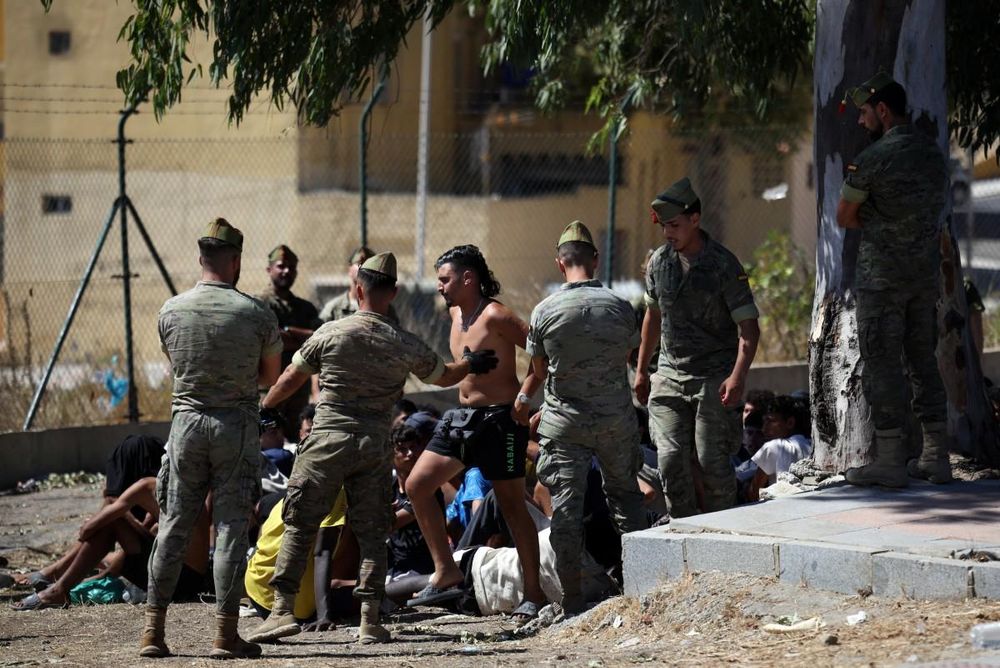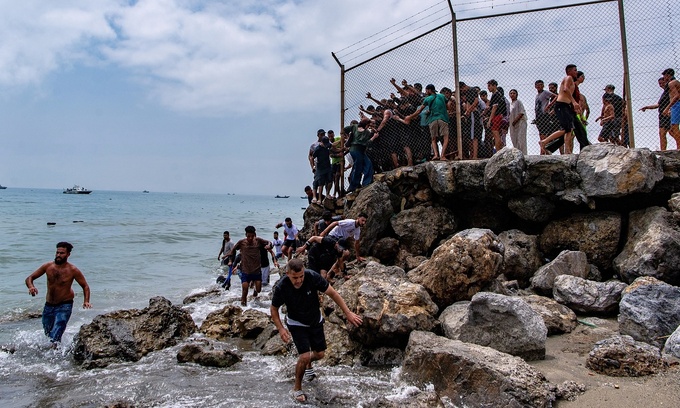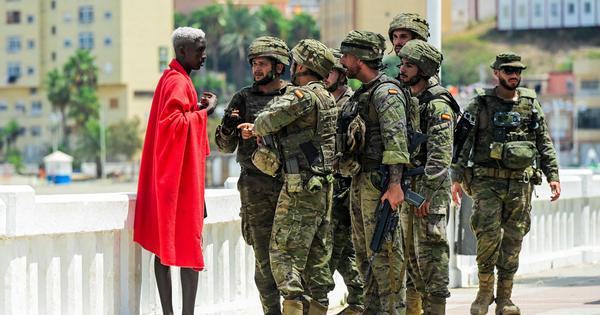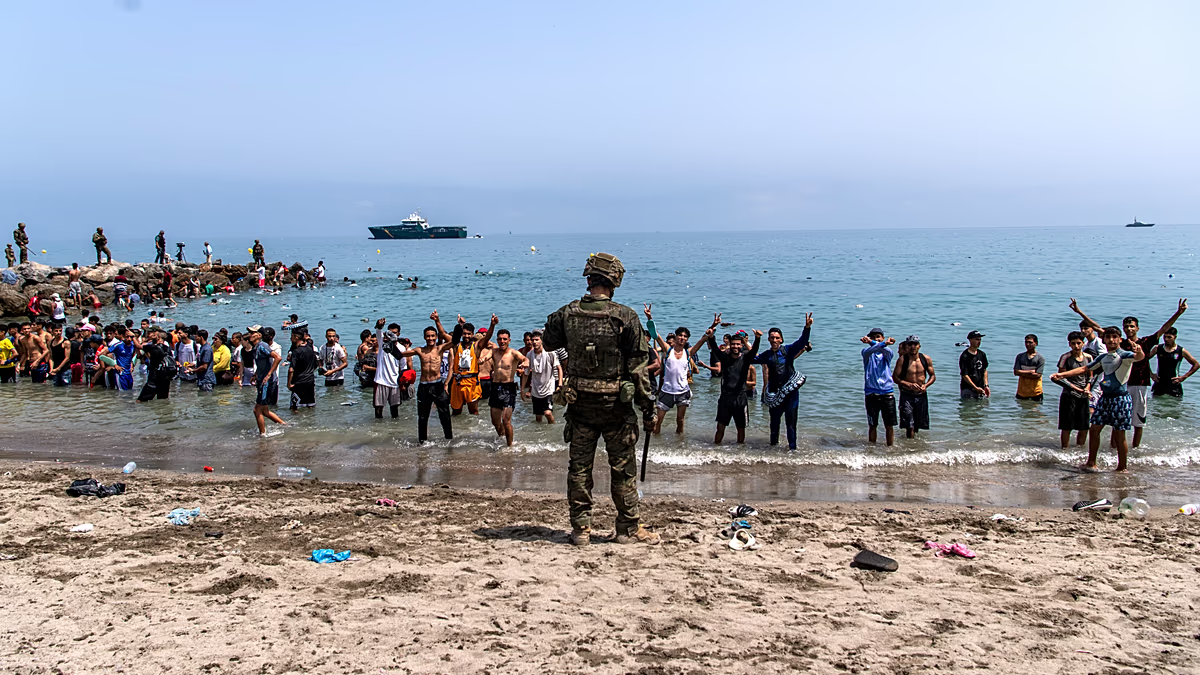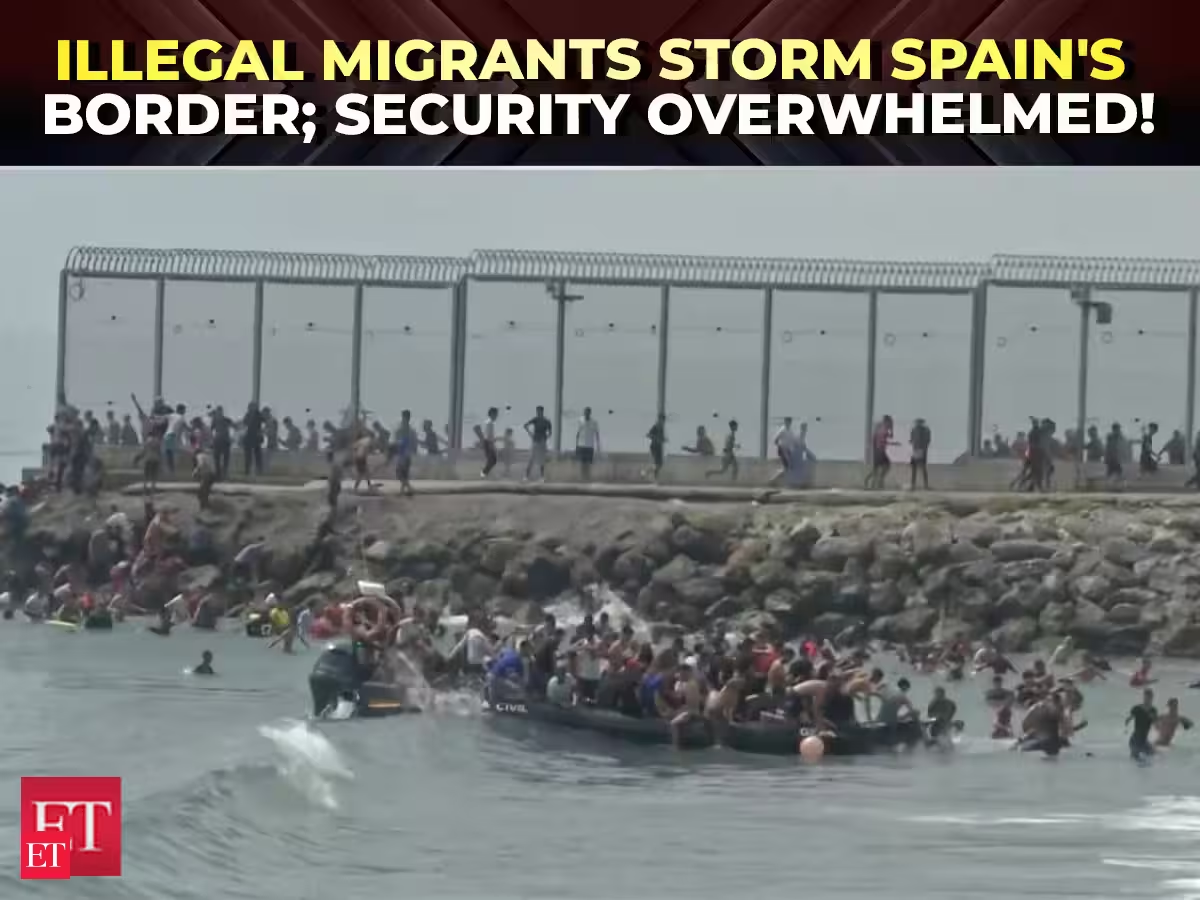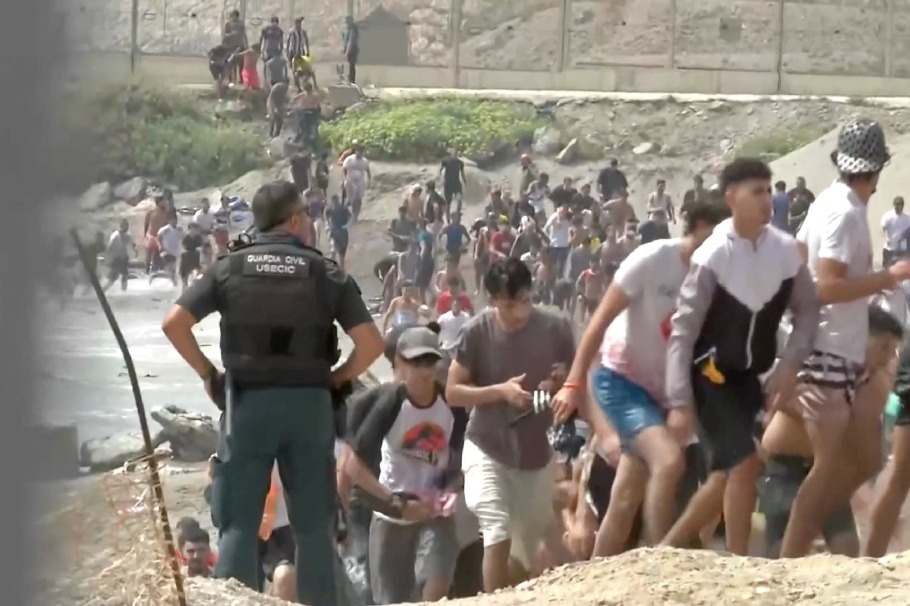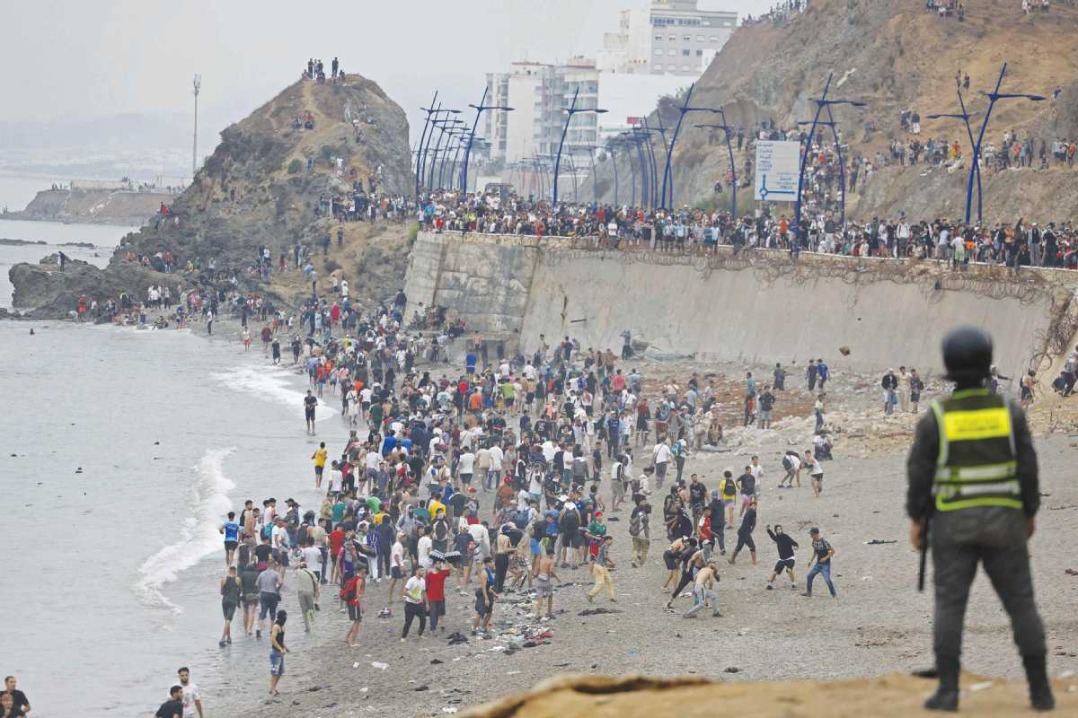
Spanish army soldiers guard a beach and nearby rocks as migrants, having swum across the border from Morocco, stand on Ceuta’s shore on July 31. Antonio Sempere / AP
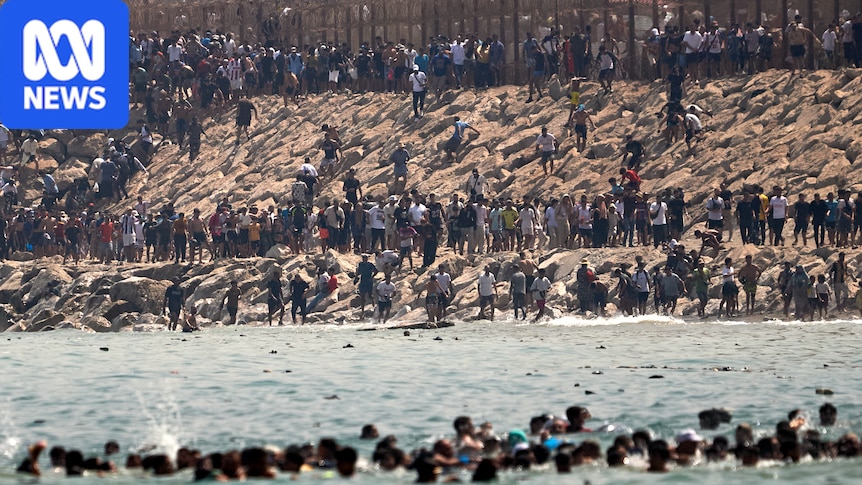
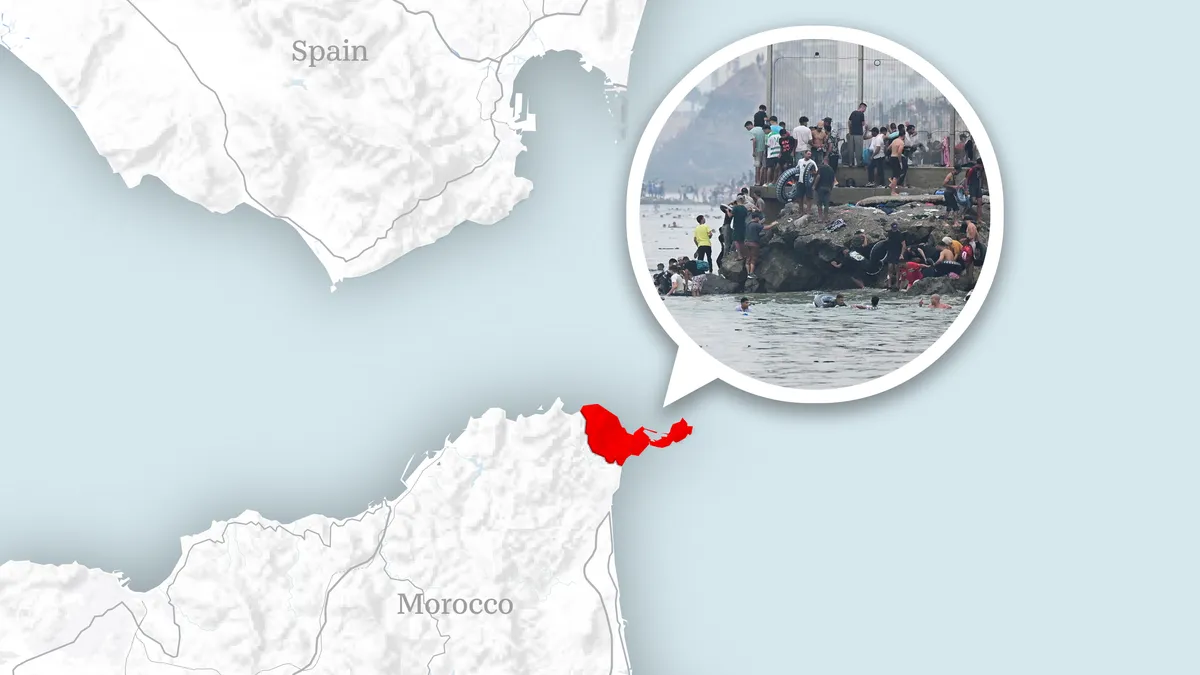
The chaotic incursion of tens of thousands of people into the tiny Spanish-controlled North African enclave of Ceuta on July 30 and July 31 was largely over a few hours after it began — but fallout from the incident continues to dominate discussion at the European Union.
The arrival of as many as 72,000 uninvited people from neighboring Morocco prompted a hastily called EU meeting on Tuesday, and continues to draw heated words from both Spain and Morocco, who each accuse the other of having manipulated the situation.
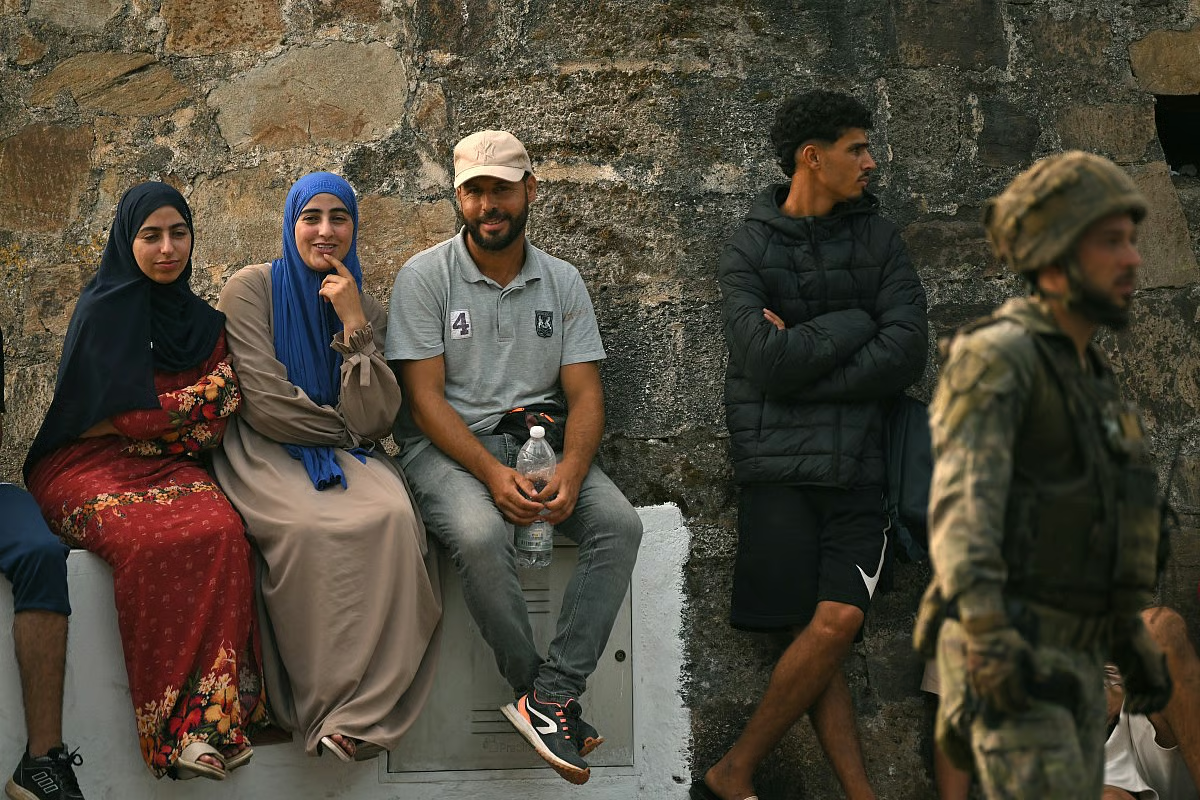
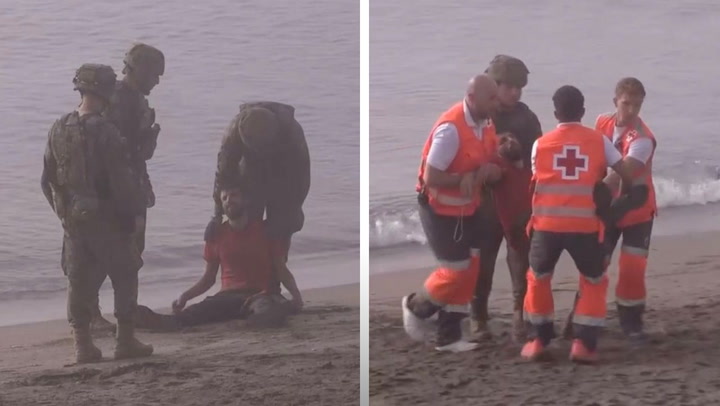
And, despite the fact that the vast majority of people who arrived in Ceuta left again within hours, the continued presence of a few thousand migrants in the days that followed have left Spain with a logistical challenge, in terms of ensuring they have adequate food, water, and shelter.
European Commissioner for Internal Affairs and Migration Magnus Brunner said after Tuesday's high-level EU meeting that the unprecedented crossing looks to have been fueled by criminal smuggling networks and online disinformation.