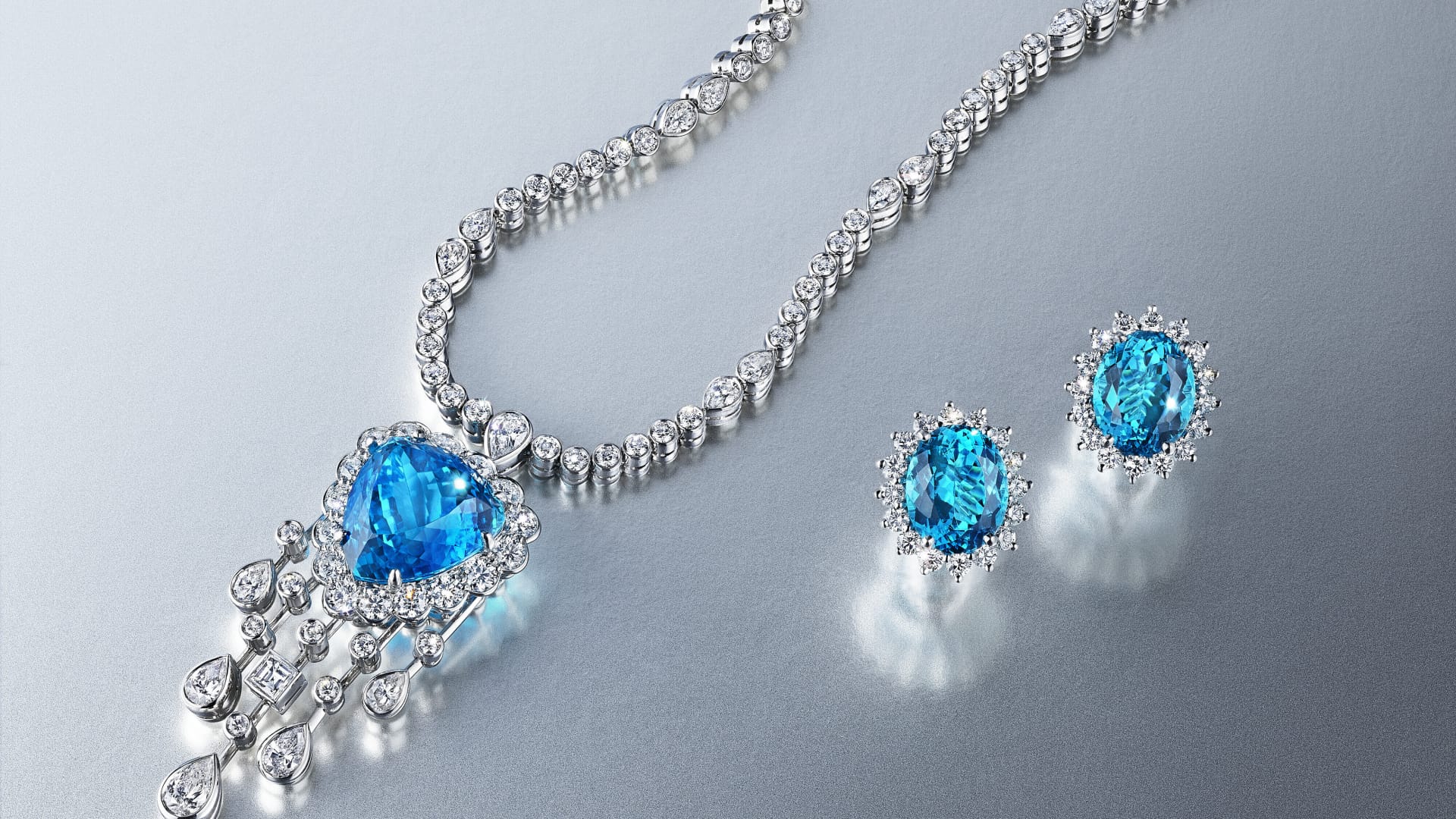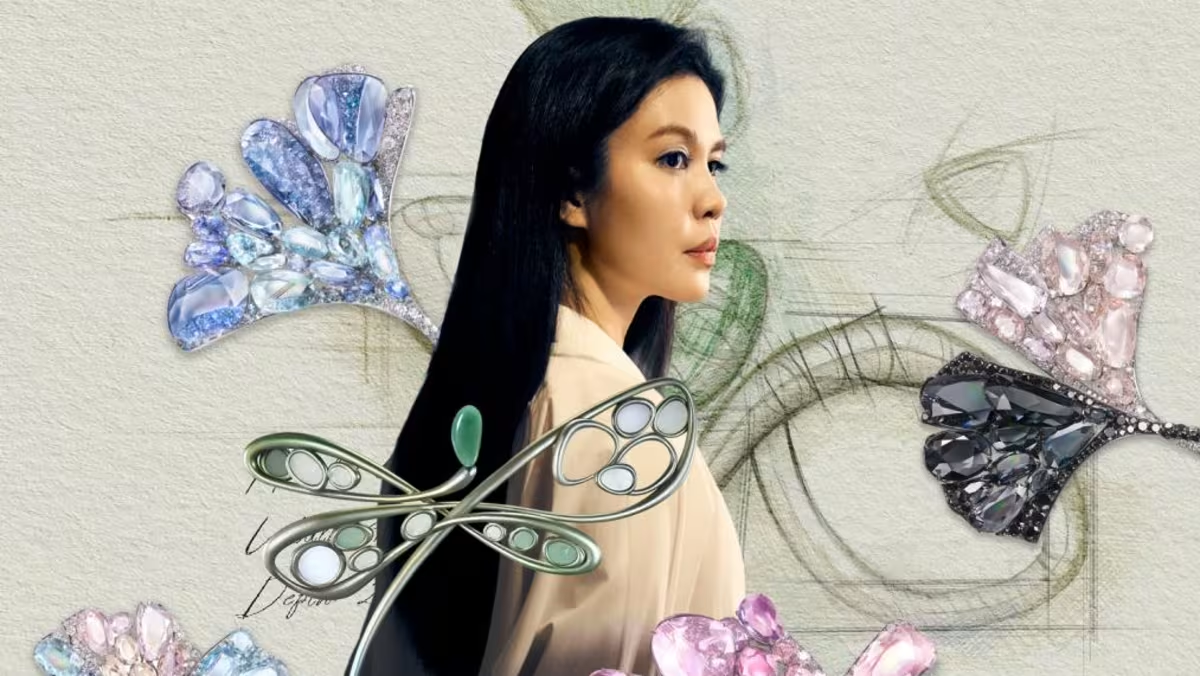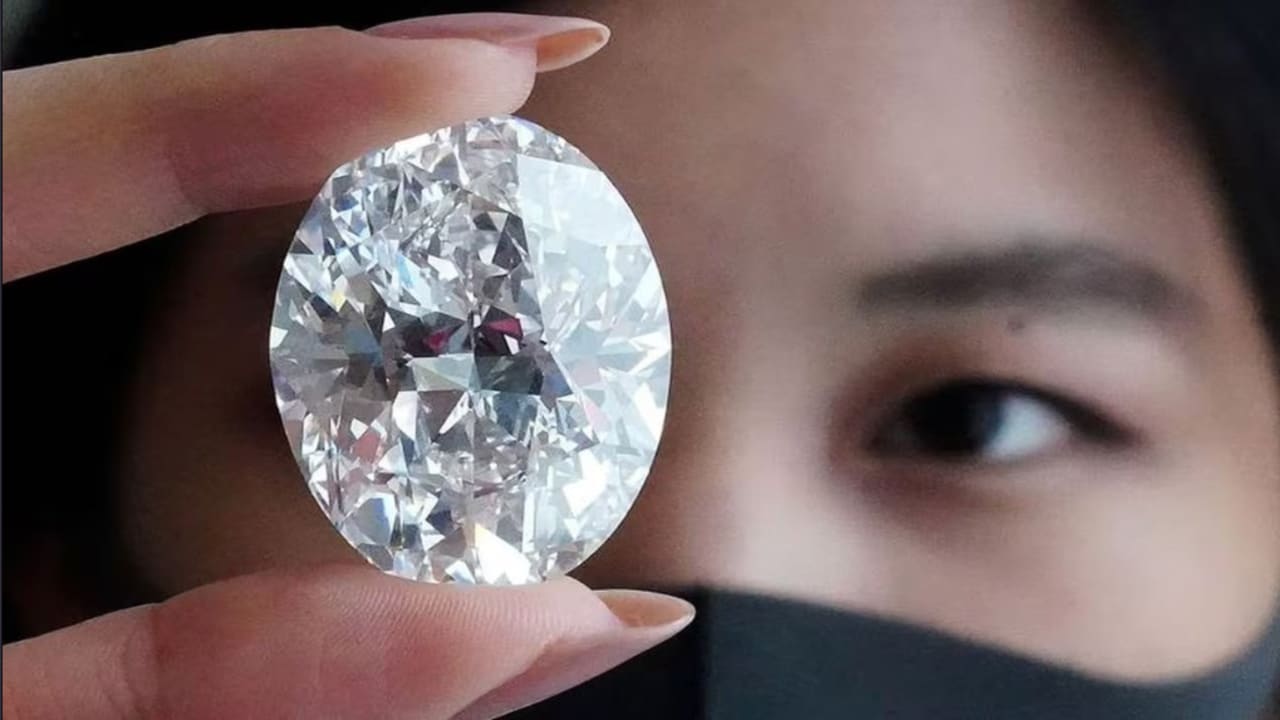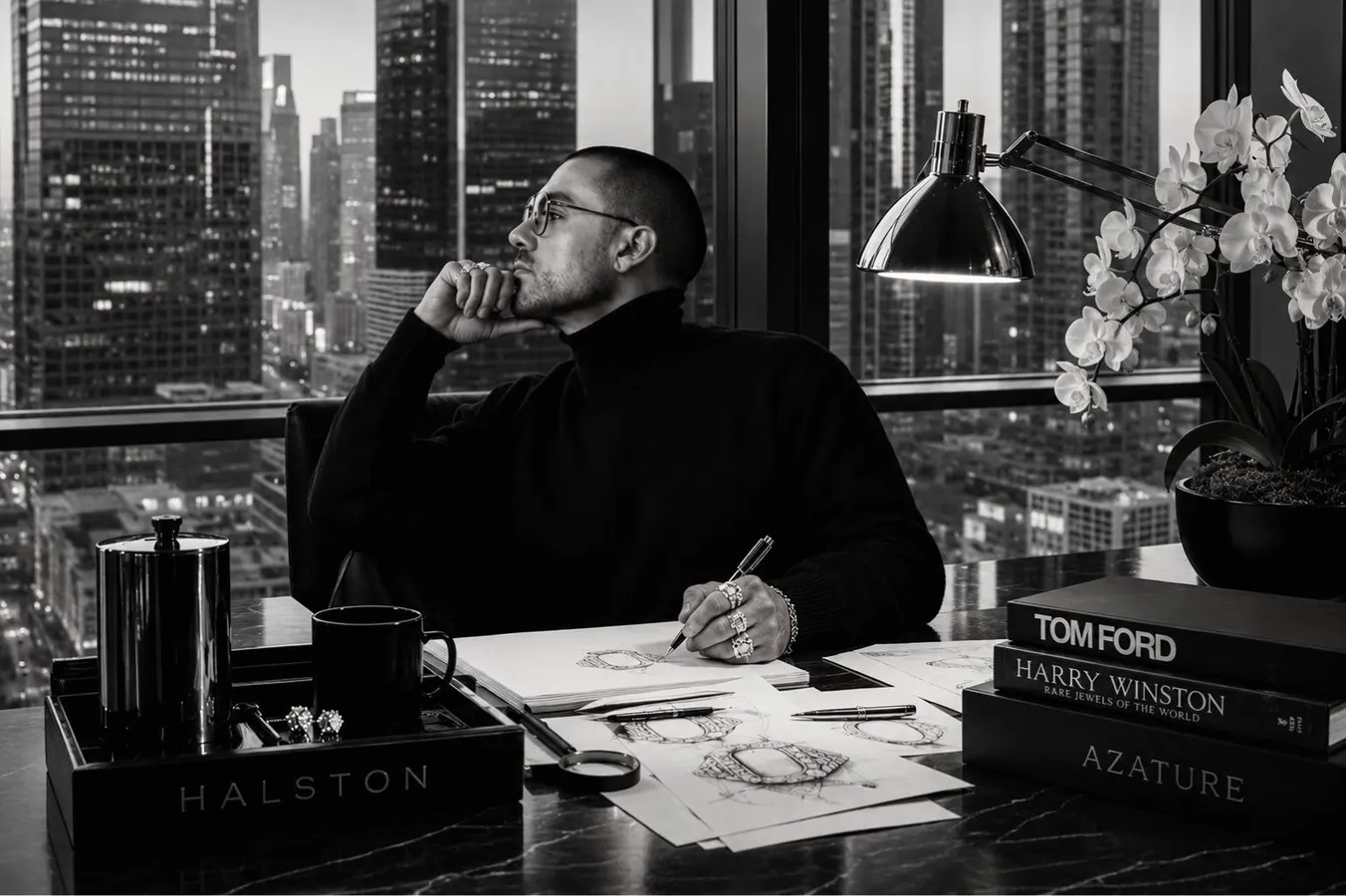
Azature collectionCourtesy of AzatureLuxury has always sold aspiration, but today, it increasingly sells accessibility. The world's largest jewelry houses compete as much through algorithms as they do via brick-n-mortar ateliers, courting customers with TikTok and Instagram drops, celebrity campaigns and AI-driven personalization. The U.S. jewelry market alone is on track to hit roughly $78 to $82 billion in 2025 and climb toward $114 billion by the early 2030s, according to multiple industry forecasts, while the global jewelry industry is projected to cross $400 billion in 2026 on its way past $580 billion by decade's end. Scarcity remains an important strategy for many luxury houses, but it is often carefully manufactured, making exclusivity just another marketing ploy. Beneath that pursuit of scale, though, a different kind of luxury businesses quietly thrive: those that run almost entirely on relationships instead of reach, on one-of-a-kind craftsmanship instead of speed, and on word of mouth instead of ad spend. Azature Pogosian, founder of Azature jewelry house based in Los Angeles.Courtesy of AzatureFor nearly twenty-five years, Los Angeles jeweler Azature Pogosian has built exactly that kind of company: Azature. Collectors know him as the "Black Diamond King," a nickname earned after he turned one of the industry's most overlooked gemstones into a successful product. BEVERLY HILLS, CALIFORNIA - MARCH 12: Cardi B attends the 2023 Vanity Fair Oscar Party, wearing jewelry by Azature, hosted By Radhika Jones at Wallis Annenberg Center for the Performing Arts on March 12, 2023 in Beverly Hills, California. (Photo by Lionel Hahn/Getty Images)Getty ImagesHis pieces have found their way onto some of the most photographed women and men on the planet: Sabrina Carpenter at W Magazine's Golden Globes party at Chateau Marmont this year, Zoe Saldana on the red carpet at the 56th NAACP Image Awards, Cardi B in black diamonds at the Vanity Fair Oscar party in 2023, and many more. None of those moments were the product of a paid placement deal. Almost all of them trace back to the same thing: someone who already owned a piece told someone else. "I always tell people I'm not in the business of selling jewelry," Pogosian told me over dinner recently. "I'm in the business of creating eternal heirlooms for people. It's almost like their legacy."LOS ANGELES, CALIFORNIA - JANUARY 04: Sabrina Carpenter attends W Magazine's Annual Best Performances Party, wearing jewelry by Azature, at Chateau Marmont on January 04, 2025 in Los Angeles, California. (Photo by Charley Gallay/Getty Images for W Magazine)Getty Images for W MagazineAn Accidental JewelerBefore UCLA, before Parsons School of Design, before he even had a driver’s license, he had already trademarked his own first name. "I had a trademark for Azature before I started driving," he says. "I didn't know what I was going to do with it. I had no clue, but I had a feeling”. Pogosian’s mother later told him that as a child he'd flip through magazines and point not at clothes, but at jewelry: "I'm going to buy you this when I grow up," he'd tell her. Fashion, not jewelry, was still his stated ambition when he graduated Parsons and took a creative-director job at a Malibu loungewear company dressed in the kind of bright blue palette that had nothing to do with the all-black wardrobe he'd worn his whole life. He lasted a few months, broke and unmoored.The pivot came, almost absurdly, on a car ride from Las Vegas back to Los Angeles with his uncle, after Pogosian had missed a job interview because he’d overslept following a New Year's Eve outing. When his uncle pressed him about his life’s goals, Azature said he wanted to be a famous designer. His uncle offered a deal instead of a pep-talk, $5,000 dollars, on the condition that Pogosian get into jewelry rather than fashion, reasoning that fashion required pattern-makers, factories and infrastructure Azature had no way to access. Jewelry, his uncle could actually help guide, as there was considerable family experience. That $5,000 became the company's entire founding capital.Betting On BlackFive thousand dollars does not go far in fine jewelry once you account for molds, packaging, a website and photography, certainly not far enough for white diamonds. Searching for an affordable alternative, Azature ran a simple search for black precious stones. Black diamonds came up. "I had interned with my uncle when I was younger, and nobody ever talked about black diamonds," said Pogosian. "I became infatuated by them."True natural black diamonds are a genuine geological rarity. Most black diamonds sold commercially today, however, are naturally occurring gray or brown stones that have been heat- or irradiation-treated to deepen their color, a legitimate, disclosed practice, but a different product from a natural fancy black or a carbonado.LONDON, ENGLAND - FEBRUARY 04: A member of the Sotheby's auction house team holds the "Enigma" black diamond on February 04, 2022 in London, England. The 55-sided, 555-carat 'Enigma' black diamond, said to be worth $7million, will go on sale at Sotheby's on February 9th with cryptocurrency being accepted as payment. This carbonado diamond is mined close to the earth's surface suggesting possible extraterrestrial origins, either from meteoric impacts or from diamond-bearing asteroids colliding with the Earth. (Photo by Leon Neal/Getty Images)Getty ImagesWhen Pogosian set one of his early pendants, a hexagon built around the number six, his lucky number since birth, with black diamonds. That pendant changed his career. After a small feature in Angelino magazine, it caught the eye of Rihanna's stylist at the time, Lisa Cooper, right as the singer was in her "Disturbia" era: dark, gothic, exactly the aesthetic Azature's designs matched. Rihanna started wearing, then collecting, his jewelry."That one piece became famous," he said. "That's how I became known as the Black Diamond King." He rejects any suggestion that the bet was calculated. "Everyone thought I had done market research," said Pogosian. "None of that. It was all instinct. I think the greatest lesson I've learned in business is that you have to remain true to your vision. I wasn't trying to compete with other brands. I was trying to create a lane of my own."The Power of Los AngelesLos Angeles, alongside New York, as one of the two metropolitan corridors where affluent consumer density overlaps with outsized celebrity and entertainment-industry concentration, an ecosystem that continues to shape how luxury jewelry demand gets discovered and validated internationally.WEST HOLLYWOOD, CA - OCTOBER 08: Television personality Kelly Osbourne attends The Black Diamond Affair with Azature at Sunset Tower on October 8, 2013 in West Hollywood, California. (Photo by Donato Sardella/WireImage)WireImagePogosian's own break illustrates the mechanism precisely. An almost offhand conversation with Kelly Osbourne's stylist at the Sunset Tower Hotel, pitching the idea that "beauty could be treated like fine jewelry" turned into a high-end black-diamond nail polish prototype that Osbourne wore on air. "I didn’t get a confirmation if she would wear it," Pogosian recalls. "Then Kelly goes on E! and talks about my nail polish, how it's a quarter of a million dollars, how she's scared to death to go to the bathroom." It went viral.. By his estimate, the moment generated billions of press impressions within 48 hours, and he built a $25 retail nail polish line, with a real black diamond in every bottle, off the back of one prototype bottle.Los Angeles arguably the most efficient word-of-mouth engine in American luxury, a city where a single dinner, a party, or a chance introduction can put a product in front of a global audience faster than any paid campaign. "My business grew strictly through word of mouth," he says. "The only way to find me is through work or through another client." He's skeptical that this kind of trust can be manufactured at scale, technology or not. "The world tells us about fast fashion, instant gratification, AI," he says. "But true luxury takes patience, integrity and uncompromising standards. You can't speed that up." Pogosian met one of his most important muses, a member of the Saudi royal family and his best friend's mother, at Rihanna's Halloween party. She became one of Pogosian’s loyal supporters and repeat customers.Azature Pogosian’s Favorite Places In Los AngelesPetite Hermitage, a popular boutique hotel in West Hollywood, frequented by the locals and celebrities alike.Courtesy of Petite HermitagePetit Ermitage is an intimate boutique hotel on a quiet residential street in West Hollywood. Its highlight is the private rooftop, reserved for hotel guests, with a saltwater pool, garden, cabanas, restaurant, and views of the Hollywood Hills. It feels more like a romantic, discreet private club than a traditional hotel, bohemian chic with a touch of Old Hollywood glamour.Little Beach House Malibu is an exclusive, members-only Soho House club located directly on the Pacific Ocean in Malibu. It is designed as a relaxed coastal retreat where people from creative industries can meet, dine, socialize, and unwind. The club features floor-to-ceiling windows, fireplaces, contemporary art, comfortable lounges, and oceanfront terraces with panoramic views. The Fountain Coffee Room is an intimate, 1950s-style diner tucked inside the iconic Beverly Hills Hotel. Open since 1949, it features a curved soda-fountain counter, 19 vintage bar stools, and the hotel’s signature banana-leaf wallpaper.The Tower Bar is an elegant restaurant and lounge inside the historic Art Deco Sunset Tower Hotel in West Hollywood. Its dark wood, gold accents, candlelit seating, fireplace, and piano create a glamorous yet discreet atmosphere. The restaurant serves refined California cuisine with European influences, accompanied by classic cocktails and sweeping views of Los Angeles. Redefining LuxuryIf there's one idea Pogosian returns to more than any other, it's that luxury has been wrongly equated with cost. "The media likes to make luxury about the biggest diamond or the biggest price tag," he says. "Truly, it's not that. Luxury is about craftsmanship, the time it takes to create something, and what that object means to you." He has turned down department-store distribution repeatedly over 25 years. "I always decline because I don't believe fine jewelry should be bought off the shelf. It's too personal."That philosophy is arriving at an interesting moment for the diamond trade itself. The broader diamond market has been reshaped over the past several years by the rapid mainstreaming of lab-grown stones: global lab-grown diamond production climbed from roughly 3 to 4 million carats in 2018 to more than 15 million carats by 2024, and lab-grown diamonds accounted for well over half of U.S. engagement ring sales by 2025, even as natural diamonds have clawed back share in the bridal category more recently. Natural diamond supply, meanwhile, hit its lowest level in 2025, with major miners like De Beers parent Anglo American actively cutting production guidance. Against that backdrop of commoditized, lab-made stones on one end and constrained natural supply on the other, rare colored and large natural diamonds, the carbonados and fancy blacks Azature has built a career around have held their value and prestige precisely because they cannot be manufactured to order. "This is a moment in your life that will outlast the way you look," Pogosian says of why he sees fine jewelry as categorically different from other luxury goods. "The piece becomes part of your family's story. It may go to your children or your grandchildren. You can't really put a price point on that."
How Azature Pogosian Bet On Anti-Scale Strategy And Won
By rejecting department stores, algorithms and mass production, Hollywood’s “Black Diamond King” built a 25-year luxury business purely on word of mouth.
1,867 words~8 min read