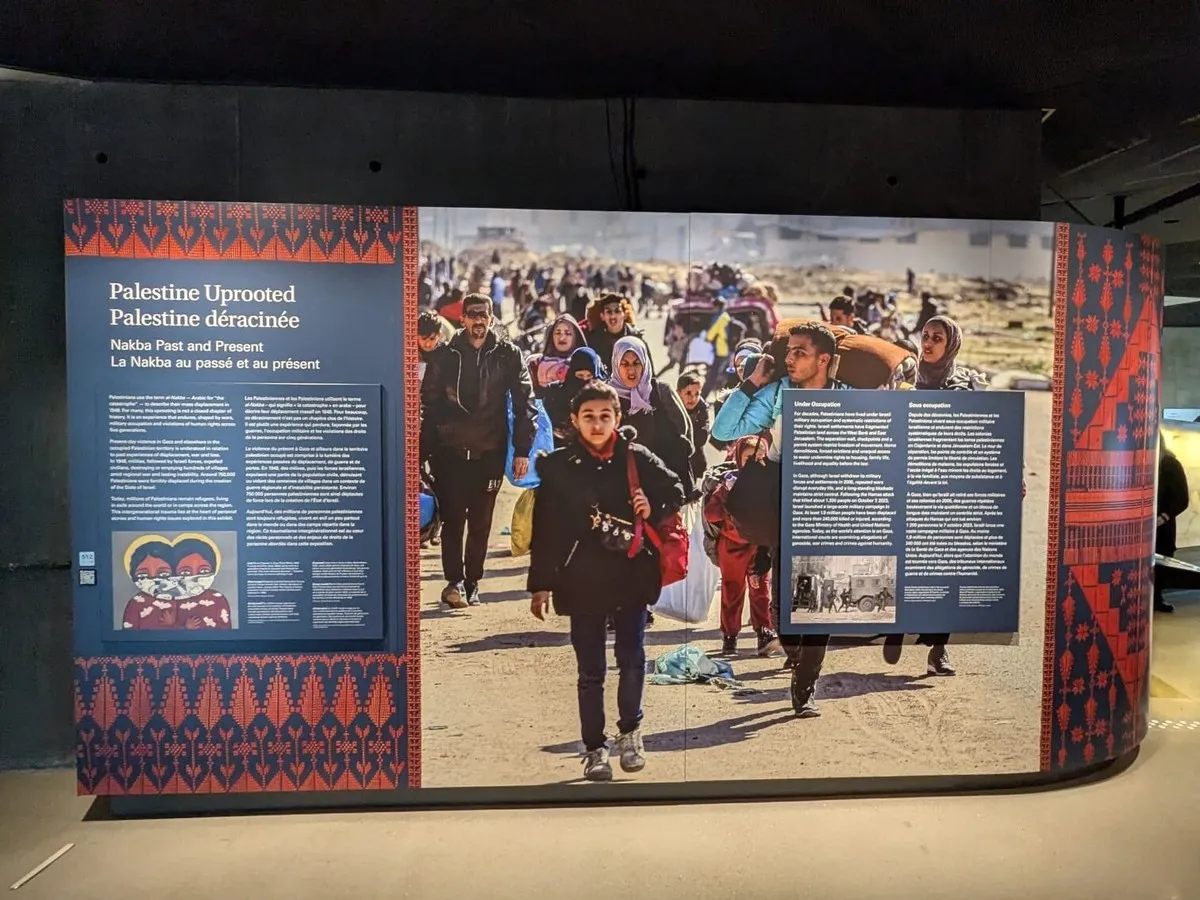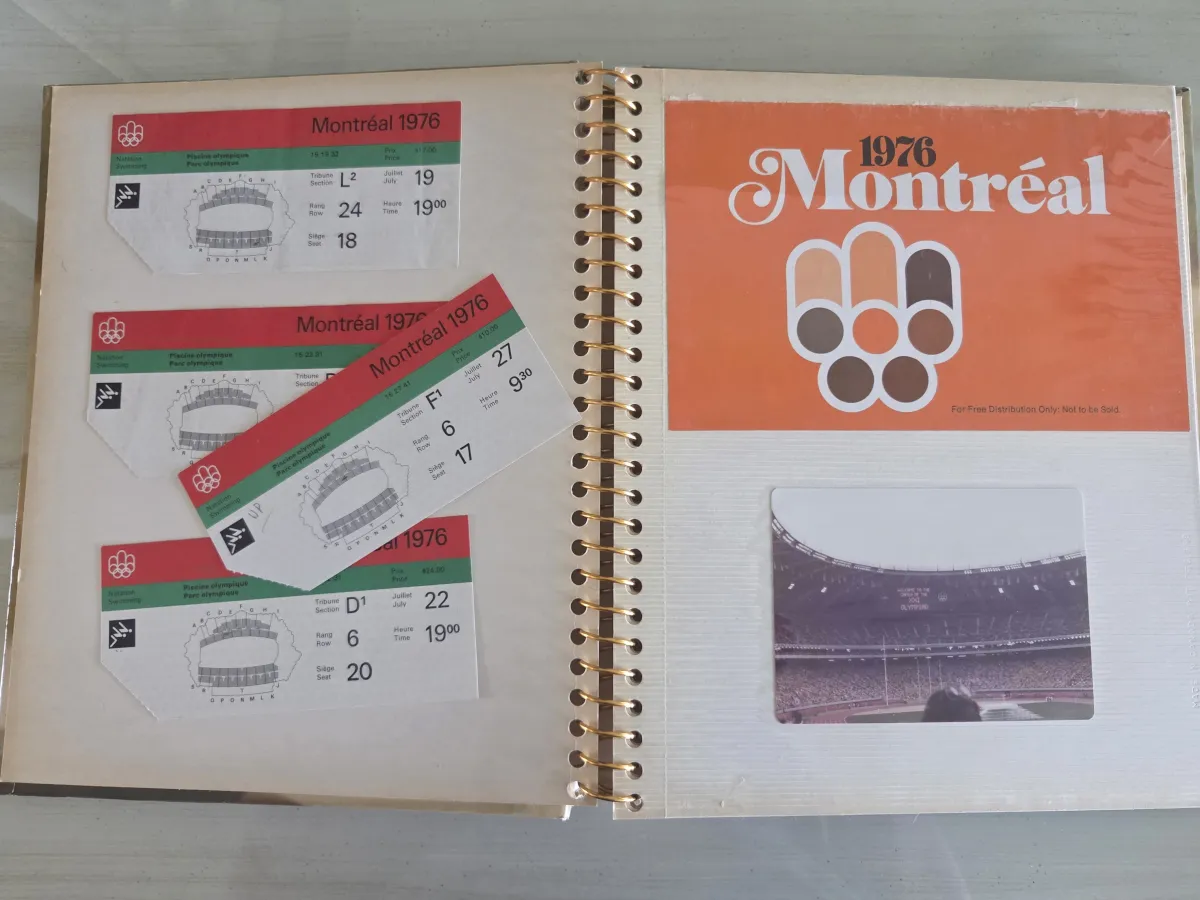
Skip to Content Subscribe Our Offers My Account Manage My Subscriptions FAQ Newsletters Canada Canadian True Crime Canadian Politics Health World Israel & Middle East Financial Post NP Comment Longreads Puzzmo Diversions Comics NP News Quiz New York Times Crossword Horoscopes Life Eating & Drinking Style Sponsored Play for Ontario Travel Travel Canada Travel USA Travel International Cruises Travel Essentials Culture Books Celebrity Movies Music Theatre Television Business Essentials Advice Lives Told Tails Told Shopping Buy Canadian Home Living Outdoor Living Kitchen & Dining Tech Style & Beauty Personal Care Entertainment & Hobbies Gift Guide Travel Guide Amazon Prime Day Deals Savings National Post Store More Sports Hockey Baseball Basketball Football Soccer Golf Tennis Driving Vehicle Research Reviews News Gear Guide Obituaries Place an Obituary Place an In Memoriam Classifieds Place an Ad Celebrations Working Business Ads Archives Healthing Epaper Manage Print Subscription Profile Settings My Subscriptions Saved Articles My Offers Newsletters Customer Service FAQ Newsletters Canada World Financial Post NP Comment Longreads Puzzmo Diversions Life Shopping Epaper Manage Print Subscription HomeNP CommentLynn Herzeg: The troubling trend of museums whitewashing Jewish historyAn exhibit on the Montreal Olympics left out key details about the Munich Massacre. Unfortunately, this was not an isolated incidentLast updated 12 minutes ago You can save this article by registering for free here. Or sign-in if you have an account.Pages from a scrapbook of memorabilia from the 1976 Montreal Olympics collected by author Lynn Herzeg. Photo by Courtesy Lynn HerzegThinking back to the summer of 1976 elicits a wave of memories that have nothing at all to do with reaching the adolescent milestone of making out with my first boyfriend. Rather, what I remember so nostalgically about that summer is the feeling of excitement as Montreal — my city! — hosted the Olympic Games.Enjoy the latest local, national and international news.Exclusive articles by Conrad Black, Barbara Kay and others. Plus, special edition NP Platformed and First Reading newsletters and virtual events.Unlimited online access to National Post.National Post ePaper, an electronic replica of the print edition to view on any device, share and comment on.Daily puzzles including the New York Times Crossword.Support local journalism.Enjoy the latest local, national and international news.Exclusive articles by Conrad Black, Barbara Kay and others. Plus, special edition NP Platformed and First Reading newsletters and virtual events.Unlimited online access to National Post.National Post ePaper, an electronic replica of the print edition to view on any device, share and comment on.Daily puzzles including the New York Times Crossword.Support local journalism.Create an account or sign in to continue with your reading experience.Access articles from across Canada with one account.Share your thoughts and join the conversation in the comments.Enjoy additional articles per month.Get email updates from your favourite authors.Create an account or sign in to continue with your reading experience.Access articles from across Canada with one accountShare your thoughts and join the conversation in the commentsEnjoy additional articles per monthGet email updates from your favourite authorsSign In or Create an AccountorThroughout the previous school year, lessons had been crafted around Olympics content. I still remember learning the Games’ motto, “Citius, Altius, Fortius.” which remains the extent of my knowledge of Latin. Fifty years later, I still have my official Olympic photo albums, in which I carefully arranged programs, ticket stubs and blurry Kodak Instamatic photos of the events I attended.It’s these memories that led me online to view the McCord Stewart Museum’s virtual exhibition commemorating the 50th anniversary of the Montreal Olympics, “Beyond the Games: Montreal’s Olympic Story.” Funded by Digital Museums Canada, which is managed by the Canadian Museum of History, a federal Crown corporation, this virtual exhibition is “designed for youth aged 12 to 17” and “offers a unique opportunity to pass down memories, stories and knowledge from one generation to the next.”The National Post newsletter that doesn’t hold back, giving readers the unvarnished truth on media, politics and culture.By signing up, you consent to receive the above newsletter from Postmedia Network Inc.A welcome email is on its way. If you don't see it, please check your junk folder.The next issue of Right? will soon be in your inbox.We encountered an issue signing you up. Please try againThe exhibition is a delightful trip down memory lane. For me, the highlight was an interview with a jovial senior, seated next to his oh-so-’70s polyester Olympics uniform on a mannequin, reminiscing about his unforgettable teenage experience working as a stadium host.The exhibition tells the Montreal Olympics story, warts and all, including the rampant corruption, skyrocketing costs, construction strikes and the mayor’s “Olympic clean-up campaign” that saw the arrest of some 200 gay Montrealers.Nor does it shy away from controversies related to foreign conflicts. Over a full page, it describes in intricate detail two political issues at the Games: that 32 countries, mostly African states, boycotted the Games due to the presence of New Zealand, whose rugby team had toured South Africa, which had been banned from the Olympics since 1964 because of apartheid; and that Canada, because it had officially recognized the People’s Republic of China, refused to allow Taiwan to compete under its usual name, Republic of China.But that degree of detail abruptly disappeared several pages later, when it came to the subject of security at the Games. The entire security operation was distilled into one vague sentence: “The tragedy that had occurred at the preceding 1972 Games in Munich led Montreal to implement extensive security measures; as a result, there were no incidents of violence.”No explanation of what that tragedy was: a Palestinian terrorist group called Black September murdered 11 members of the Israeli Olympic team.The online exhibition is an abridged version of the McCord’s onsite exhibition called, “Montreal 1976: An Olympic Feat,” which has been running since late March. In the museum version, the panel about security defines “the tragedy” to which the virtual version refers: “Munich 1972 marked Olympic history because of the terrorist attack that claimed the lives of 17 people and led to a 36-hour suspension of the Games.”No mention that 11 of those “people” were not random victims from random countries, but all Israelis, and that the only non-Israeli victim was a West German police officer. No specification that the remaining five people whose lives “were claimed” were not victims, but the terrorists themselves. This basic information appears in the first sentences of a Google search overview.In both the online and onsite exhibitions, given the intricate details about virtually all aspects of the Games, including the foreign politics, omitting the most essential facts of the 1972 Munich Massacre could not possibly have been an oversight. At best, it was incompetent curation. At worst, the museum was trying to pre-empt a backlash from anti-Israel activists, should it dare identify the perpetrators and the victims, lest Jewish victimhood undermine Palestinian victimhood, the cause du jour. Either way, it was a gold-medal performance in Jewish history erasure.Erasing modern Jewish history seems to be a trend of Olympic proportions these days. Even erasing ancient Jewish history. In his June article in the Free Press, Roy K. Altman — a U.S. federal judge, author and ancient history buff — provided several examples of artifacts at the British Museum whose descriptions strangely neglect to mention their major significance in connection with documenting the ancient Jewish presence in the Levant. Given that the anti-Israel propaganda machine has been cranking out the false narrative that Jews are not indigenous to the region, this matters.Closer to home, there is the “Palestine Uprooted: Nakba Past and Present” exhibit at the federally funded Canadian Museum for Human Rights. In an appalling example of activist-hijacked content, it presents a one-sided, it’s-all-the-Jews’-fault story of an unprovoked expulsion of 750,000 Palestinian Arabs in 1948 from the newly established State of Israel.The narrative on display is devoid of critical historical context, such as the fact that this displacement occurred as a direct result of a war started by the Arab countries that invaded Israel after rejecting the two-state solution proposed by the United Nations, which — also not mentioned — the Jewish leadership had accepted. Conveniently absent, also, is the fact that Jewish leaders publicly implored Palestinian Arabs to remain in Israel, promising them safety and full civil rights, as declared in the state’s Declaration of Independence, and which the Arab-Israeli population exercises to this day.My written complaint to the McCord two weeks ago went unanswered, so I tipped off a reporter and he emailed questions to museum administrators. Two days later, they finally replied to him, stating that they had just rectified the issue on the online exhibition. They said nothing about revising the panel at the onsite exhibition. Nor did they provide any explanation as to how and why this tragic event in Olympic and Jewish history had been whitewashed by the historians and curators behind these exhibitions in the first place.National Post Join the Conversation This website uses cookies to personalize your content (including ads), and allows us to analyze our traffic. Read more about cookies here. By continuing to use our site, you agree to our Terms of Use and Privacy Policy.
Lynn Herzeg: The troubling trend of museums whitewashing Jewish history
An exhibit on the Montreal Olympics left out key details about the Munich Massacre. Unfortunately, this was not an isolated incident
1,511 words~7 min read