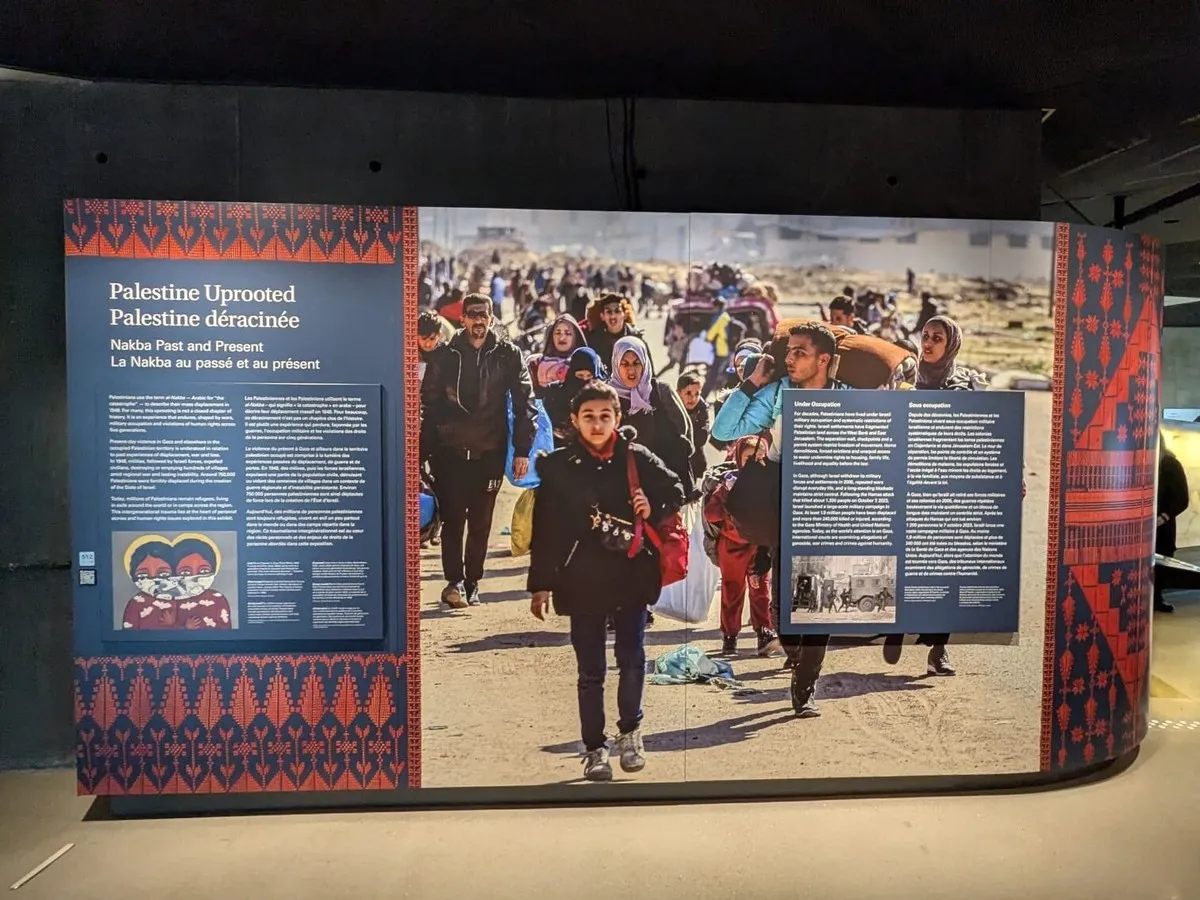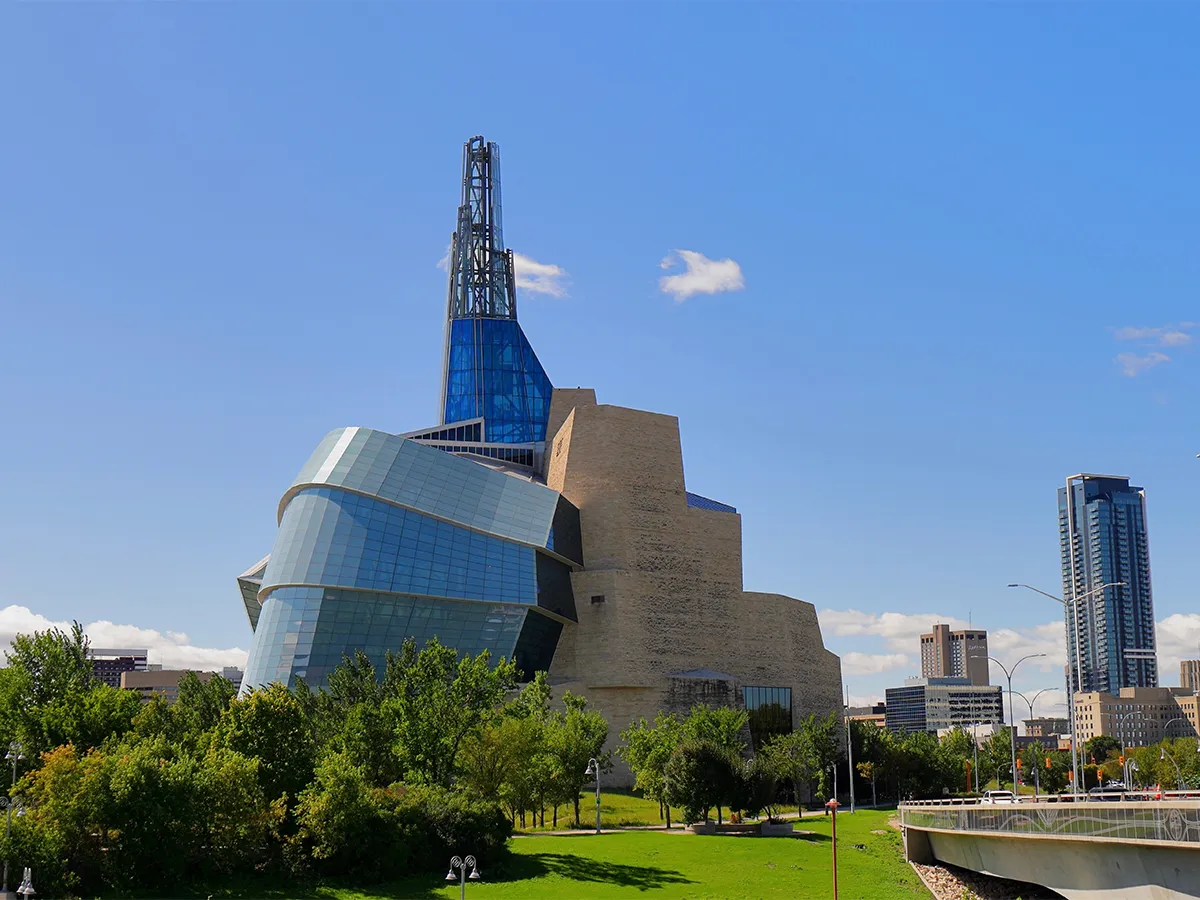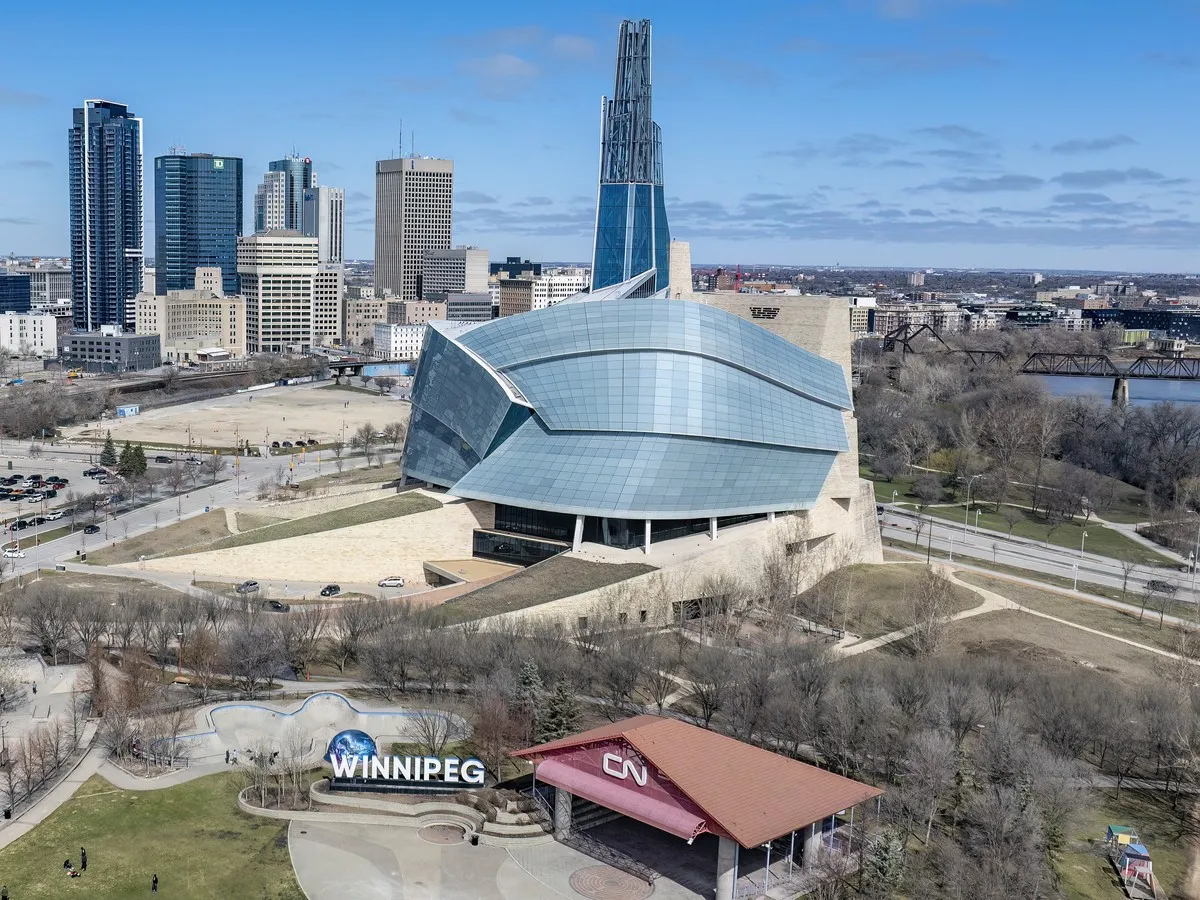
Skip to Content Subscribe Our Offers My Account Manage My Subscriptions FAQ Newsletters Canada Canadian True Crime Canadian Politics Health World Israel & Middle East Financial Post NP Comment Longreads Puzzmo Diversions Comics NP News Quiz New York Times Crossword Horoscopes Life Eating & Drinking Style Sponsored Play for Ontario Travel Travel Canada Travel USA Travel International Cruises Travel Essentials Culture Books Celebrity Movies Music Theatre Television Business Essentials Advice Lives Told Tails Told Shopping Buy Canadian Home Living Outdoor Living Kitchen & Dining Tech Style & Beauty Personal Care Entertainment & Hobbies Gift Guide Travel Guide Amazon Prime Day Deals Savings National Post Store More Sports Hockey Baseball Basketball Football Soccer Golf Tennis Driving Vehicle Research Reviews News Gear Guide Obituaries Place an Obituary Place an In Memoriam Classifieds Place an Ad Celebrations Working Business Ads Archives Healthing Epaper Manage Print Subscription Profile Settings My Subscriptions Saved Articles My Offers Newsletters Customer Service FAQ Newsletters Canada World Financial Post NP Comment Longreads Puzzmo Diversions Life Shopping Epaper Manage Print Subscription HomeNP CommentAdam Katz: The 'Nakba' exhibit's contempt for history is worse than you thinkThe Canadian Museum of Human Rights left out the entire context of the 1948 Arab-Israeli warLast updated 1 week ago You can save this article by registering for free here. Or sign-in if you have an account.The Canadian Museum for Human Rights in Winnipeg. Photo by Adobe StockWINNIPEG — Rather than telling the story of the Arab refugee crisis as a tragic consequence of a complex war, the new “Palestine Uprooted: Nakba Past and Present” exhibit at the Canadian Museum for Human Rights presents it as an unprovoked expulsion, encouraging visitors to view Palestinian displacement as the product of Israeli intent alone. Enjoy the latest local, national and international news.Exclusive articles by Conrad Black, Barbara Kay and others. Plus, special edition NP Platformed and First Reading newsletters and virtual events.Unlimited online access to National Post.National Post ePaper, an electronic replica of the print edition to view on any device, share and comment on.Daily puzzles including the New York Times Crossword.Support local journalism.Enjoy the latest local, national and international news.Exclusive articles by Conrad Black, Barbara Kay and others. Plus, special edition NP Platformed and First Reading newsletters and virtual events.Unlimited online access to National Post.National Post ePaper, an electronic replica of the print edition to view on any device, share and comment on.Daily puzzles including the New York Times Crossword.Support local journalism.Create an account or sign in to continue with your reading experience.Access articles from across Canada with one account.Share your thoughts and join the conversation in the comments.Enjoy additional articles per month.Get email updates from your favourite authors.Create an account or sign in to continue with your reading experience.Access articles from across Canada with one accountShare your thoughts and join the conversation in the commentsEnjoy additional articles per monthGet email updates from your favourite authorsSign In or Create an AccountorThe term “Nakba,” meaning “catastrophe,” once referred to Israel’s victory over the five Arab nations that invaded it in 1948; now, at the Canadian Museum for Human Rights and beyond, it’s used to refer to the Arab Palestinian interpretation of 1948 war history, which focuses almost exclusively on what the Jews did to Arabs.The museum’s omission-ridden narrative paints an incomplete picture, leading visitors to make faulty assumptions about both the 1948 and the current Israel-Hamas war — assumptions that have alarmingly led to a rise in support for targeted violence.The National Post newsletter that doesn’t hold back, giving readers the unvarnished truth on media, politics and culture.By signing up, you consent to receive the above newsletter from Postmedia Network Inc.A welcome email is on its way. If you don't see it, please check your junk folder.The next issue of Right? will soon be in your inbox.We encountered an issue signing you up. Please try againThe first assumption encouraged by the museum is that there was never an off-ramp in the lead-up to the 1948 conflict. One of the exhibit’s panels reads, “In 1948, militias followed by Israeli forces expelled civilians, destroying or emptying hundreds of villages amid regional war and lasting instability.” By emphasizing a linear progression from seemingly unprompted Zionist aggression to Palestinian displacement while overlooking rejected alternatives or internal Palestinian political divisions, the exhibit suggests that war was inevitable.Yet Palestinian Arab society during the British Mandate was anything but politically uniform. It contained competing visions of leadership, strategy, and coexistence that were far more complex than the distortionary colonizer-versus-colonized framing of the Nakba exhibit.Those visions unfolded against rapidly changing events on the ground. From the 1890s to the 1920s and 1930s, Jewish immigration and economic transformation brought change to Mandatory Palestine, a protectorate that the international community entrusted to Britain to establish a Jewish homeland after the fall of the previous Turkish imperial authority in the First World War. At the same time, waves of anti-Jewish violence devastated the territory.This culminated in the Arab Revolt of 1936 to 1939, where thousands of Arabs refused to work, implemented a boycott of all Jewish products, and attacked Jewish communities and British soldiers. The British ultimately appeased the Arab street by severely limiting Jewish immigration during the Holocaust. Under the leadership of the supreme Arab religious and political leader in Jerusalem, Grand Mufti Amin al-Husseini, a movement against Jewish national aspirations dominated Palestinian Arab politics, marginalizing and assassinating rivals who favoured more pragmatic approaches to coexistence. Husseini literally became a Nazi collaborator and war criminal. His influence did not end with the Second World War. He eventually became a mentor to the young Yasser Arafat — another pivotal leader in the Palestinian National movement entirely absent from the exhibit — who later described Husseini as “our hero,” said he took “immense pride” in being his student, and declared that the Palestine Liberation Organization (now the government in the West Bank) was “continuing the path” Husseini had established.That struggle over Palestinian leadership shaped the decisions that followed. The 1947 United Nations Partition Plan offered both Jews and Palestinian Arabs states of their own. Jewish leaders accepted it despite painful compromises. Arab leaders rejected it and chose war instead. The future that emerged in 1948 was therefore not the only one available. It was the product of political choices between compromise and confrontation.The next assumption encouraged by the museum is that the Nakba is an “ongoing” process. It portrays Palestinian displacement as a continuous consequence of Israeli policy, along with the plight of Palestine Arab refugees, kept in squalid camps all over the Arab world, barred from resettling as citizens of the very countries that had claimed to have gone to war on their behalf, not because those countries didn’t want them or chose to use them as symbolic weapons of guilt, but because the Jews of Israel wanted them to suffer or didn’t care. A panel in the exhibit states, “Families expelled in 1948 carried keys to homes they believed they would soon return to. These keys have become symbols of the struggle for Palestinian rights.” No mention is given to all the rights that can’t be exercised in Jordan, Syria, Lebanon, and Egypt by the hundreds of thousands of resident Palestinians living there as refugees, barred from buying property, having certain jobs, or moving freely throughout the region. By casting Israel as the sole entity responsible for the living conditions of Palestinian refugees elsewhere in the region, the museum supports the longstanding position of many Arab states that has left Palestinians with key decisions about their future made for them by others: that the solution lies with Israel reversing the outcome of the 1948 war that caused it all by ceasing to exist and dissolving itself.The museum also fails to mention the many instances where Palestinian refugees have been used as an anti-Israel strategy. Throughout the 1948 war, for example, Arab leaders encouraged civilians to leave temporarily in anticipation of military victory. Instead, Israel survived, and hundreds of thousands of Palestinians became refugees. The United Nations Relief and Works Agency (UNRWA), established in 1949, institutionalized hereditary refugee status across generations. Jordan disengaged from the West Bank in 1988, leaving many Palestinians without citizenship while reinforcing a distinct Palestinian political identity. Many Arab governments refused to permanently resettle or normalize Palestinian refugees to signal their rejection of Israel’s legitimacy.Palestinian displacement is not just a legacy of a war Israelis didn’t want, but a product of decades of political decisions that tied Palestinian aspirations to reversing Israel’s victory in 1948. By omitting those decisions in its telling of the history, the Canadian Museum for Human Rights, and by extension, the government, moves from empathizing with Arab suffering to accusing Israel of causing a problem many others helped create.The final assumption encouraged by the museum is that the “Nakba,” by itself, explains the Israeli-Arab-Palestinian conflict and everything that followed. It cannot. It emerged from the collision of two national movements whose histories had become inseparable by 1948. Remove Jewish history from that story, and it no longer makes sense. As the exhibit currently stands, visitors never encounter the broader context of 1948: the repeated appeals by prominent Zionist leaders and Israeli institutions urging Arab civilians to remain, the Declaration of Independence’s invitation for Arab residents to participate as equal citizens, or the Arab siege that sought to starve the residents of Jerusalem. Visitors learn nothing of the postwar offers at Lausanne in 1949 to permit the return of substantial numbers of refugees as part of a broader peace settlement, the complete ethnic cleansing of ancient Jewish communities numbered in the hundreds of thousands across the Arab world, or the many Arab villages that remained untouched because they did not take part in the fighting. Nor do they see the decades of international recognition affirming the Jewish people’s right to re-establish their national home.In the exhibit’s vacuum, it almost seems natural to view Zionism as a kind of colonialism, Israeli security as aggression, and Jewish historical memory as little more than an excuse.The “Nakba” is both a Palestinian memory and an Israeli memory of the same year, experienced through different lenses. The problem with the museum’s Nakba exhibit is therefore not just what it leaves out; it is what those omissions teach visitors to believe. By removing Palestinian agency, regional responsibility, and competing historical experiences, it reconstructs an inaccurate and antagonistic past.National PostAdam Katz is a political science and history student at the University of Manitoba. Join the Conversation This website uses cookies to personalize your content (including ads), and allows us to analyze our traffic. Read more about cookies here. By continuing to use our site, you agree to our Terms of Use and Privacy Policy.
Adam Katz: The 'Nakba' exhibit's contempt for history is worse than you think
The Canadian Museum of Human Rights left out the entire context of the 1948 Arab-Israeli war
1,775 words~8 min read