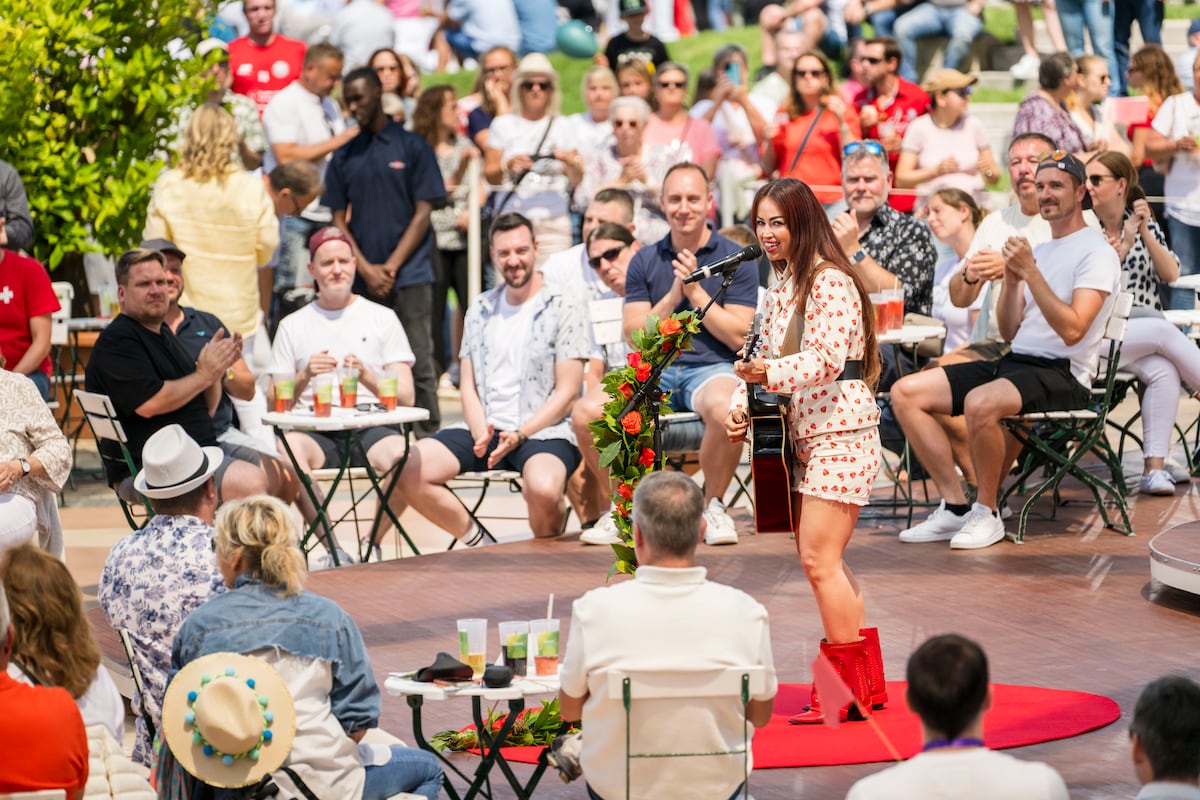
Outside of Germany, the virtues of ‘Schlager music’ are barely known and appreciated. Admittedly, the label ‘virtues’ is contestable. This style of German music, whose roots go back as far as the late 19th century, is characterised by catchy instrumentals with easygoing and usually sentimental lyrics. It serves as the country’s musical equivalent of Marmite: Germans seem to either love it or hate it.
I fell in love with Schlager after encountering it at German beer festivals and dive bars during a long-range Camino pilgrimage that took me through Germany, France and Spain. The Pet Shop Boys are fans too (see their 2024 hit, ‘The Schlager Hit Parade’).
The music is cheesy but, set against the cynical blandness of modern pop music, it’s a welcome tonic. So much of the Anglo-US musical scene – which is what most people in the UK are exposed to these days – is depressing, not to mention awful for the messaging it sends, especially to younger demographics. Schlager sticks to putting a positive spin on love and romance. It’s hard to see how we don’t need more of that at the moment.
Then again, for a country that gave us Johann Sebastian Bach, Schlager and its modern musical derivatives (Schlager peaked in popularity in the 1960s before its revival this century) might seem a bit of a setback: