For years, organisations have approached women’s leadership development with good intentions. Leadership programs, mentoring initiatives, networking forums, and diversity targets have all aimed to improve representation at senior levels. Yet, despite these efforts, progress has remained slower than expected.Gender Equality. (Getty Images/iStockphoto)The reason is becoming increasingly clear. The challenge is no longer about preparing women to succeed within existing leadership systems. It is about redesigning those systems themselves.India does not have a shortage of talented women leaders. Business schools, professional programs, and corporate talent pipelines are producing highly capable women across industries. In fact, women now occupy more than a third of senior management roles in Indian mid-sized businesses. The issue lies elsewhere. Leadership pipelines continue to reward uninterrupted career progression, linear functional growth, and traditional definitions of leadership success. These models often overlook the varied career journeys that many women navigate.This is why women’s leadership should no longer be viewed as a diversity initiative. It is a strategic business capability that directly influences organisational resilience, succession strength, and long-term competitiveness.The conversation in boardrooms must move beyond representation. Having women in leadership positions is important, but representation alone does not create stronger organisations. What matters is whether companies are systematically building a robust pipeline of women leaders capable of steering the business through uncertainty, disruption, and growth.Research consistently shows that organisations with gender-diverse leadership teams benefit from broader perspectives, better decision-making, stronger governance, and improved financial performance. More importantly, they build leadership teams that are better equipped to understand changing markets, evolving customer expectations, and increasingly diverse workforces. Developing women leaders, therefore, is not an exercise in compliance or corporate responsibility. It is an investment in organisational capability.Capability cannot be built through leadership workshops alone. One of the biggest gaps in today's leadership pipeline is that women often excel in functional leadership roles but receive limited opportunities to build enterprise-wide experience. Many successfully lead finance, technology, human resources, or operations functions, yet relatively few are given early responsibility for running business units, managing profit and loss accounts, shaping corporate strategy, or participating in governance discussions. These experiences are precisely what prepare future CEOs and board members.Organisations need to identify high-potential women much earlier in their careers and deliberately create opportunities that broaden their exposure beyond functional excellence. Rotational assignments, strategic business projects, P&L ownership, cross-functional leadership roles, and board-level interactions should become integral parts of leadership development rather than opportunities reserved for a select few. Board-ready leaders are developed over many years; they rarely emerge when a vacancy suddenly appears.Equally important is the shift from mentorship to sponsorship. Mentors provide valuable guidance, but sponsors actively create opportunities. They recommend talent for challenging assignments, advocate during succession discussions, and put their own credibility behind future leaders. While many organisations encourage mentoring relationships, sponsorship often remains informal and dependent on individual goodwill.That needs to change.Every CXO should be accountable for actively sponsoring future women leaders as part of their leadership responsibility. Sponsorship should become a measurable leadership outcome, discussed alongside business performance, talent development, and succession planning. Leaders should be expected to identify, develop, and advocate for high-potential women who can eventually take on enterprise leadership roles. When sponsorship becomes intentional rather than incidental, leadership pipelines become significantly stronger.Ultimately, this conversation is not about creating opportunities for one section of the workforce. It is about creating organisations that are better prepared for the future.Businesses today operate in an environment defined by rapid technological change, evolving customer expectations, and constant disruption. Organisations cannot afford leadership pipelines that unintentionally exclude capable talent because they were designed for a different era. Redesigning leadership systems to recognise diverse career journeys, expand developmental opportunities, and institutionalize sponsorship creates stronger succession benches, improves decision-making, and builds organisations that are more resilient.The question is no longer whether India has enough talented women to lead.The real question is whether organisations are willing to redesign leadership pathways that allow that talent to reach the top. Those that do will not simply become more diverse. They will become stronger, more future-ready businesses.(The views expressed are personal)This article is authored by Pravasi Bhushan, director, Academics, WILL.
Why building women leaders is a business imperative
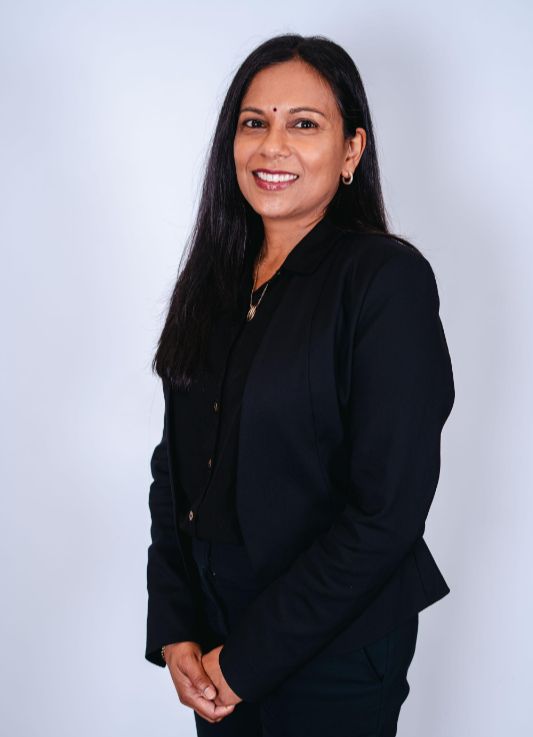
This article is authored by Pravasi Bhushan, director, Academics, WILL.
683 words~3 min read