Moon Ki-hoon
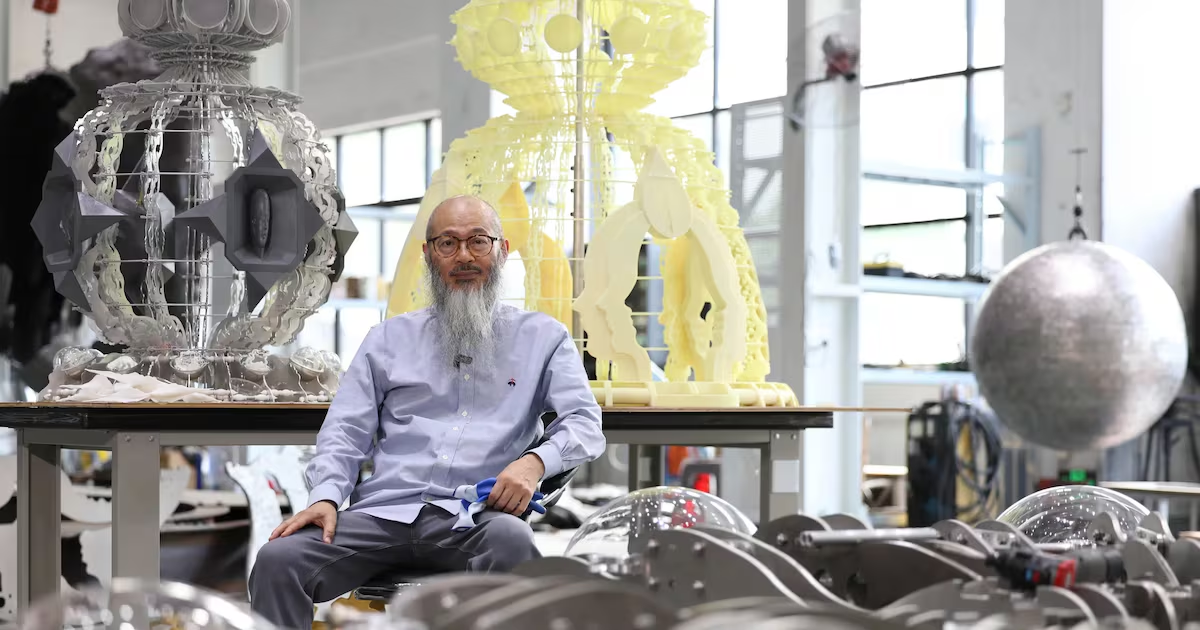
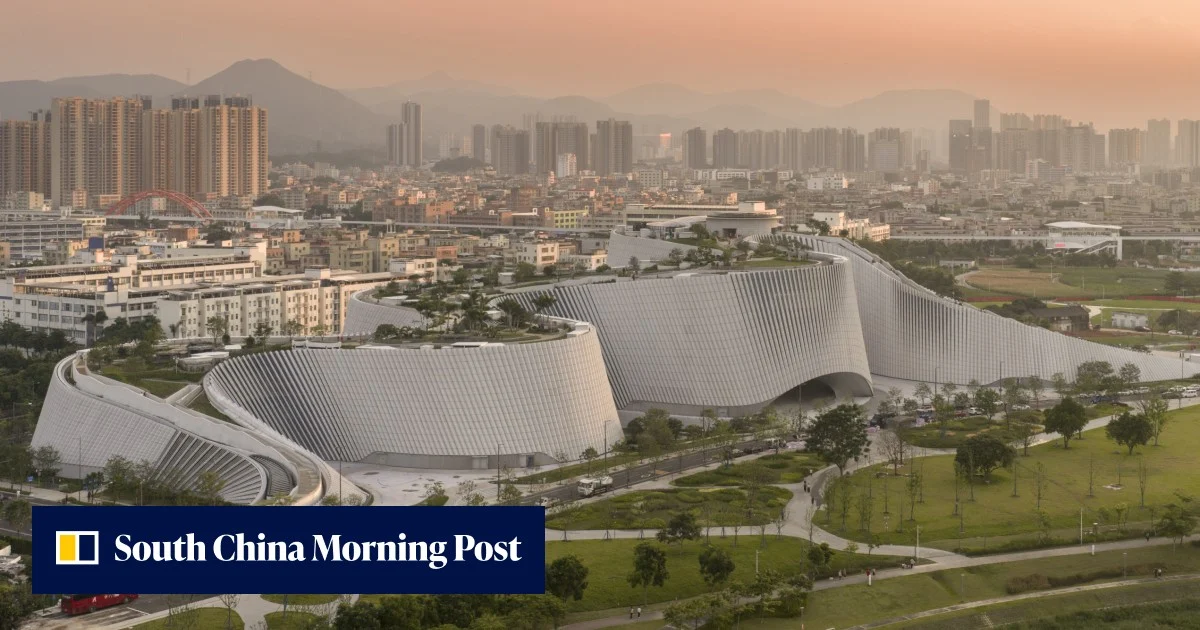
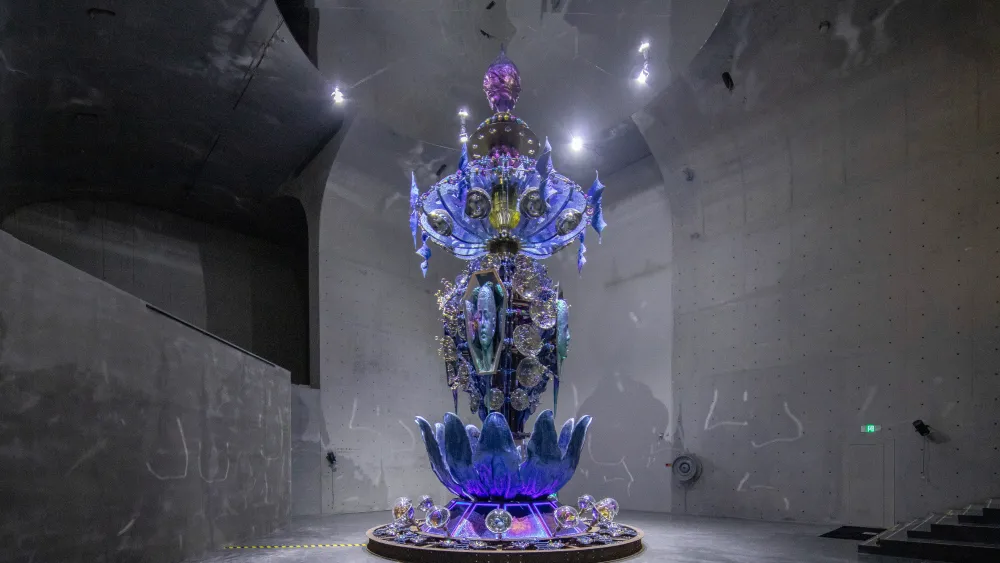
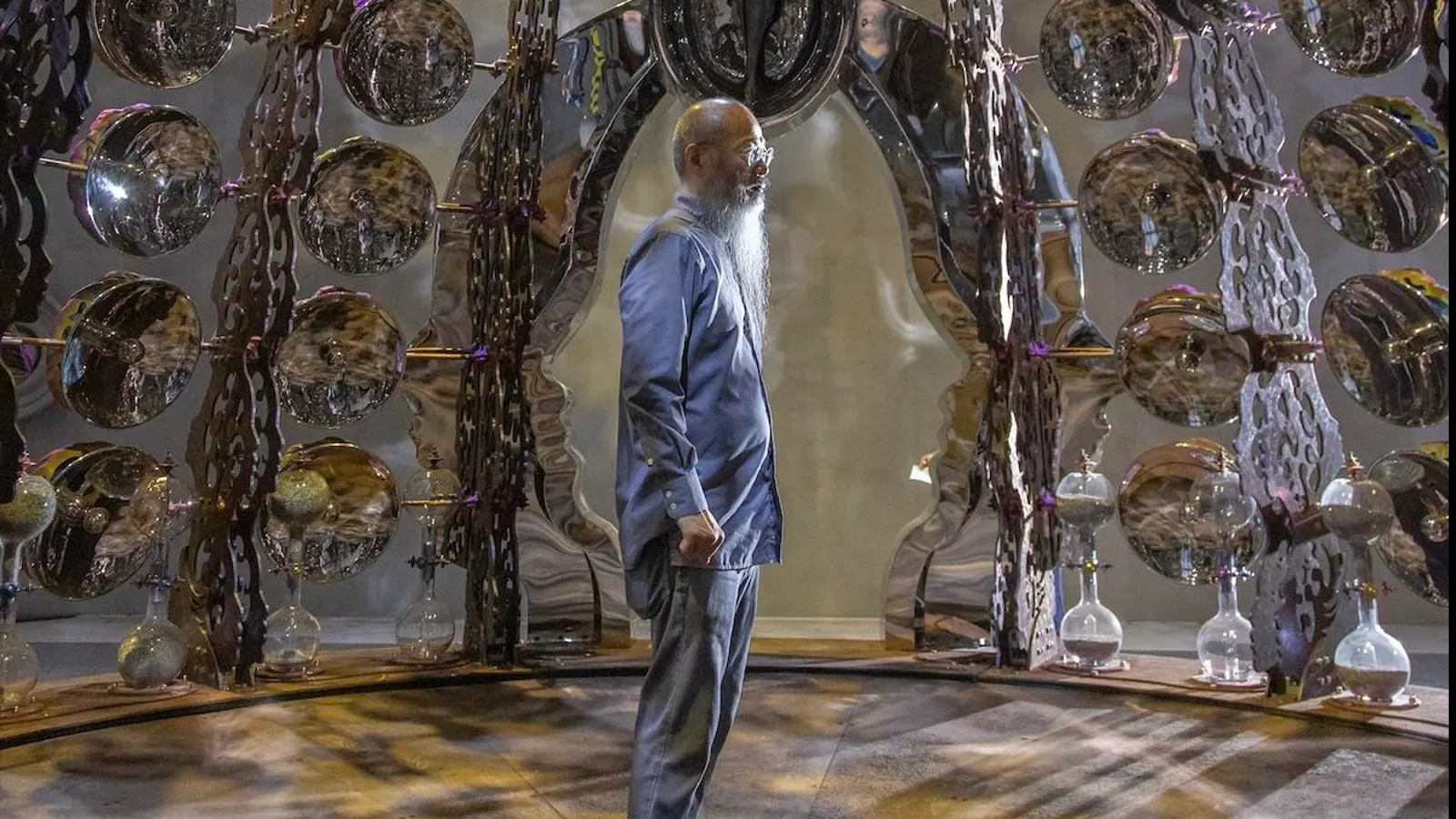
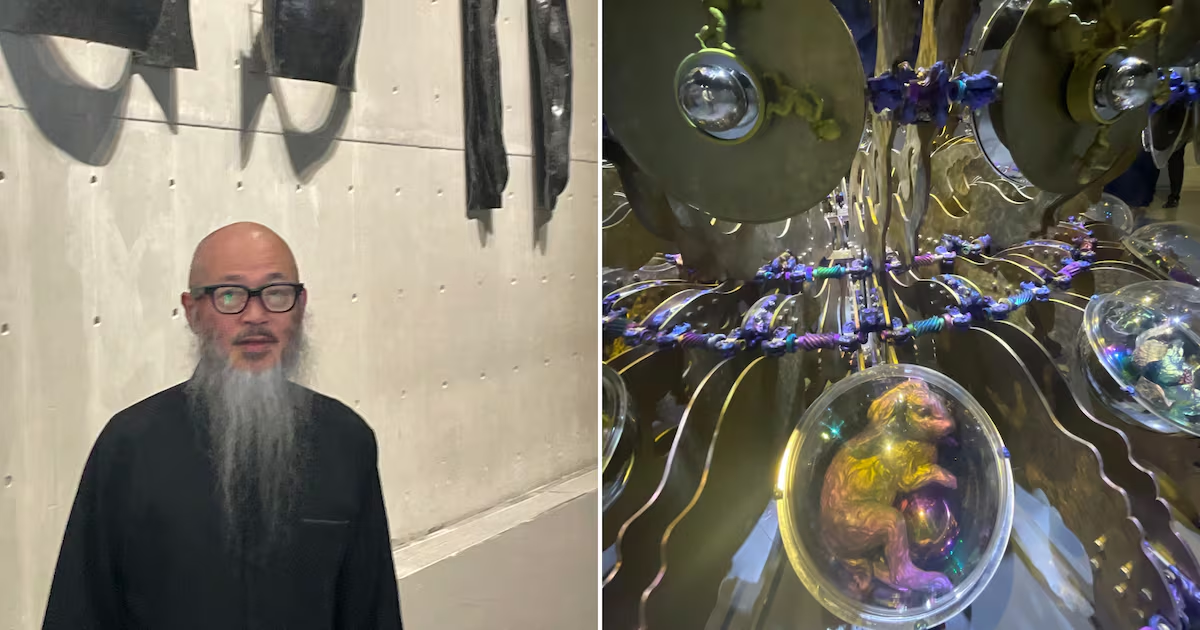
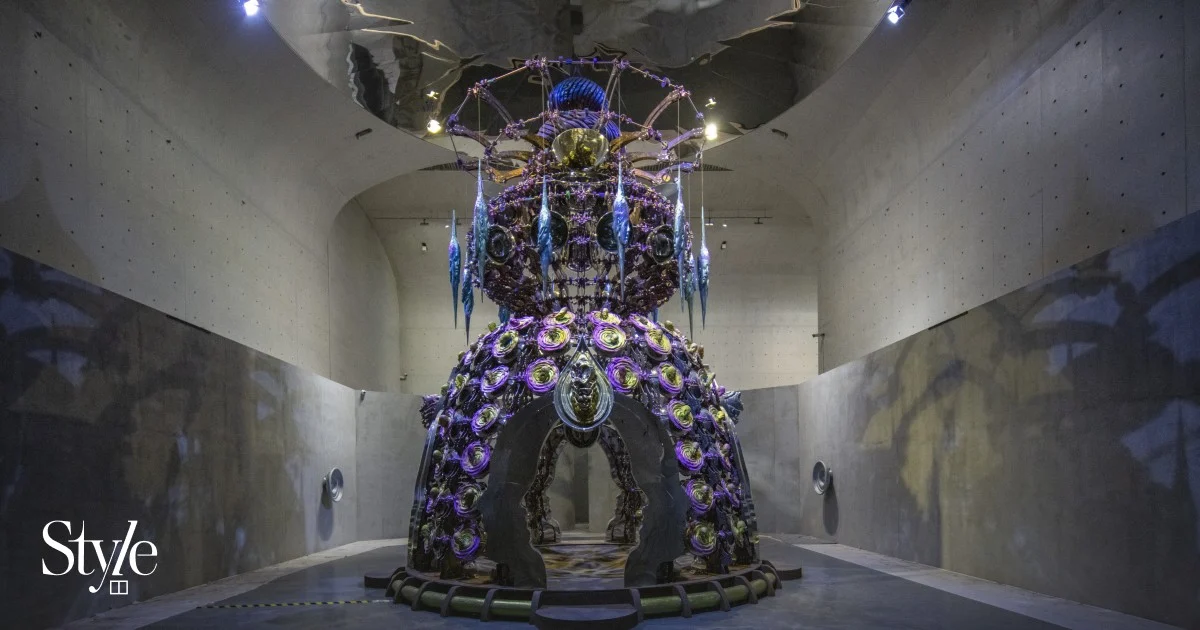
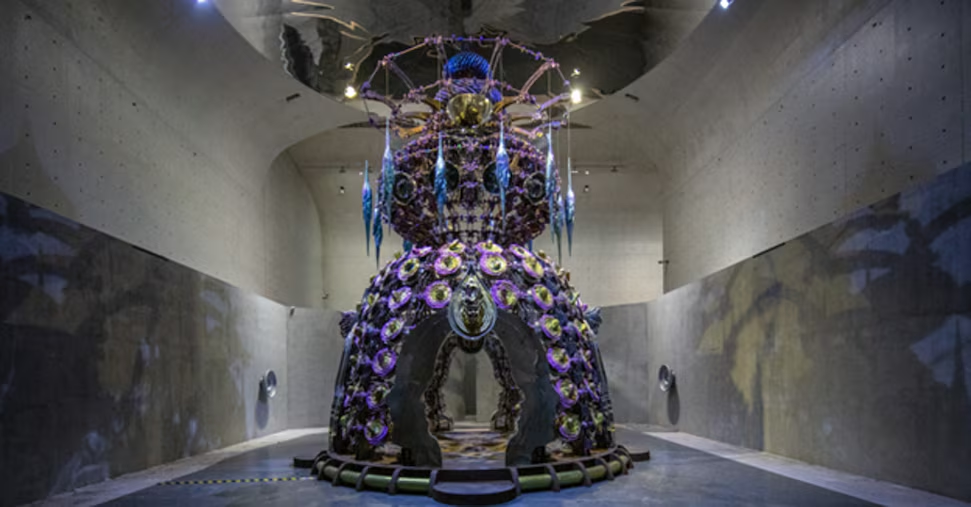
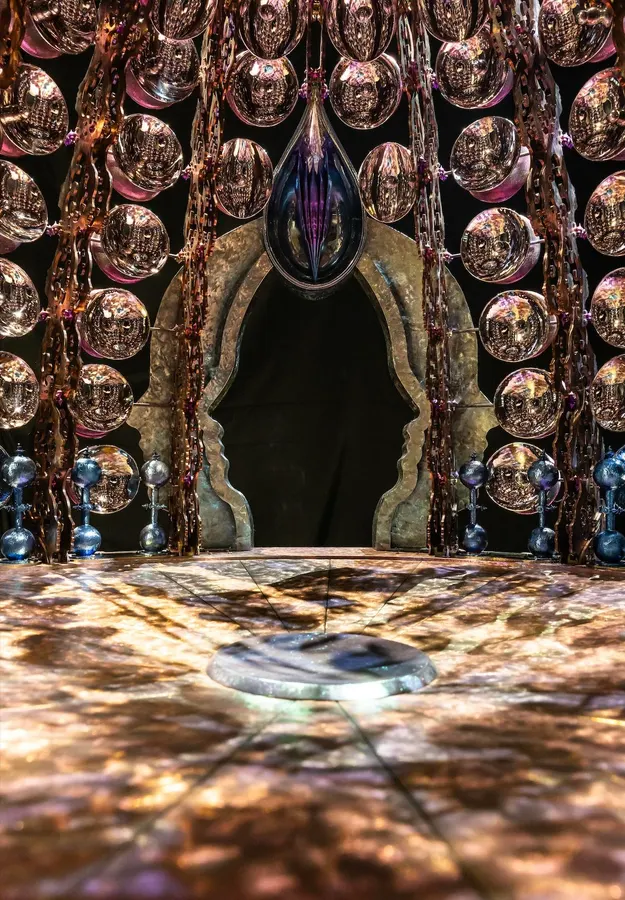
Hong Kong artist stages the most ambitious exhibition of his career at the Long Museum West Bund Wallace Chan at Long Museum West Bund in Shanghai (JJYPHOTO/Wallace Chan) Korea Herald correspondentSHANGHAI — The man at the center of the Long Museum's vast concrete halls seems, at first glance, an unlikely author for them.Slight and soft-spoken, with a long white beard that gives him the air of a Taoist sage rather than a maker of monuments, Wallace Chan stood before some 50 reporters at the opening of "Vessels of Other Worlds" and stopped mid-speech to collect himself, overcome in a way his staff said no one had seen before.At 70, with the largest exhibition of his life unfolding behind him, the composure that carried him from a childhood of poverty to the summit of two art worlds briefly gave way."Vessels of Other Worlds," which opened to the public on July 18 and runs through Oct. 25, is the second chapter of a dual-site project that began in May at Venice's Chapel of Santa Maria della Pieta, timed to the 61st Venice Biennale. In Shanghai it consumes the entire Long Museum West Bund, an expanse of raw concrete designed by Atelier Deshaus on the site of a former coal wharf along the Huangpu River. Five years in the making, the show gathers Chan's three previous Biennale projects, a new trio of colossal titanium vessels and, at the end, the jewelry that made his name. Long Museum West Bund in Shanghai, where "Wallace Chan: Vessels of Other Worlds" is on view (Long Museum) The two venues could hardly be less alike, and that contrast is by design. "The Pieta Chapel in Venice is charged with sacred and historical associations, while the Long Museum in Shanghai operates within a contemporary institutional framework," said curator James Putnam, who has worked with Chan on six projects since 2021. The Venice installation emphasizes ritual and historical continuity, he said, while Shanghai "relates more to urban growth, modernity, industrial-modern sensibility, progress and looking towards the future."Indeed, the museum's bare vaults and unfinished surfaces carry an industrial austerity bordering on the sepulchral, and the exhibition announces itself by embracing that severity rather than taming it. The route begins in dim, zigzagging passages modeled on the winding paths of a traditional Chinese garden, past dismantled sculptural fragments suspended in the gloom like relics at an excavation site. Installation view of "Wallace Chan: Vessels of Other Worlds" at Long Museum West Bund in Shanghai (JJYPHOTO/Wallace Chan) Works from Chan's earlier Biennale outings appear along the way: the wall-mounted titanium reliefs of "Titans," shown at Venice's Fondaco Marcello in 2021; the totemic forms of "Totem," which followed there in 2022; and pieces from "Transcendence," the 2024 exhibition at the same Pieta Chapel now hosting the Venice half of this show.These are somber things: heads the color of wet concrete rising, eyes closed, from fields of rusted steel; faces tapering into droplet points, as if caught mid-melt; sense organs enlarged to unsettling scale. The whole first half holds to this palette of gunmetal, rust and shadow, a hush that reads, in hindsight, like the patience of an artist still learning what metal could carry. Wallace Chan's "Transcendence" on view at Long Museum West Bund in Shanghai (JJYPHOTO/Wallace Chan) The walk doubles as a compressed history of Chan's migration from the jewelry bench to the museum floor, and it doesn't take long to grasp what all the restraint has been holding back. When the corridors give way, the vessels appear one by one, each towering in a hall of its own, and the register flips from monochrome austerity to something closer to delirium."Birth," "Growth" and "Rebirth" rise seven, eight and 10 meters, less sculptures than inhabitable structures. They are the exhibition's reason for being, restagings of the modest-sized works shown in Venice enlarged past anything the chapel could hold. Their forms were inspired by the Olea Sancta, the sacred oils used in Catholic rituals, each carrying a governing hue: birth in yellow, growth in red, rebirth in blue. Wallace Chan's "Birth" on view at Long Museum West Bund in Shanghai (JJYPHOTO/Wallace Chan) Up close, the surfaces teem with a motley inventory of parts. Serene faces sit in mirrored casings beside clock discs with warping numerals; zodiac creatures, a scorpion among them, hang sealed in transparent spheres; babies appear mid-stride among the components as mirrored discs and gears throw off light in violet, gold and blue. Each vessel, Chan said, is built from more than 5,500 titanium components and over 22,000 screws, some of the metal salvaged, by Putnam's account, from China's aerospace industry.The effect is overwhelming, and not always comfortably so. The vessels read as organisms, reliquaries and machines all at once, their distorted faces hovering between the beatific and the grotesque; one might think of a carnival float built for another planet. Viewers accustomed to the cool minimalism of much contemporary sculpture may find the density a lot to take in. Chan, for his part, sees that friction as the point. A detail of Wallace Chan's "Rebirth" at Long Museum West Bund in Shanghai (JJYPHOTO/Wallace Chan) "I am not interested in reducing the human being to a pure form or a clean line," he said. "Human life is complicated, layered, emotional, contradictory and full of memory." Against the museum's severe concrete, he added, "the ornament is not decoration; it is evidence of life, patience and the human hand.""Growth," the centerpiece, is the one visitors can enter. Inside, mirrored walls slowly rotate, multiplying and fracturing the reflection of anyone standing within, an architectural translation of the Wallace Cut, the gem-carving technique Chan invented in 1987 that conjures multiple images inside a single transparent stone. An optical trick once contained in a gem now holds the whole viewer."We are never one fixed image," Chan said. "We are made of memory, desire, fear, time and change." Wallace Chan's "Growth" on view at Long Museum West Bund in Shanghai (JJYPHOTO/Wallace Chan) For an artist so preoccupied with instability, he has bound himself to a material notorious for refusing to yield. Titanium, more familiar from aerospace and medical implants than from museum plinths, melts only at around 1,700 degrees Celsius. Here it has been heated, carved, hammered and anodized into impersonating nearly everything it is not: weathered wood, molten liquid, organic growth."My relationship with titanium is more like a tango: we yield to each other, chase and are chased in turn," Chan said. What justifies the struggle, in his telling, is permanence. He calls it "the material closest to eternity," small enough to enter the human body, durable enough to leave the planet.That interest in permanence shapes the exhibition's structure as well. The cycle runs from birth to rebirth, with death conspicuously skipped, and the omission is no oversight. "Death is not absent; it has changed form," Chan said, recalling that as a young man he would sleep and meditate in cemeteries, trying to understand what lies beyond. "I did not want to represent death as darkness or conclusion. I wanted to ask what remains, what transforms, and what begins again." Wallace Chan stands before "Birth" at Long Museum West Bund in Shanghai (JJYPHOTO/Wallace Chan) The show closes, somewhat unexpectedly, in a gallery of jewelry: butterfly brooches, carved gemstones and other early pieces borrowed back from collectors, displayed in vitrines designed as sculptures in their own right.Ending a monumental sculpture exhibition with wearable objects might seem like a retreat to smaller ambitions. Putnam sees it otherwise: Chan makes jewelry "as sculptural works that express a conceptual vision, ... the work is increasingly seen in the context of contemporary art rather than craft." For Chan, the hierarchy of scale does not exist at all. "A piece of jewellery can hold an entire cosmos," he said.Midway through the exhibition, in an interlude easy to hurry past, sits the work that lingers longest. A boat, wooden to the eye but titanium in substance, rests beneath screens relaying live footage from the Venice chapel. Installation view of "Wallace Chan: Vessels of Other Worlds" at Long Museum West Bund in Shanghai (JJYPHOTO/Wallace Chan) It happens to resemble the boat that carried Chan's family from Fuzhou to Hong Kong in the early 1960s, when he was five. What waited on the other side was a childhood of extreme poverty, full-time work at 13 and, at 16, a gemstone-carving workshop. "That passage shaped my sense of life as movement, uncertainty and becoming," Chan said.In an exhibition this ornate and abstract, the boat is the one object that asks nothing of the viewer but recognition. Every artist folds the personal into the work; in Chan's maximalist universe, the line is unusually hard to trace. Where, then, does the work end and the life begin?"Many parts of the exhibition carry my life quietly: poverty, migration, craft, faith, doubt, death, rebirth, and the desire to create something that can outlive me," he said. "A viewer may not recognize these traces immediately, but they are inside the work, like currents beneath the surface of water.""Wallace Chan: Vessels of Other Worlds" runs at the Long Museum West Bund in Shanghai through Oct. 25, and at the Pieta Chapel in Venice through Oct. 18.