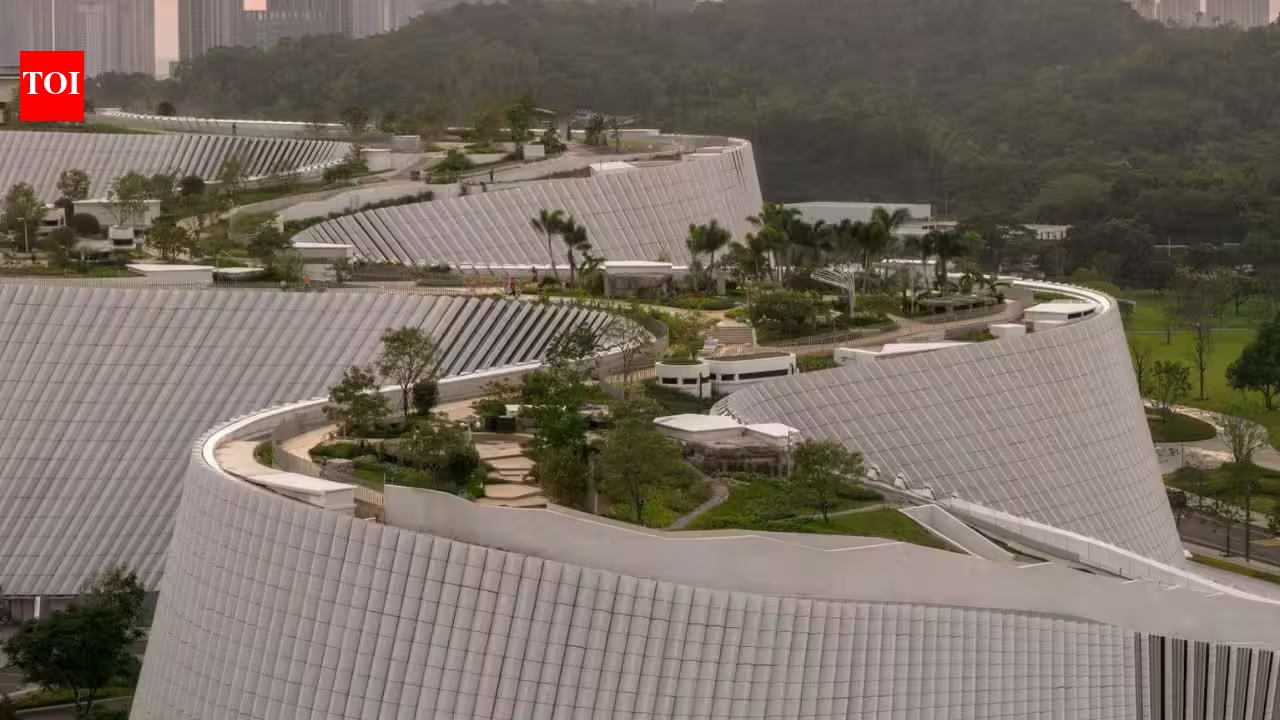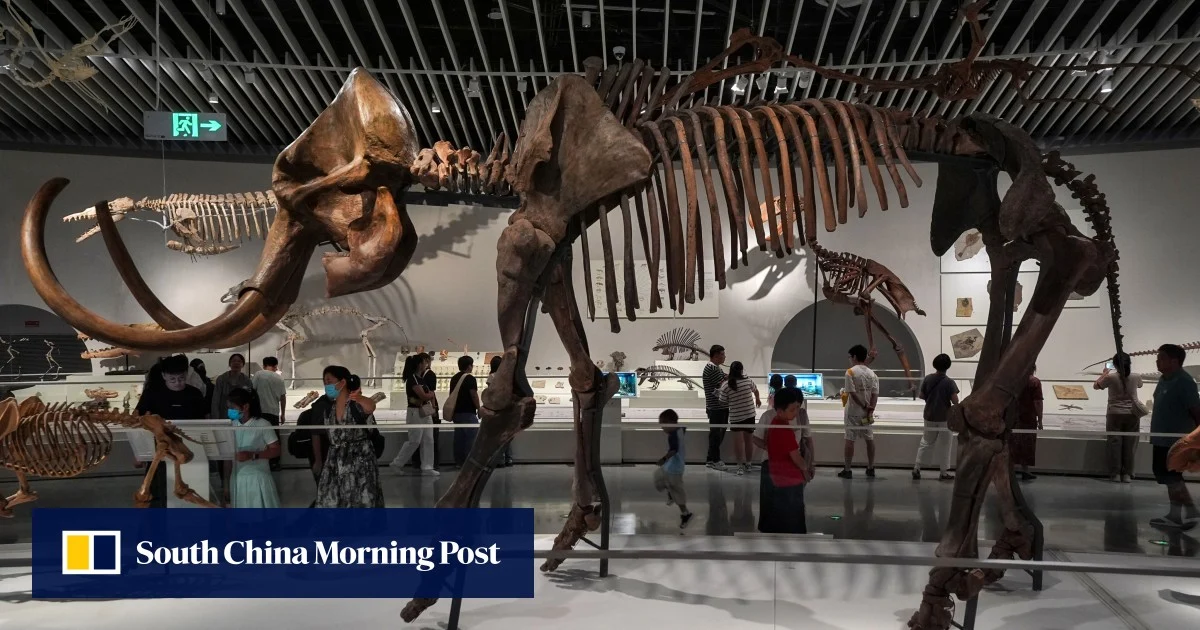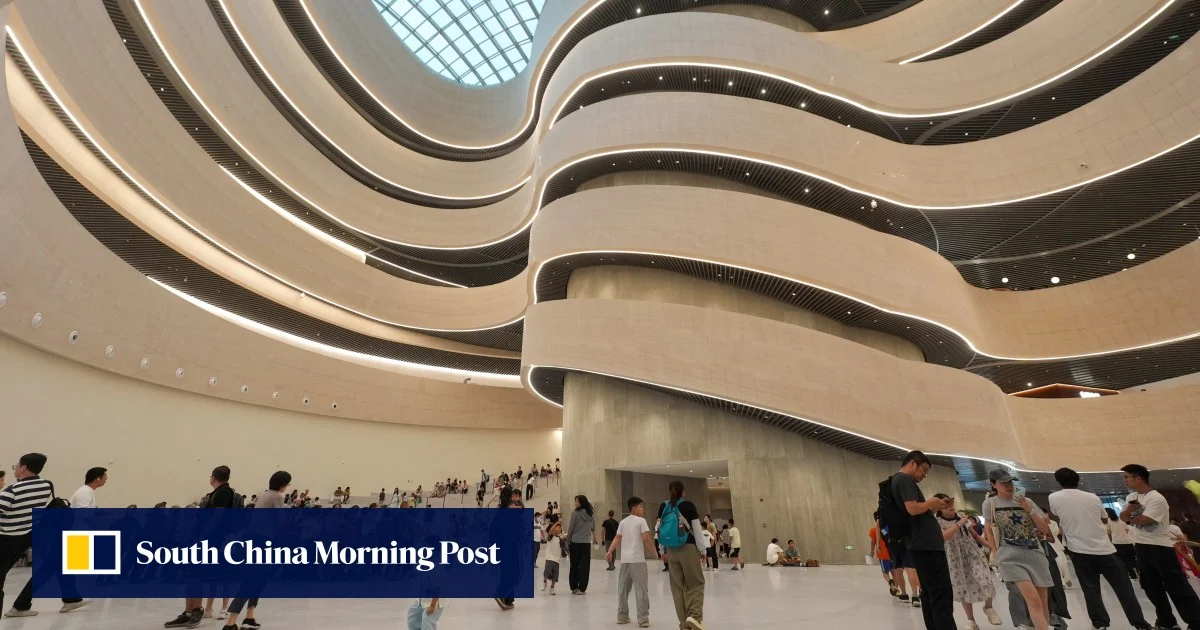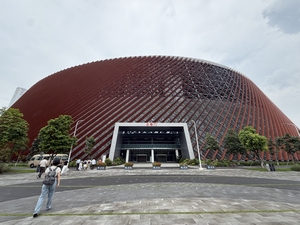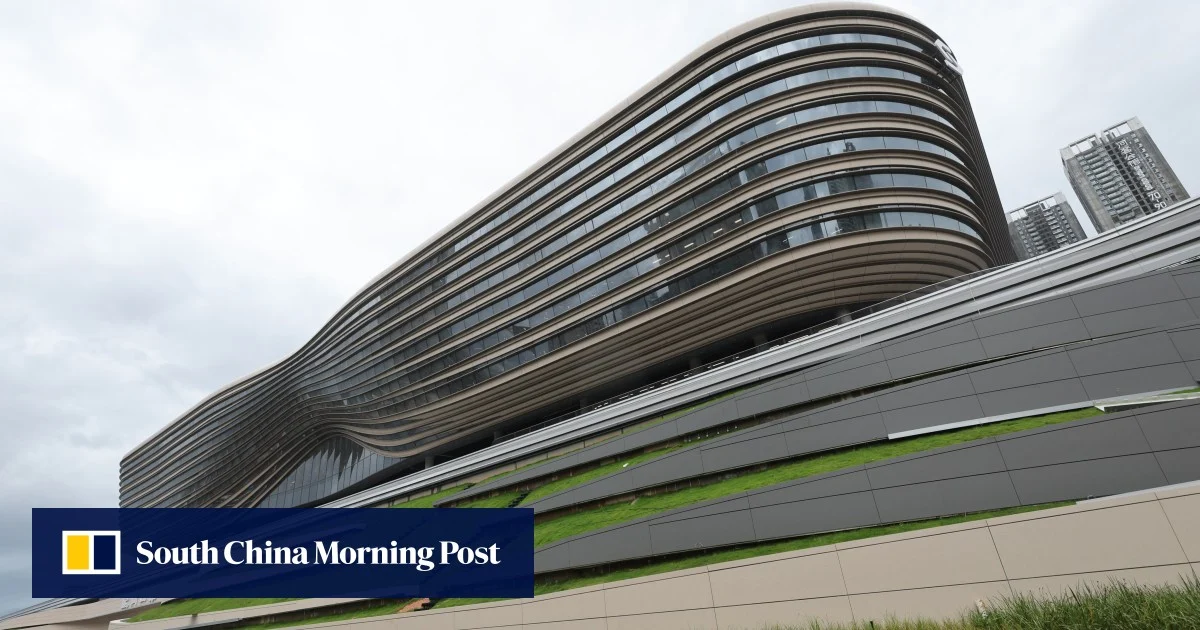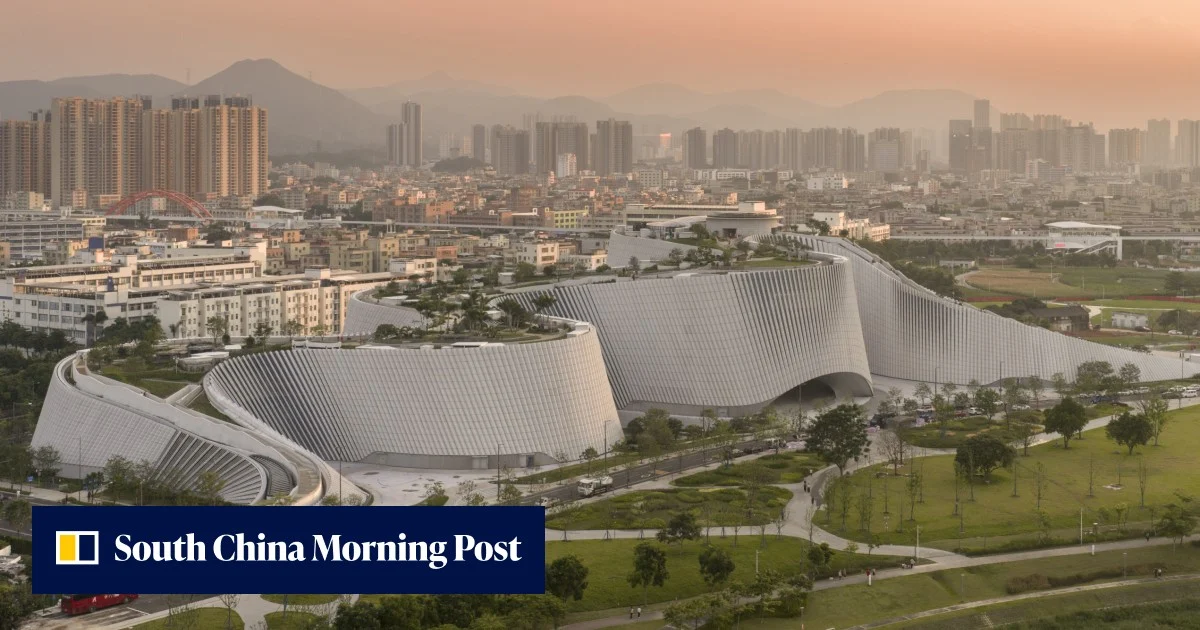
For the crowds that are flocking to the newly opened Shenzhen Natural History Museum, the sprawling structure is commanding as much of their attention as the dinosaur fossils and other specimens that it houses.The 3.5 billion yuan (US$518 million) cultural landmark in the city’s Pingshan district is striking because of its size – the 42,000 square metre (452,000 sq ft) site is the equivalent of six football fields – and the fact that it is a masterclass in biomimicry and sustainable design that seamlessly blends the built environment with the local landscape.The public museum was built after an international design competition that drew more than 70 proposals. The winner was a consortium led by renowned Danish architectural firm 3XN working with Hong Kong-based B+H Architects, which is part of Singapore’s Surbana Jurong, and local Shenzhen firm Zhubo Design.The museum’s organic form reflects its location in a green zone surrounded by water – Yanzi Lake is on one side, while the Dunzi wetland area is nearby. Its free-flowing curves mirror the local river systems and surrounding hills, a delta design that already earned gold at the 2024 Urban Design & Architecture Design Awards.“The delta [idea] was right there from the beginning when we started the competition,” says Kim Herforth Nielsen, founder and creative director of 3XN. “We’ve been inspired by how water can carve into cliffs, for example like the Grand Canyon.”He notes that while the team sketched out various other concepts, the water delta motif resonated immediately, proving to be the strongest vision for the site.
How the Shenzhen Natural History Museum was designed to reflect its landscape
Architects from Danish firm 3XN and Hong Kong’s B+H talk about the museum’s unique design that reflects its green and water-edged location.
256 words~1 min read