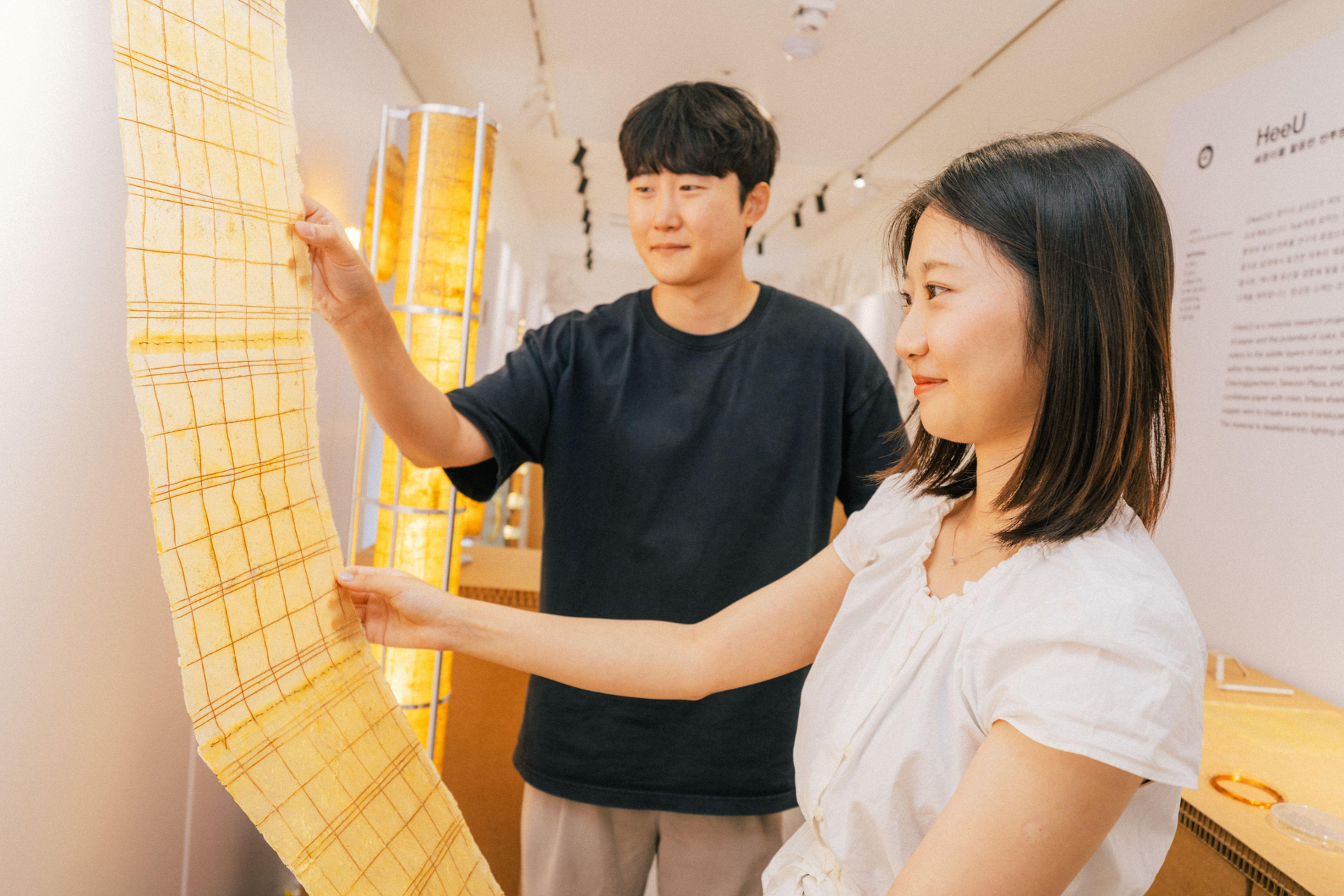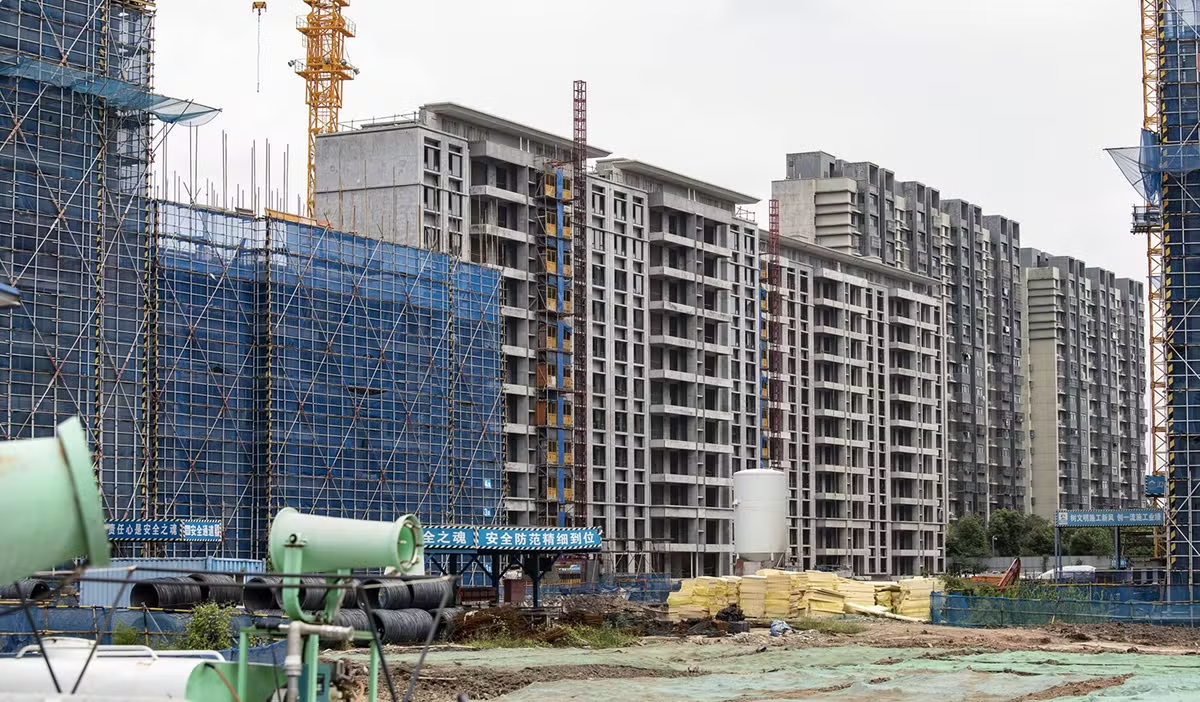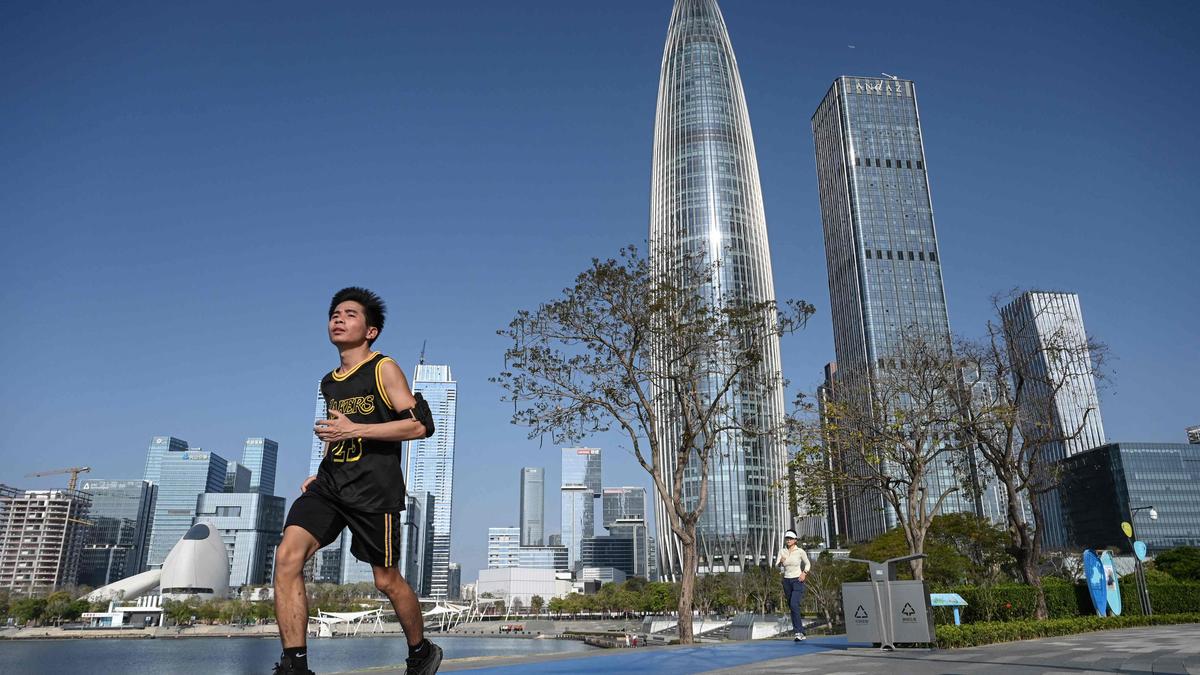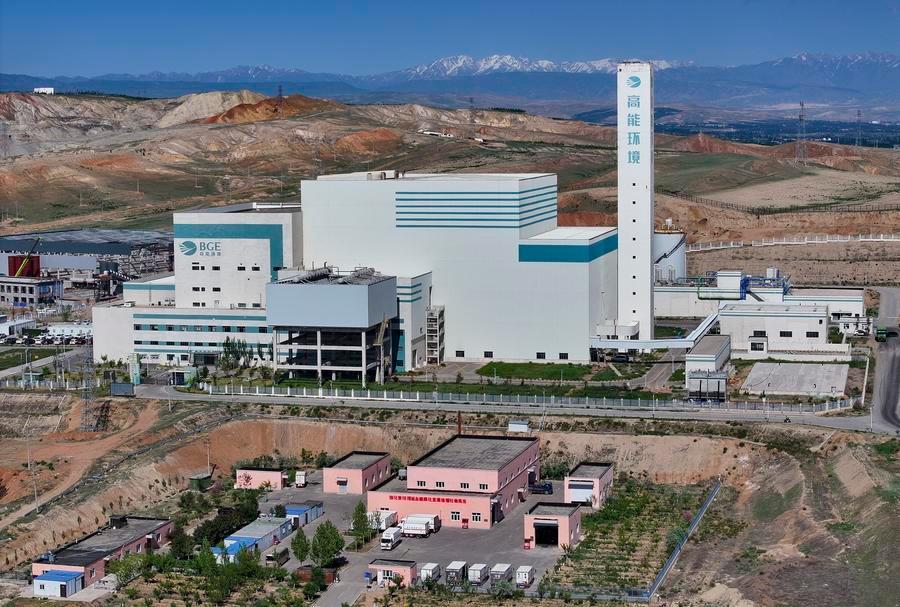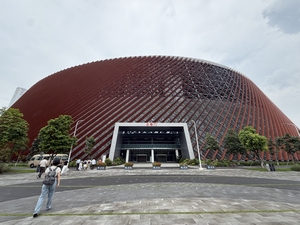
Inside Longgang Energy Ecological Park, where a quarter of the city's waste is burned — and digital art is on display Longgang Energy Ecological Park in Shenzhen, China, on June 25 (Park Ga-young/The Korea Herald) Korea Herald correspondentSHENZHEN, China — A building featured in a Yale University Press survey stands in Shenzhen's Longgang District.Wrapped in a vast circular shell — a form its Scandinavian designers borrowed from the Hakka roundhouses native to the district — the structure is one of 55 that critic Hugh Pearman selected for "About Architecture," his June 2023 survey of structures that help explain the world.The identity of this building is the Longgang Energy Ecological Park, and it is a garbage incinerator, which is among the least wanted neighbors a city can build, long feared as sources of dioxins and foul air.Shenzhen's answer was to make one that was impossible to look away from and then open it to visitors.Inside, the building includes a digital art museum, its walls and floors washed in swirling, Monet-esque color for an immersive show titled "The Color of Light and Shadow." "The Color of Light and Shadow," a digital exhibition at the Longgang Energy Ecological Park in Shenzhen, China (Park Ga-young/The Korea Herald) Visitors walk a route through the plant's inner workings, past real-time emissions readouts and digital artworks, before reaching the exhibits. The message the operators want to land is that burning garbage need not be dirty."Around Shenzhen, people thought that waste incineration was a heavily polluting industry," Xiao Yuanbing, the Safety Director of Shenzhen Energy Environment East Co., the operator of the plant, told reporters on June 25. "We wanted them to see that we can actually do this very well and release even less."Shenzhen holds itself to an emissions standard that is stricter than the national or European baseline, Xiao said, treating the national limit as a floor rather than a target.The plant has set aggressive environmental standards since 2010, when Beijing named it among China's first batch of low-carbon pilot cities. It has played that role ever since, rolling out carbon trading, green bonds and a citywide emissions cap ahead of the national government.Waste was part of that push. Shenzhen is home to some 20 million people, including its large migrant population, and generates around 15,000 tons of waste a day. For years much of that went into landfills, which Xiao said the city had come to see as the worse option, not least because rotting waste releases methane, a greenhouse gas far more warming than carbon dioxide.The timing was not a coincidence. A city cannot stop burying its garbage until it has somewhere else to put it, so Shenzhen's incinerators were built to come online in 2019, the Longgang plant among them. The capacity arrived just as the city moved to end raw-waste landfilling. Longgang Energy Ecological Park in Shenzhen, China, on June 25 (Park Ga-young/The Korea Herald) The interior of the Longgang Energy Ecological Park in Shenzhen, China, on June 25 (Park Ga-young/The Korea Herald) Making incineration clean enough to show off takes machinery. A representative walked through the plant's flue-gas system, which runs smoke through seven successive stages of treatment — removing nitrogen oxides, scrubbing out sulfur and acids with lime slurry, filtering stream through activated carbon and fabric filters, then stripping it further still — where many plants elsewhere use five or six.The results are posted where everyone can see them: A screen on-site streams the plant's emissions in real time. The wastewater, too, is kept in a closed loop, recirculated back into the plant rather than discharged.For all its machinery, the plant does no sorting of its own. By the time garbage arrives, it has already been compacted at transfer stations into a form too dense to pick apart, a plant representative said. Separation happens earlier in the city's households. That makes the plant the last link in a chain whose real work is done at the front end.Shenzhen has spent years pushing residential waste separation neighborhood by neighborhood on the understanding that a plant, however advanced, can only process what reaches it. Bins and rules are now standard across housing complexes.Sorting, the representative said, is a slow business. It takes time for habits to change. But the plant has already changed something else — the way people see a place like this.
Shenzhen built an architectural icon and then filled it with trash
Korea Herald correspondent SHENZHEN, China — A building featured in a Yale University Press survey stands in Shenzhen's Longgang District. Wrapped in a vast cir
723 words~3 min read