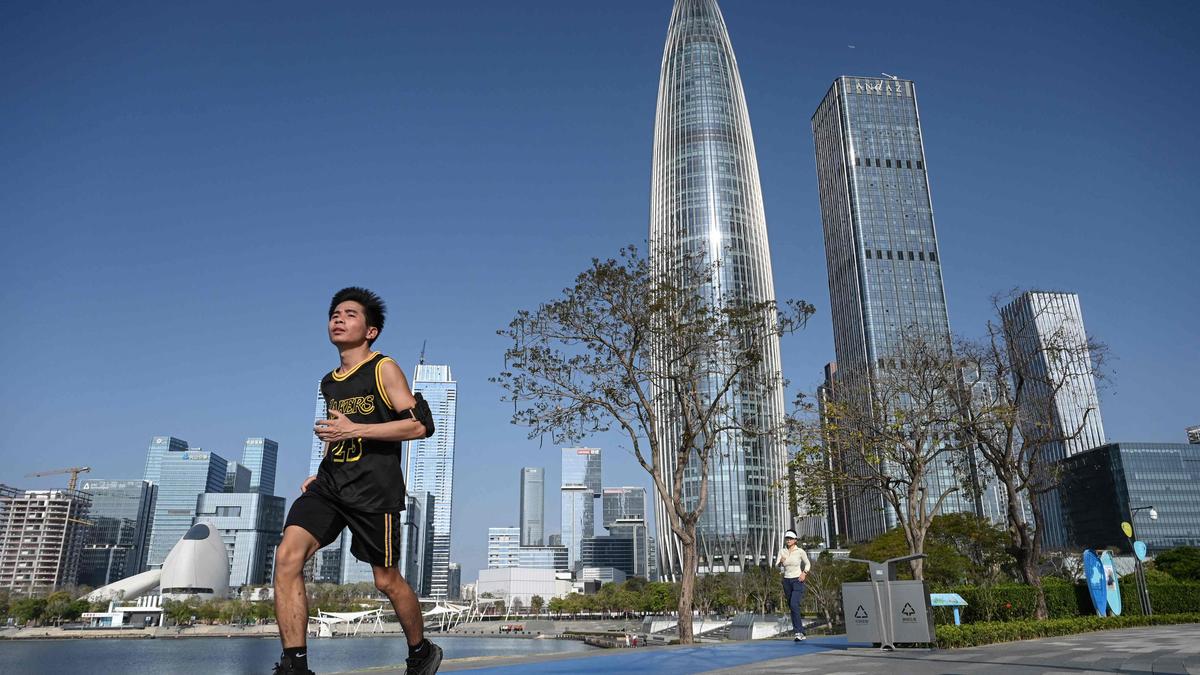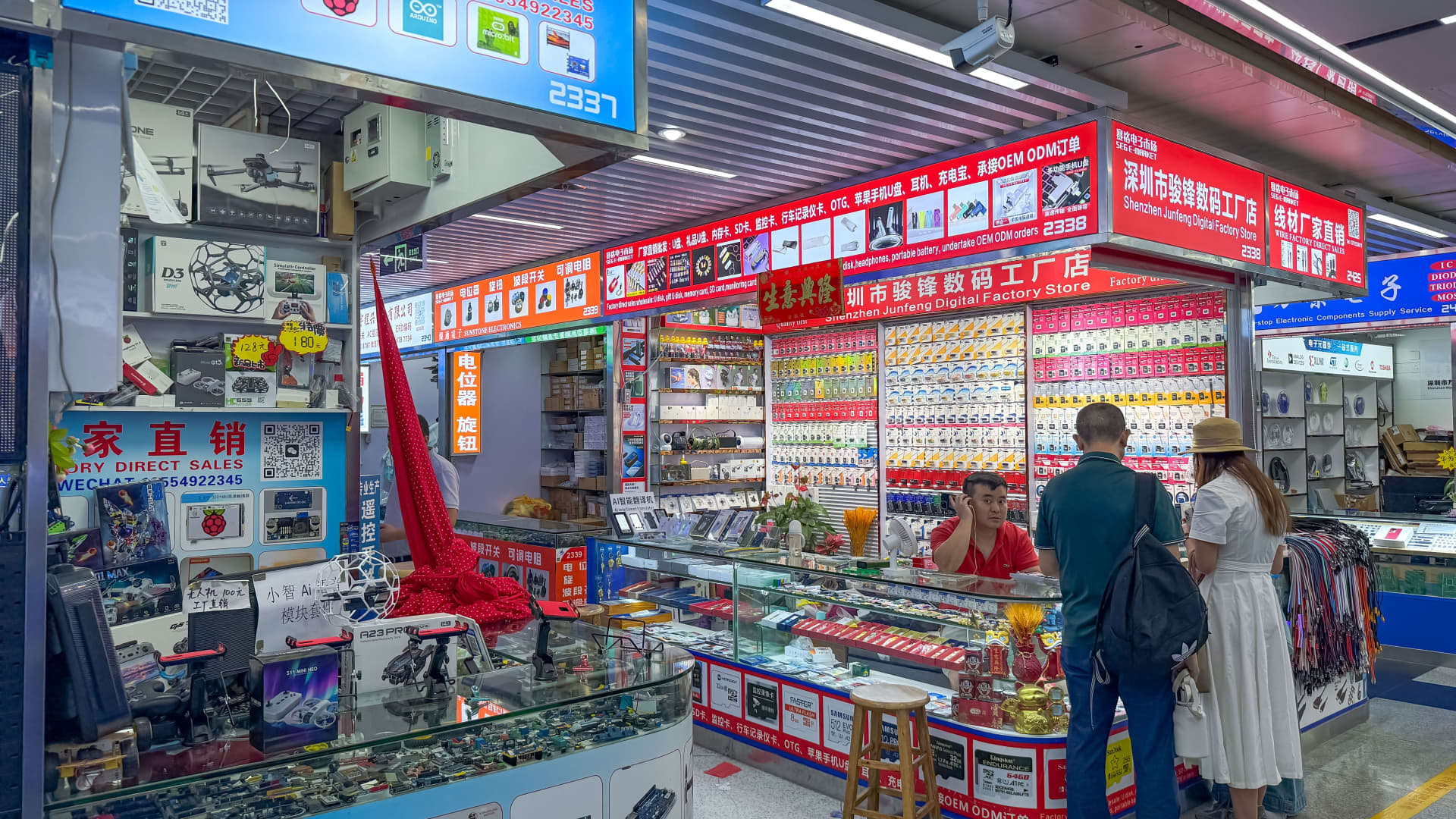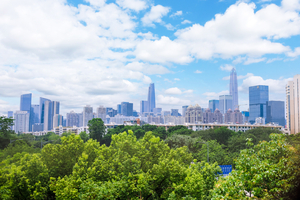
The city, home of Huawei, BYD and DJI, is branding its greenery — and selling the idea of a greener futureKorea Herald correspondentSHENZHEN, China -- The green and the hardware are not opposites in Shenzhen; they run on the same logic. The city that manufactures the world's gadgets is now manufacturing its image as a green one — and, increasingly, turning that green into a business.The first thing a visitor notices in Shenzhen may be the green license plates — reserved for electric vehicles — on car after car after car. To someone arriving from another Chinese city like Beijing, the number of electric vehicles stands out.Park So-hyun, a Korean Chinese and a resident of Shenzhen for more than 25 years, gestured at the passing traffic. "More than half the cars out there are electric," she said.The official count is lower — EVs made up about 28.6 percent of the city's registered vehicles at the end of 2024, according to municipal figures. But her eye is not wrong. Roughly three of every four new cars sold in Shenzhen were electric as of early 2025. The city electrified its entire public bus fleet in 2017 — the first megacity in the world to do so — and nearly all of its roughly 22,000 taxis soon after. Most of what is actually moving on a given street, in other words, runs on a battery.Much of that battery power is homegrown. BYD — now the world's largest EV maker — was founded in Shenzhen in 1995 not as a carmaker but as a battery company, and it still keeps its headquarters in the city.Along with BYD, Shenzhen boasts other high-tech companies like Huawei, Tencent and DJI — enough to give itself the title of China's information-technology capital. It's famed worldwide as a place where an electronics prototype can go from sketch to working sample in a matter of days.City of a thousand parksThe lasting impression, however, is often a park — one of nearly 1,300 scattered across the city.As evening approaches, Shenzhen’s greenways come alive with office workers cycling, walking and running along paths that weave through the urban landscape. The city calls itself a “City of a Thousand Parks,” and the name is literal: Shenzhen had about 1,290 parks at the end of 2023 and is working toward 1,350, with a long-term goal of more than 1,500 by 2035.The expansion is part of a broader vision the city calls “Mountain-Sea City,” a plan to connect mountains, coastline and urban areas through a network of green spaces. Its greenways already stretch more than 4,000 kilometers, intending to make nature accessible within a five-minute walk for every resident.The parks range widely in size: Most are small community plots, while a few dozen large country parks hold the bulk of the green space. The city runs a three-tier system — a neighborhood park within 500 meters of home, a bigger urban park within two kilometers, a nature reserve within five.One example sits in the city center. Bijia Mountain and Lianhuashan Park, two urban ecological parks, are connected by the elevated skywalk at the UpperHills development — a mixed-use complex of offices, apartments, a hotel and shops, designed to knit the development into the two hillsides rather than wall them off. A pathway that links UpperHills and Lianhuashan Park in Shenzhen, China (Xinhua) Another sits on the Shenzhen Bay waterfront, alongside the towers that house tech firms like Tencent. Talent Park opened on Nov. 1, 2017 — the date Shenzhen had just designated as its first official "Talent Day."On the afternoon of June 25, a humanoid robot made by EngineAI, a Shenzhen startup, was walking a park path, trailed by a scrum of onlookers with long lenses and phones alongside runners and cyclists.Billed as China's first municipal park built on the theme of "talent," it is infrastructure as branding: an abstract policy goal, attracting skilled workers, turned into a walkable, Instagram-ready public space that doubles as a civic advertisement.The city makes the link between green space and talent explicit.Jiao Yang, who heads the planning section at the Nanshan district branch of the Shenzhen Municipal Bureau of Planning and Natural Resources, framed the greenery as a talent strategy. A fast-moving city, Jiao said, has to give young people more than a place to work hard. "Shenzhen gives you both the soil to strive and a garden to rest in."The numbers behind the pitch are striking: At an average age of about 32.5, against a national 38.8, Shenzhen is one of China's youngest major cities, and it is still growing — its permanent population reached 18.25 million in 2024 after adding 259,000 people, the largest gain of any major Chinese city, with roughly two-thirds of residents lacking a local household registration, or hukou."Shenzhen isn't a city that appeals to one age group," Jiao said. "It's inclusive. Everyone can find a place to dock here."The greenway where Jiao was speaking, the Dasha River Ecological Corridor, is one product of that approach. The 13.7-kilometer stretch runs through Nanshan District from a reservoir to the mouth of Shenzhen Bay and opened in full in 2019, rebuilt from a channelized, hard-bottomed watercourse."There was a time we channelized our rivers — rigid, engineered," Jiao said. "Now we have brought them back close to nature." In the evening, its banks fill with runners and cyclists.Shenzhen's green ambitions do not stop at parks and clean traffic. The city has also learned to make a business of its ecology.In September 2023, it held China's first auction of mangrove-conservation carbon credits — the "blue carbon" stored by protected coastal wetlands. Bidding on 3,875 metric tons of carbon opened at 183 yuan per ton and, after 92 rounds among 17 companies and organizations, closed at a record 485 yuan ($68) — a 165 percent premium and the highest carbon-sink price in China at the time.The roughly 1.88 million yuan raised was directed to the city treasury for mangrove protection and restoration. Shenzhen has since taken a packaged "Blue Carbon Shenzhen Model" to the UN climate conference and hosts the International Mangrove Center.The volumes are small — 3,875 tons is a rounding error against the emissions of a city of more than 17 million — and the record price reflected novelty as much as fundamentals. Researchers, including the London School of Economics' Grantham Research Institute, caution that blue-carbon accounting and the question of who benefits are still unsettled. But the significance was never the tonnage. It was the act: a wetland measured, priced, packaged and sold.Even the city's fashion houses build green. The Shenzhen label Marisfrolg spent some 15 years raising a campus in Longhua district shaped like a bird in flight — a biomorphic complex by the New Zealand firm Architecture van Brandenburg, commissioned by the brand's founder, Zhu Chongyun.Its curving facade is clad almost entirely (about 80 percent) in recycled material — discarded ceramics, marble offcuts, brick and glass slag, assembled by hand — and a pond along the northern edge captures rooftop rainwater and draws in prevailing wind to passively cool the buildings. Studios, showrooms, a boutique hotel and what the company calls Asia's largest catwalk are threaded through gardens and ponds, the company's representative explained on June 26.This article is published as part of a Korea-China press exchange program hosted by the Korea Press Foundation and Xinhua News Agency. -- Ed. Shenzhen (Xinhua) Shenzhen (Xinhua) Shenzhen (Xinhua) A bridge in Shenzhen A park in Shenzhen A part in the center of Shenzhen nearby UpperHills is seen in this photo taken on June 24. (Xinhua News Agency) A bridge linking a shopping center and a park in Shenzhen A robot demonstration takes places at Shenzhen Talent Park in Nansham District, Shenzhen on June 24. (Park Ga-young/The Korea Herald) A robot demonstration takes place at Shenzhen Talent Park in Nansham District, Shenzhen on June 24. (Park Ga-young/The Korea Herald) International Mangrove Center Inside Marisfrolg Fashion Campus, a Shenzhen-based high-end fanshion brand's headquarters on June 26 (Park Ga-young/The Korea Herald) Inside Marisfrolg Fashion Campus, a Shenzhen-based high-end fanshion brand's headquarters on June 26 (Park Ga-young/The Korea Herald) Inside Marisfrolg Fashion Campus, a Shenzhen-based high-end fanshion brand's headquarters on June 26 (Park Ga-young/The Korea Herald) BYD's EVs are on display on June 25 at its headquarters in Shenzhen, China. (Park Ga-young/The Korea Herald) BYD's EVs are on display on June 25 at its headquarters in Shenzhen, China. (Park Ga-young/The Korea Herald)
In Shenzhen, the surprise isn't the tech -- it's the green
Korea Herald correspondent SHENZHEN, China -- The green and the hardware are not opposites in Shenzhen; they run on the same logic. The city that manufactures t
1,403 words~6 min read