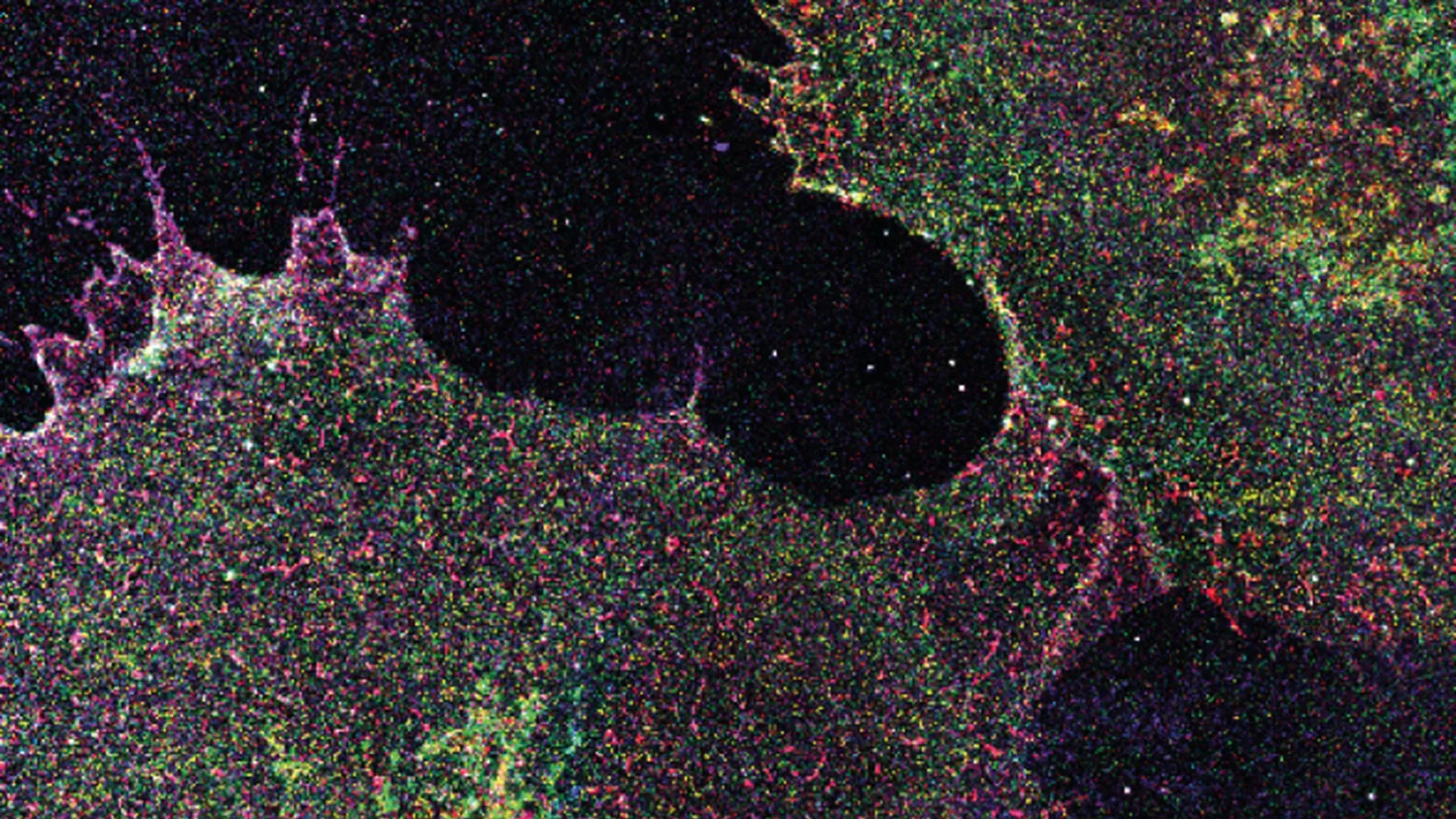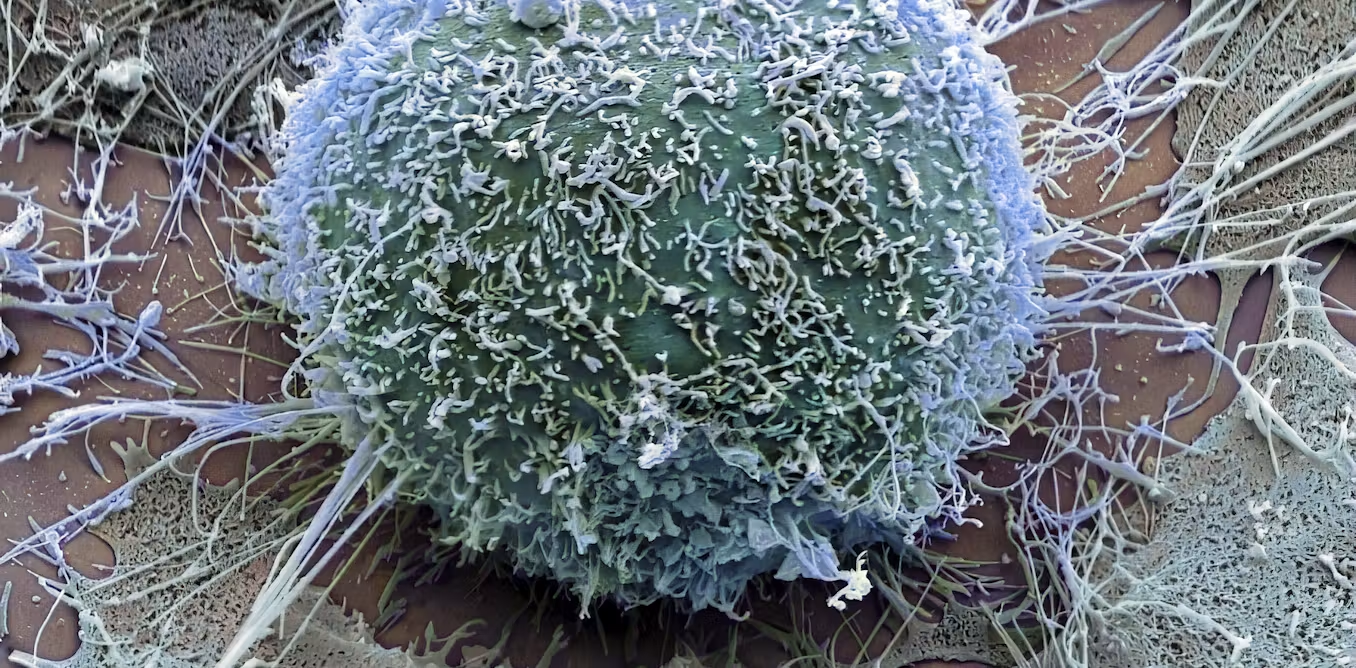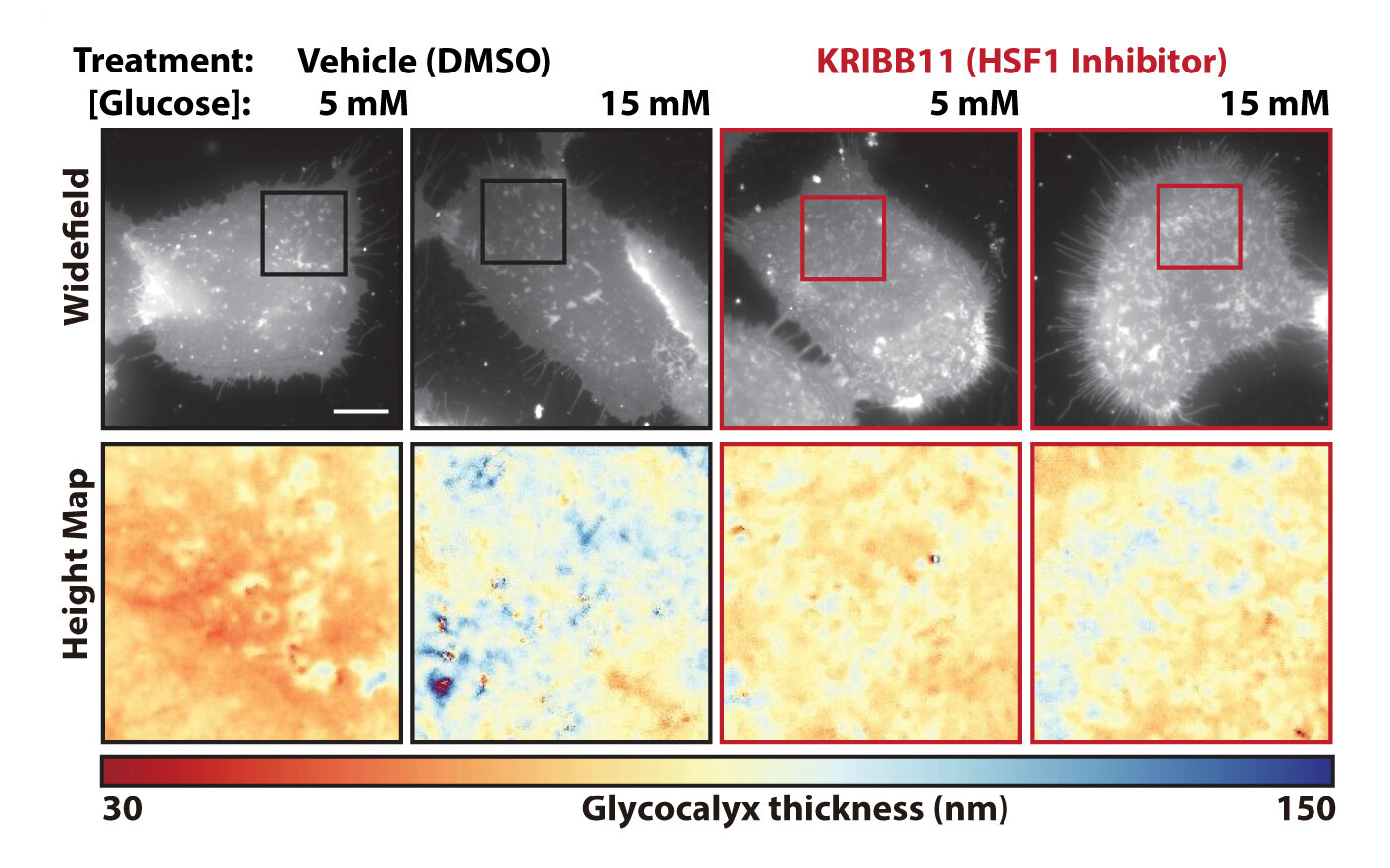
This figure shows the results of blocking a protein called heat shock factor 1. Using scanning angle interference microscopy, the scientists showed that inhibiting this protein prevented the thickening of the outer protective layer that cancer cells use to trick the immune system. When the protein is not blocked, cancer cells' cloaking costumes grow thicker in response to excess glucose or hyperglycemia. Credit: Kevin Tharp, Sanford Burnham Prebys
Like spies evading detection by mastering disguises, many cancer cells are adorned with a copious coat of sugar-derived molecules that throws the proverbial hounds of the immune system off the scent.
Scientists at Sanford Burnham Prebys Medical Discovery Institute and collaborators across North America published findings Aug. 7, 2026, in Science Advances showing that cancer cells' cloaking costumes can result from changes in the nearby neighborhood of immune cells, connective tissue, blood vessels, proteins and carbohydrates called the tumor microenvironment. The researchers also found a way to thin this sugary shroud, enabling cancer cells to be recognized and eliminated by the immune system.
Lead and corresponding author Kevin Tharp, Ph.D., knew that cells squeezed by their surroundings change their mitochondrial function in surprising ways. He realized that a key place where cells would experience this kind of physical pressure was in the tumor microenvironment.