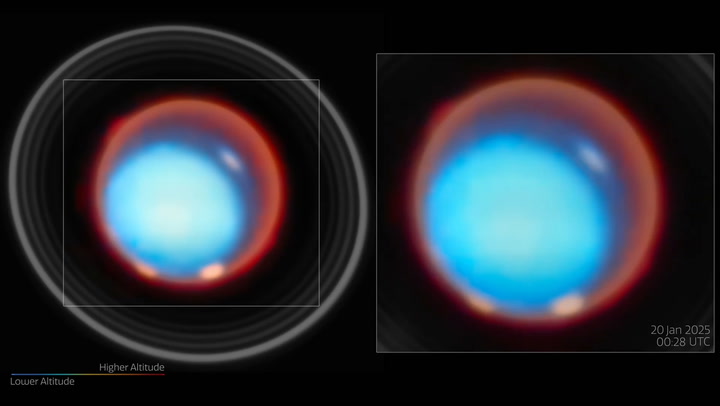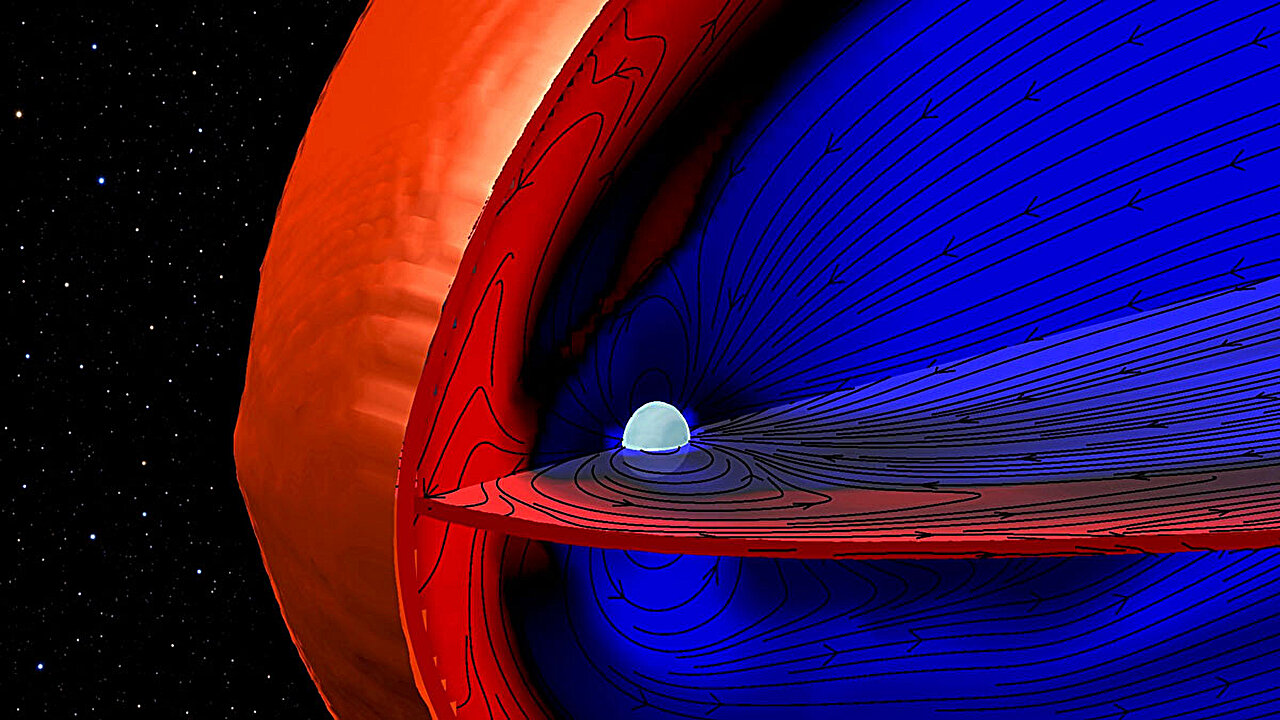
This image depicts the Uranian magnetosphere at equinox. The outermost boundary (left) shows the bow shock surface that interacts with the solar wind. Credit: Xin Cao
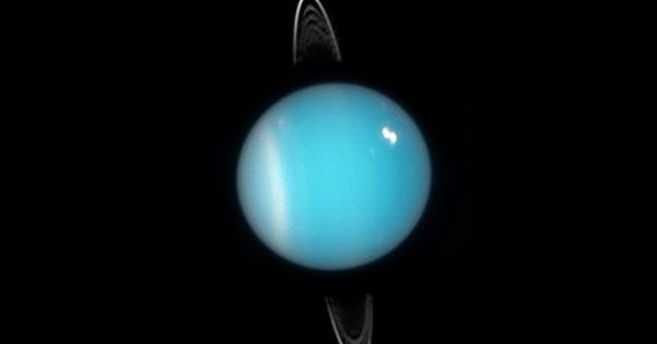
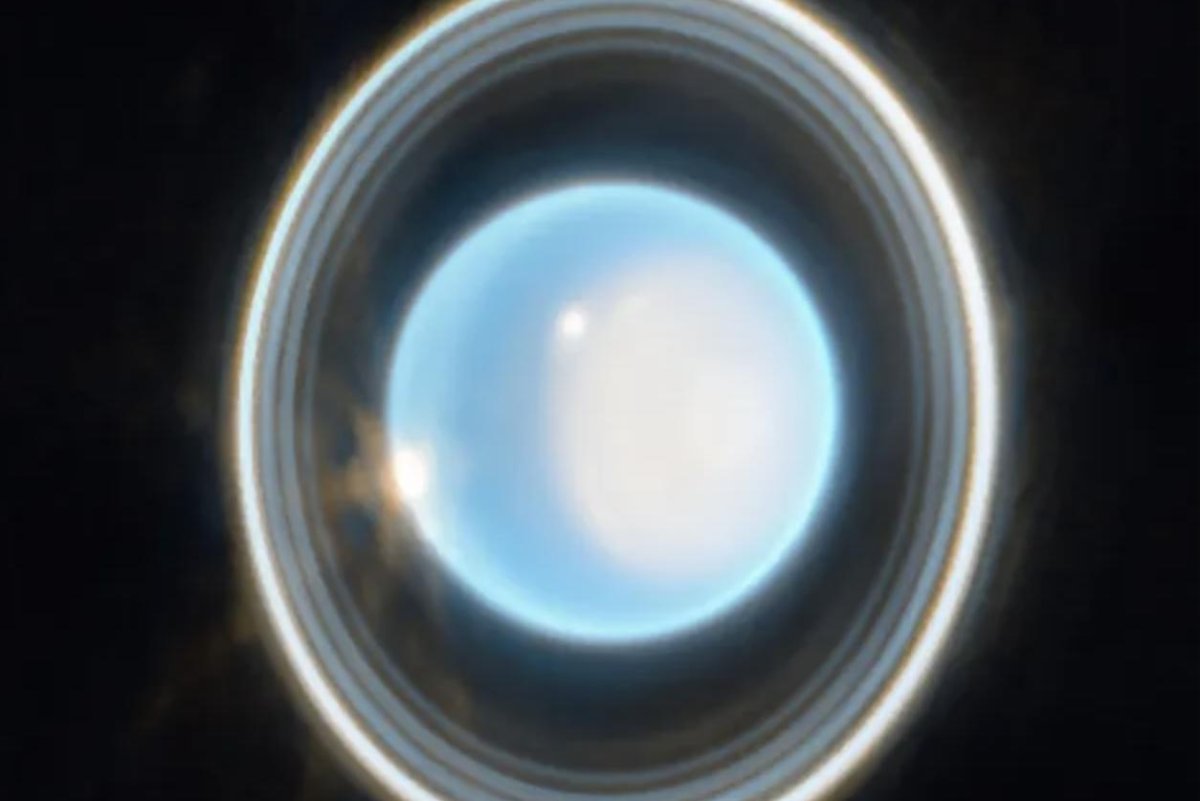
Within our solar system, Uranus is a geometric oddball. Its spin axis tilts more than 90° from its orbit, so it essentially rolls on its side through space. In contrast, Earth and other planets tilt only moderately or not at all. What's more, the ice giant's magnetic field is strangely offset and tilted another 60°.
These extreme asymmetries mean that the interaction between Uranus's magnetic field and the solar wind—charged particles constantly streaming out from the sun in all directions—is also quirky. At Earth and other planets, the boundary where the solar wind slams into the planetary magnetic field and abruptly slows to form a turbulent shock wave, known as the bow shock, is relatively stable. But at Uranus, the bow shock is highly dynamic, changing shape and size throughout each Uranian day, like the expansion and contraction of breathing lungs.
However, the precise extent and underlying drivers of the Uranian bow shock's "breathing" have so far been unclear. Now, using advanced computer simulations and data from NASA's Voyager 2 spacecraft, X. Cao and colleagues have quantified the specifics of these daily changes in an article published in the journal AGU Advances.