I've spent a lot of time staring at browser tabs, switching between Figma, Jira, and my IDE, trying to verify if the padding on a button matches what is written in the CSS. It's a low-value, high-friction task that kills flow. When we talk about 'AI agents' today, most people focus on them writing code or summarizing text. But the real productivity leap isn't just having an agent write a component; it's having an agent audit your design layers against your implementation without you ever leaving Cursor.
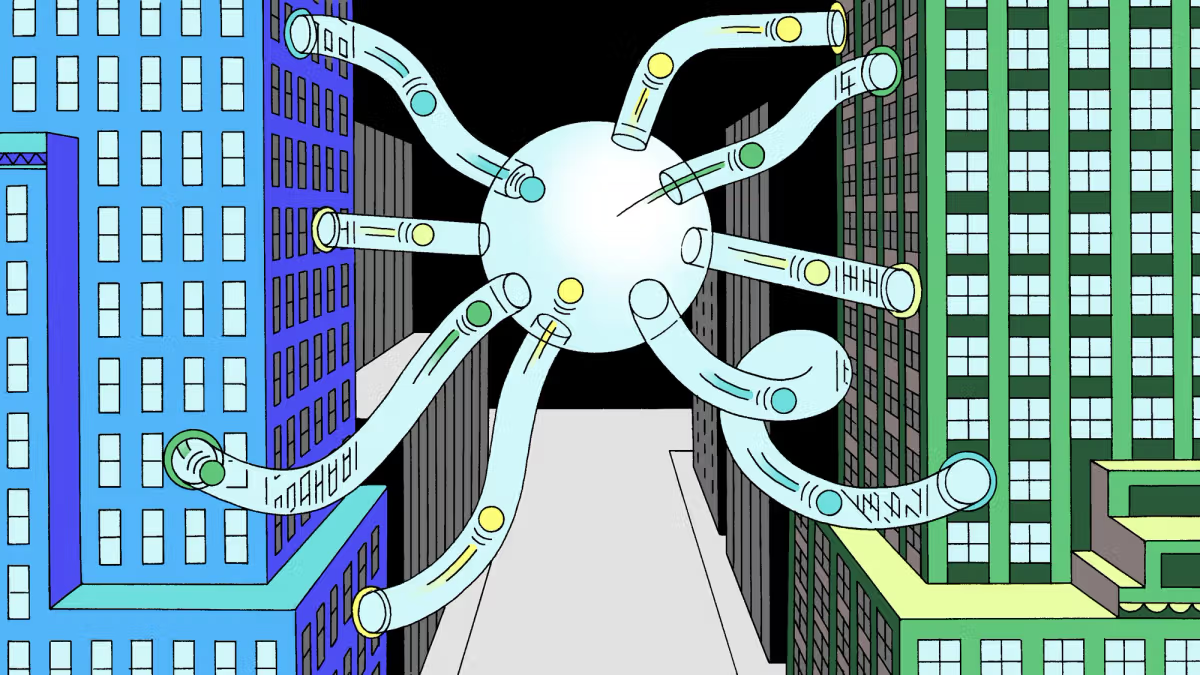
This is what happens when you bridge the gap with the Lanhu MCP server.
The context-switching tax
If you are working in a high-performance team, design handoff is usually where momentum goes to die. A designer makes a change in Lanhu, leaves a comment about a color tweak, and then... nothing happens until you manually notice the notification, open the web interface, find the layer, and translate that back into code.
If you are using an agent like Claude or Cursor, that agent is currently blind to your design source of truth. It only knows what you copy-paste into it. You can paste a screenshot, sure—but screenshots don't give you the structural metadata. They don't tell you if a group is named btn-primary-container or just Group 452.