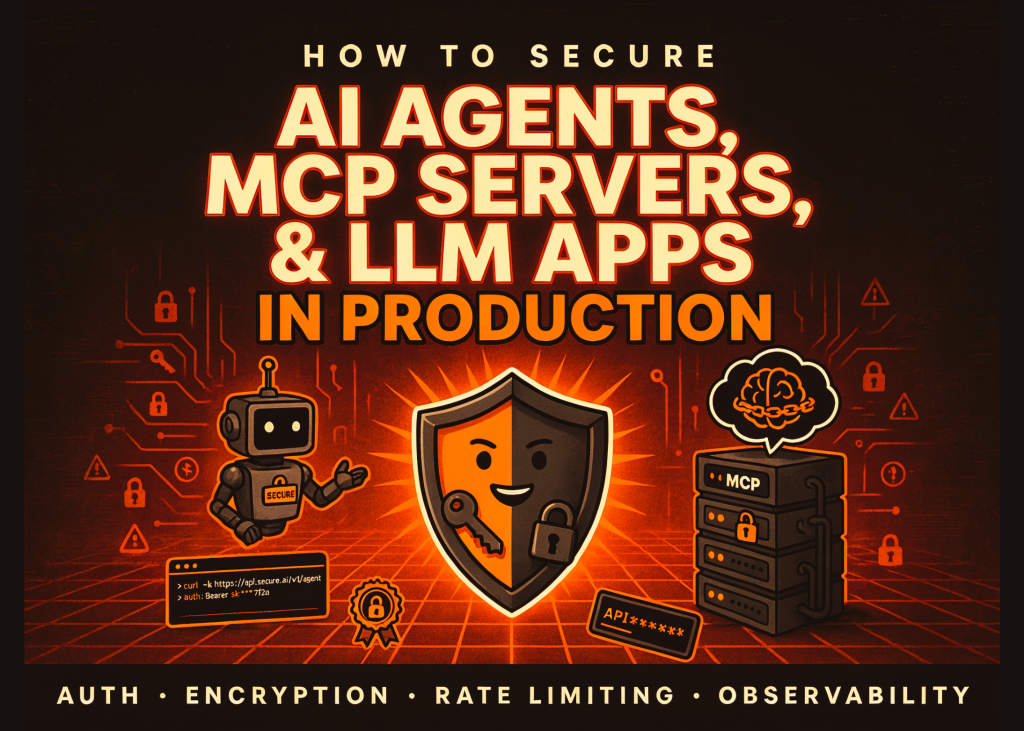
Agents, MCP integrations, and LLM-powered applications are entering codebases faster than most security programs can track them. Mend.io’s new practitioner guide, ‘Securing AI agents, MCP servers & LLM apps: A practical framework’, targets that gap. It is organized around three moves: see what matters, fix what matters faster, protect AI in production and ships seven reusable artifacts.
Why traditional AppSec breaks
AppSec was built on one assumption: applications do what their code says. Agentic AI breaks it. Agent behavior emerges from a model, a system prompt, retrieved context, user input, and the tools it may call. Two identical deployments can behave differently.
The failure modes are new too. Prompt injection arrives through data, not code. An over-permissioned agent can take harmful actions without any vulnerability being exploited. A deprecated model keeps serving predictions after its maintainer stops patching it. A poisoned tool description on an MCP server can redirect an agent’s behavior without touching the application. None appear in a CVE feed. The mandate is two-sided: shift left, and protect right.
Artifact 1.1: the five-layer attack surface map