Originally published on tamiz.pro.
The integration of Large Language Models (LLMs) into the software development lifecycle has evolved from passive code completion to active, autonomous agents capable of reading repositories, running tests, and deploying infrastructure. This shift introduces a critical architectural vulnerability that traditional cybersecurity models are ill-equipped to handle: the agent-as-a-user problem.
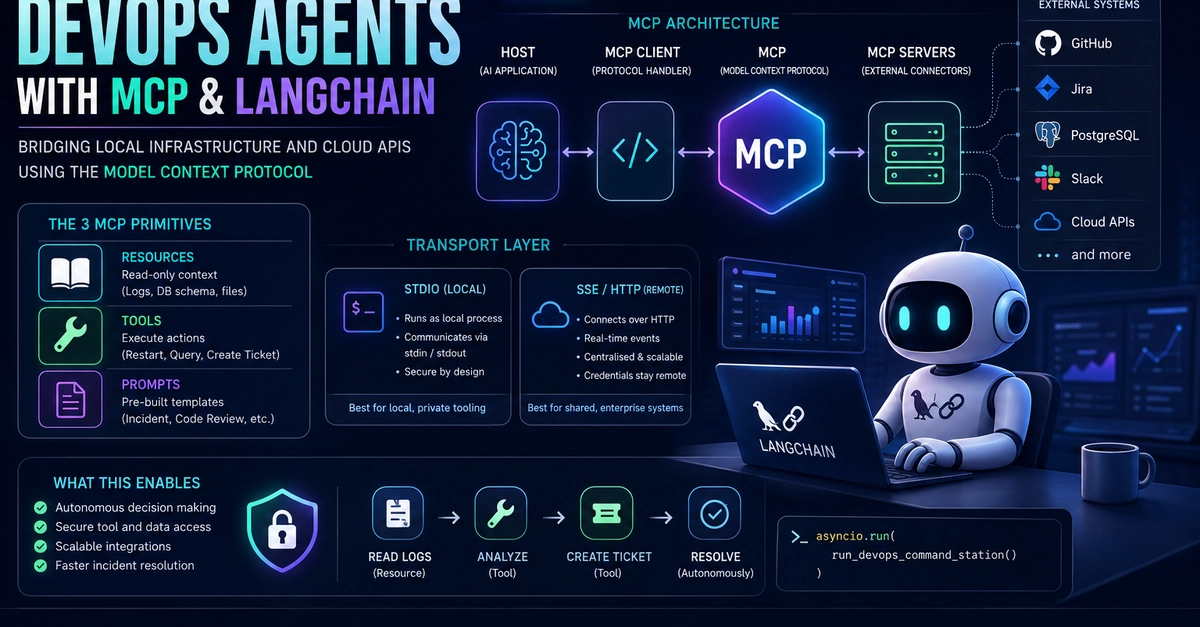
For decades, authentication and authorization (AuthZ/AuthN) have been designed for human operators or long-lived service accounts with static scopes. Autonomous agents, however, are dynamic, context-dependent, and often operate under strict token budgets and time constraints. When these agents interact with external systems via protocols like the Model Context Protocol (MCP), the surface area for credential leakage, privilege escalation, and supply chain attacks expands exponentially.
This article dissects the failure modes of current credential management in agent-driven workflows, analyzes the specific security implications of MCP, and proposes a new architectural pattern for secure agent authentication.
The Agent-as-a-User Paradox