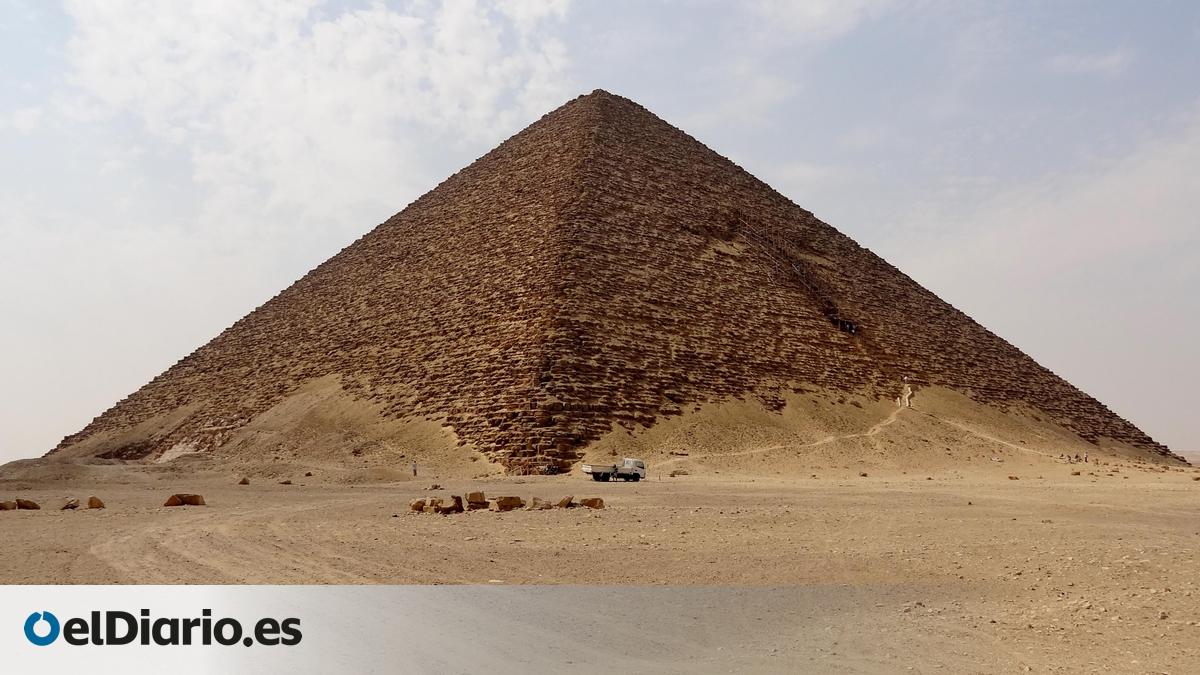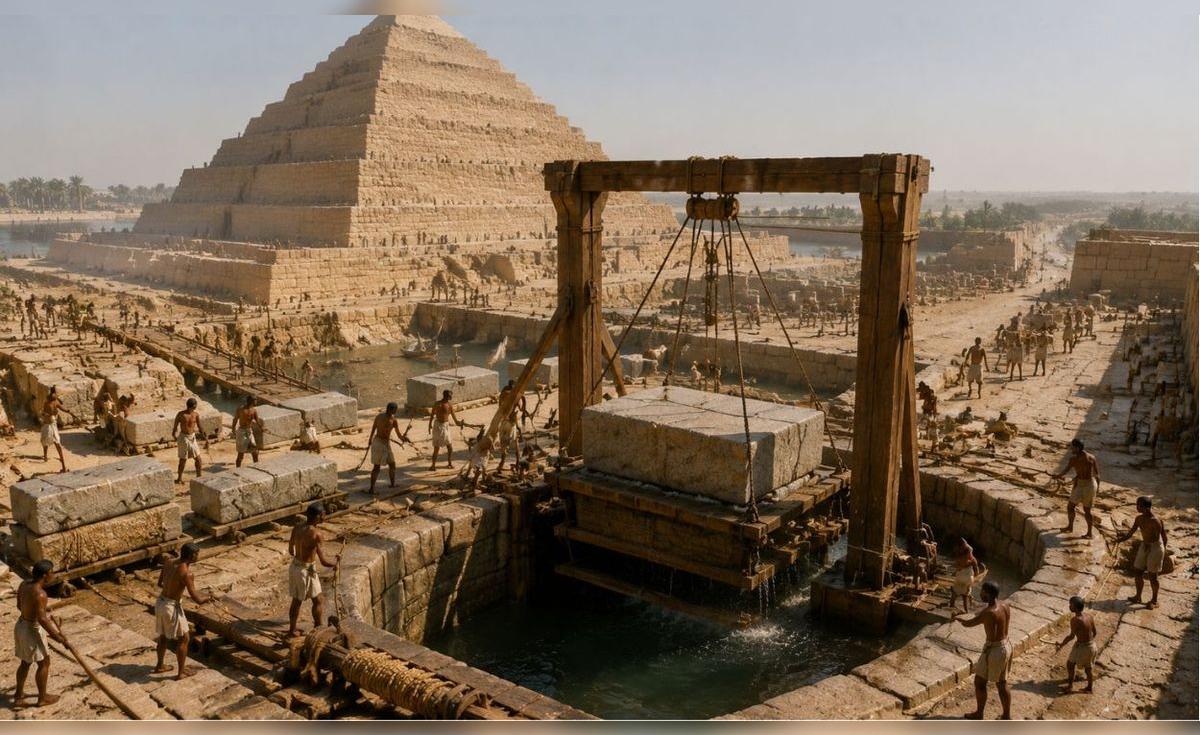
For nearly a century, archaeologists believed that two huge, linear structures near Egypt’s Red Pyramid were ramps to move stones. They might have been wrong. A new analysis of the pyramid, located at the Dashur necropolis in modern-day Cairo, suggests that the “ramps” were actually large dams. If true, this means that ancient Egypt’s architects and construction workers used a hydraulic system to supply water to the construction site nearly 5,000 years ago, according to an early-access version of the study provided by npj Heritage Science. Contextually, this interpretation is consistent with how King Snefru’s reign, during which the Red Pyramid was built, also saw the emergence of the earliest instances of large-scale hydraulic engineering, the team explained in the paper. Royal Air Force pictures (1925) from the Red Pyramid, with a view on two dams on the background (white rectangle). Credit: UCL Institute of Archaeology “While the pyramid complexes themselves have been extensively investigated, associated technical infrastructures such as dams, flood-control walls, diversion works, canals, and workers’ installations remain far less well characterized,” wrote the researchers, a team of French and Egyptian archaeologists, in the paper. The ‘builder pharaoh’ Snefru’s reign lasted from approximately 2,613 to 2,589 BCE. During this time, the pharaoh commissioned numerous big architectural structures, including the Sadd el-Kafara dam. According to the paper, this dam, with an estimated original height of 45 feet (14 meters), is “widely regarded” as one of the largest, oldest dams in world history. A major flood event later toppled the dam, but the initiative represents “clear evidence that state-level hydraulic engineering and flood risk management were already underway during Snefru’s building program,” the paper noted.
'Ramps' Near Egypt's Red Pyramid Might Actually Be Ancient Dams
If the new interpretation is correct, it means ancient Egyptians were far better at water management than we thought.
693 words~3 min read