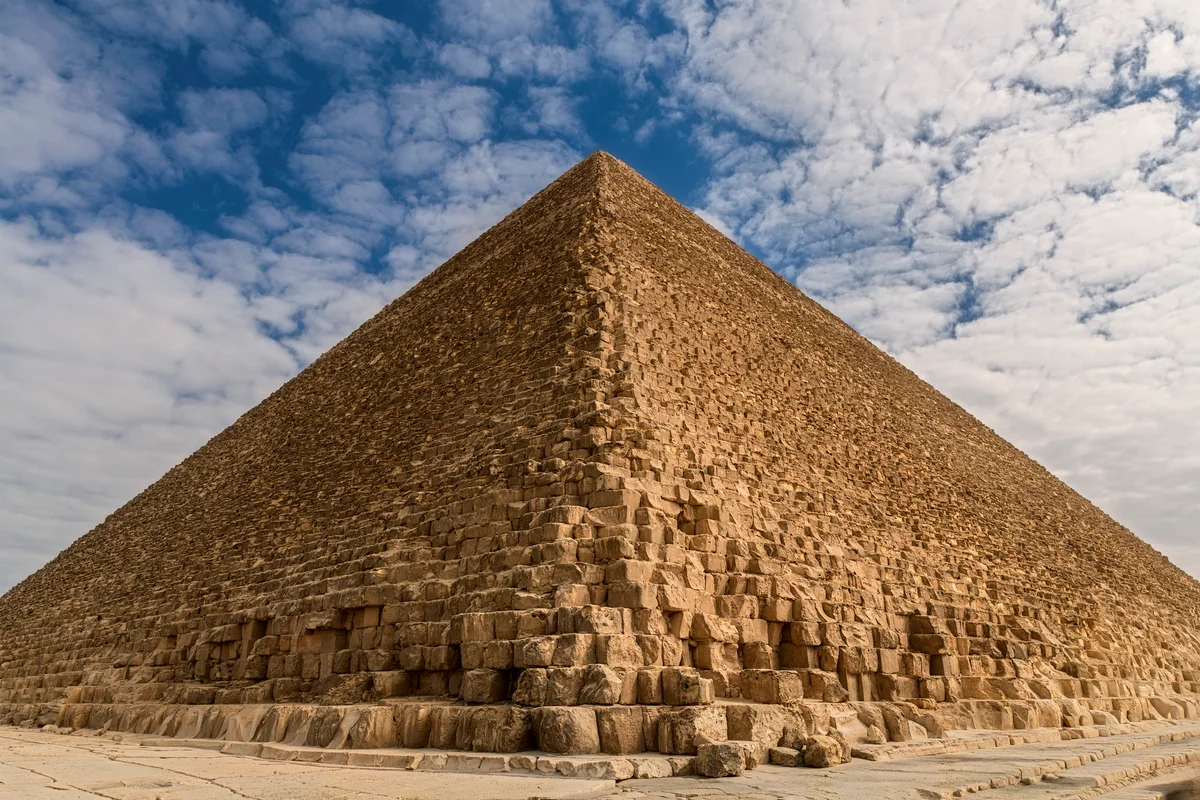
The Ancient Egyptians’ ability to build the Great Pyramid of Giza in the absence of modern machinery and technology has amazed – and baffled – experts for decades.
But now the mystery surrounding the monument’s construction may have been solved by researcher Vicente Luis Rosell Roig, who presents mathematical evidence in Nature that an ingenious system of spiralling, indented ramps were used to deliver the stones used in its construction.
The vast structure – the largest Egyptian pyramid – built around 2,560 BCE as the tomb of the Egyptian Pharaoh Khufu, contains an estimated 2.3 million stone blocks, weighing between 2.5 and 15 tonnes each.
For the monument to have been completed within the 27 years of Khufu's reign, a block would have to have been placed at an average rate of one every three minutes. Debate has raged, however, over how the giant structure could have been completed in this time frame.
Some researchers have suggested that external ramps were used. But such ramps would themselves have required vast quantities of material, and no clear archaeological evidence of them has ever been found.