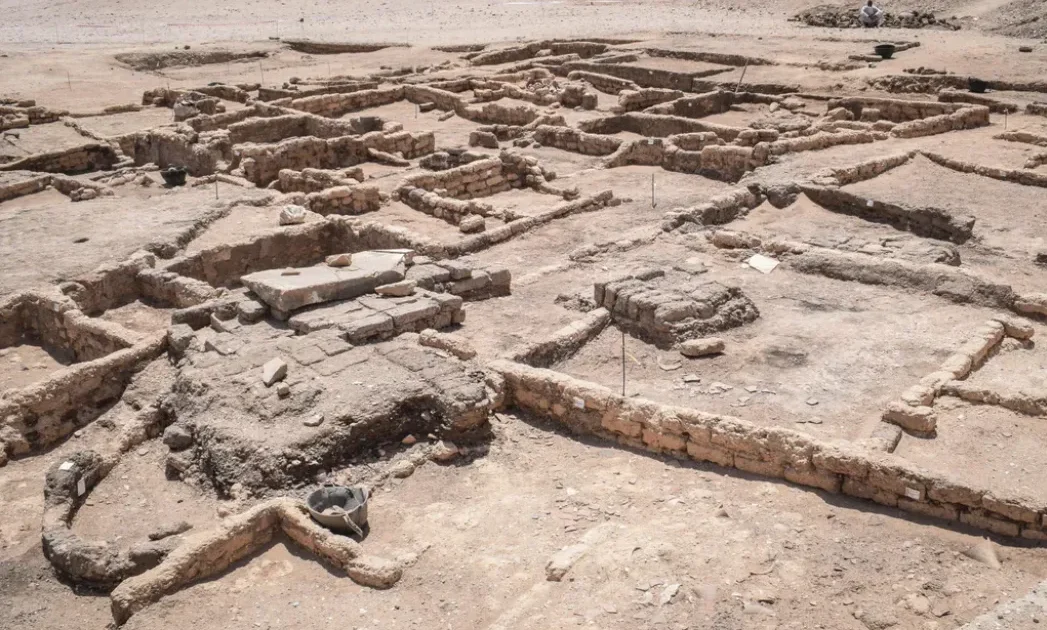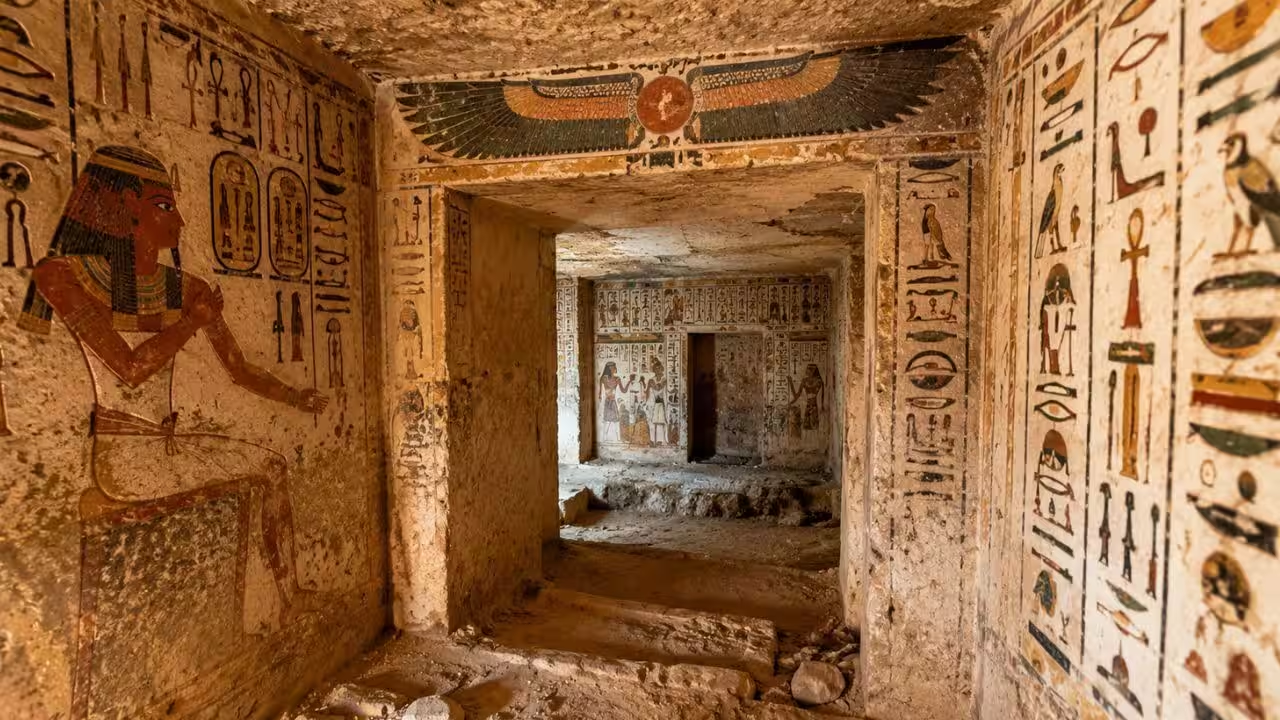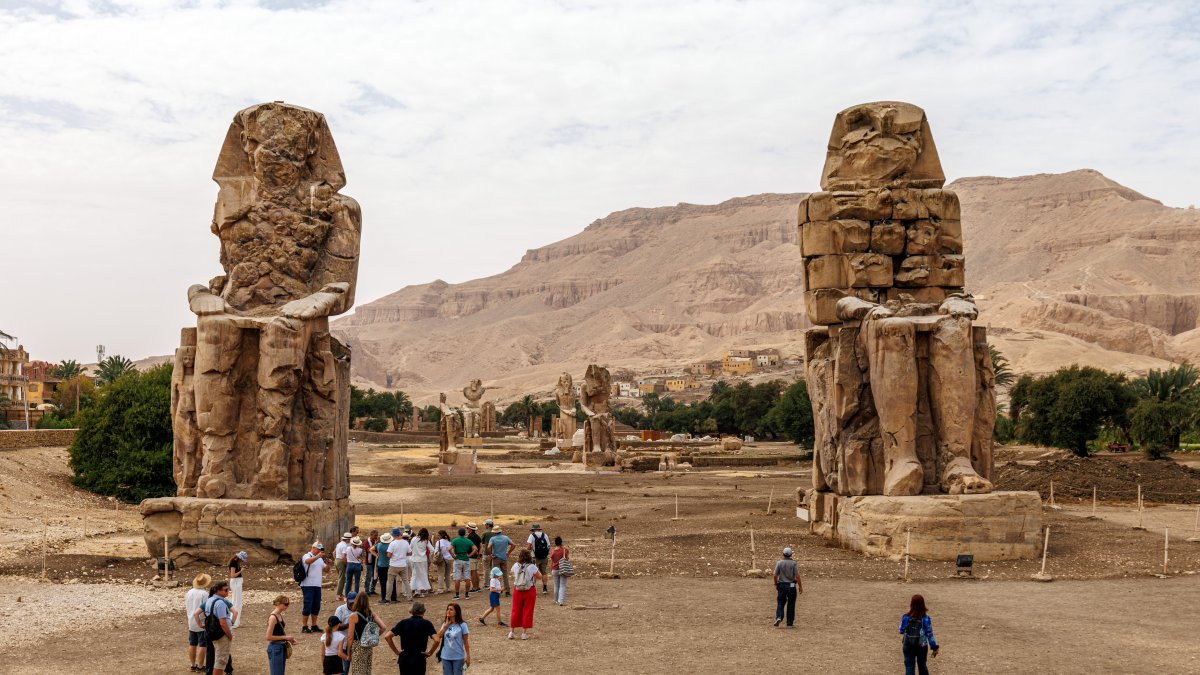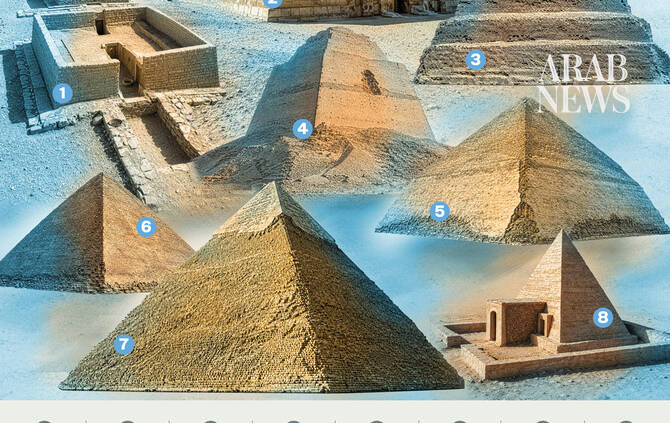
LONDON: When a team of Egyptian archaeologists revealed details last month of excavations at an ancient burial ground on the east bank of the Nile, there was the usual flurry of international media excitement at the prospect of yet another breakthrough in our understanding of how the great pyramids of ancient Egypt were built.
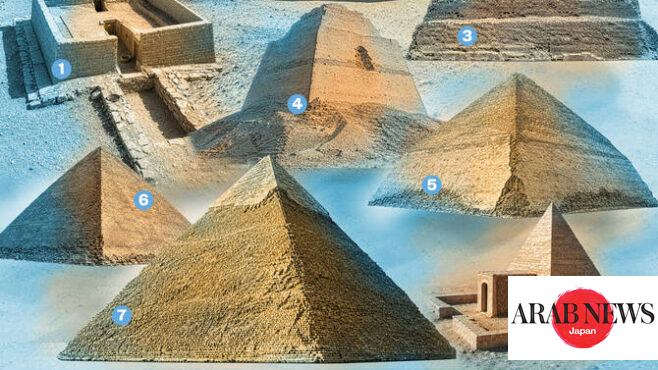
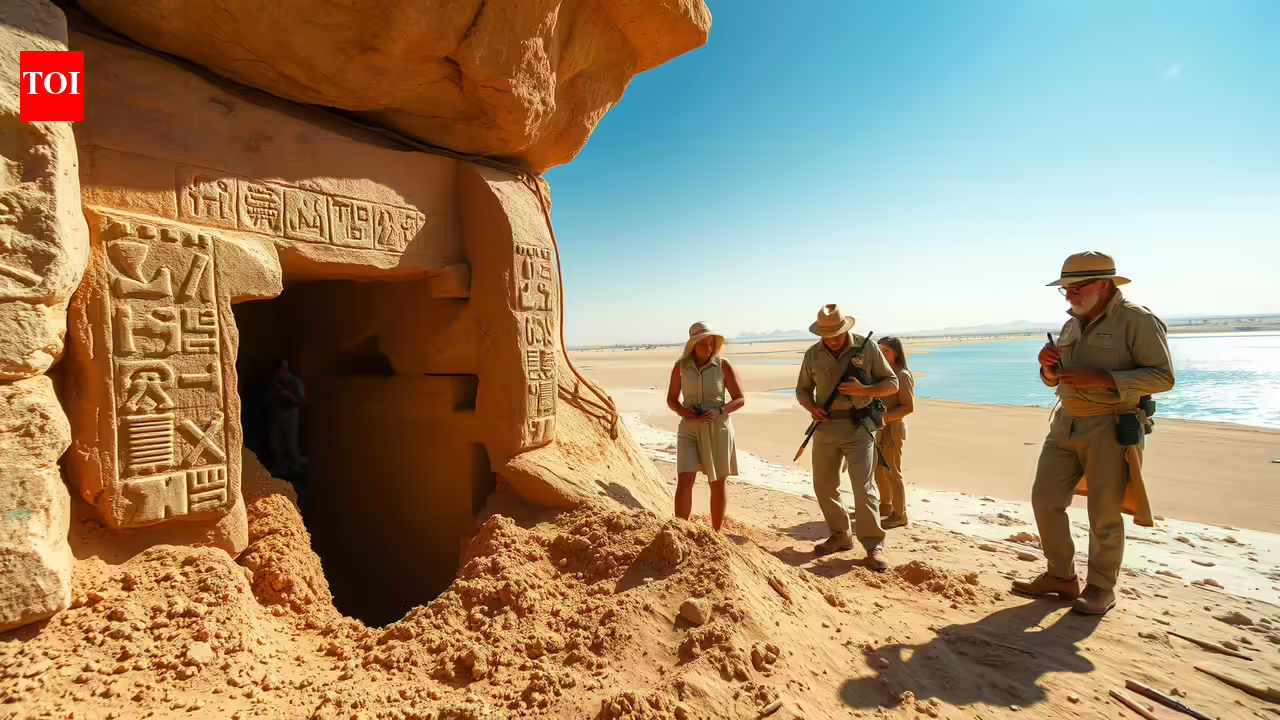
The twin 5,000-year-old tombs at Jabal Al-Tayr were not pyramids — it would be several centuries before the first of those were built — but the media excitement centered on the discovery that, in one of the tombs, the subterranean stone walls were thicker at the bottom, gradually becoming thinner toward the top.
“These tombs reveal the origins of the pyramids,” one article claimed. Others stated that they “rewrite” or “redefine” the origins of Egyptian pyramid architecture. But a small yet crucial qualifying word was missing from most of the excited coverage.
What the press release from Egypt’s Ministry of Tourism and Antiquities had actually said was that “the architectural style may represent an early stage in the development of geometric thought that later led to the appearance of the terraced pyramid, then the full pyramid.”
The enthusiasm to seize on any possible “explanation” for the enduring mystery of how the great Egyptian pyramids were built came as no surprise to Roland Enmarch, reader in Egyptology at the UK’s University of Liverpool and a former editor of The Journal of Egyptian Archaeology.