Economists say the country's poverty line no longer reflects actual living costs and are urging the government to revise it as soon as possible.
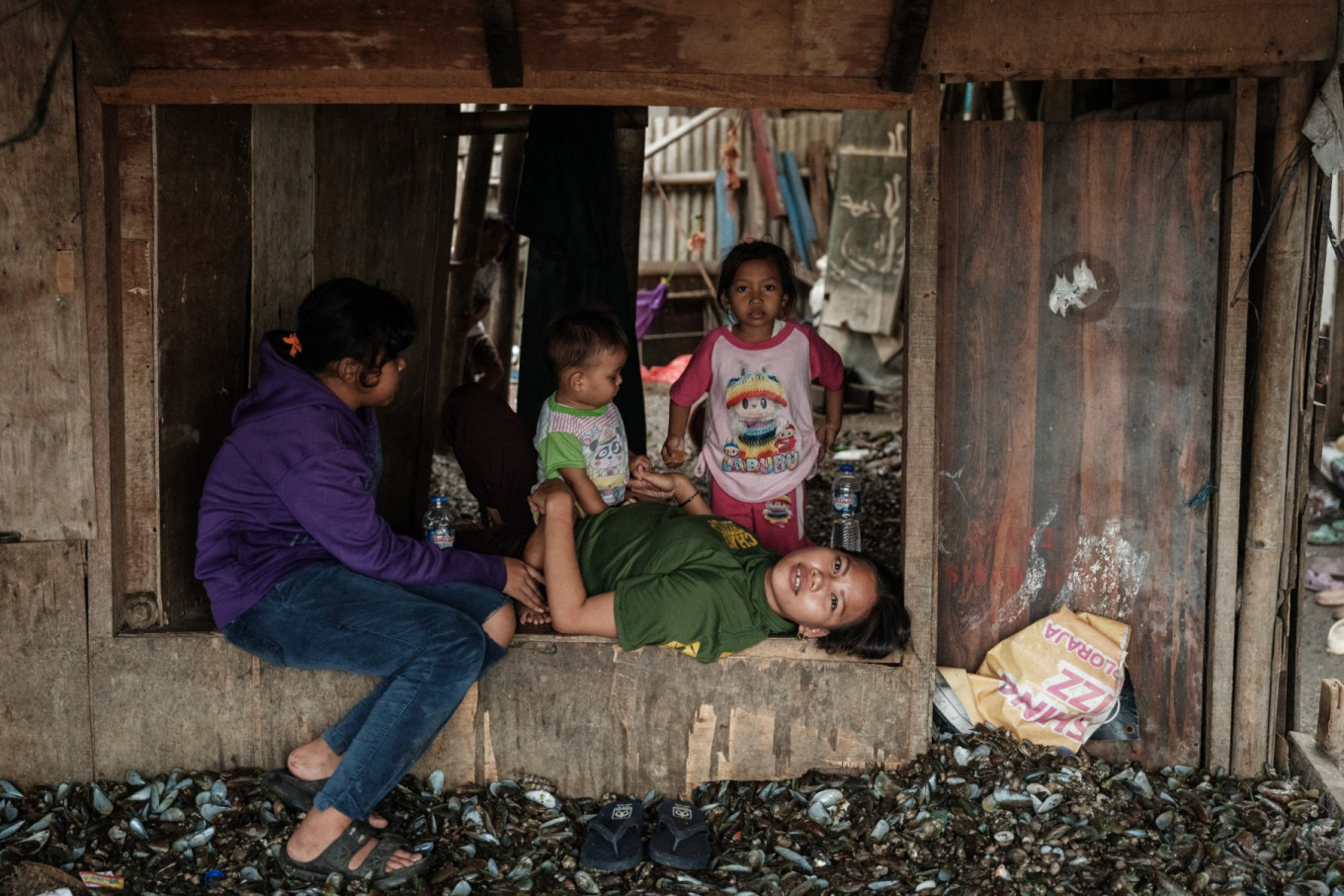
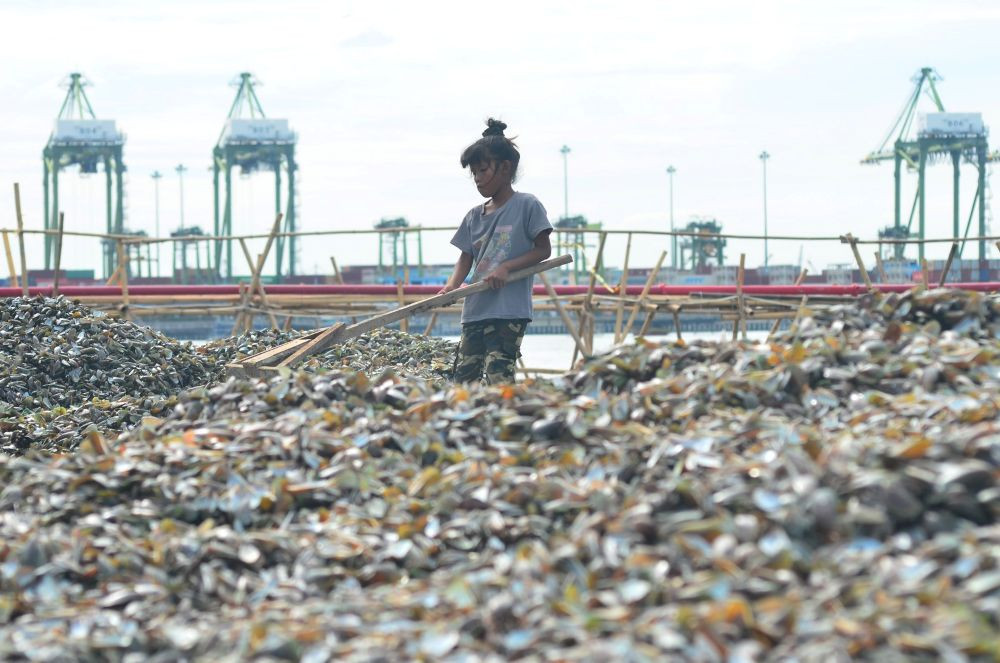
A girl arranges piles of discarded shell waste on Oct. 25, 2025, in the Cilincing area of North Jakarta. Child labor remains a challenge facing the country’s poverty alleviation drive. (JP/Iqro Rinaldi)
Indonesia's poverty rate has fallen further, according to data released by Statistics Indonesia (BPS) on Friday, but economists say widening inequality suggests the poverty line is too low, so the statistical improvement may not fully reflect households' actual welfare.BPS reported that the national poverty rate declined to 8.07 percent in March 2026, down from 8.25 percent in September 2025 and 8.47 percent a year earlier. The number of people living below the poverty line fell to 22.93 million, a decrease of 430,000 from September and 920,000 from March 2025.
The decline was driven largely by urban areas, where the poverty rate dropped to 6.34 percent from 6.6 percent six months earlier. Rural poverty edged down to 10.67 percent from 10.72 percent, leaving a gap of more than four percentage points between urban and rural regions.
BPS defines poverty in terms of expenditure, with households considered poor when their spending is less than Rp 669,235 (US$37.49) per household member. The number is derived by calculating what is deemed the absolute necessity of Rp 499,886 in food expenditure and adding Rp 169,349 for non-food needs.