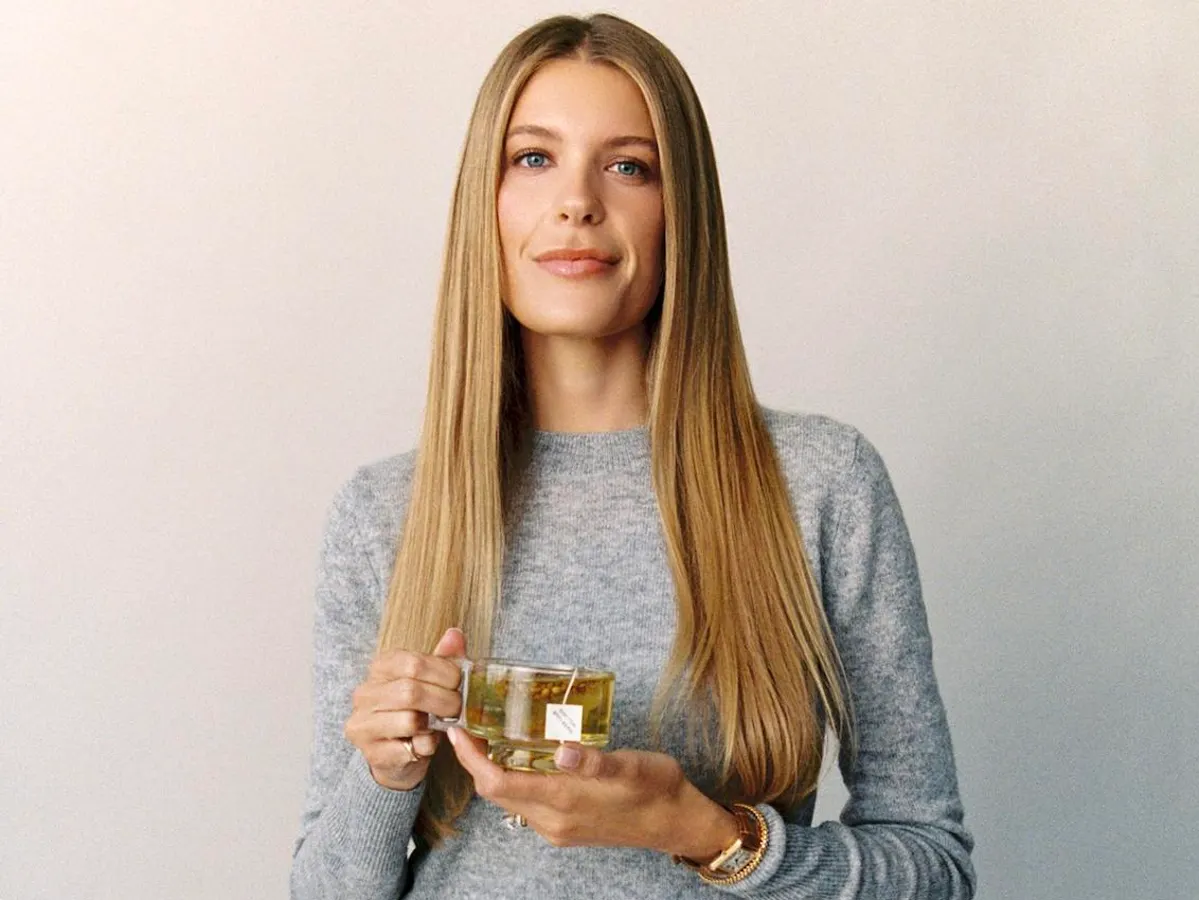
Dr. Natazia zu Stolberg, Photo Credit: Courtesy of Doctor StolbergPhoto Credit: Courtesy of Doctor StolbergWellness is supposed to make us feel better. Somewhere along the way, it started making many of us feel more anxious.Today, better health often comes packaged as optimization: supplement stacks, wearable trackers, peptides, elimination diets, cold plunges, and an endless stream of advice on social media. Every scroll seems to uncover another habit to adopt — or another mistake — making it increasingly difficult to separate credible guidance from the noise.At the same time, the business of wellness continues to surge. McKinsey estimates the global consumer wellness market has reached $2 trillion, driven by consumers who view wellness as a daily practice rather than an occasional purchase.Against that backdrop, Dr. Natazia zu Stolberg has a surprisingly radical approach: Slow down. Drink a cup of tea.And if you’re going to eat the burger, enjoy the burger.I first discovered Doctor Stolberg the way many consumers probably have: while scrolling Instagram. Bright yellow tea boxes kept popping up across my feed, paired with a steaming mug of tea and the tagline “Rest + Digest” and the notion that “cool girls drink hot tea.” Then I stumbled on a post riffing on McDonald’s iconic "1 million served" slogan to celebrate one million cups of tea sold. I was intrigued. And I wanted this practitioner-turned-CPG founder to spill her secrets. MORE FOR YOUPhoto Credit: Courtesy of Doctor StolbergPhoto Credit: Courtesy of Doctor StolbergHere was a doctor borrowing the language of a fast food brand while encouraging people not to fear eating it."I eat burgers," Doctor Stolberg told me matter-of-factly over a Zoom call. "Eating out with friends shouldn't cause anxiety."That perspective feels like a refreshing departure from much of modern wellness, where every meal can seem like a decision to indulge or regret.This isn’t to say Dr. Stolberg dismisses nutrition. Quite the opposite: she believes deeply in eating nourishing, whole foods, moving your body and caring for your health, but without letting wellness become another source of fear or perfectionism.It's also exactly what she says she hears from patients.As a Doctor of Acupuncture and Chinese Medicine, founder of wellness brand Doctor Stolberg, and co-founder of Los Angeles-based health and wellness center Space 314, much of her work today involves helping people filter out the noise.Rather than encouraging consumers to constantly add another supplement, hack or protocol, Doctor Stolberg’s tea is rooted in Chinese medicine, which emphasizes balance, digestion and addressing the root cause of symptoms instead of chasing quick fixes."At my core," she says, "I believe that less is more. Simple habits done consistently lead to the biggest changes."That philosophy didn’t begin with a business plan, it began with her own health challenges.As a teenager, Dr. Stolberg struggled with debilitating endometriosis. Surgery brought only temporary relief, and at 17 she found herself weighing options that included another operation, birth control or medication that would effectively induce menopause."I remember thinking, these aren't sustainable options."Long before wellness creators filled social media feeds, she stumbled across an online forum where women with endometriosis shared their experiences with acupuncture. Curious, she found a practitioner and committed to treatment."It took time," she says. “But I noticed benefits almost immediately.”The experience completely changed the trajectory of her career.Originally planning to attend medical school, Dr. Stolberg realized she wanted to help other women the way acupuncture had helped her."It all started from a deeply personal experience," she says. "Those are still the women I primarily treat today."Years later, another personal frustration would become the foundation of her company.While completing her doctorate, she struggled with chronic bloating and increasingly restrictive eating habits."I remember not wanting to go out for dinner with friends because I knew I'd feel awful afterward," she recalls. "That was a huge problem because sharing meals with people is one of life's greatest pleasures."She developed an herbal formula that dramatically improved her digestion. When she later opened her Los Angeles clinic, she prescribed the same blend to patients, asking them to prepare it twice daily as part of a 60-day protocol.Eventually one patient asked: "’Can you just make me 120 tea bags? I'll actually follow the protocol if you do.'"Dr. Stolberg went home, ordered supplies from Amazon and started making tea in her kitchen. "There wasn't a business plan," she says. "I just wanted to make it easier for my patients."For the next three years, she quietly sold “Rest + Digest” tea while reinvesting every dollar back into the company. "I didn't want to spend money I didn't have," she says. "Looking back, not having funding was actually a gift. It forced me to grow carefully."That same philosophy still shapes the business today.Since relaunching Doctor Stolberg in June 2025, that patient-first approach has translated into a surprisingly fast-growing business. The brand has surpassed $1 million in sales and grown revenue roughly ninefold year over year. Nearly 90% of sales come directly through its own channels, fueled largely by founder-led storytelling and word of mouth rather than paid advertising. She also serves digestion and wellness advice on her Substack, Well Being.The brand has expanded thoughtfully into like-minded partners, from hospitality destinations including Auberge Resorts Collection, Four Seasons Resort Los Cabos at Costa Palmas, and Ash Hotels, to premium grocers like Happier Grocery and Sua Superette, as well as beauty and lifestyle retailers including Silver Springs and Moss.The numbers suggest consumers aren’t simply buying tea — they’re buying into a different philosophy of wellness, one that’s rooted in “Soft medicines for well beings” (the brand’s tagline).Her philosophy isn’t just expressed in words — it shapes every aspect of the brand. Rather than relying on the familiar visual language of wellness — minimalism, green juices and aspirational perfection — Doctor Stolberg deliberately flips the script. Campaigns feature pizza instead of green juices. Retro diner mugs replace pristine supplement bottles as merch. The effect feels both disruptive and deeply intentional: a wellness brand that removes guilt instead of reinforcing it, making wellness feel a little more human.It’s a radical approach in an industry that often celebrates restriction. The wellness advice on social media and podcasts is frequently framed around urgency: you’re eating the wrong foods, taking the wrong supplements or following the wrong routine. So much content performs because it taps into fear.Dr. Stolberg has watched that shift happen firsthand."The hook on social media was always, 'You're doing this wrong.' Some of that content is educational, but it's still rooted in fear, shame and convincing people they're failing."Eventually, she began seeing the consequences inside her clinic."Patients would come in completely overwhelmed," she says. "They'd tell me, 'I'm not doing enough,' or 'I'm doing everything wrong,' even though they were already doing many things well."That experience fundamentally shaped how she wanted to build her own company."I've become very intentional about making sure people don't encounter my brand and leave feeling inadequate or anxious."Instead, she hopes they leave feeling encouraged.It also explains why Rest + Digest remains a tea versus turning the formula into capsules.Her answer is immediate. “A pill is too fast.” She wants people to boil the water, steep the tea, sit still for a few minutes, drink it slowly, and create a habit.That idea may be resonating at a moment when consumers are increasingly looking for rituals, not just another capsule to add to an already crowded supplement routine.With nearly 1 million posts on TikTok mentioning cortisol (popularizing unverified terms like “cortisol face” and “cortisol belly”), wellness conversations have become increasingly focused on stress, hormone balance and optimization. Stolberg’s philosophy offers something radically different: fewer products, slower rituals and simple habits practiced consistently over time.“The pause is part of the medicine.” Especially, she says, when digestion is the goal.For Dr. Stolberg, however, the answer is consistency.It’s a philosophy she applies equally to medicine, business and life — and one that feels especially relevant in an era obsessed with quick fixes and overnight transformations.When Doctor Stolberg first launched, she and her wife filled roughly 40,000 tea bags by hand in their kitchen before eventually scaling production, printing labels on a home printer, and packaging every order themselves. "I’ve always wanted to grow slowly," she says.It’s a notable stance at a time when many wellness brands race to become lifestyle empires almost overnight.When I asked what keeps her motivated through the inevitable challenges of building a company, she talked about how her philosophy is flipping the script on how people are viewing dinner.Health shouldn’t become another source of stress, it should create more room for joy.Photo Credit: Doctor StolbergPhoto Credit: Doctor StolbergEven the brand’s bright yellow packaging feels intentional. In Chinese medicine, each of the five elements has an associated color, and yellow represents the Earth element, which governs the spleen and stomach — the digestive organs. The result is a visual identity that feels as optimistic and grounding as the philosophy behind it.In a culture obsessed with doing more, buying more and optimizing more, simplicity has become surprisingly disruptive.Throughout our conversation, Dr. Stolberg returned to one idea again and again:“Simple habits, done consistently, create the biggest changes.”But if I had to distill her philosophy into three words, it would simply be this:Eat the burger.
How Doctor Stolberg Turned A Cup Of Tea Into A Viral Wellness Brand
As wellness grows more complex, Doctor Stolberg offers a simpler prescription: slow down, drink tea and enjoy the burger. Go inside the buzzy tea brand.
1,524 words~7 min read