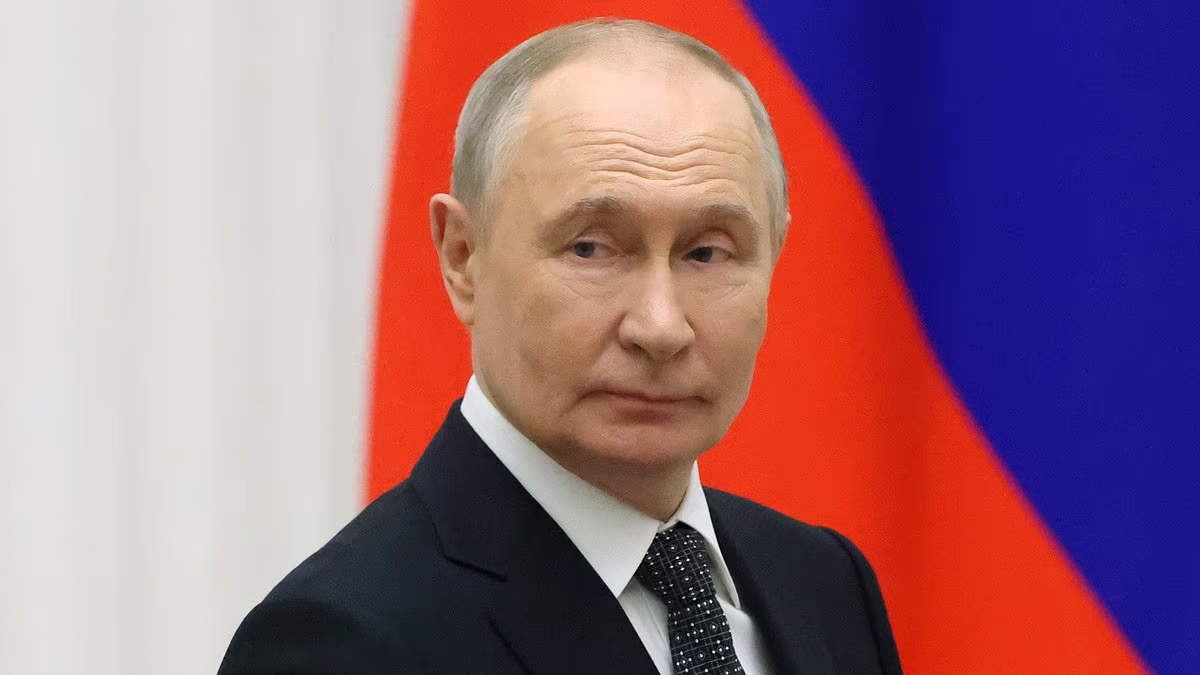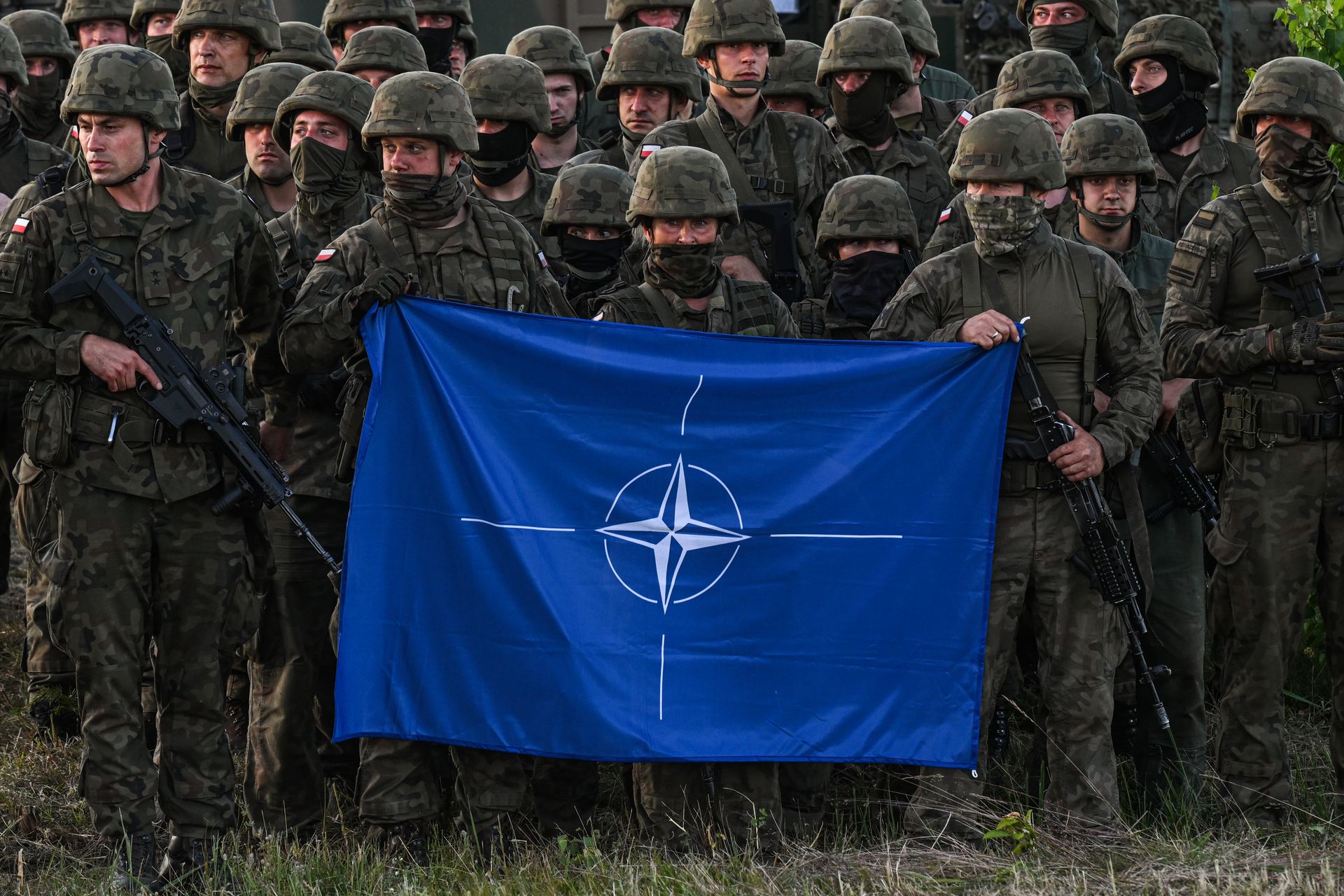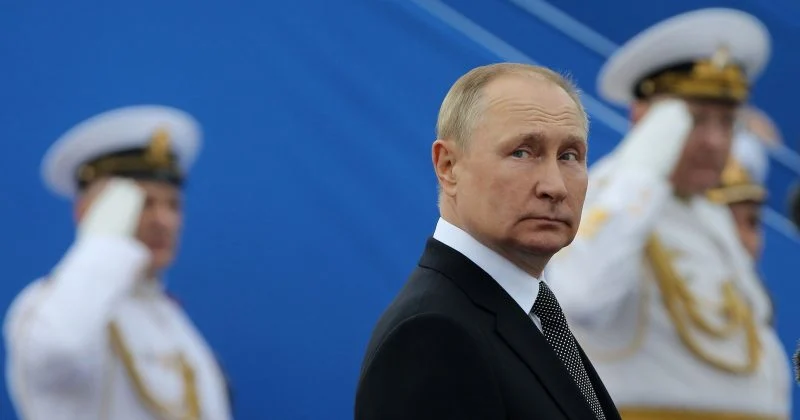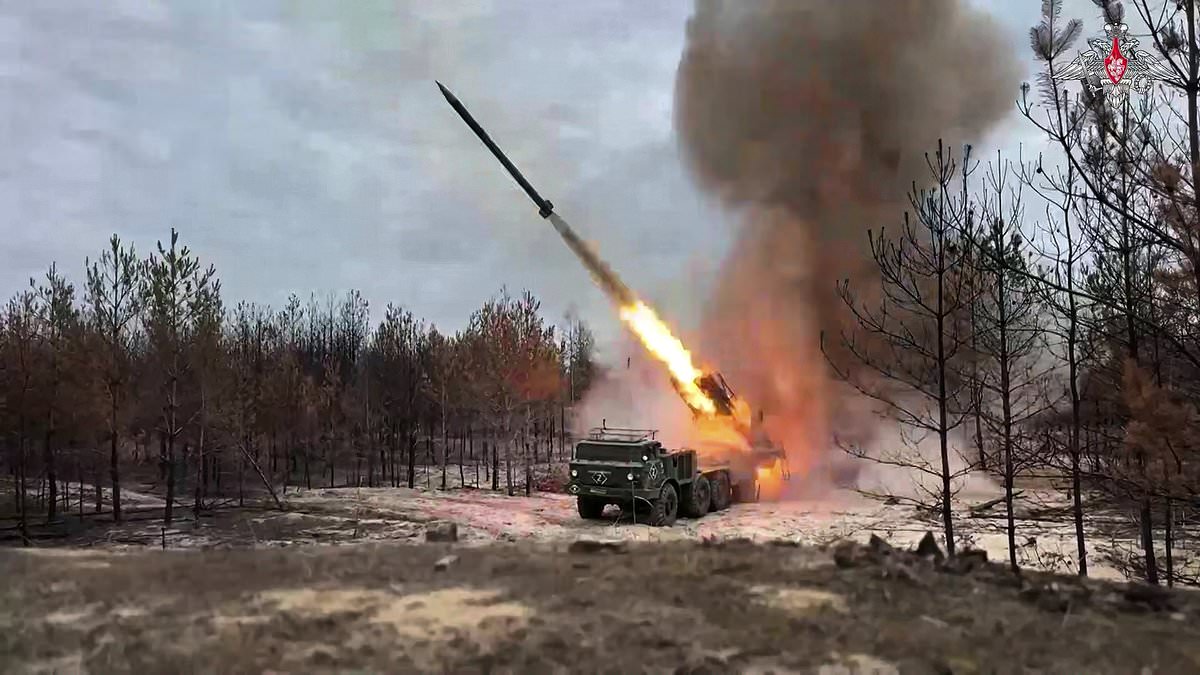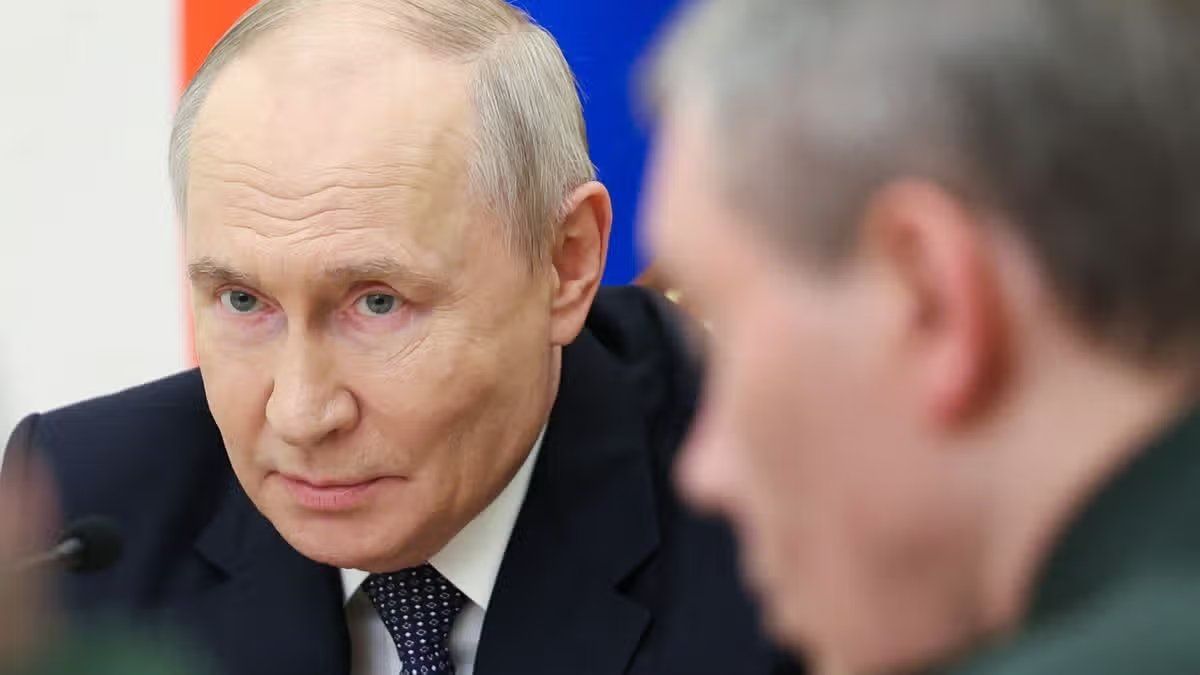
US intelligence and European leaders have sounded the alarm that a Russian attack on NATO could be imminent as the Kremlin's grip on Ukraine starts to falter12:24, 07 Aug 2026Vladmir Putin could send troops to attack a NATO member as early as this autumn in an attempt to test the military alliance's resolve, according to a report from US intelligence.Officials in Washington have long held the assumption that Russia would never attack a NATO ally while it was preoccupied with the invasion of Ukraine.But that assumption has changed after a shortage of troops, slow progress on the frontlines and daily attacks by Ukraine inside Russian borders have turned the tide of the conflict and put pressure on Putin in a way he hasn't felt before, the Wall Street Journal reports.In response, Putin may try to attack or even occupy a country on NATO's eastern flank in an attempt to split resources and fracture the military alliance's Article 5 commitments, which state that all members nations will collectively defend an ally who gets attacked.Citing unnamed U.S. officials, the WSJ claims the attacks could also come amid reports that Washington is currently facing a shortage of critical munitions, which have been depleted as a result of its war with Iran. Stockpiles of crucial long-range and short-range missile systems, such as Patriot systems and Terminal High Altitude Area Defence (THAAD) interceptors, remain critically low, the outlet reports.“The numbers do not lie,” NATO’s Allied Joint Force Command Brunssum said in a post.“The possible threats range from a cyberattack on a NATO country or sending unmarked armed groups to occupy territory to a limited incursion on the alliance's eastern flank,” said the WSJ report.According to U.S. intelligence assessments., the time frame for a Russian move could be any time between this autumn and 2029.Possible threats range from a cyberattack on a NATO country or the dispatch of unmarked armed groups to occupy territory, to a limited incursion on the Alliance's eastern flank.Countries such as Estonia, Latvia and Georgia are thought to be at serious risk, while territory in Poland that neighbours the Russian exclave of Kaliningrad could also be targeted.By grabbing a small patch of territory in the Baltics, Putin could declare a victory against the West.Last month, Russian opposition politician and chess grandmaster Garry Kasparov told Polish media : “ I think the chance are that he'll cross NATO borders — Estonia, Latvia, Lithuania, Poland, just a small incursion using drones.“I think the chances are growing because Putin needs a winning narrative and Ukraine doesn't offer it.”Lithuanian President Gitanas Nausėda echoed Kasparov's claims, warning recently: “I cannot deny that we have such information and that it concerns kinetic operations.“Not on a large scale, but targeted kinetic operations that are very likely to be directed against critical infrastructure.”Lithuania's Defense Minister Robert Kaunas also warned that Russia could use Ukrainian drones to carry out a false-flag attack in the region."We have data that Russia is considering unconventional kinetic attacks on critical infrastructure in the Baltic region. Russia is likely to use Ukrainian production drones to do so," he told local outlets this week.The news comes after a number of probing attacks in recent months on NATO-affiliated countries. Last month saw a number of Russian drones make excursions into Romanian territory, while Nordic intelligence has reported an increase in Russian military presence near its border with Finland.Article continues below"All 32 NATO partners agree that Russia might have the capability to invade a NATO partner country in 2029," Lieutenant General Christian Freuding, the head of Germany's army, told Politico."2029 is not a German timeline. It’s NATO-agreed intelligence," he added.
Putin 'plotting attack on NATO member' to save face after Ukraine humiliation
US intelligence and European leaders have sounded the alarm that a Russian attack on NATO could be imminent as the Kremlin's grip on Ukraine starts to falter
601 words~3 min read