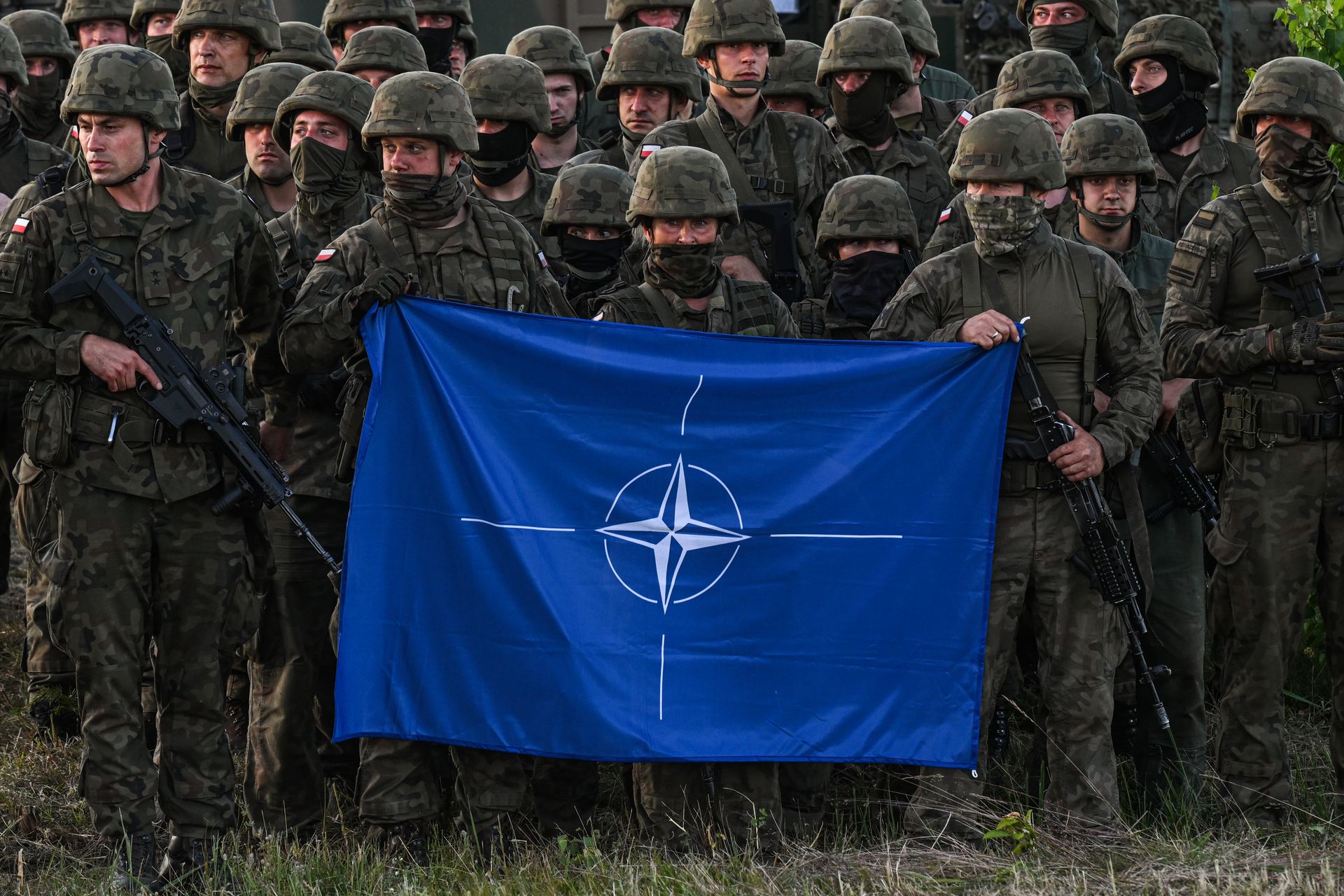
WarAugust 7, 2026 7:54 am • 3 min readPolish soldiers hold a NATO flag at the Orzysz training ground in Orzysz, Poland, on July 3, 2022. (Omar Marques / Getty Images)U.S. intelligence reports raised new alarms that Russian President Vladimir Putin could provoke a NATO nation with a limited attack as early as this fall, the Wall Street Journal (WSJ) reported on Aug. 6.According to WSJ, officials in Washington previously believed that an attack on a NATO ally would not occur amid Russia's preoccupation with its war in Ukraine. The new-found belief by U.S. intelligence matches a chorus of similar warnings made by European officials in recent months. In June, the head of Germany's army, Lieutenant General Christian Freuding, cautioned that Russia might have the capabilities to strike NATO countries within the next three years. According to WSJ, U.S. officials believe that a large-scale hybrid-warfare attack, or even limited land incursion, may come between the fall of this year and 2029. The latest intelligence report comes amid warnings from European countries that Russia may also attempt to use false flag-style attacks using Ukrainian-made drones to strike critical infrastructure in the Baltic region."The Kremlin, Putin, needs a new escalation, some kind of new victory, and in this case the Baltic region and Poland are the closest targets," Lithuania Defense Minister Robert Kaunas told LRT Radio on Aug. 6, voicing new intelligence.The statement came after drone incidents and incursions in all three Baltic states have raised tensions in the region in recent months. On Aug. 5, an unidentified first-person view (FPV) drone reportedly collided with a Ukrainian cargo plane at Leipzig airport in Germany. German Interior Minister Alexander Dobrindt described the incident as a "hybrid attack scenario." He did not name Russia but the Kremlin has been waging a hybrid war aimed at destabilizing European countries for several years.Citing unnamed U.S. officials, WSJ reported that recent Ukrainian strikes on Russian energy infrastructure and minimal gains on the battlefield could push Putin to attempt to secure a victory against NATO. The attack would likely target NATO’s eastern flank to test the alliance’s Article 5 commitments — the collective defense clause for member nations.The warnings from the intelligence communities come amid reports that the U.S. now faces shortages for critical munitions amid its ongoing war with Iran. Certain long-range and short-range missile system stockpiles, such as Patriot systems and Terminal High Altitude Area Defense (THAAD) interceptors, remain low, according to the WSJ.In response to the shortages, U.S. President Donald Trump said that the United States "needs missiles too" on Aug. 6 when President Volodymyr Zelensky renewed calls for military aid.Allied supplies of air defense missiles to Ukraine fell by two-thirds in the first half of this year compared with the same period in 2025, Zelensky said on Aug. 5.Taking advantage of defense shortfalls, Russian forces have increased strikes on Kyiv. On Aug. 5, ballistic missile and drone attacks killed 17 people near the capital and injured dozens more. Ukraine's Air Force said Russia launched 24 ballistic and four hypersonic missiles during the attack, as well as 115 Shahed-type drones. None of the missiles were intercepted.
US intel warns Russia could test NATO as early as this fall, WSJ reports
U.S. intelligence reports raised new alarms that Russian President Vladimir Putin could provoke a NATO nation with a limited attack as early as this fall, the Wall Street Journal (WSJ) reported on Aug. 6.
521 words~2 min read