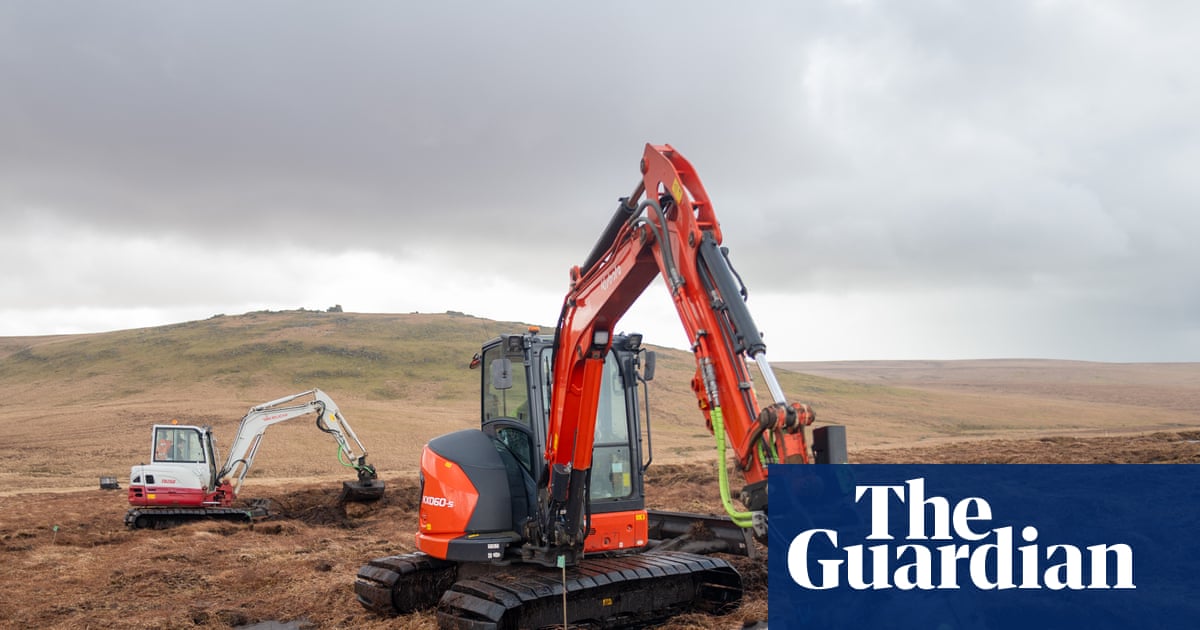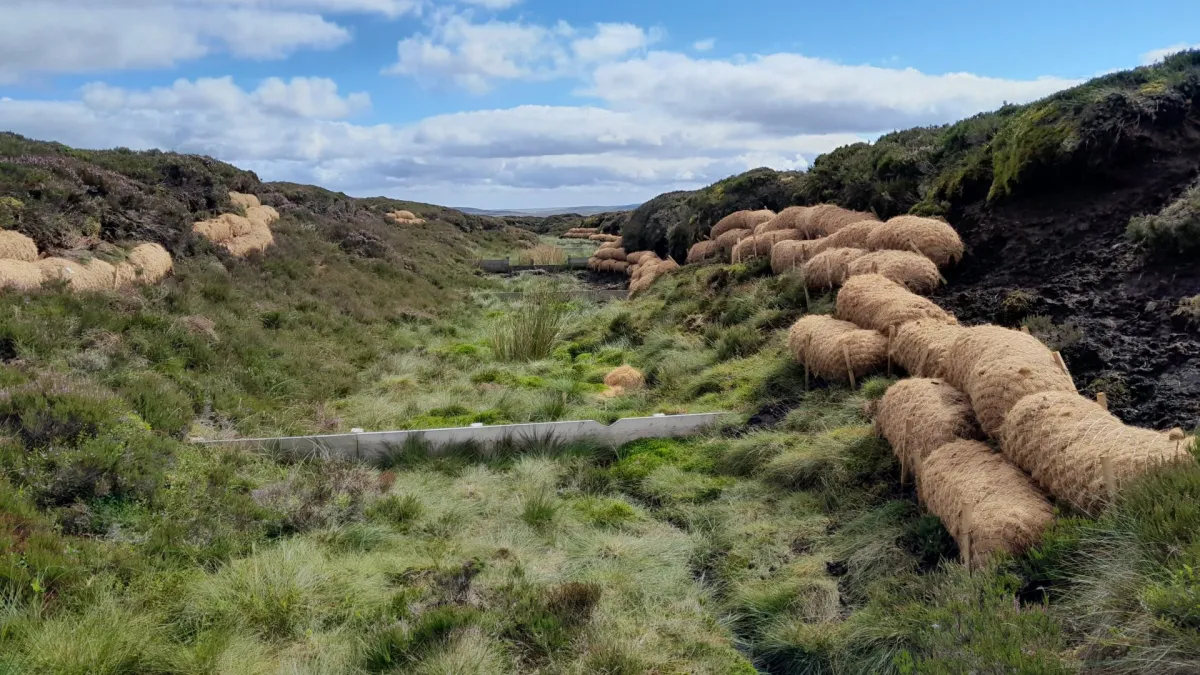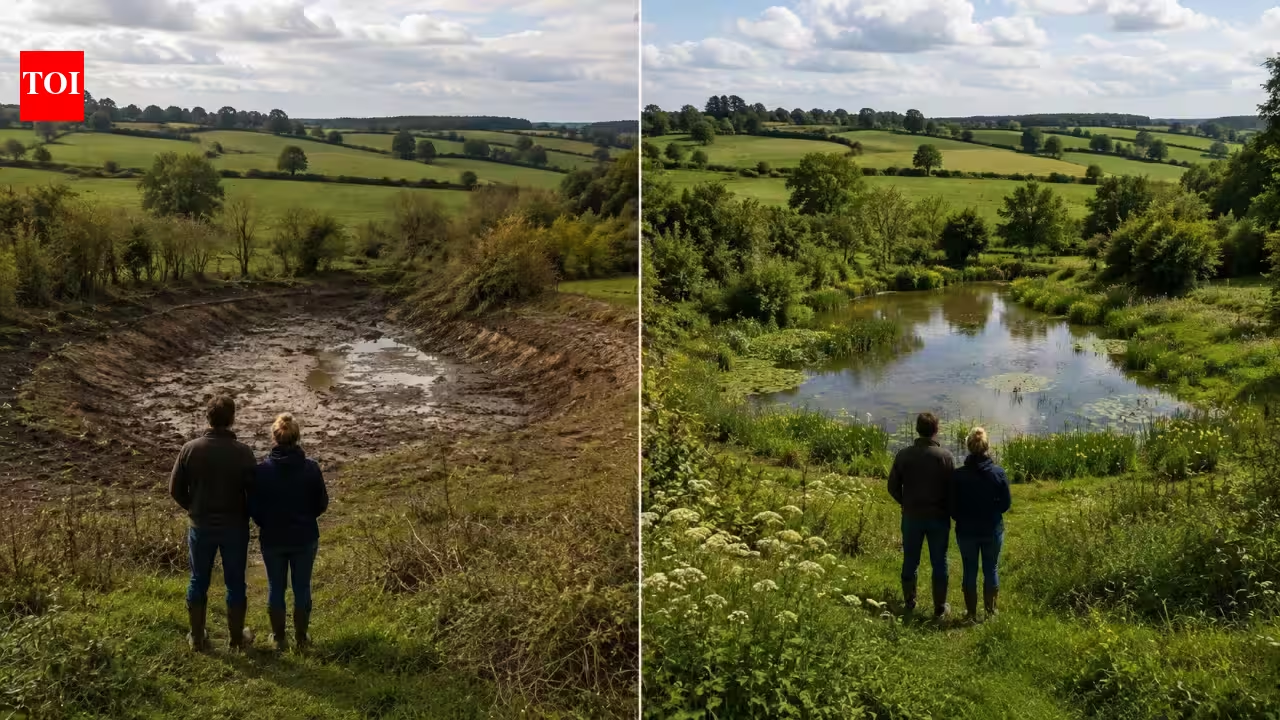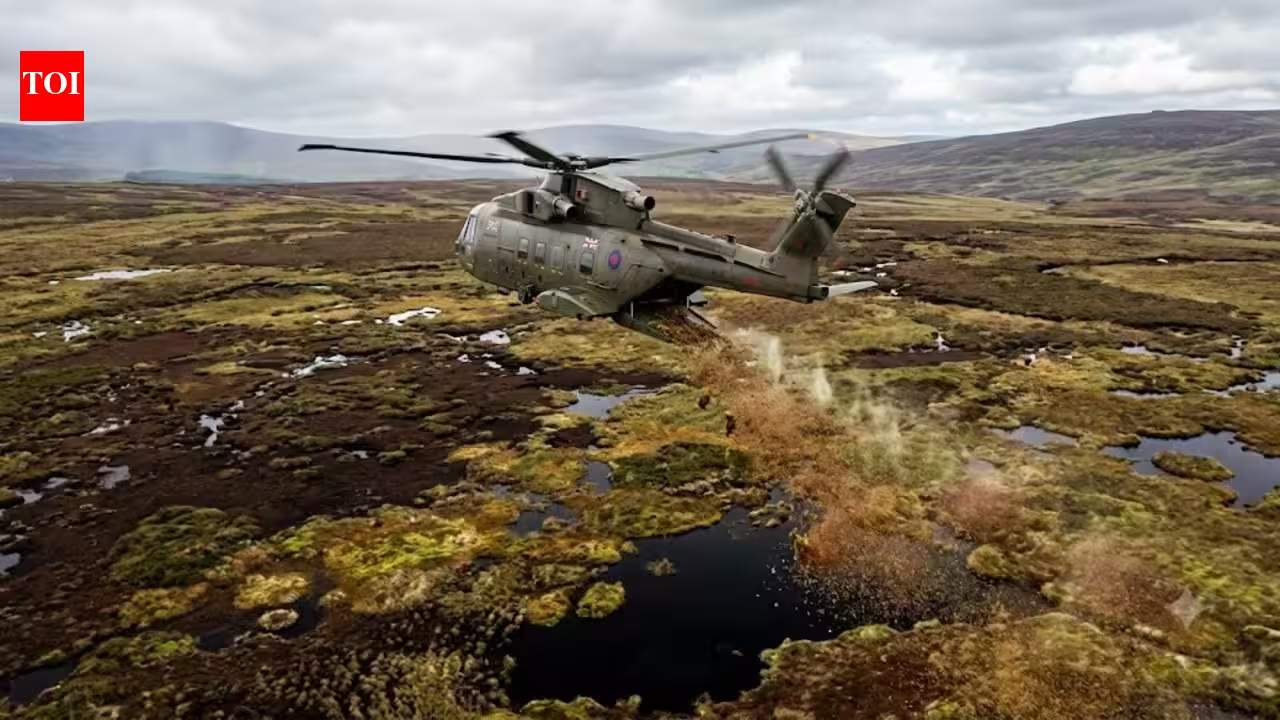
Representative image of a helicopter dropping green life from the sky to revive wild bogs. Image Credits: Google GeminiHigh in the Peak District of northern England, vast stretches of peatland had been reduced to bare, eroding peat by decades of industrial pollution, repeated wildfires, overgrazing and drainage. The exposed landscape was losing soil, releasing stored carbon and sending dark, sediment-rich water into rivers and reservoirs. Restoring the damaged bog by traditional methods would have taken years because much of the terrain was too steep and inaccessible to vehicles or large teams of workers.According to the Moors for the Future Partnership, restoration teams adopted an unusual solution in 2013. They loaded 2.8 million fragments of living moss into a helicopter and scattered them across remote sections of the Peak District that were difficult to reach on foot. The aerial operation was part of one of the largest peatland restoration programmes in the United Kingdom, designed to help moss recolonise bare peat and restart the natural processes that allow peat bogs to recover.Why restoring moss meant restoring the peatlandAlthough moss may appear to be an ordinary plant, it is fundamental to the health of peat bogs. It acts like a sponge, absorbing and retaining many times its own weight in water, keeping the ground permanently wet and creating the waterlogged conditions needed for peat to form. When peat bogs become degraded, however, this natural system begins to break down. Drainage lowers the water table, allowing oxygen to penetrate the peat and accelerating the decomposition of organic matter, which releases stored carbon dioxide into the atmosphere. As the peat dries out, both the peat and the remaining moss become vulnerable to erosion by rain and wind, making it even harder for the bog to recover.According to Restoration Ecology, healthy peatlands provide habitat for specialised plants and wildlife while storing large amounts of carbon, regulating water flow and improving water quality. Because peat accumulates extremely slowly, protecting and restoring existing peatlands is far more effective than trying to recreate them after they are lost.Restoring the bog from the airUnlike many restoration projects that focus on planting trees, peatland recovery depends on recreating the wet conditions that allow moss to grow naturally. The moss fragments scattered from the helicopter landed on damp, stabilised peat, where they gradually established new colonies. As the moss spread, it trapped more water, keeping the peat surface wetter and creating the conditions needed for peat formation to resume. Over time, the recovering vegetation reduced erosion, slowed water runoff and helped the damaged bog begin functioning as a healthy peatland once again.The aerial approach also solved a major logistical challenge. Carrying millions of delicate moss fragments by hand across steep, remote moorland would have required enormous time and labour. Helicopters enabled restoration teams to distribute the material quickly while minimising disturbance to the fragile landscape. In the years that followed, monitoring showed the once-bare peat becoming increasingly green as moss spread alongside cotton grass, heather and other native bog plants. The recovering habitat also supported wildlife including curlews, golden plovers and mountain hares, species that rely on healthy upland peatlands.In 2013, England loaded 2.8 million living moss capsules into a helicopter and then flew them over a peat bog too remote to restore by hand. Image Credits: Wikimedia Commons.A growing role in climate resilienceThe Peak District project has become a model for peatland restoration across the United Kingdom, where large areas of peat have been damaged by centuries of drainage, burning and other land-use practices. Rather than relying on a single solution, the programme combined erosion control, rewetting and vegetation restoration to rebuild an ecosystem that had taken thousands of years to form.According to Nature Climate Change, peatlands cover only about 3 per cent of the Earth's land surface but store an exceptionally large share of global soil carbon, making them one of the planet's most important natural carbon reservoirs. When they remain wet and healthy, they continue storing carbon, regulating water and supporting biodiversity. When they degrade, they become significant sources of greenhouse gas emissions.More than a decade after helicopters first scattered millions of living moss fragments across the Peak District, areas that were once dominated by bare, eroding peat have been transformed into functioning bogs once again. The project demonstrated that even severely degraded and inaccessible landscapes can recover through a combination of engineering, ecological restoration and long-term management.
In 2013, England loaded 2.8 million living moss capsules into a helicopter and then flew them over a peat bog too remote to restore by hand
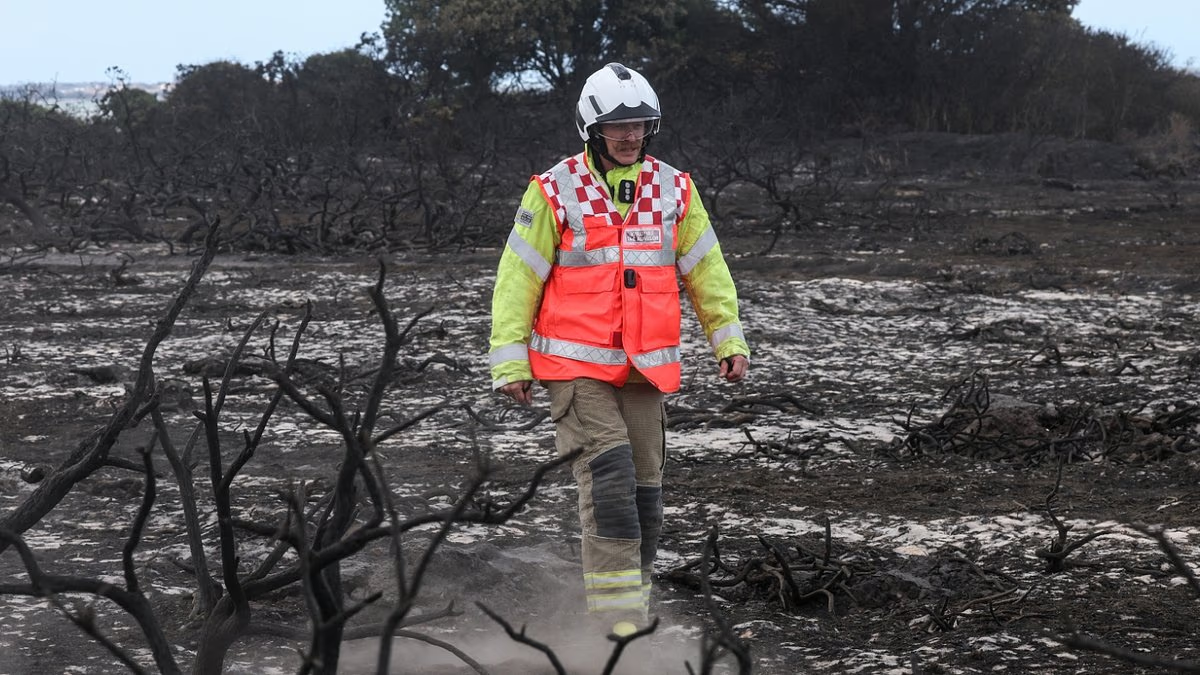
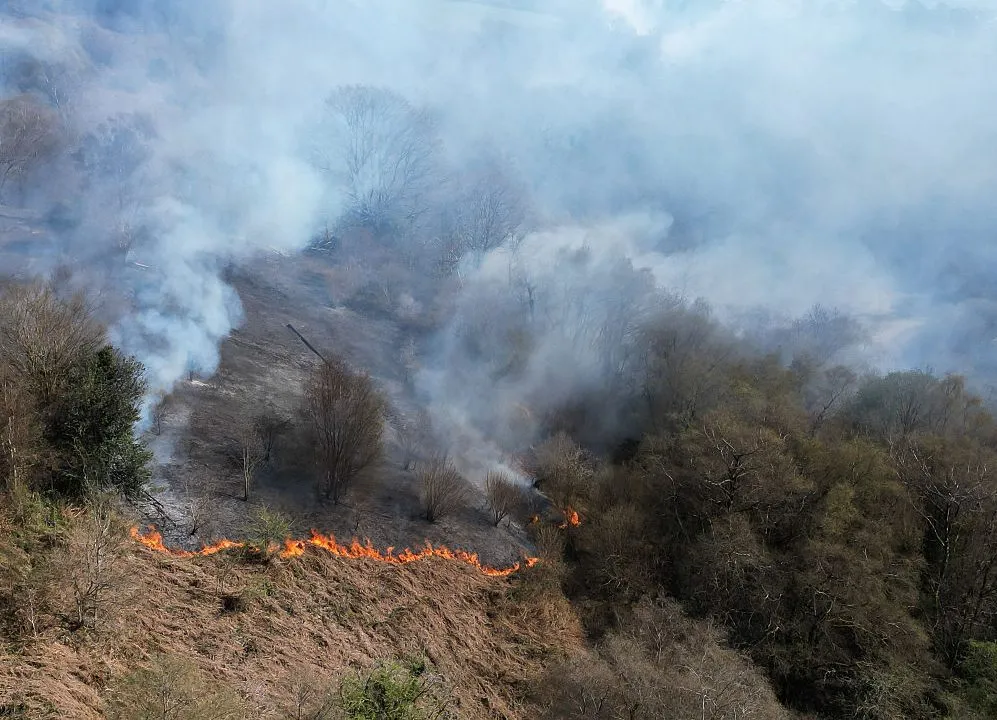
High in the Peak District of northern England, vast stretches of peatland had been reduced to bare, eroding peat by decades of industrial pollution, repeated wildfires, overgrazing and drainage. The exposed landscape was losing soil, releasing stored carbon and sending dark, sediment-rich water into rivers and reservoirs.
730 words~3 min read