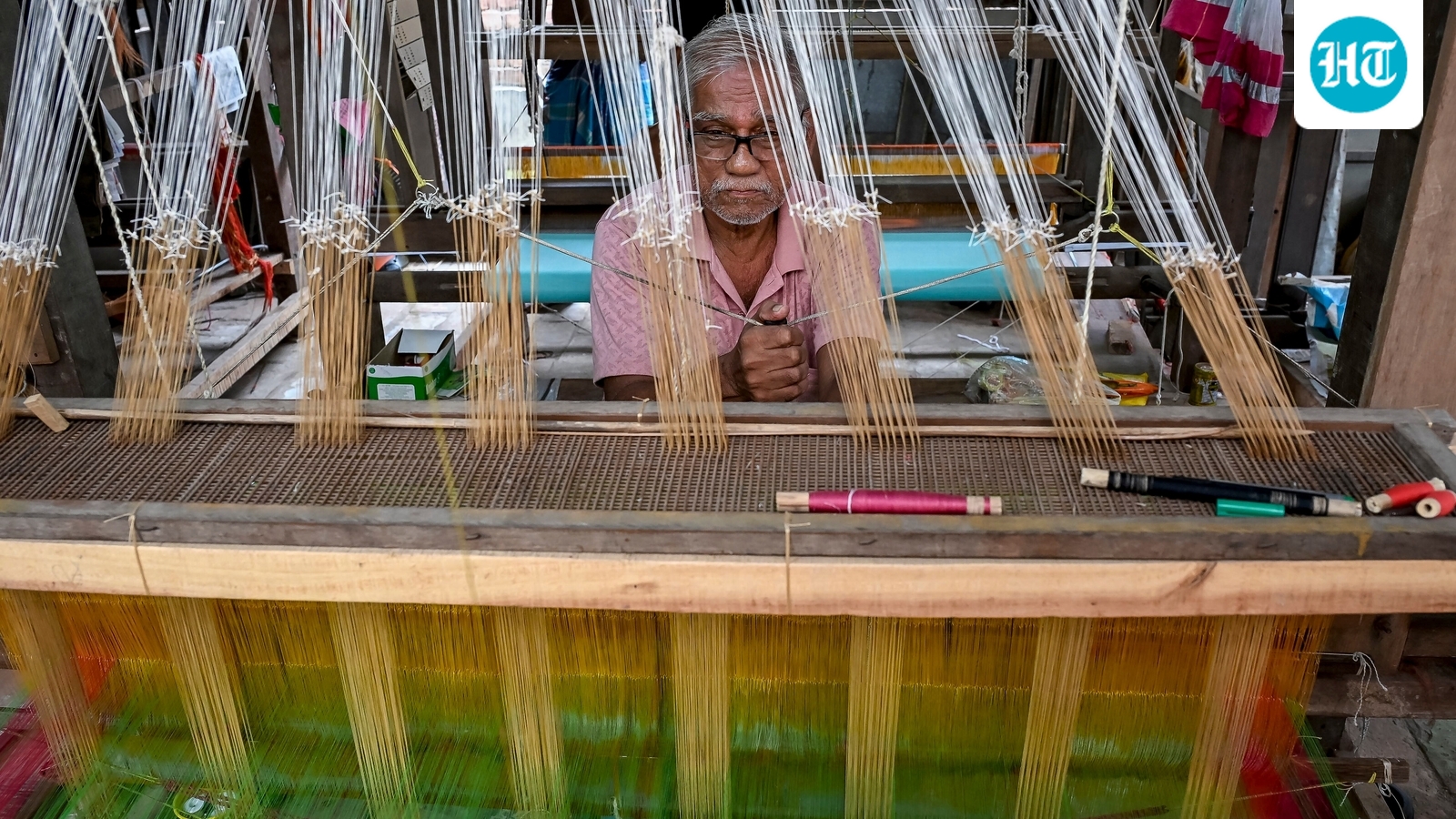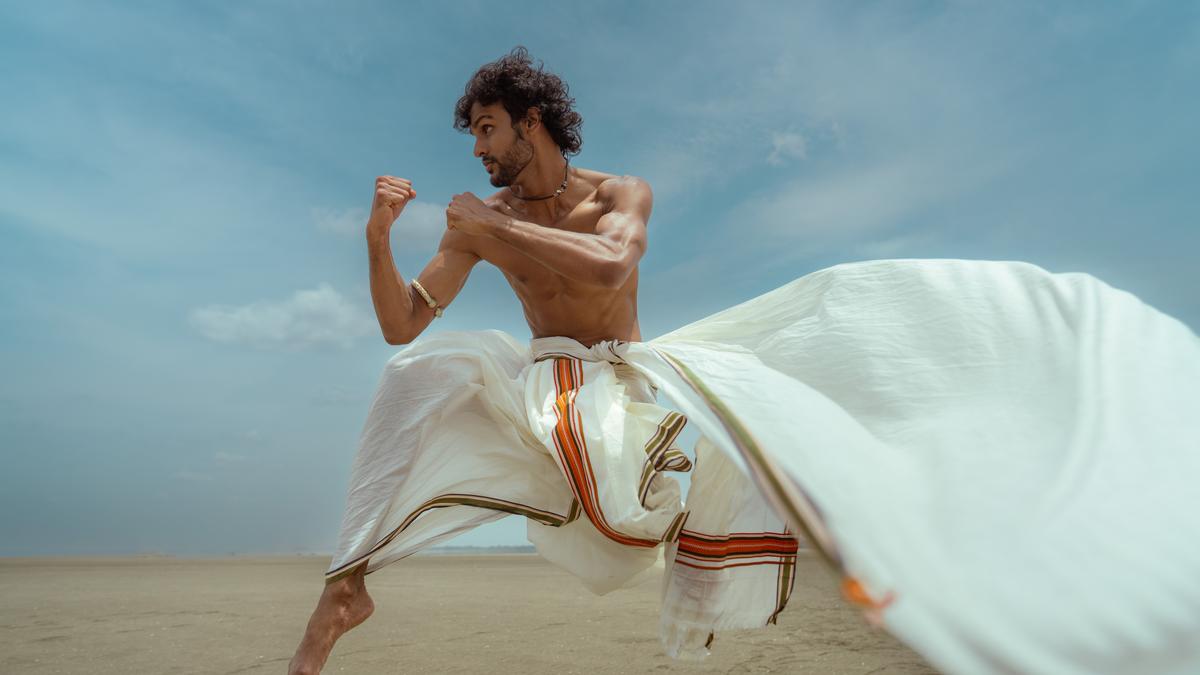
Stripes of black, orange and red. Tiny black fish swimming in threes. Checkered blues. Imagine all of this on dhotis, the ubiquitous South Indian garment more commonly associated with crisp white fabric, edged in solid colours or gold. While it traditionally features in saris woven by the Santhal tribal community, , the Santhali weave now finds a place on the dhoti through Panchaa, an initiative by Ramraj Cotton. This limited-edition launch, features 11 different designs on eight-yard dhotis handwoven in cotton with an off-white base and azo-free dyes. This coming-together of weaves is unusual: a garment traditionally from the South, a company that has its roots in Tamil Nadu, and a weave that originates from the forests and far-flung areas of Odisha. For Bindu Vinodhan, founder, Mauna Dhwani foundation who has spent close to a decade working on the revival of the Santhali weave, collaborating with weavers in Mayurbhanj, a project with Chennai-based photographer, author and documentary filmmaker Amar Ramesh set the ball rolling.
The Panchaa line will have 11 different desings in the Santhali weave
| Photo Credit:
Amar Ramesh
At the culmination of this project, Amar approached Ramraj Cotton with two dhotis woven in the Santhali weave. “They were amazed at how beautifully it came together and decided to work with the weavers directly, to reimagine the weave, and bring out a contemporary dhoti,” Amar says. “Among the Santhali community, weaving had begun to decline as people migrated in search of other livelihoods. Within two or three generations, the tradition had nearly disappeared. Over the last decade, we worked on reviving the weave, facilitated setting up looms and more. Everything is done here by them from scratch,” says Bindu.