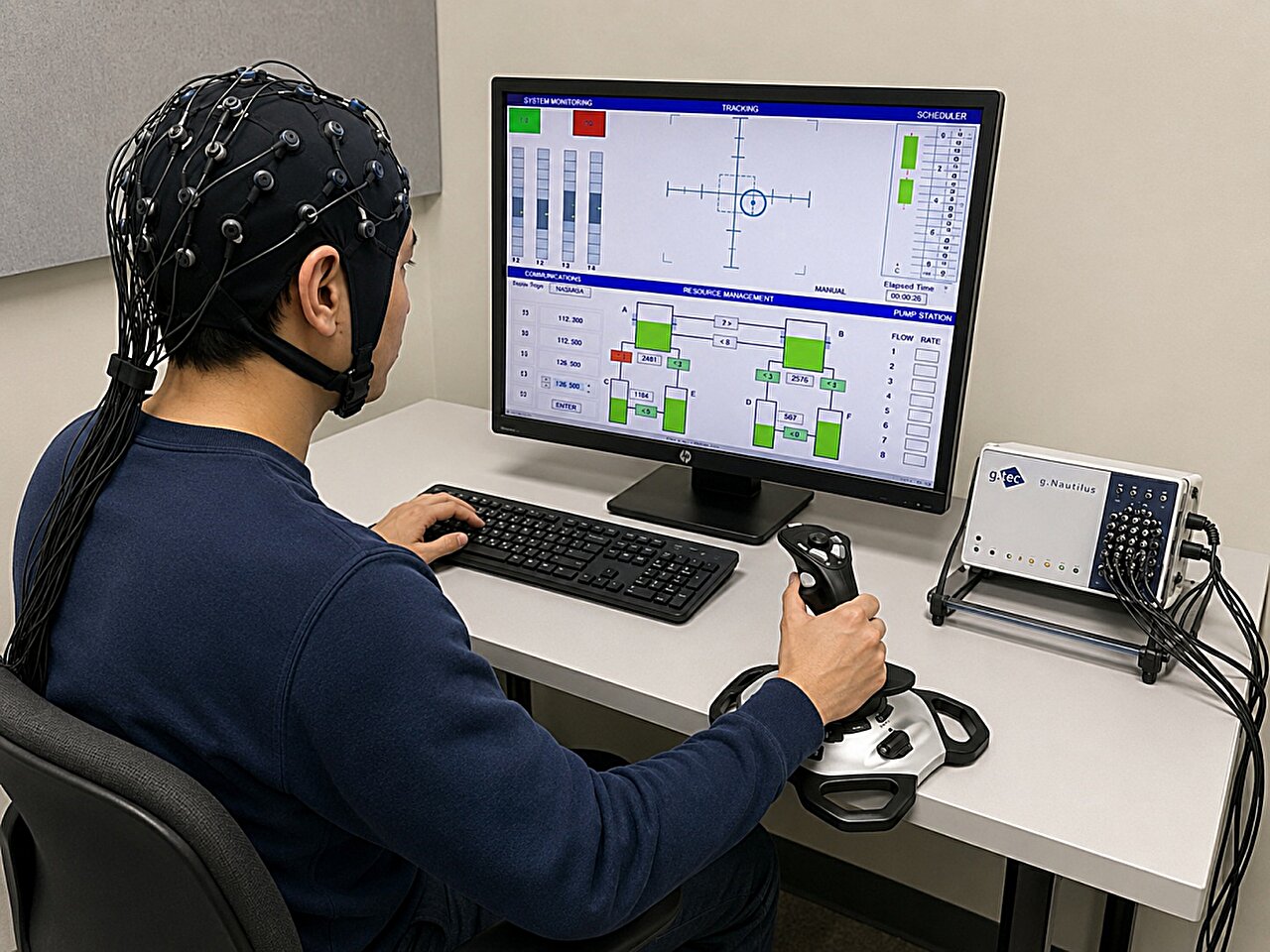
The Lingnan research team used the aviation industry as their research background, employing flight simulators to test different modes of human–machine collaboration. The team utilized the multi-attribute task battery (MATB), developed by NASA, to mimic work scenarios where operators have to multitask, and analyzed how the distribution of decision-making and control authority between humans and intelligent systems affects safety, work efficiency, and user experience. Credit: Lingnan University
As artificial intelligence is gradually being integrated into various industries, human–AI collaboration has become a subject of significant concern. A joint study conducted by the Department of Psychology at Lingnan University has found that while AI helps maintain employee performance during surges in workload, allowing it to autonomously decide when to take over and relinquish control may make it difficult for users to regain situational awareness, thereby increasing mental fatigue and even leading to human-machine conflict.
Academics point out that enhancing the transparency of intelligent systems to help users understand AI decision-making logic, while ensuring humans retain control over task allocation, is essential for maintaining long-term performance and sound judgment. These findings have been published in the International Journal of Human–Computer Interaction.