AI and machine learning by Aruna Ranganathan and Xingqi Maggie YeFebruary 9, 2026Illustration by Eynon JonesPostBuy CopiesSummary. Leer en españolLer em portuguêsPostBuy CopiesRight now, many companies are worried about how to get more employees to use AI. After all, the promise of AI reducing the burden of some work—drafting routine documents, summarizing information, and debugging code—and allowing workers more time for high-value tasks is tantalizing.PostBuy CopiesRead more on AI and machine learning or related topics Generative AI, Technology and analytics, Automation and Burnout
AI Doesn’t Reduce Work—It Intensifies It
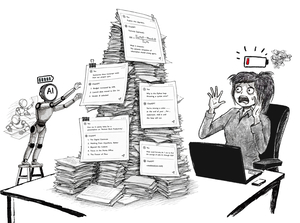
One of the promises of AI is that it can reduce workloads so employees can focus more on higher-value and more engaging tasks. But according to new research, AI tools don’t reduce work, they consistently intensify it: In the study, employees worked at a faster pace, took on a broader scope of tasks, and extended work into more hours of the day, often without being asked to do so. That may sound like a win, but it’s not quite so simple. These changes can be unsustainable, leading to workload creep, cognitive fatigue, burnout, and weakened decision-making. The productivity surge enjoyed at the beginning can give way to lower quality work, turnover, and other problems. To correct for this, companies need to adopt an “AI practice,” or a set of norms and standards around AI use that can include intentional pauses, sequencing work, and adding more human grounding.
83 words~1 min read