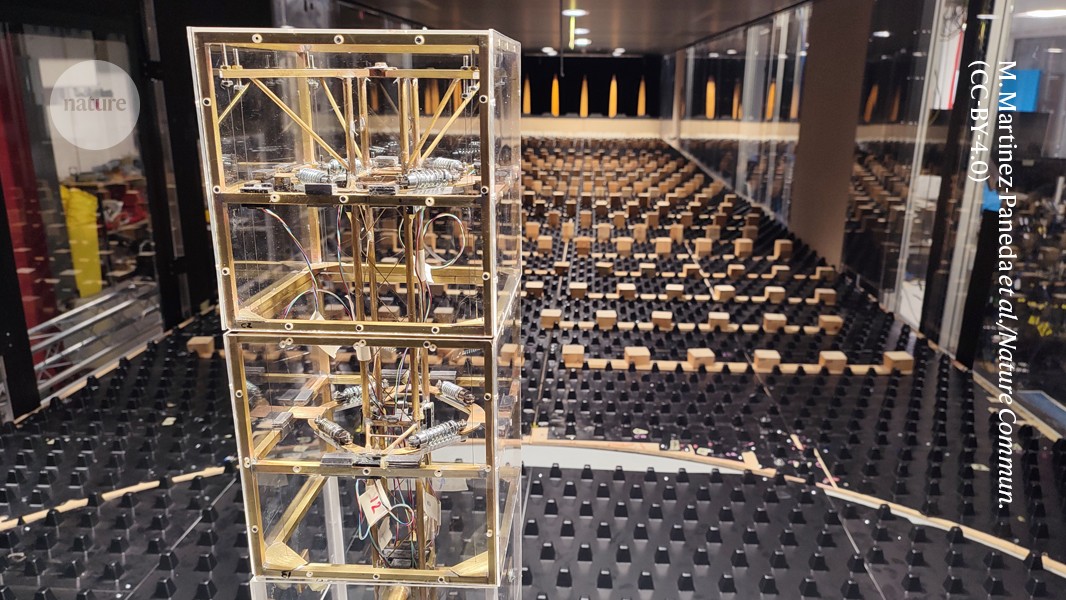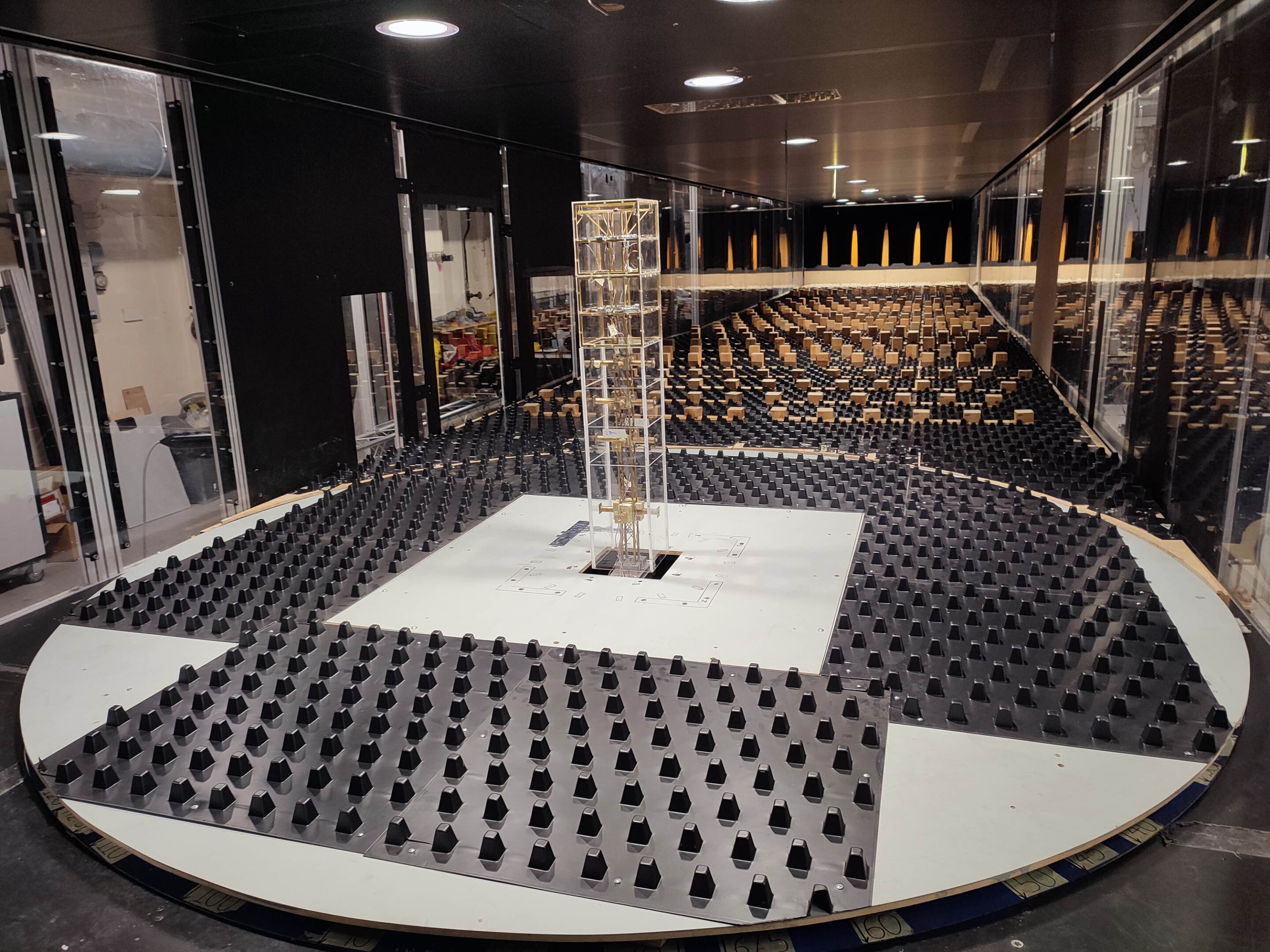
View of the aeroelastic model in the Imperial 10x5 Wind Tunnel. Credit: Imperial College London
Imperial and Arup pioneer a new approach to designing tall buildings that uses the building's own weight to reduce movement in high winds and earthquakes. Inspired by traditional Japanese pagodas, it makes towers safer while cutting carbon and construction costs.
Extreme events continue to expose the vulnerability of our towns and cities. As urban populations grow and the climate changes, the need for buildings that protect people, recover quickly and use resources more efficiently has never been clearer.
Meeting these challenges has traditionally relied on designing tall buildings to remain as rigid as possible, resisting wind- and earthquake-induced motions through increased structural sizes and material use. Researchers and engineers from Imperial College London and Arup have challenged that long-held assumption, developing a new approach that uses a building's own mass to reduce movement in high winds and earthquakes.
Instead of trying to eliminate movement, it accepts that buildings will move and puts that movement to work to improve the building's performance. Tested through wind tunnel experiments and earthquake simulations, the approach reduced wind-induced accelerations and was shown to produce safer, more resilient and more sustainable tall buildings.