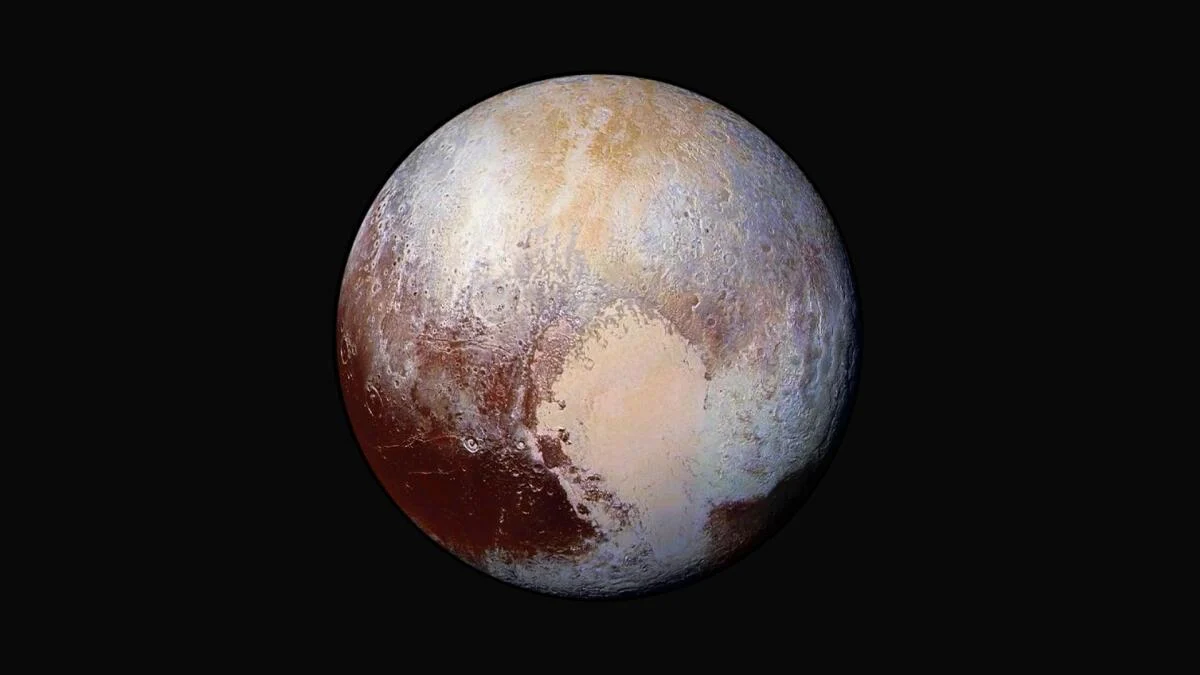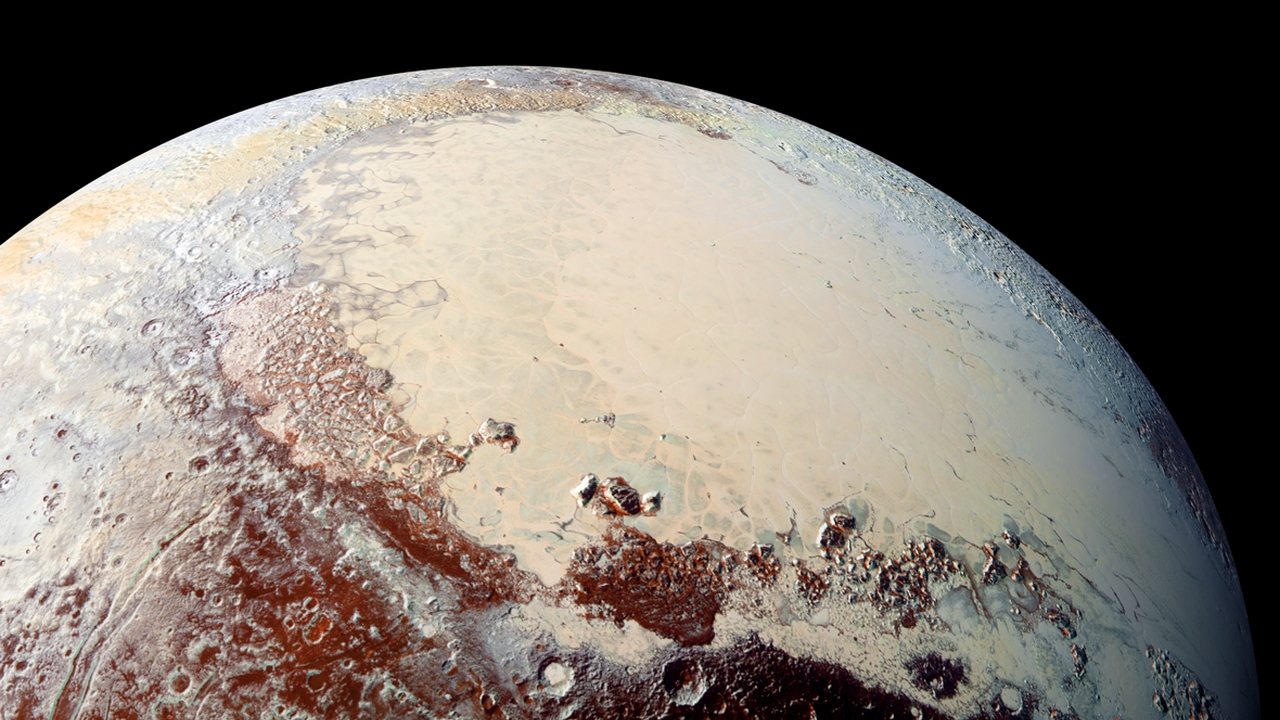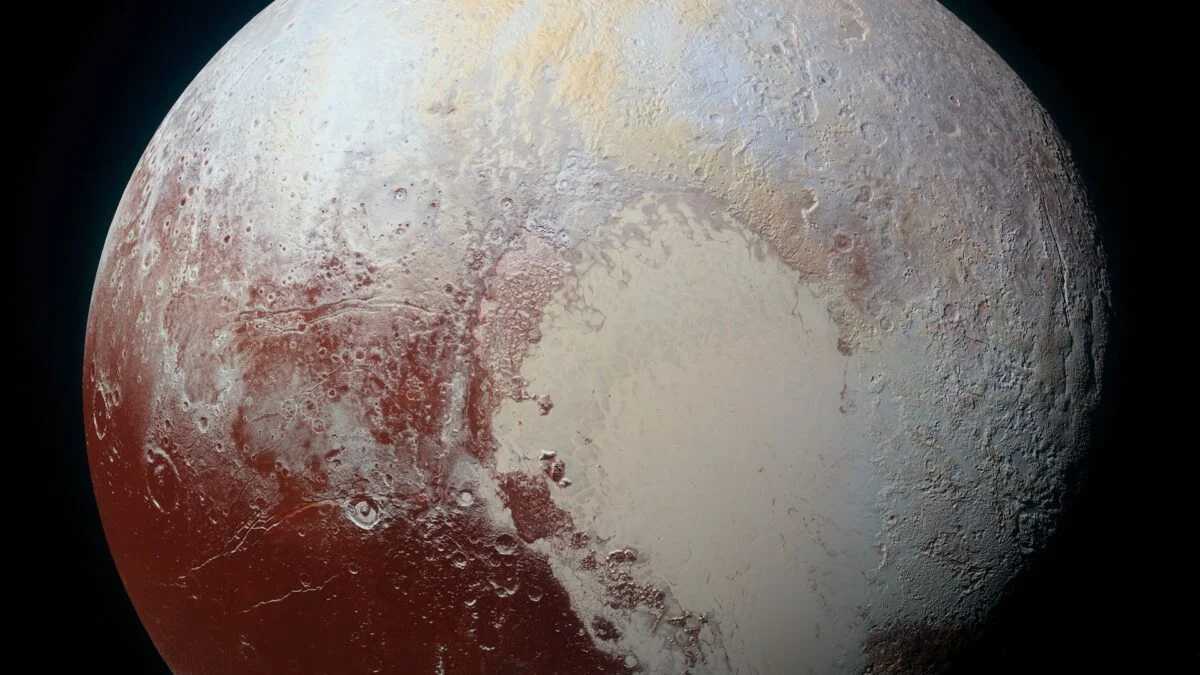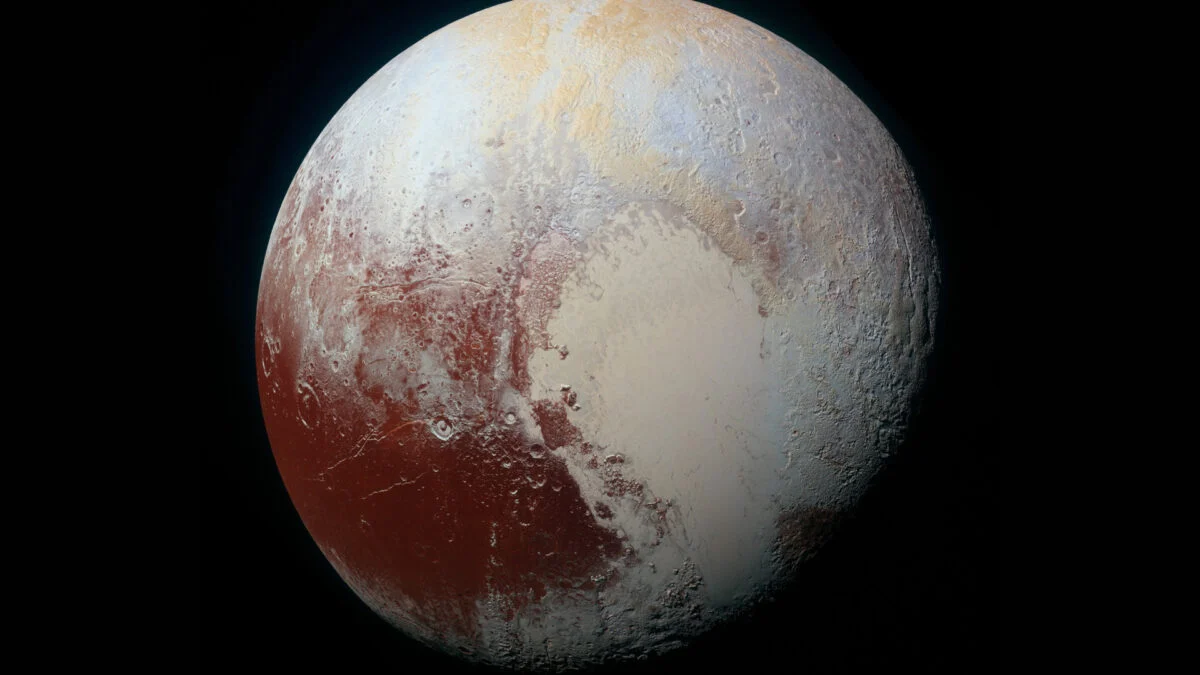
Odd surface patterns on Pluto hinted to astronomers that, sometime in the past—quite possibly not that long ago—liquid existed on its surface. A team of planetary scientists believe they’ve found it. A new analysis of New Horizon images of the Sputnik Planitia, a section of Pluto’s massive, heart-shaped glacier, suggests that liquid nitrogen once existed on the dwarf planet’s surface. The study, published late last month in The Planetary Science Journal, presents the first evidence of recent liquid flow on Pluto. That is, recent on astronomical scales; Sputnik Planitia is presumably less than one million years old, so if the findings are true, it would mean that liquid nitrogen was present sometime in that period. Pluto’s northern Sputnik Planitia glacier (in the western or left side of Pluto’s bright heart) is shown here in a color mosaic made from New Horizons imagery. Credit: NASA/Johns Hopkins APL/SwRI “Pluto never stops surprising us, and this new result certainly does that,” Alan Stern, the study’s lead author and New Horizons’s principal investigator, said in a statement. “In addition to suggesting that liquids have recently expressed themselves on Pluto’s surface, it also suggests a new kind of time-variable feature on Pluto.” The right spot According to the paper, the area that came to be called the Sputnik Planitia caught astronomers’ interest even before New Horizons. Hubble’s observations and other data indicated that one specific section of Pluto had an unusually bright terrain. This was one important reason that, when New Horizons made its Pluto flyby in 2015, Sputnik Planitia was deemed a primary target for high-resolution observations.
Pluto's Famous Glacial Heart Has Been Secretly Leaking Liquid Nitrogen
“Pluto never stops surprising us.”
548 words~2 min read