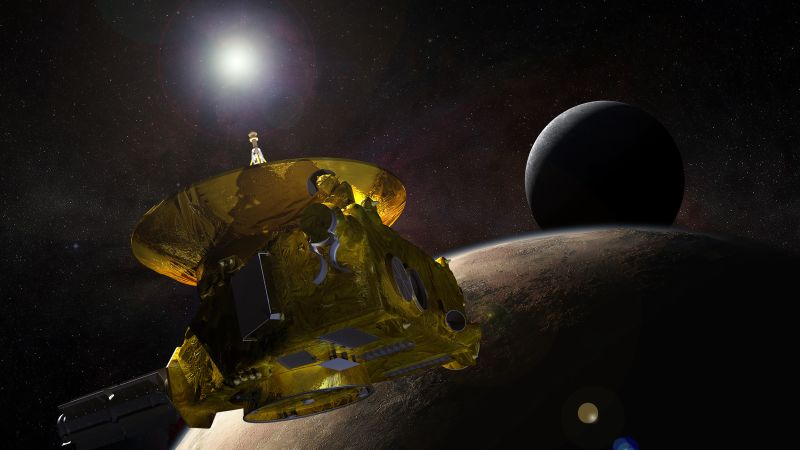
In July 2015, NASA’s New Horizons spacecraft gave us our first look at Pluto’s surface in spectacular detail. The rare encounter revealed a distant world with giant ice sheets, mountains, valleys, and terrains unlike any other seen in the solar system. By reexamining those iconic images, scientists believe they have found the first evidence of landslides occurring on the dwarf planet. In a new study published in the journal Icarus, a team of scientists report the detection of six massive landslides located within three impact craters on Pluto. This mass movement of material is common on Earth and has occasionally been found elsewhere in the solar system, but the recent discovery marks a first for Pluto and could help scientists learn more about what shapes icy worlds like it. Slip and slide Landslides happen when large amounts of rock, debris, or soil move down a slope, relocating material to a new place. They typically occur on Earth due to heavy rain, snowmelt, volcanic activity, and earthquakes. Landslides also take place elsewhere in the solar system, most commonly on the rocky world of Mars, as well as the dwarf planet Ceres and the asteroid Vesta.
Scientists have long theorized that Pluto’s icy terrain and steep craters could host massive landslides, helping sculpt its landscape over time. Even Pluto’s largest moon, Charon, has shown signs of long-run-out landslides on its surface. Pluto, on the other hand, has kept its mass-wasting events under wraps.