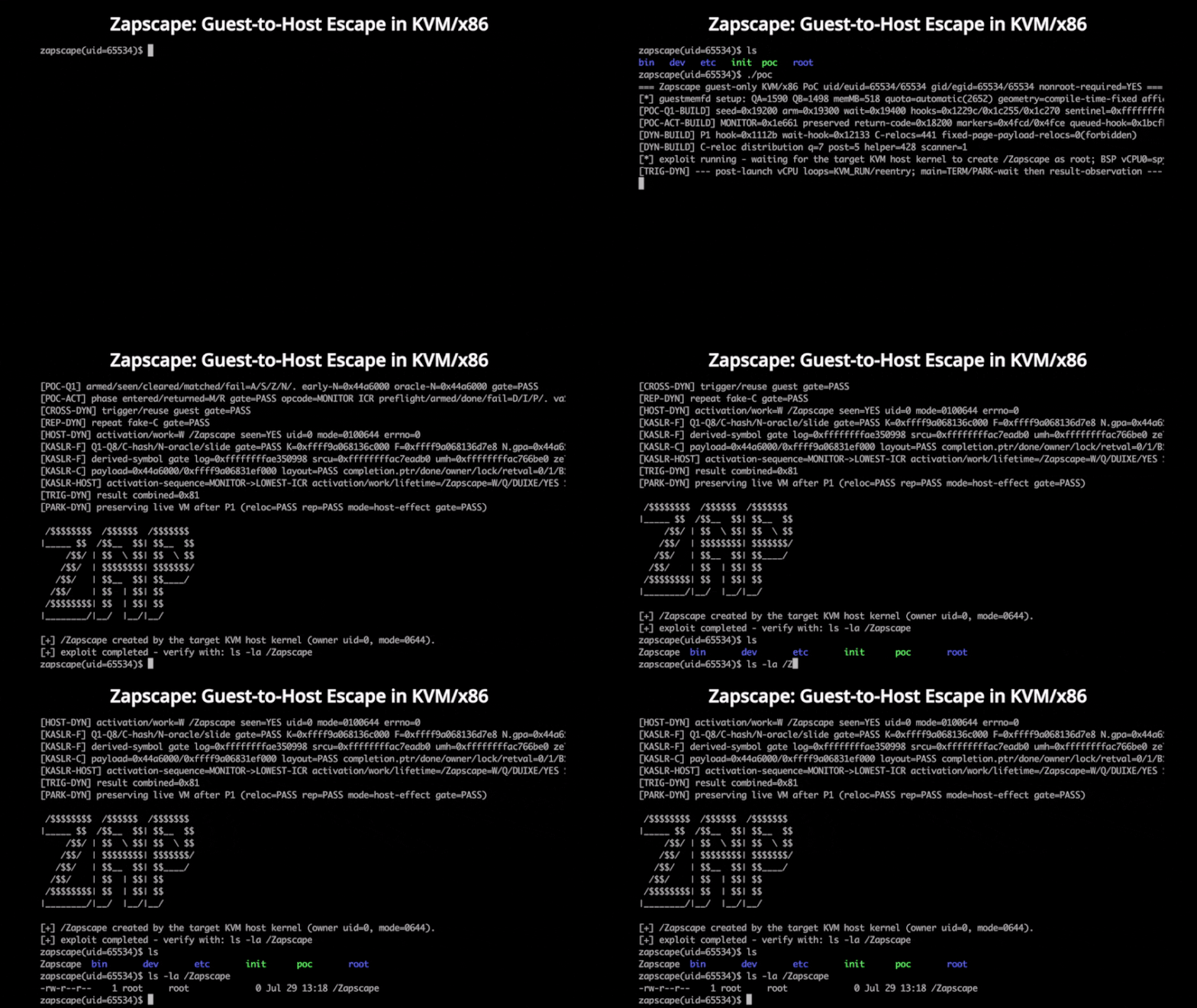
A newly disclosed Linux kernel vulnerability can be exploited to escape virtual machines (VMs) and execute code on the underlying host, security researchers warn.
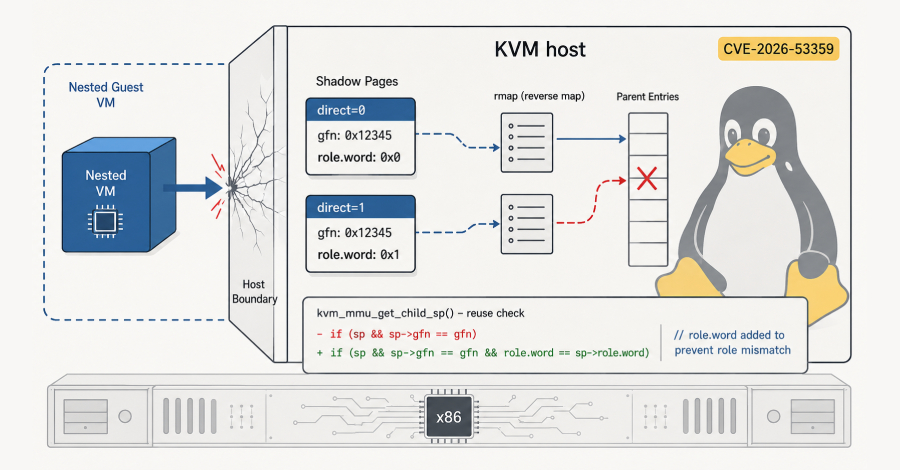
Tracked as CVE-2026-53359 and referred to as Januscape, the security defect impacts the shadow MMU code in Linux Kernel-based Virtual Machine (KVM) hypervisor.
The guest-to-host vulnerability poses a major threat to multi-tenant x86 public clouds running untrusted guests and exposing nested virtualization. It is known to be the first KVM exploit that can be triggered on both Intel and AMD architectures.
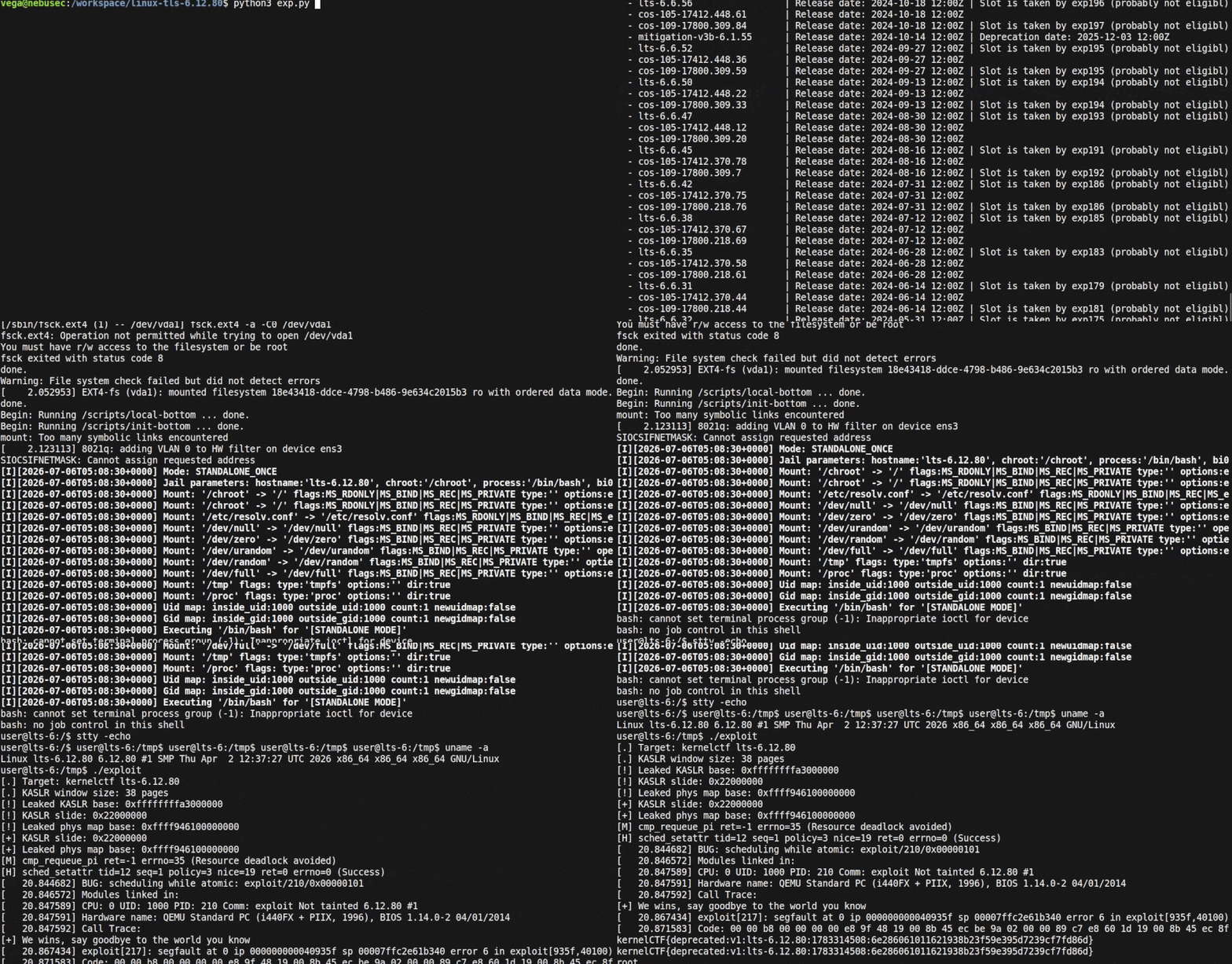
The flaw was discovered by security researcher Hyunwoo Kim (@v4bel), who demonstrated it as a zero-day in Google kvmCTF, the bug bounty program that works like a CTF event and offers up to $250,000 for full VM escape weaknesses.
According to Kim, the vulnerability is a use-after-free vulnerability that can be triggered from the VM to corrupt the shadow page state of the host’s kernel.