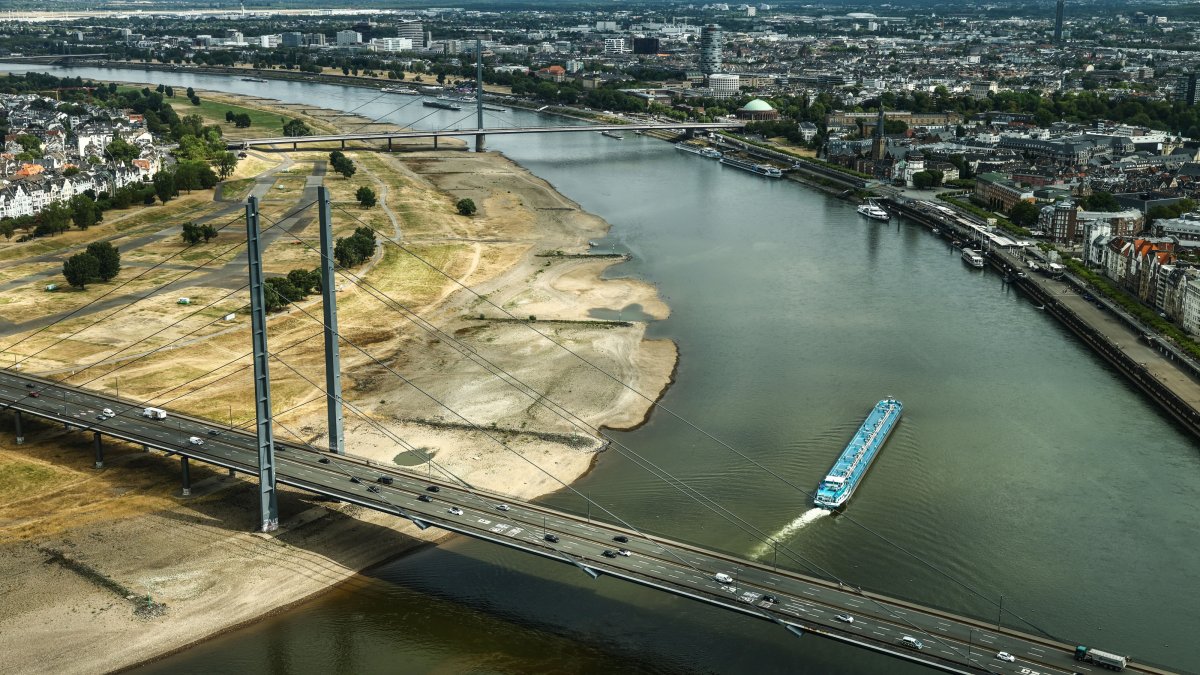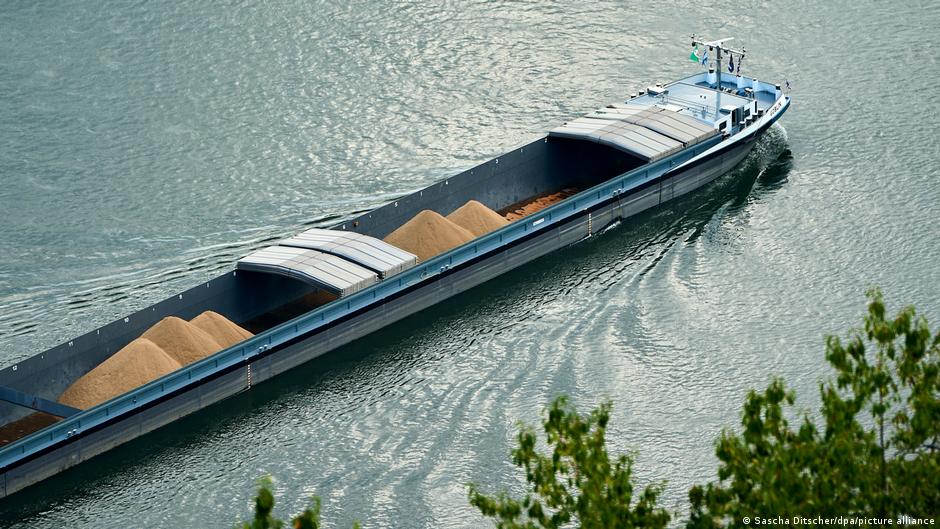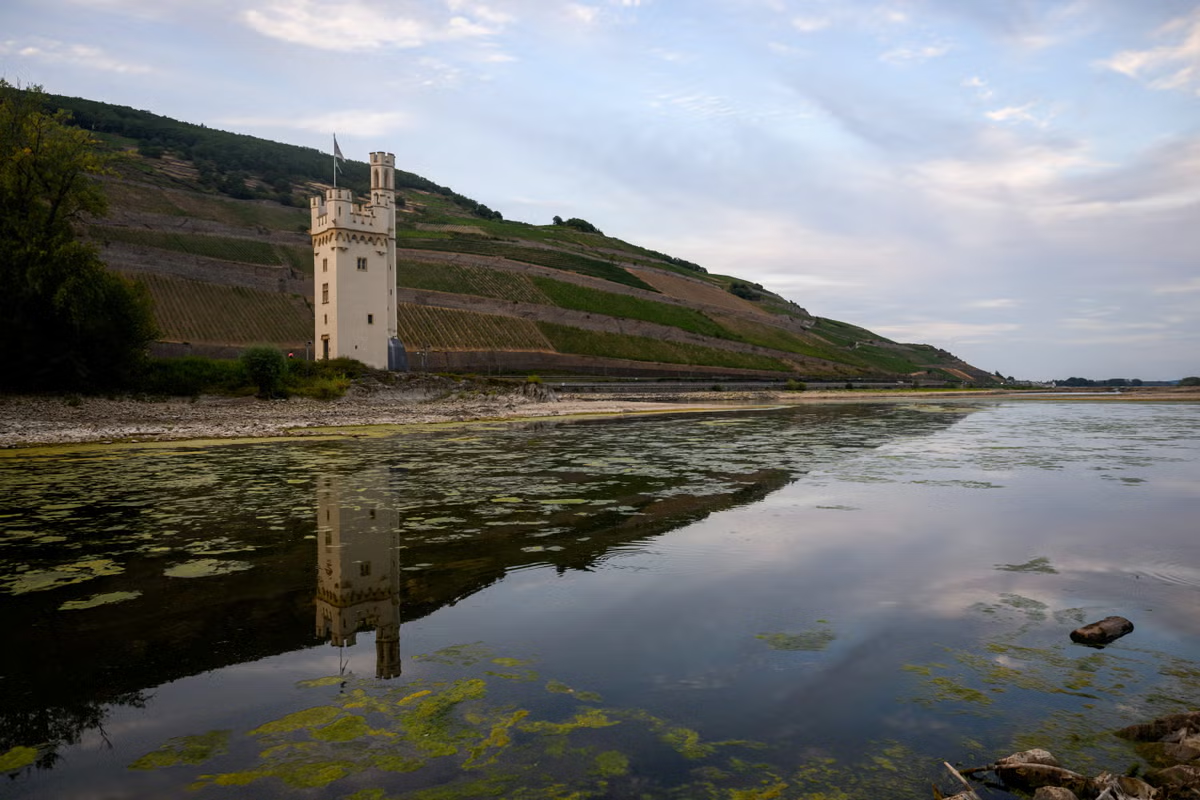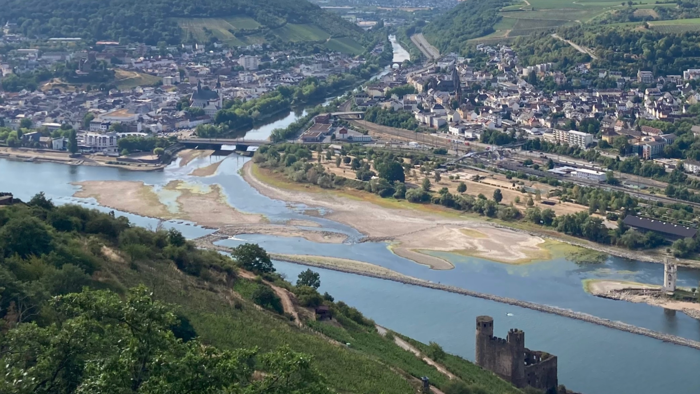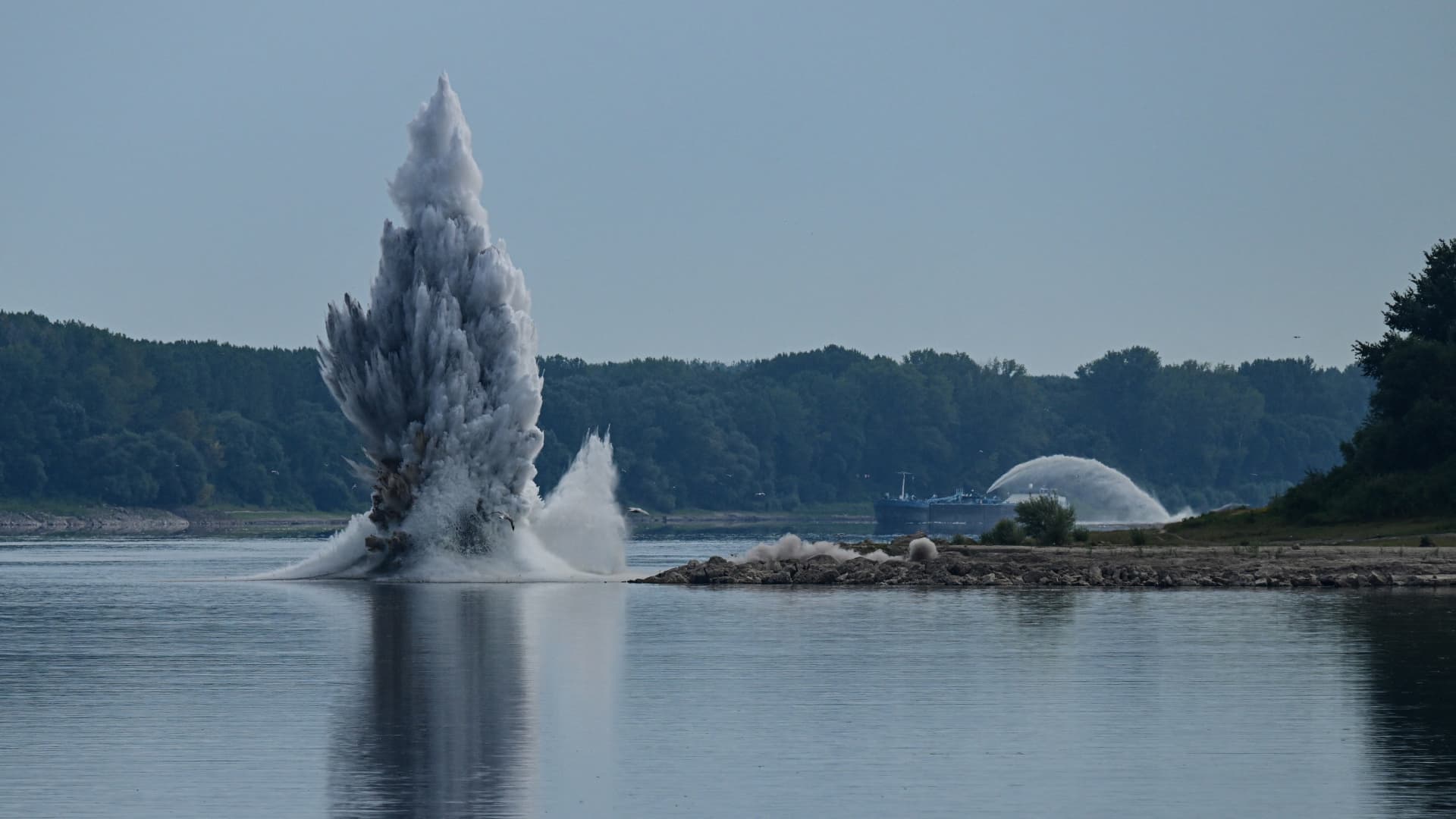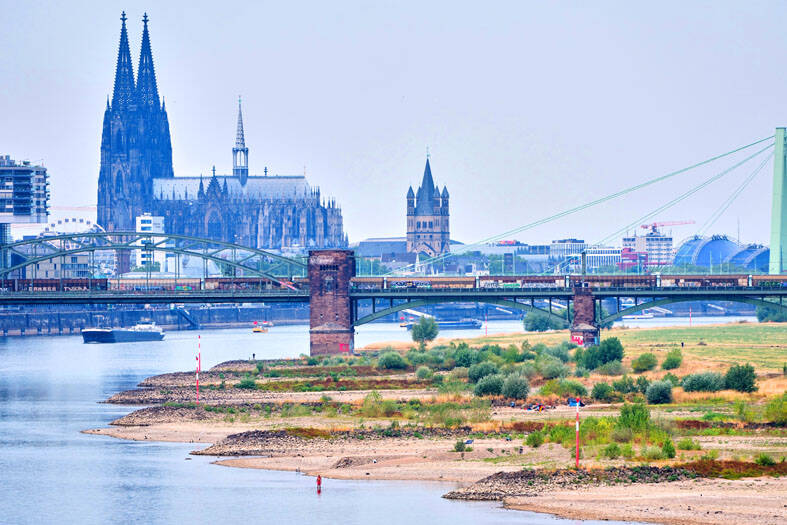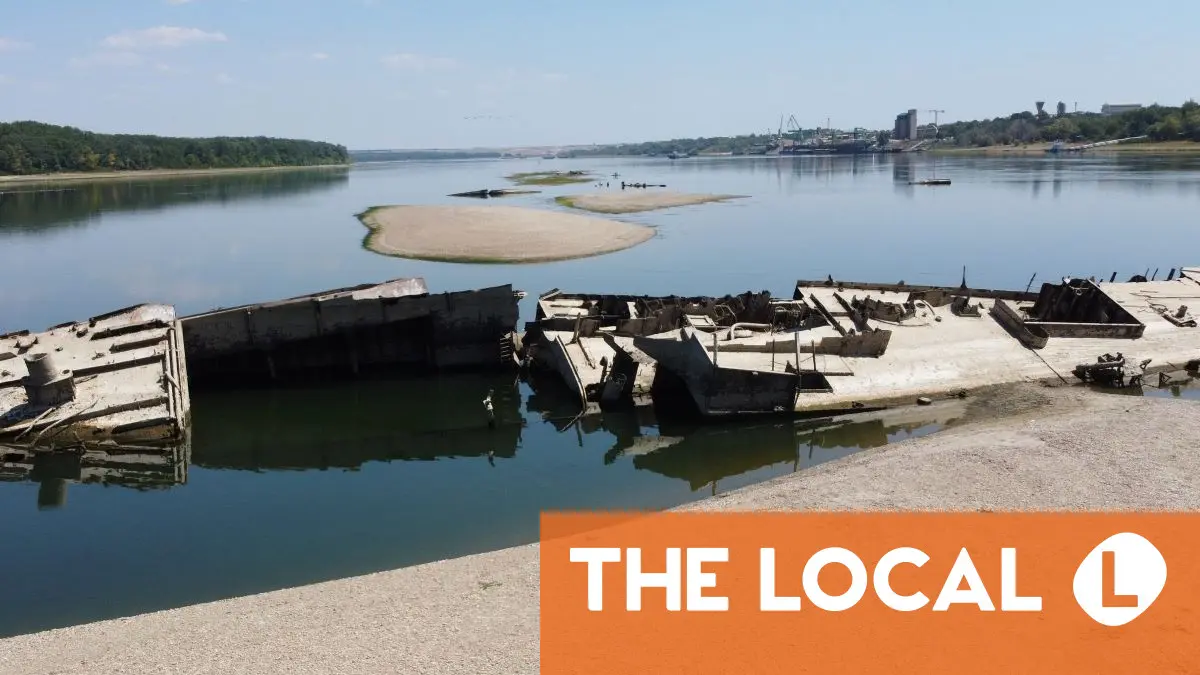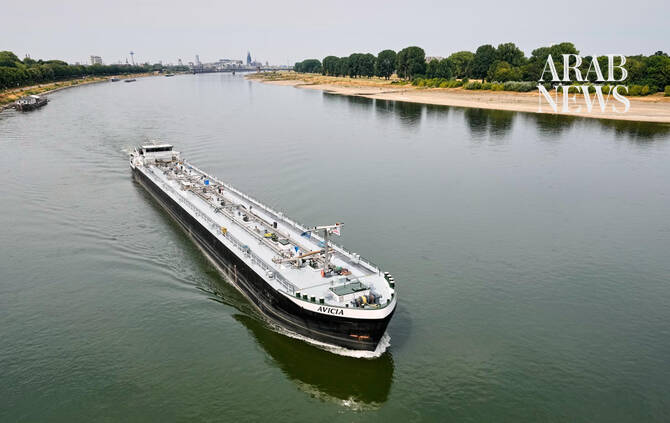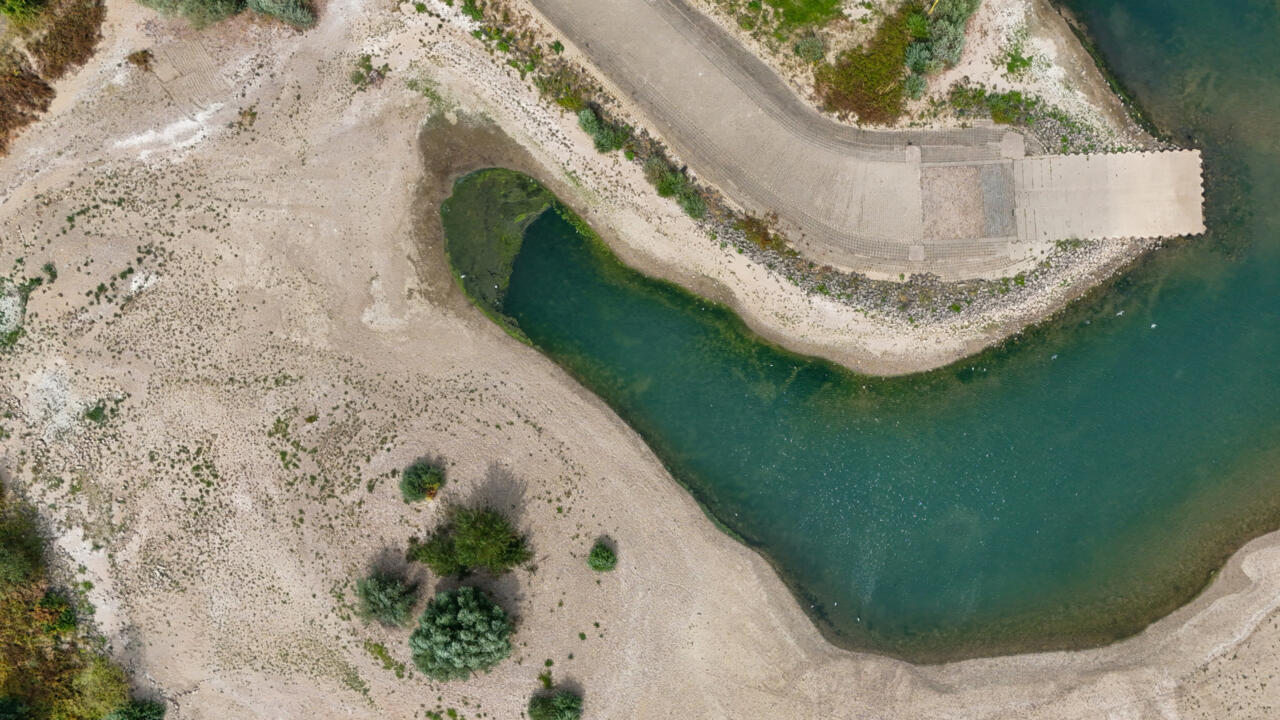
The Rhine riverbed has partially dried up near steelmaker Thyssenkrupp's blast furnaces in Duisburg, a picture of how the low water levels pose a new challenge for German industry.The mighty waterway also winds past car factories, chemical plants and big river ports as it passes through the industrial heartland of Europe's biggest economy and takes cargo all the way to ports in the Netherlands. Shallow water is imposing tighter limits on how much cargo can float down the river -- sending prices up for freight, and heaping pressure on the government to act.New Transport Minister Steffen Bilger met in Bonn on Thursday with industrial executives, shipping companies and port bosses to discuss the unfolding crisis.
A container ship on the Rhine sails past Thyssenkrupp Steel Europe AG in Duisburg © Ina FASSBENDER / AFP
"If you look at the Rhine, the Danube or the Elbe currently, you see the problem," Bilger told reporters at the meeting, referring to Germany's three longest rivers."Where normally ships are carrying thousands of tonnes of goods, today we see bare sandbanks," Bilger said, adding that "ships are only able to carry a fraction of their cargo, if at all".In normal times the Rhine handles around 80 percent of Germany's inland waterway traffic, said Rico Luman, an economist at ING. Every year, some 285 million tonnes of goods travel along the river.Speaking alongside Bilger, the head of Germany's domestic shipping association Jens Schwanen said the dry spell had come early and 2026 could turn out to be "a once-in-a-century event".Schwanen said that it was important "to speed up in taking measures on the lower and middle reaches of the Rhine, where we have to deepen the navigable sections".Industry feeling the pinchThe port in Duisburg, in Germany's steel-producing Ruhr region, has reported that vessel loading capacities have dropped to about one-third of their usual levels.The lower loads have led to a shift of cargo toward smaller vessels, as well as rail and road transport. In the oil sector, loads are sometimes capped at between 300 and 400 tonnes for 110-meter tanker barges, leading to a surge in the number of trips required.