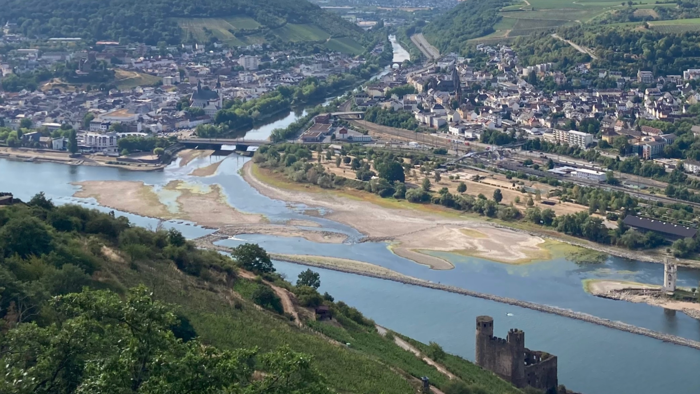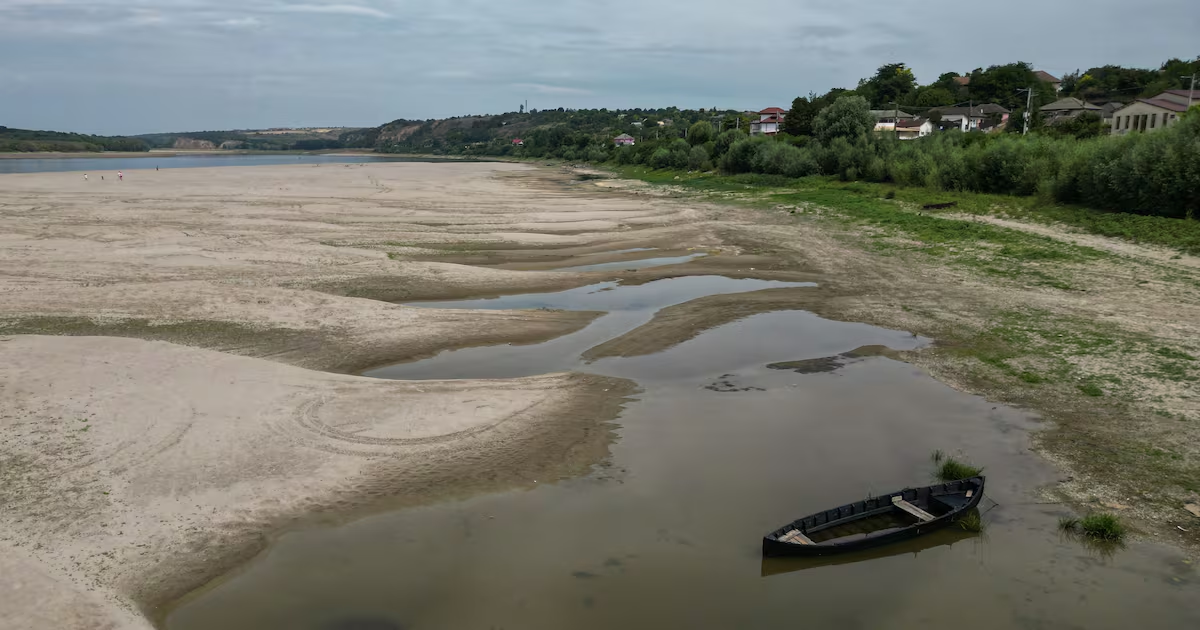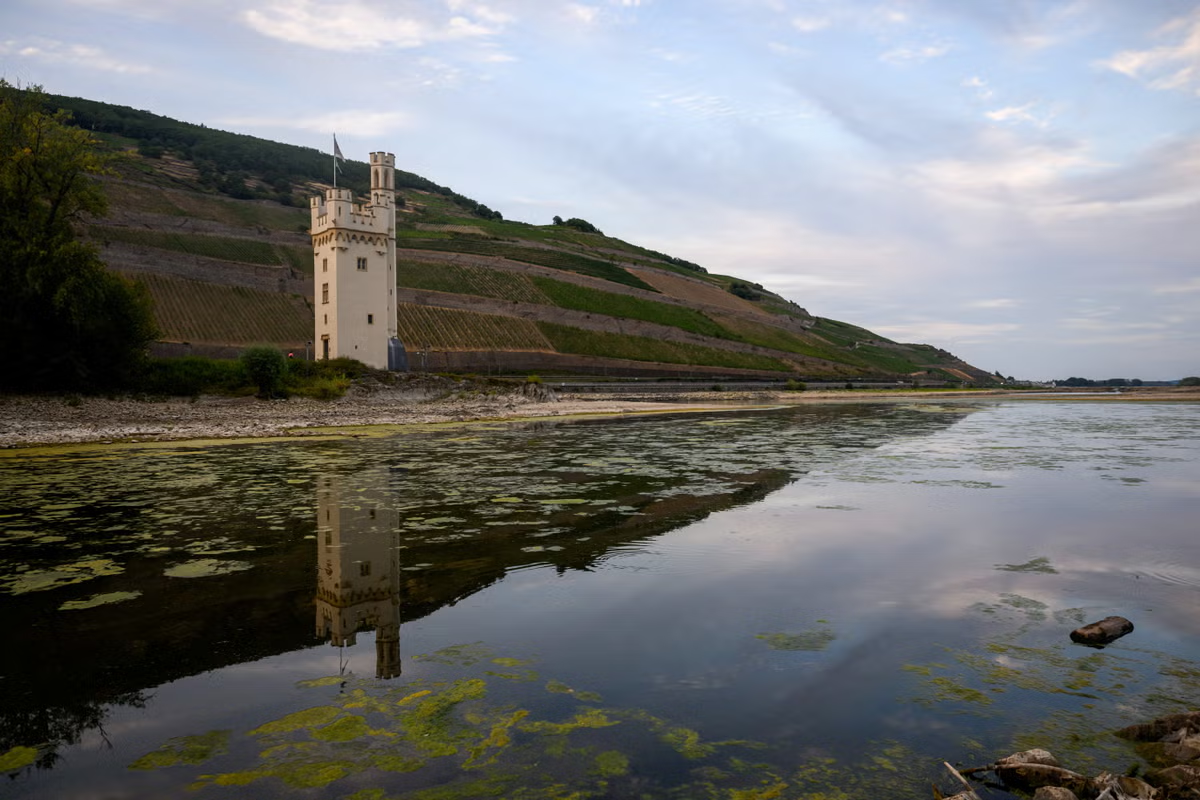
The Rhine River’s water levels dropped to the lowest in almost 150 years as hot, dry weather scorches Europe, threatening to disrupt a crucial route for transporting coal, fuel and industrial commodities across a large swath of the continent.The water level at Kaub, a choke point for vessels heading to southern Germany and Switzerland, fell to 24cm on Monday. That is the lowest since records began in 1880, according to German federal data compiled by ETH Zurich.With the fourth heat wave to grip Western Europe this summer stretching through the start of this week, the situation risks creating logistical bottlenecks on a river that snakes for 1,230km from the Swiss Alps to the North Sea.
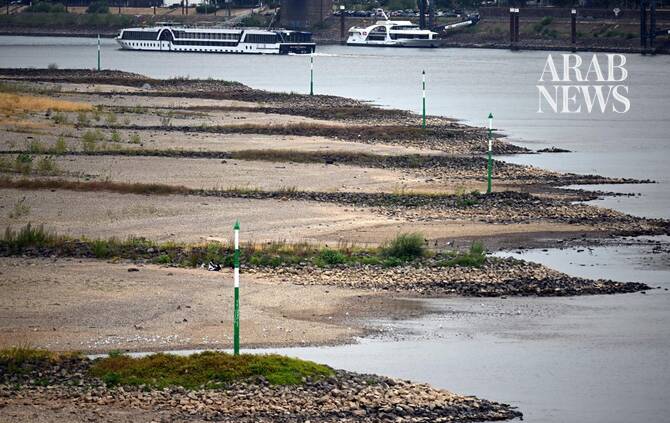
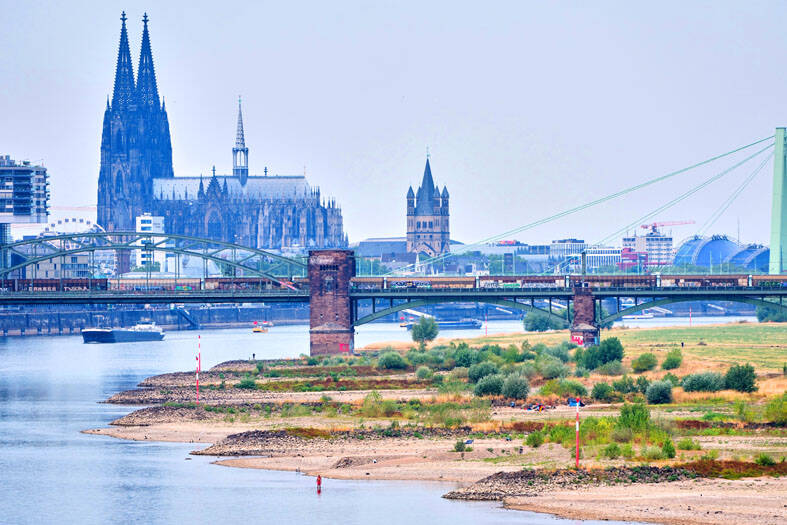
The Rhine near Cologne, Germany, has less boat traffic due to low water levels during a heat wave and a prolonged drought as Cologne Cathedral stands in the background on Monday.
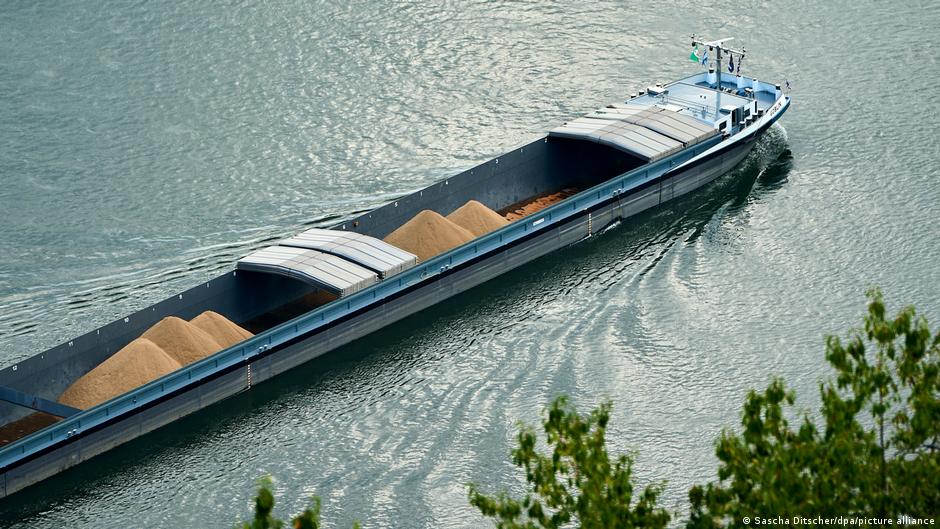
The falling levels of the Rhine have already pushed freight rates sharply higher as barges are forced to reduce cargo loads to transit shallow waters. The cost to ship diesel from Rotterdam to Karlsruhe — inland from the closely watched Kaub choke point — has climbed to the highest since Bloomberg began compiling the data in 2009.The Rhine is a vital conduit for transporting oil products, chemicals, coal, iron ore, grains and containerized goods. Some cargoes can be transported by rail instead. A DB Cargo spokesperson said last week that the railway operator is in constant talks with customers affected by low water levels.