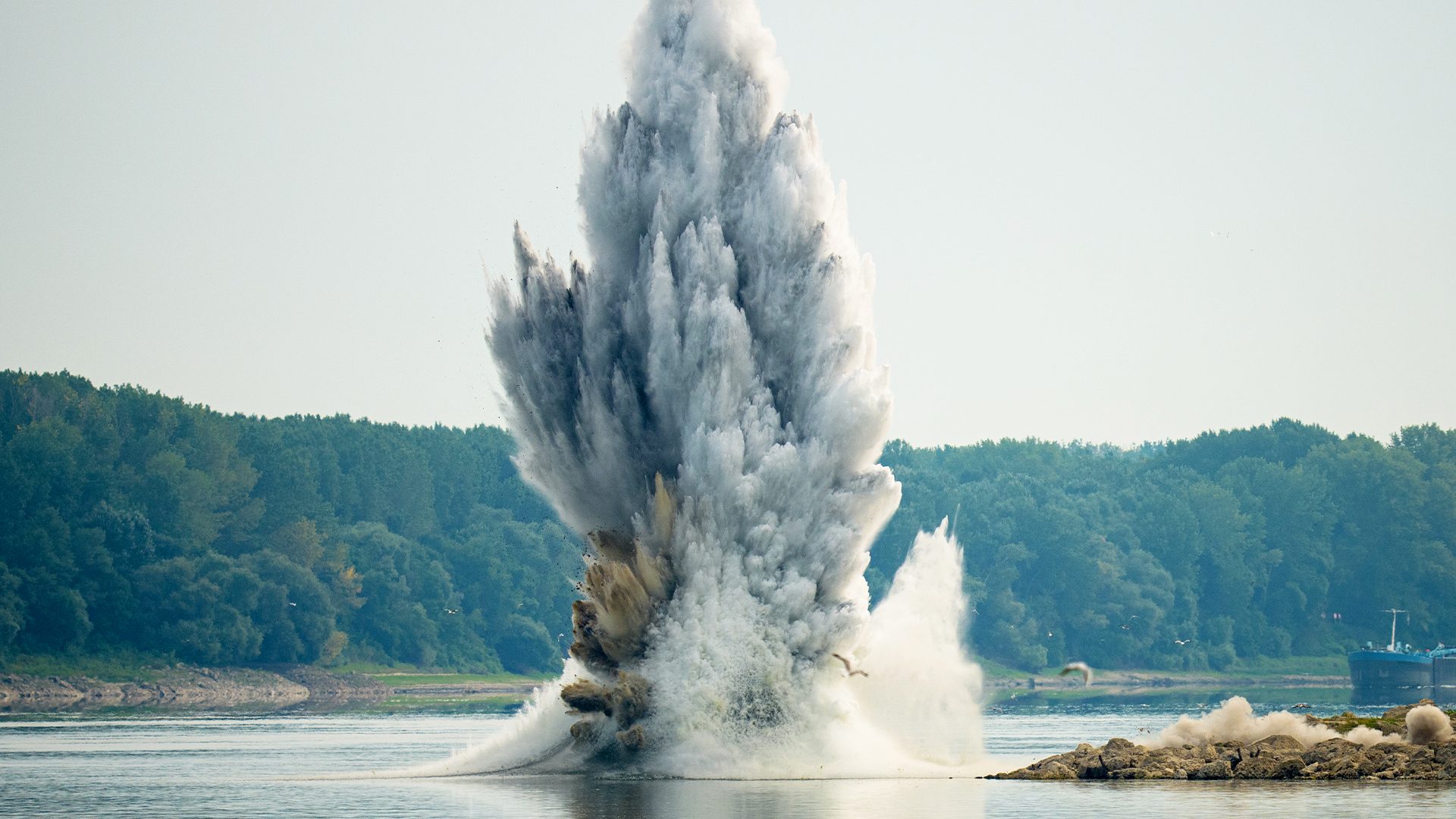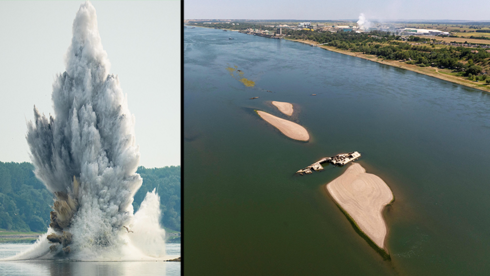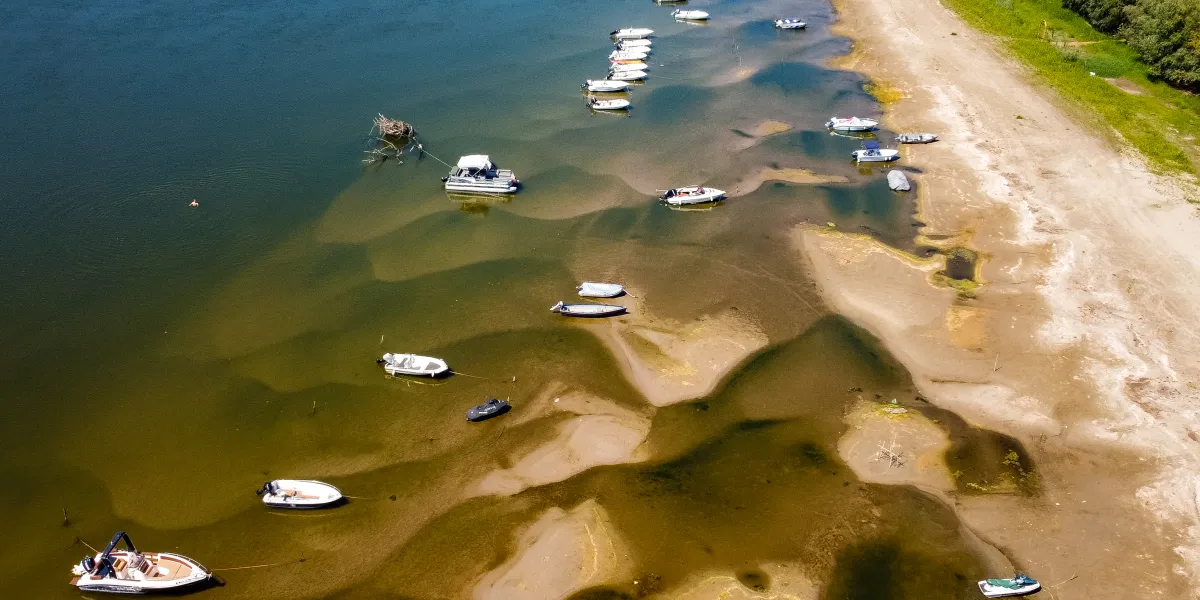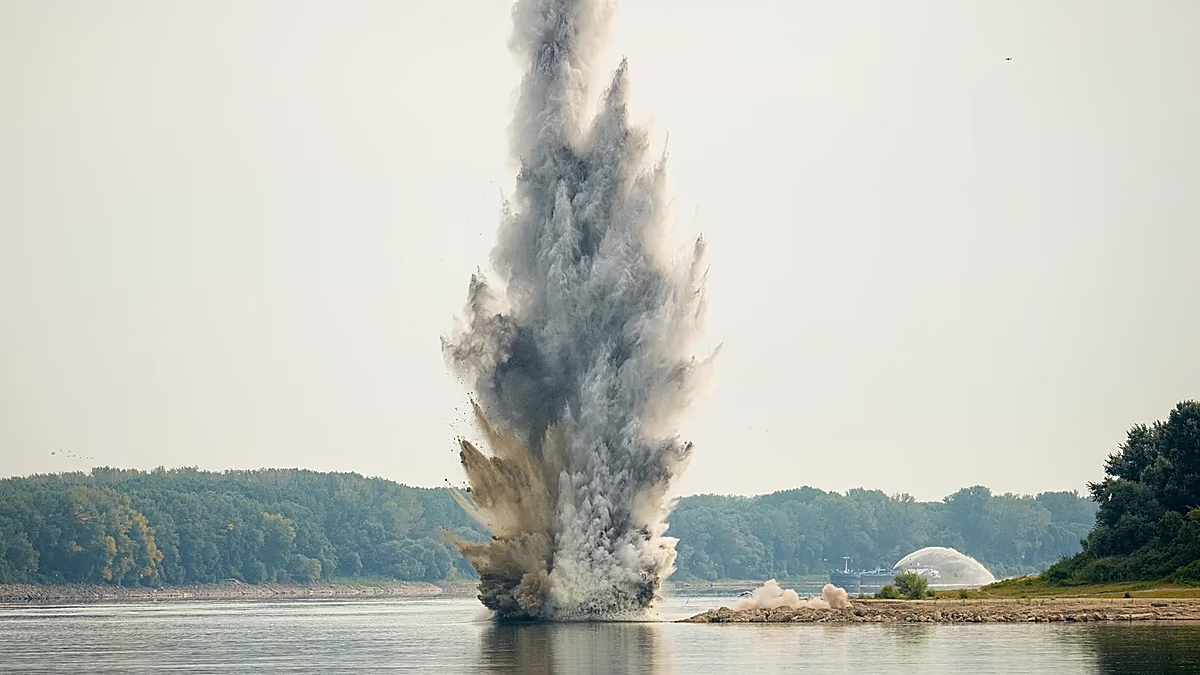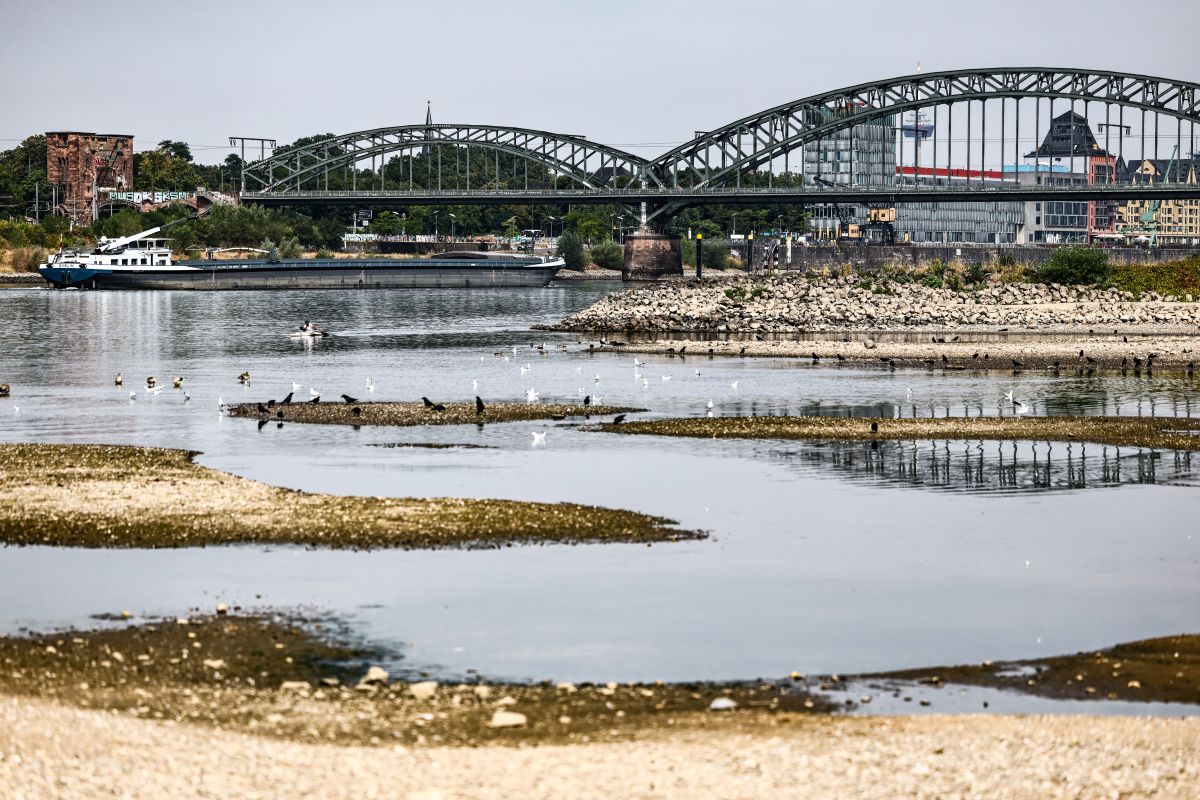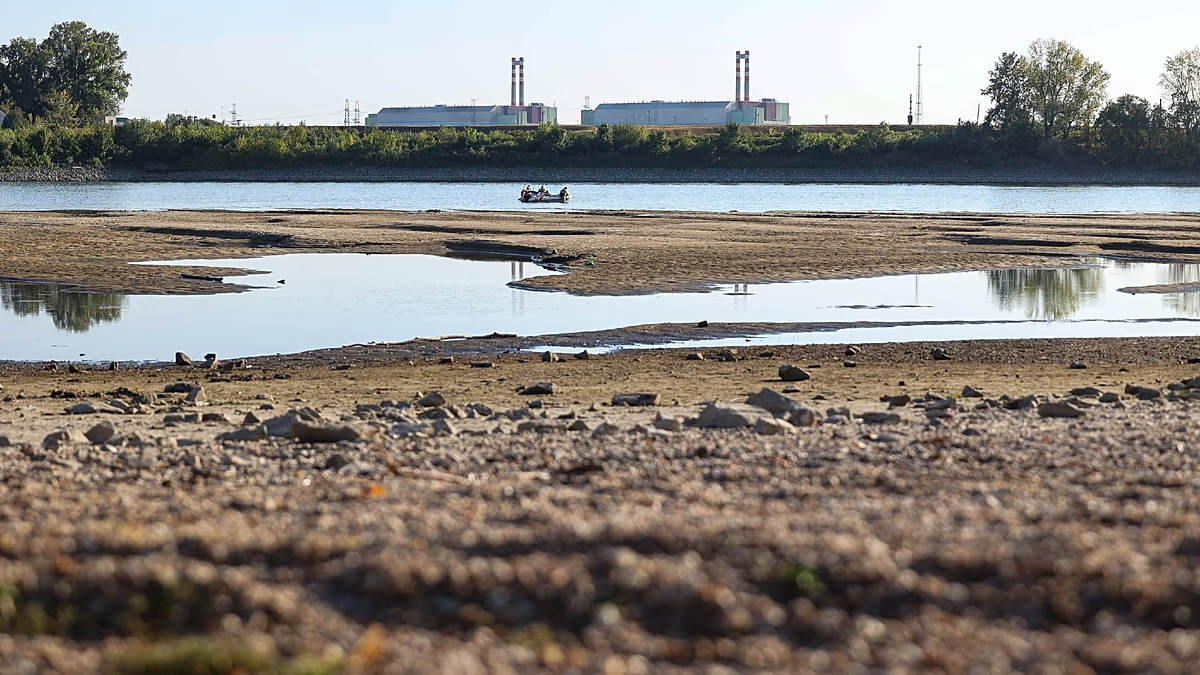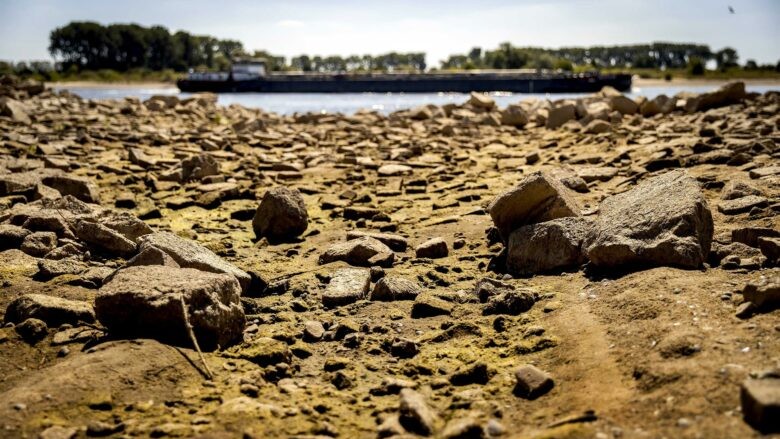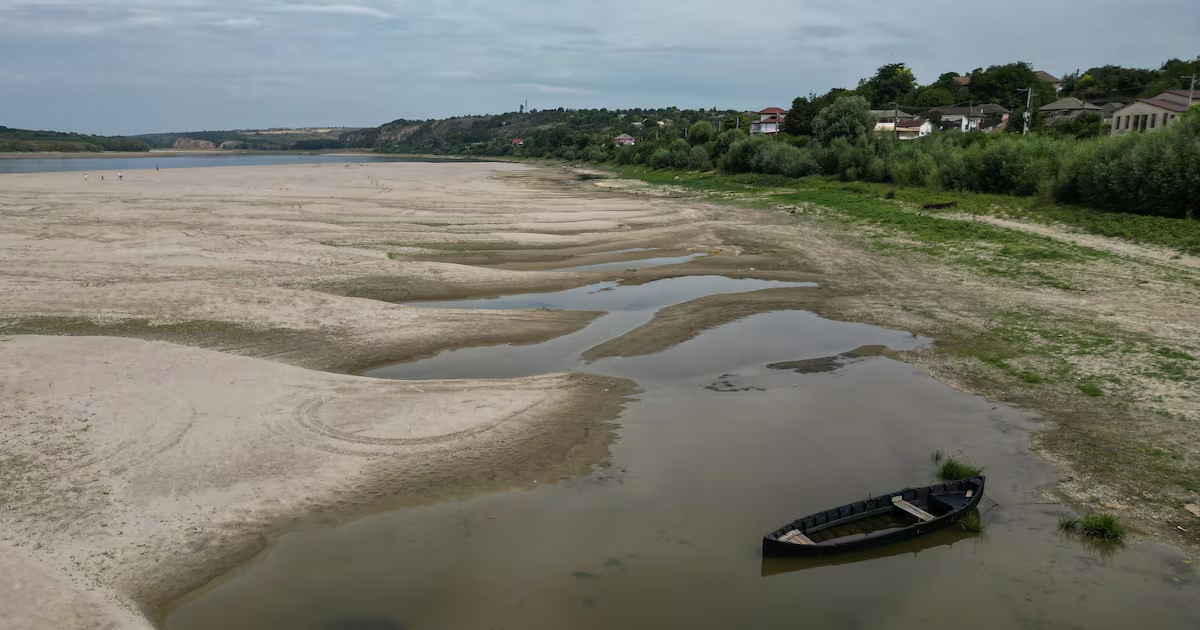
A summer of blistering heatwaves has resulted in record low water levels in Europe, curtailing river transport and drastically reducing electricity generation. Europe’s two great rivers, the Rhine and the Danube, have been seriously affected, resulting in a water-cooled nuclear power plant operating at just 10 per cent capacity and cargo being moved by rail instead. The level of the Danube has fallen below 10cm, well under the previous low of 33cm in 2018, while the Rhine has fallen below 25cm.From the port of Rotterdam to hydropower plants in Serbia, waterways have become less reliable for transporting goods such as grains and oil, or for producing much-needed electricity when millions seek ways to cool their homes.This has driven the continent to lean more heavily on imported fossil fuels and variable renewable energy, stoking fears about the economic impact of searing heat and erratic rainfall. The Rhine’s water level has dropped to its lowest in nearly 150 years. The level at Kaub, a key chokepoint for vessels heading to southern Germany and Switzerland, fell to 24cm on Monday. That is the lowest since records began in 1880, according to German federal data compiled by university ETH Zurich. The fourth heatwave to grip western Europe this summer has stretched into this week and risks creating logistical bottlenecks on a river that snakes for roughly 1,290km from the Swiss Alps to the North Sea.A cargo ship passes an exposed sandbar on the Rhine. Getty ImagesShow caption: A cargo ship passes an exposed sandbar on the Rhine. Getty I…The Rhine's falling levels have pushed freight rates sharply higher as barges reduce cargo loads to navigate the shallow waters. The cost to ship diesel from Rotterdam to Karlsruhe – further inland from Kaub – has climbed to its highest level since Bloomberg began compiling the data in 2009. The volume of cargo transported between Rotterdam – Europe's largest seaport – and the Rhine has fallen slightly each week since the beginning of July and is around 10 per cent lower than normal, a port spokesperson said.Chemical and oil-product tankers and dry bulk carriers are particularly affected because of their normally greater draught compared to container barges. This means they sit deeper in the water and require greater depths.“It's affecting not one region like we've seen in the past, but the whole European landscape,” said Alessandro Armenia, a power analyst at commodities data and analytics firm Kpler.“Given the current dynamics, it means either we're going to see blackouts or we need to invest way more.”In Hungary, a nuclear plant that faced being shut down due to low water levels was given a temporary reprieve overnight when the Danube rose by a tiny amount. The Paks nuclear power plant behind the partially dried-up Danube in Dunaszentbenedek, Hungary. ReutersShow caption: The Paks nuclear power plant behind the partially dried-up D…Prime Minister Peter Magyar is due to visit the country's only nuclear plant, south of Budapest, which is operating at just over 10 per cent capacity. On Tuesday he posted on Facebook that the last of its four turbines was “operating safely”. The 2GW Russian-built Paks power plant, which generates more than 40 per cent of Hungary's electricity, has had to be gradually powered down over the past week because it uses the Danube's waters as a coolant.“Around 1.30am we were only a few millimetres away from the full powering down of the Paks nuclear plant but then the decline in the water level stopped and it rose 1.5 centimetres by the morning,” Mr Magyar wrote.Paks could remain idle for weeks, forcing Hungary to increase power imports. Voluntary reductions in power use by households and more than 300 companies, made after a government appeal, have lowered demand, easing some pressure on the national grid. But Mr Magyar has said that this week will be critical as hot weather prevails. In Romania, the navy took unprecedented action to boost water flows towards the country’s sole nuclear power plant by detonating a rock formation in the Danube.Authorities said the blast would clear the way to build a temporary dam to send more water to the river channel where the Cernavoda reactor sits.“Any day past Wednesday or Thursday that the nuclear power plant functions is a gain,” Defence Minister Radu Miruta said. “A day of it functioning is three times more efficient than the costs of this operation.”Car plants run in Romania by Renault-owned Dacia and Ford agreed to halt production until August 19, voluntarily reducing power consumption by about 200MW, Prime Minister Ilie Bolojan said.Play00:50Romania diverts flow of Danube river amid water crisisFrance’s river-cooled nuclear plants have suffered a record number of heat-related outages this summer. France has lost more than 3.7 terawatt hours of nuclear power to temperature restrictions during June and July alone, more than double the full-summer record set in 2018, according to ICIS data. While overall generation has remained broadly in line with recent years, output has fallen sharply during periods of extreme heat, reducing supplies as electricity demand for air conditioning peaks.Many of France’s nuclear plants rely on river water for cooling before discharging the warmer water back into the river. Environmental regulations limit those discharges when temperatures are already high, forcing reactors to reduce output. “France is pulling prices up in neighbouring markets,” said Matthew Jones, head of power analytics at ICIS. “We’re going into another heatwave potentially and there could be several more. Given what existing heatwaves have done, there are fears in the market that it will only get worse.”The situation may prove even more serious – and longer-lasting – in the Alps and the Nordic region, where hydroelectric reservoirs are running dry. Unless they are replenished before winter, Europe could enter its peak heating season without one of its most important sources of flexible electricity, at a time when gas storage levels are lower than usual.In Norway, by far Europe’s biggest producer of hydropower, reservoirs are filling up at about the lowest rate in the last 20 years, according to Katinka Bogaard, managing director at Volt Power Analytics in Oslo. A combination of factors is to blame: below-average snowfall last winter; an unusually warm spring and summer that has already melted limited snowpack; and persistently dry weather that has left too little run-off to replenish reservoirs. Southern Norway has also exported 3.8TWh this year to Germany, England, Denmark and the Netherlands, according to data from Norwegian grid operator Statnett.“We’re paying winter prices now, which is new,” Ms Bogaard said. “If we get the most extreme amount of precipitation, we can bring the levels close to normal. But that’s what we need to get back to a normal situation.”At Djerdap 1, Serbia's largest hydropower plant, output has fallen to 20 per cent of capacity, the plant's production director Davor Maljokovic said, because the once broad shipping channel beside it has shrunk to expose sandbanks and gravel bars.The lack of water has also disrupted cooling systems at Serbia's Kostolac coal-fired power plants, forcing them to cut output, state power utility EPS said.
Europe's heatwave causes power and cargo headache as rivers shrink | The National
Low water levels limit power production and shipping across continent
1,168 words~5 min read