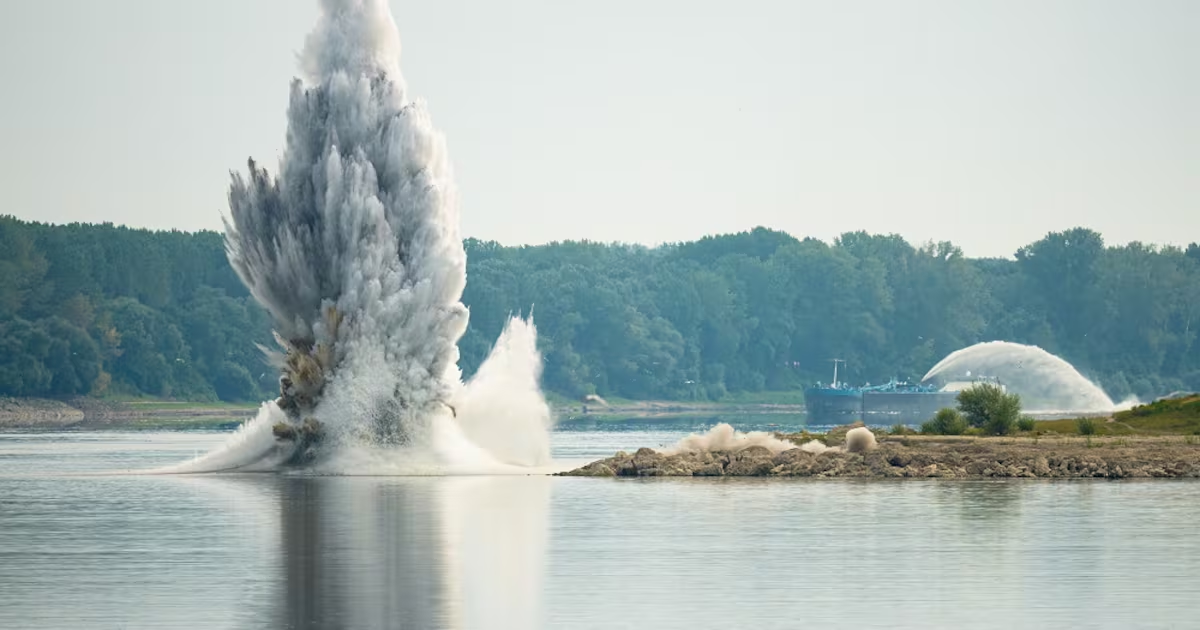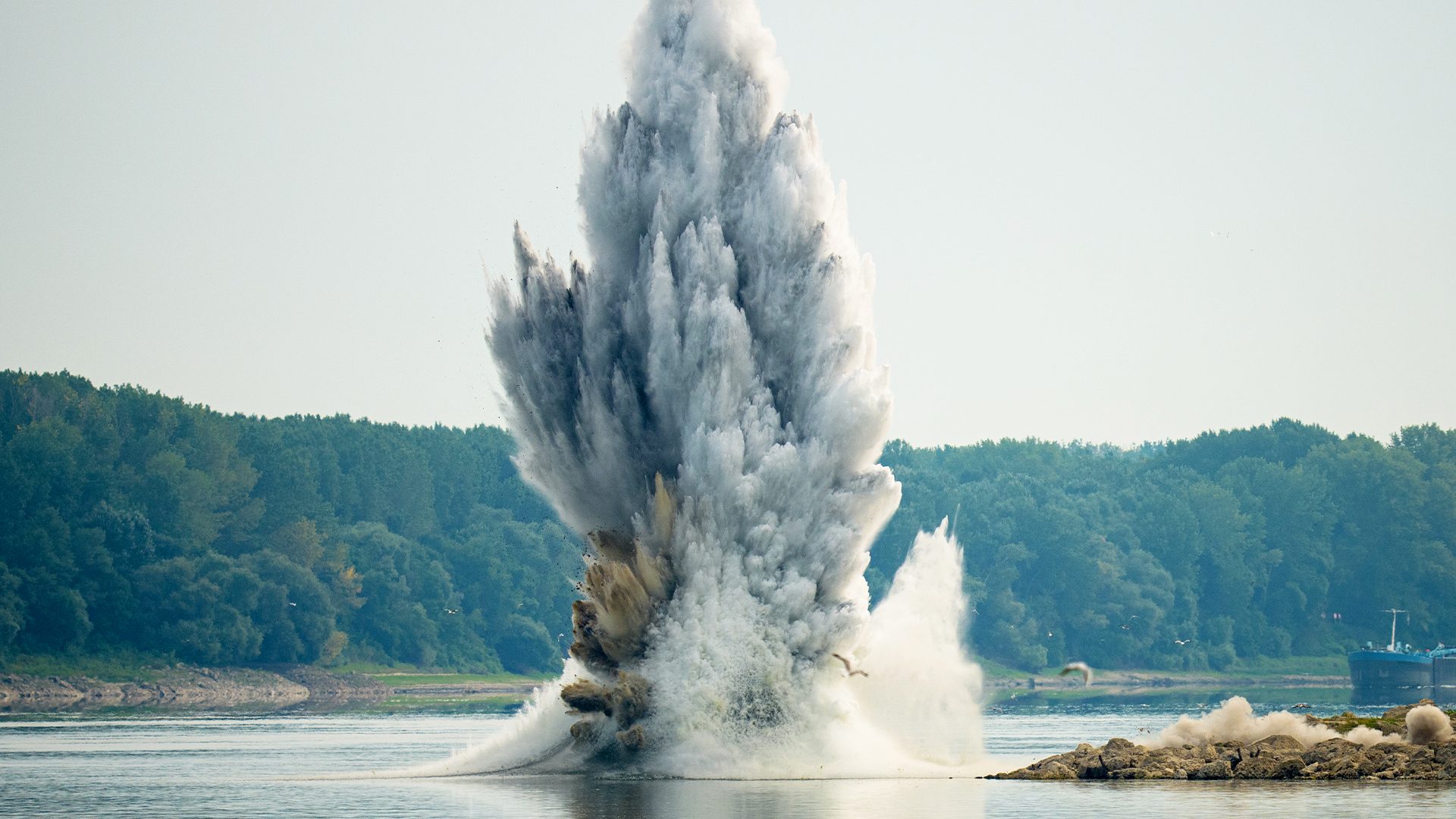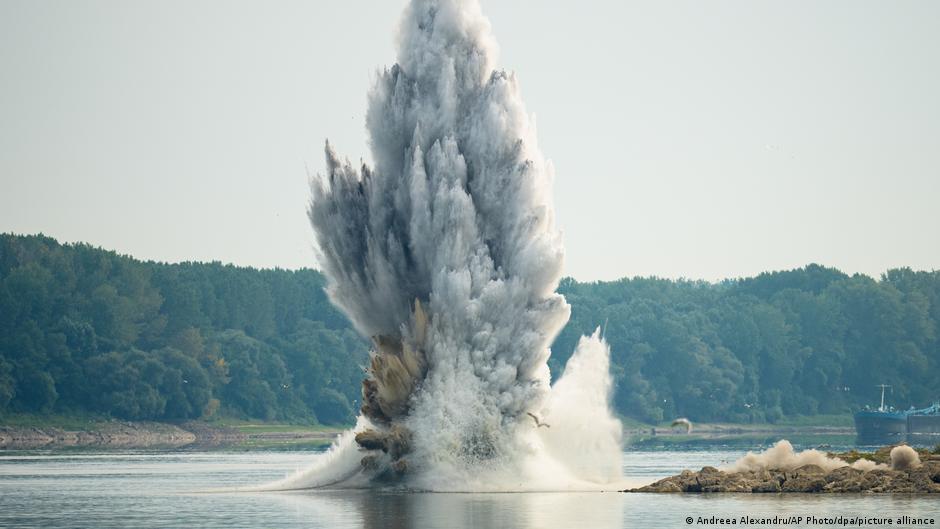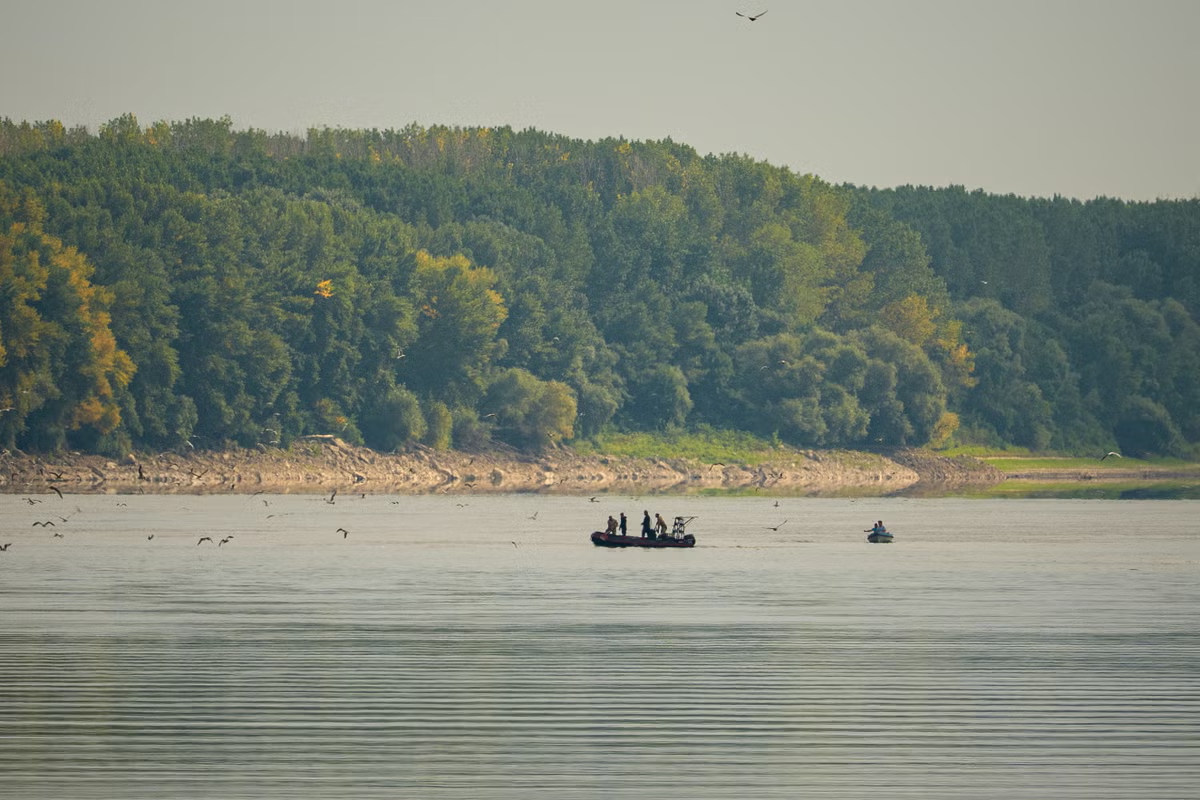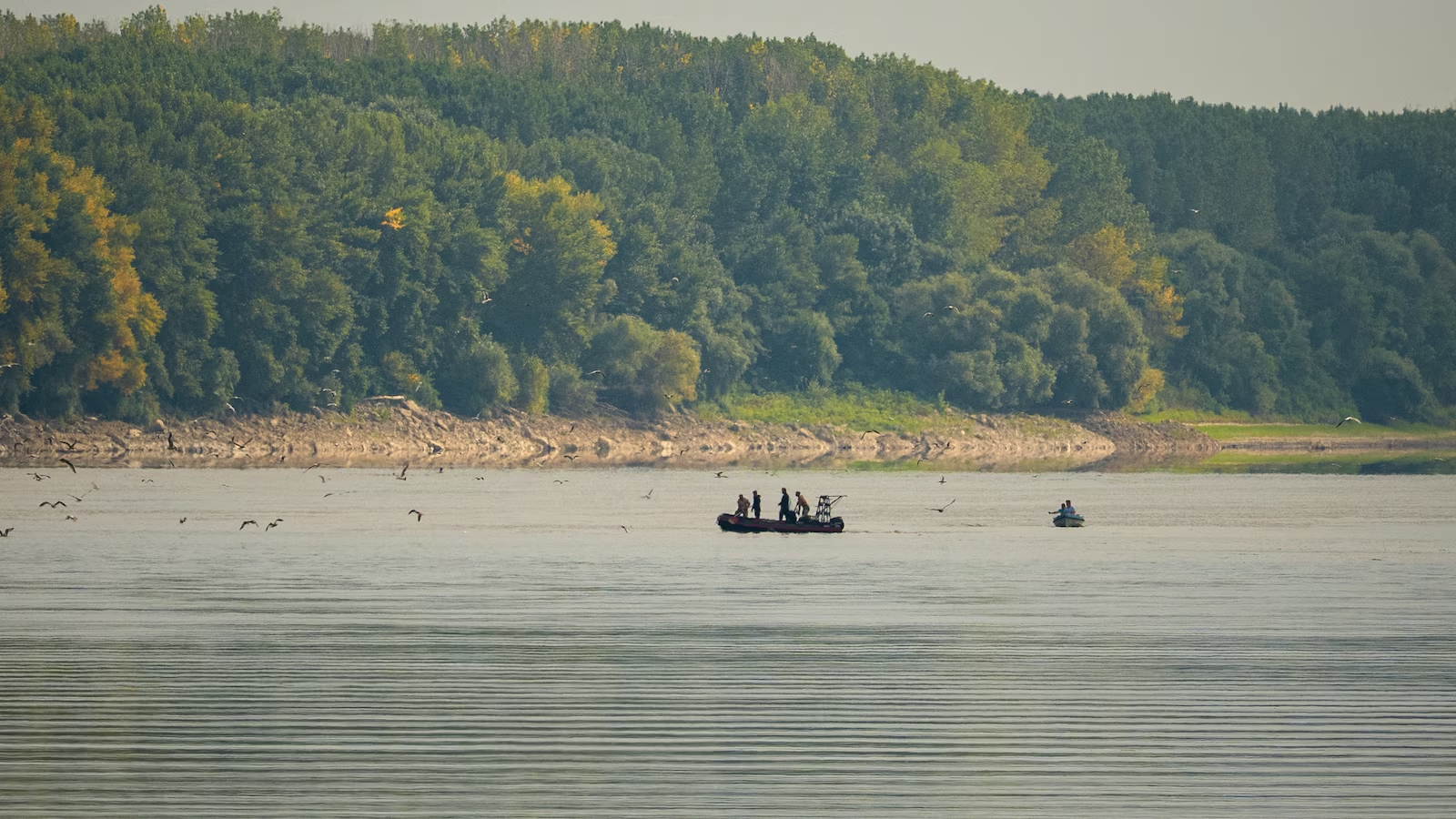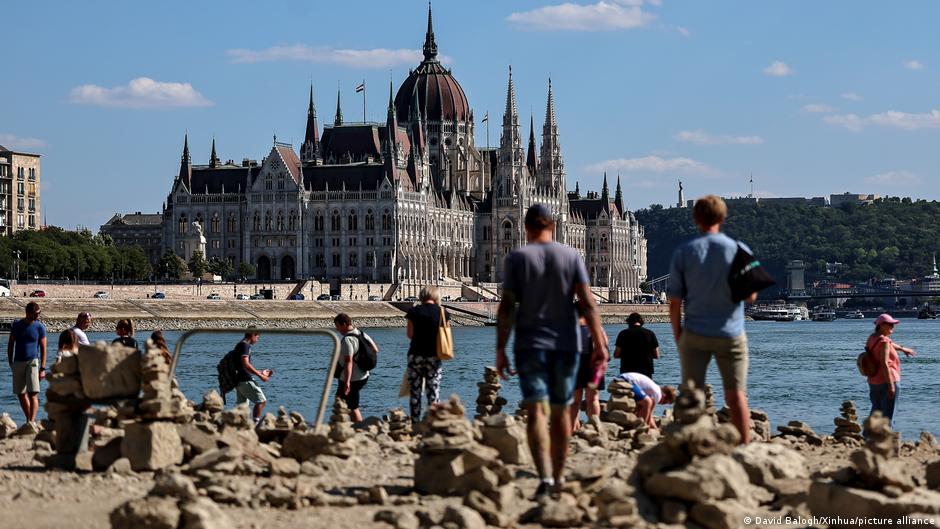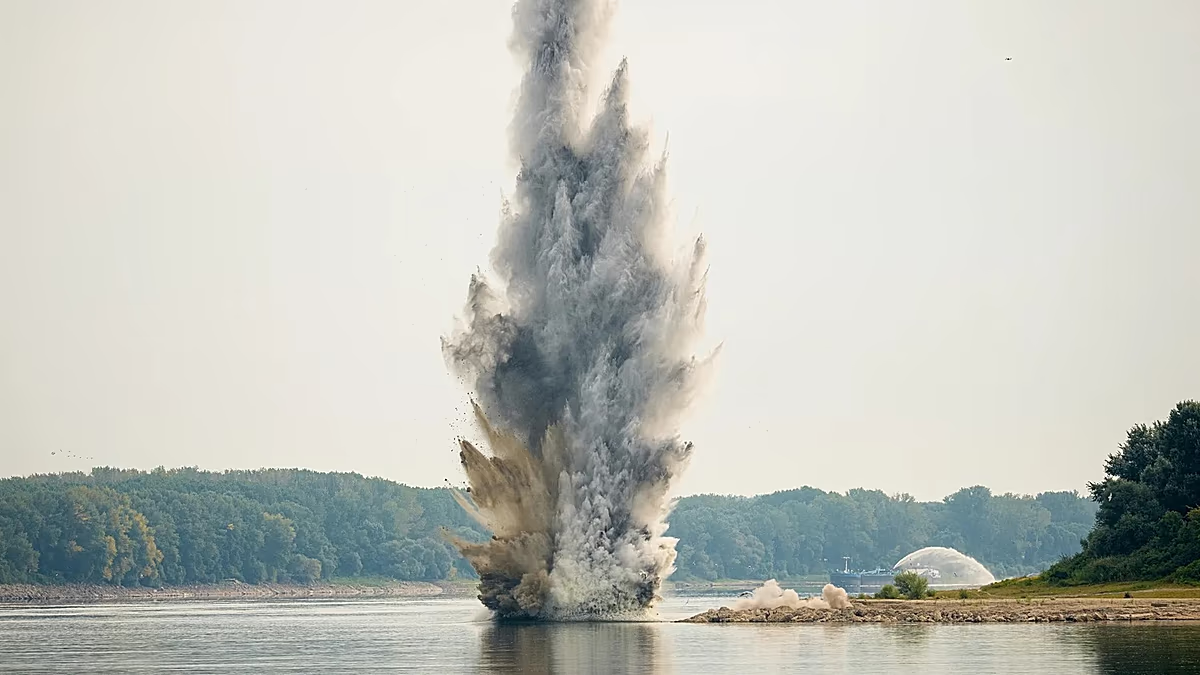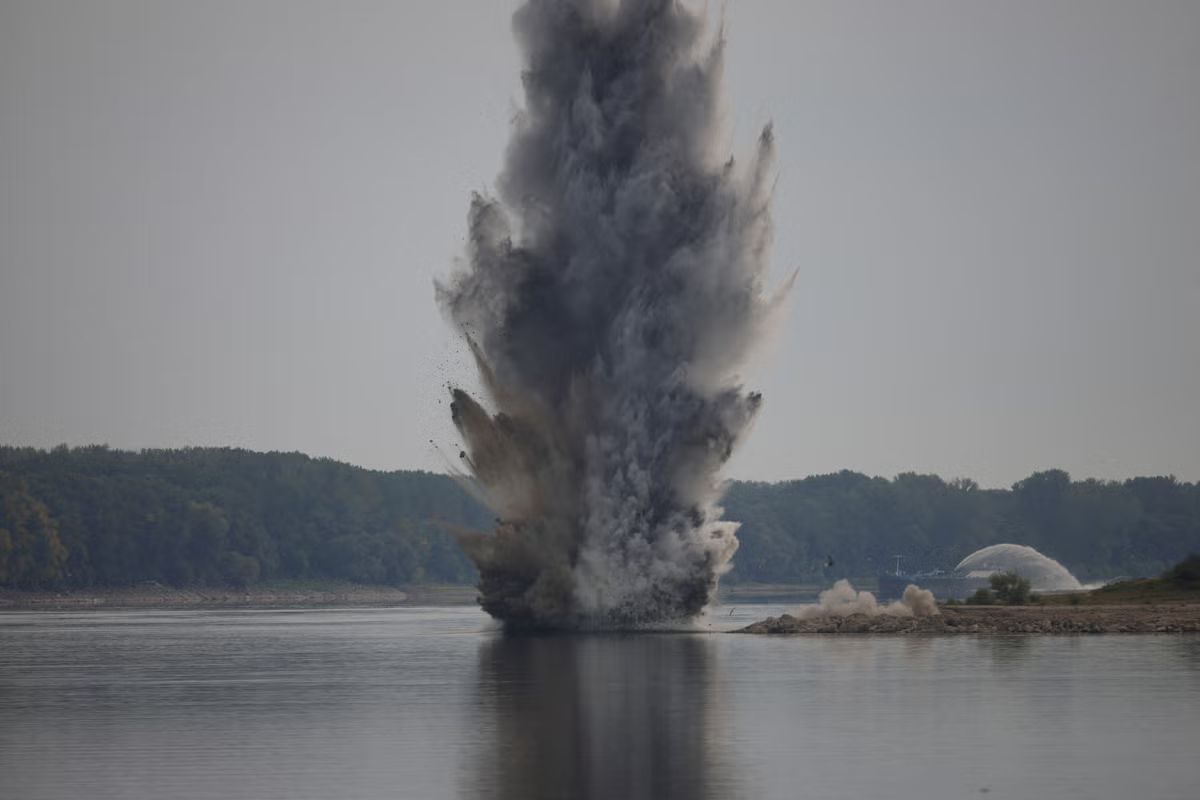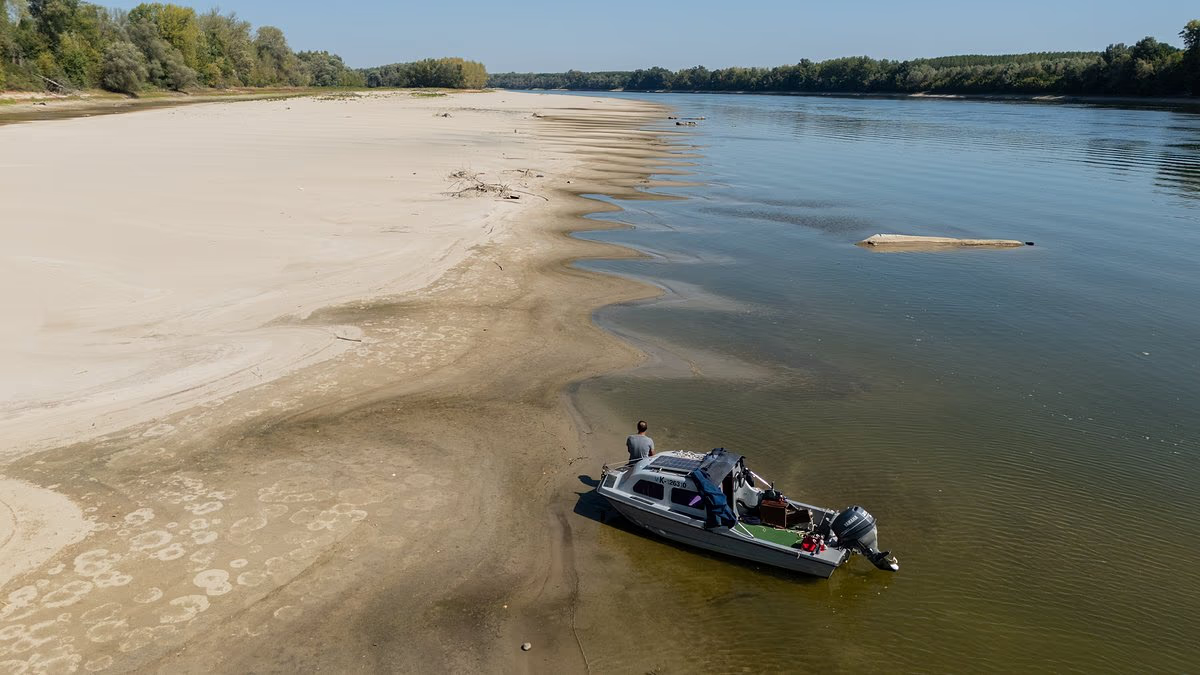
Romania blasted apart a river rock to redirect cooling water, while Hungary imposed emergency restrictions as drought, extreme heat and record-low water levels crippled power generationCountries across Central and Eastern Europe have been forced in recent days to take dramatic steps to conserve electricity and avert an energy crisis after plunging water levels in the Danube, one of the continent’s largest rivers, pushed power plants to the brink of shutdown.In Romania, authorities went so far Monday as to blast apart a large rock in the river to divert water into a Danube channel leading to the country’s last operating nuclear reactor, where it is needed for cooling.Romania blasts massive rock to divert water to nuclear reactor GalleryThe Danube riverbed exposed in Serbia by drought and heat (Photo: REUTERS/Zorana Jevtic)People walk across a section of the river exposed by falling water levels in Budapest, Hungary (Photo: Attila KISBENEDEK / AFP)A German warship sunk during World War II is exposed by falling water levels in Serbia (Photo: REUTERS/Djordje Kojadinovic)Persistent drought and a series of extreme heat waves across Europe have caused the Danube’s water level to fall sharply. In the Hungarian capital, Budapest, it dropped Monday to just 10 centimeters, or about 4 inches. The previous record low was 33 centimeters, set in 2018.The river is not expected to rise in the coming days or weeks because no significant rainfall is forecast. A new heat wave is now gripping the region, bringing temperatures of up to 38 degrees Celsius, or 100 Fahrenheit, and increasing demand for electricity and water.The water shortage has brought Hungary’s only nuclear power plant, the Soviet-era Paks facility with four reactors, to the brink of a full shutdown for the first time in its 44 years of operation.The plant, which uses Danube water to cool its reactors, generated only 240 megawatts of electricity Monday, compared with 2,000 megawatts under normal conditions.In a video posted to Facebook, Hungarian Prime Minister Péter Magyar said engineers had managed to keep the last operating turbine running, preventing a shutdown that some had expected over the weekend. He warned, however, that the plant would probably have to shut down completely Tuesday or Wednesday.A sandbar exposed beneath a bridge over the Danube in Budapest (Photo: Janos Kummer/Getty Images Europe)Conditions are so severe that people can walk their dogs along the exposed riverbed; a section of the Danube in Hungary (Photo: Attila KISBENEDEK / AFP)The Paks plant, about 90 kilometers, or 56 miles, south of Budapest, accounts for nearly half of Hungary’s electricity production and about one-third of its consumption.To make up for the shortfall, Hungary is relying on electricity imports from neighboring countries and on renewable energy. Last week, the government asked major factories to reduce power consumption and urged households to conserve electricity as much as possible, particularly during peak demand between 5 p.m. and 10 p.m.It also announced that electrically powered freight trains would be barred from operating during peak hours beginning Monday.Power plants in other countries are also facing dramatic declines in electricity production, along with disruptions to shipping and agriculture.Romania’s military blasted a rock Monday near the Bala channel on the Danube in an effort to redirect water toward the river’s main channel and the Cernavodă nuclear power plant.The Danube’s flow rate in Romania has fallen to 1,500 cubic meters per second, less than one-third of its July average. Authorities shut down one of the Cernavodă plant’s two reactors last week, leaving the facility operating at about half its normal capacity.Reactor 1 at Romania’s Cernavodă nuclear power plant; construction of the dam is expected to be completed Wednesday (Photo: Daniel MIHAILESCU / AFP)The controlled explosion in the river in Romania on Monday (Photo: AP Photo/Andreea Alexandru)(Photo: Daniel MIHAILESCU / AFP)A vessel works to redirect the flow of the Danube in Romania on Monday (Photo: AP Photo/Andreea Alexandru)(Photo: Inquam Photos/George Calin via REUTERS)The controlled explosion, which sent a towering plume of water into the air, was an extraordinary step underscoring the severity of the water crisis in the region.Romania now plans to quickly build a temporary dam that will divert more Danube water into the channel serving Cernavodă’s remaining reactor. The water diversion work is expected to be completed Wednesday.Acting Prime Minister Ilie Bolojan declared a national state of alert in Romania’s energy sector over the weekend, warning that the Danube’s low water level could force the shutdown of Cernavodă’s second reactor.He urged residents to voluntarily reduce electricity use during peak evening hours.After meeting with industry leaders Monday, Bolojan announced that automakers Dacia and Ford had begun maintenance shutdowns and halted vehicle production through Aug. 19. Other companies agreed to reduce energy use during peak hours.The public has been urged to conserve electricity during peak hours; the Danube in Romania (Photo: AP Photo/ Nicolae Dumitrache, File)Along the riverbank in Austria, where areas normally covered by water have also been exposed (Photo: Christian Bruna/Getty Images Europe)Serbia is also struggling with the crisis. The Danube’s record-low water level has forced the country’s main hydroelectric power station to operate at only 20% of capacity, prompting Prime Minister Đuro Macut to hold an emergency meeting Monday on the energy shortage.Macut asked residents to reduce as much as possible their use of high-consumption household appliances, including air conditioners. He warned that the situation was serious and demanding.The heat continues to grip other parts of Europe and fuel wildfires.In Greece, hundreds of firefighters battled a major blaze northwest of Athens for a fourth straight day Monday. Strong and shifting winds allowed the fire to destroy homes, burn through pine forests and consume tens of thousands of acres of farmland.Two crew members aboard a firefighting helicopter were killed Sunday when it collided in midair with another helicopter. The two crew members aboard the second aircraft survived.More than 400 firefighters and 21 aircraft were taking part in the firefighting effort.Greek firefighting helicopter disaster: The collision that killed two A wildfire rages near Athens; five firefighters have died in the past week (Photo: REUTERS/Louisa Gouliamaki)(Photo: REUTERS/Louisa Gouliamaki)(Photo: AP Photo/Petros Giannakouris)In the Netherlands, firefighters were battling a major blaze in a nature reserve in the southern province of Limburg. A nearby campground was evacuated because of poor air quality caused by heavy smoke.Italy was preparing for another week of extreme heat, while the regional government in the northern Piedmont region declared a state of emergency because of prolonged water shortages and wildfires.Vienna, the Austrian capital, recorded a new temperature record Monday of 40.1 degrees Celsius, or 104.2 Fahrenheit. The previous record of 40 degrees Celsius had been set just six days earlier.Firefighting efforts in Limburg, the Netherlands, where a campground was evacuated (Photo: ROB ENGELAAR / ANP / AFP)(Photo: ROB ENGELAAR / ANP / AFP)Britain’s weather service said Monday that a prolonged heat wave and lack of rainfall made July the driest month in England and Wales in nearly 200 years.All of Wales and more than half of England are now officially in drought.Studies show that Europe is warming faster than any other continent, at roughly twice the global average since the 1980s. Rising temperatures and prolonged drought leave vegetation drier and more flammable, allowing wildfires to spread faster and burn more intensely.
Danube water crisis pushes European nuclear plants toward shutdown
Romania blasted apart a river rock to redirect cooling water, while Hungary imposed emergency restrictions as drought, extreme heat and record-low water levels crippled power generation
1,192 words~5 min read