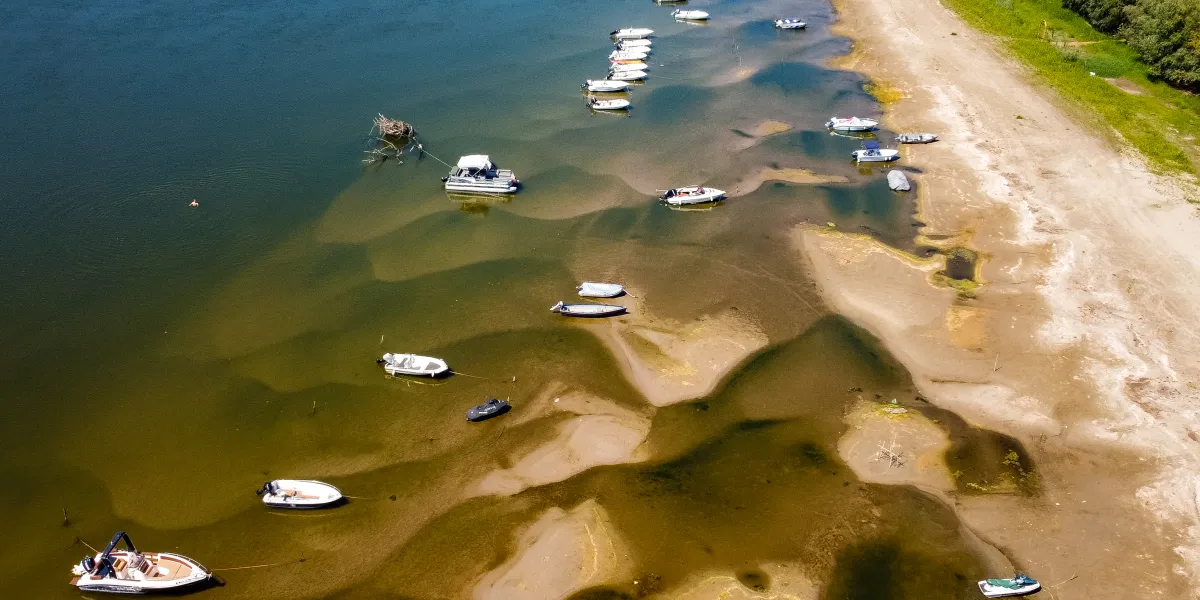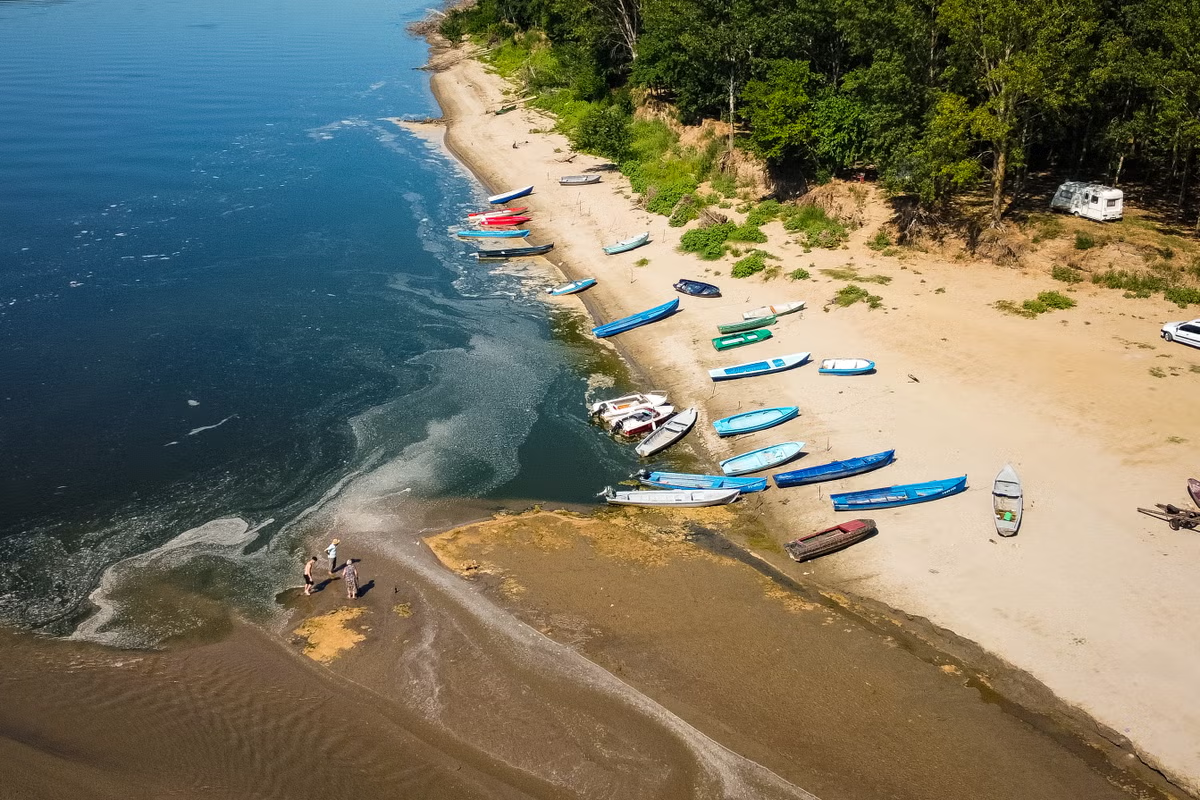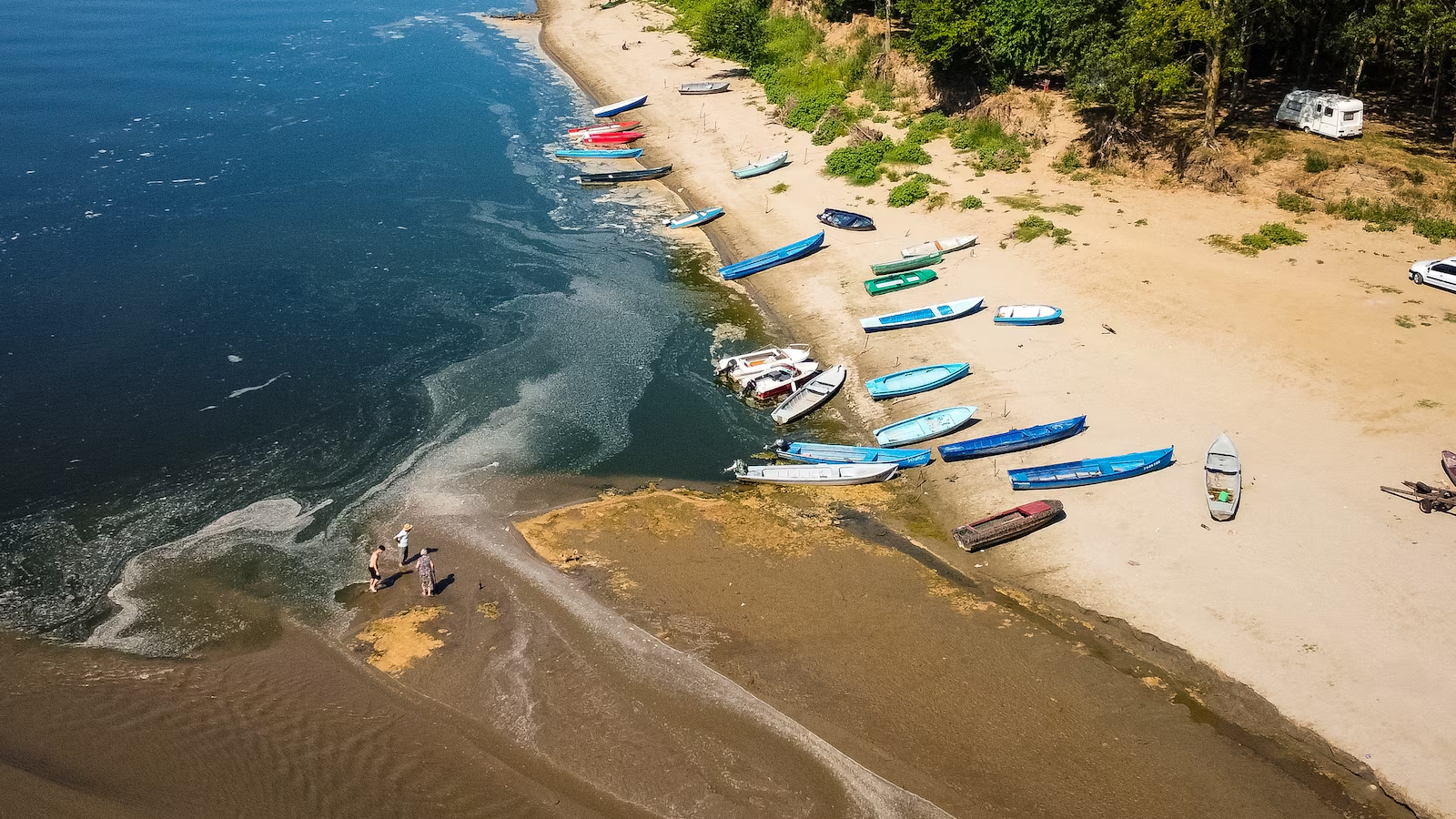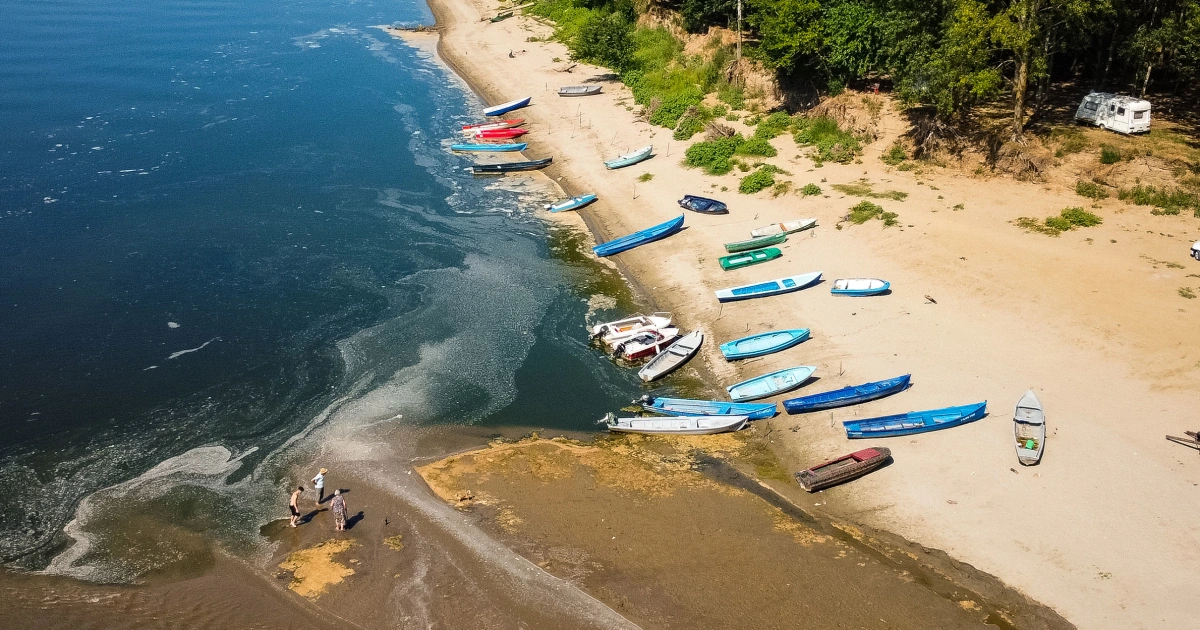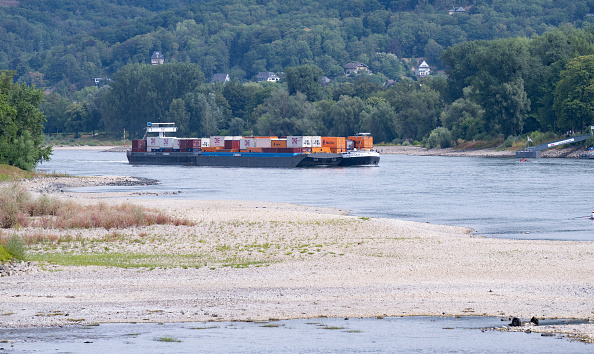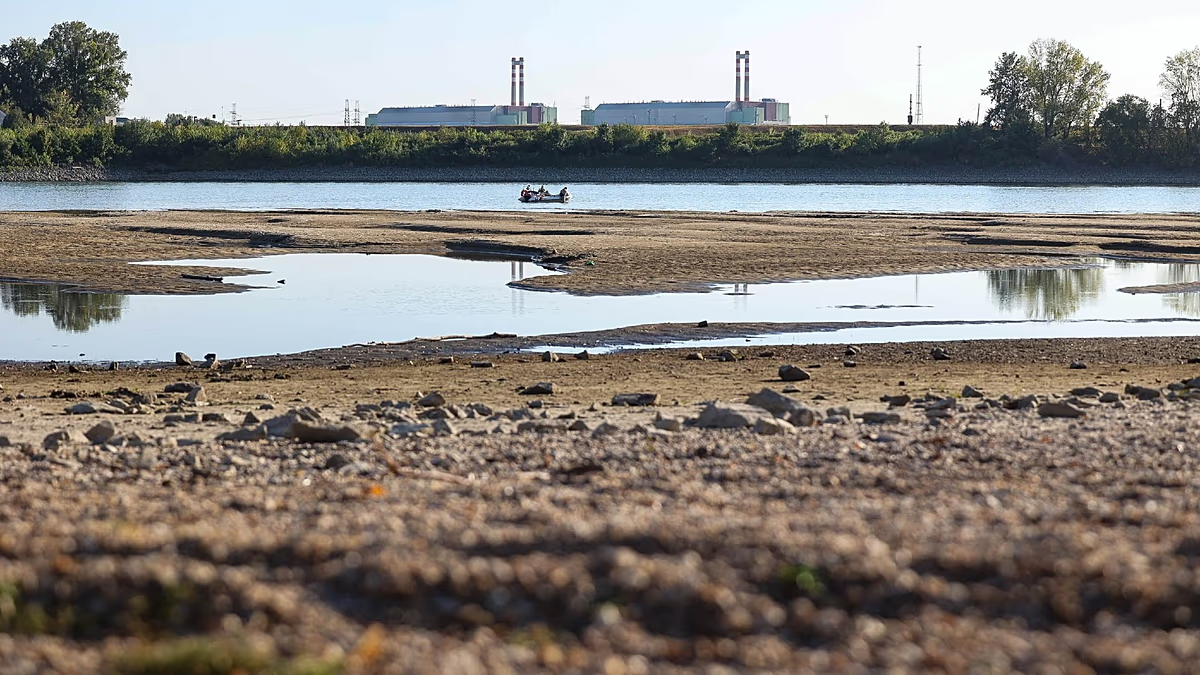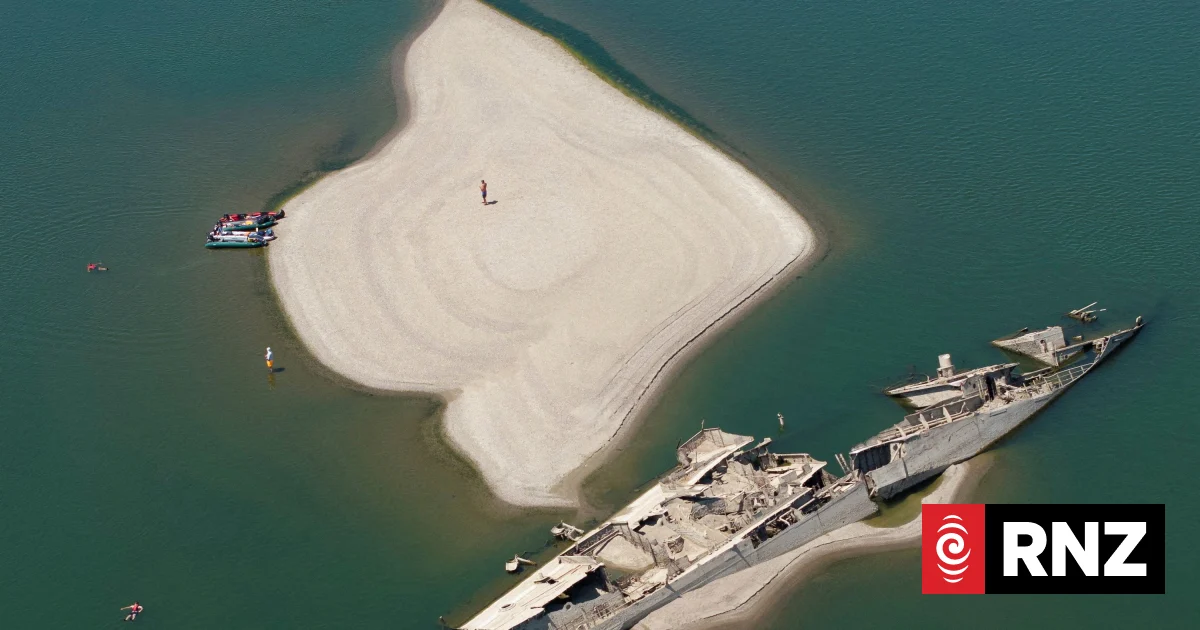
Baking temperatures and drought across large swathes of central and eastern Europe have driven water levels on the Danube and Rhine rivers to record lows in some areas, hitting shipping, energy production and tourism hard.Extreme conditions aggravated by the climate emergency left Europe’s waterways from the Netherlands to the Black Sea parched, triggering compounding crises.For the first time in their history, Hungary and Romania had to shut down atomic reactors normally cooled by the Danube.The largest nuclear power plant in Hungary, the 44-year-old Paks which supplies nearly half of the country’s electricity, has been cutting output since Monday.
The Paks power plant’s cold-water intake channel from the Danube.
The prime minister, Péter Magyar, said the Paks plant was operating at less than 50% capacity and was expected to be completely powered down next week. The shutdown could extend for weeks as Danube water levels are expected to remain too low to restart it.“An energy crisis situation could arise beginning Monday,” he posted on X. “Coordinated steps and restraint will be needed to avoid more severe consequences. We are counting on everyone!”Map of the Danube running across eastern Europe with two nuclear power plants detailedA malfunction at Hungary’s largest gas-fired power plant in Százhalombatta was worsening the grid shortage, he said.Hungarian authorities have asked citizens to reduce energy use in the peak evening hours, including refraining from charging EVs and switching off air conditioners, while carmakers and battery manufacturers have been ordered to cut power and water consumption.In Romania, authorities shut down a reactor unit at the Cernavodǎ power plant earlier in the week for safety reasons and announced a second would be switched off soon after.The prime minister, Ilie Bolojan, said the shutdowns could last for one to two weeks and also urged Romanians to reduce power consumption in the evenings.