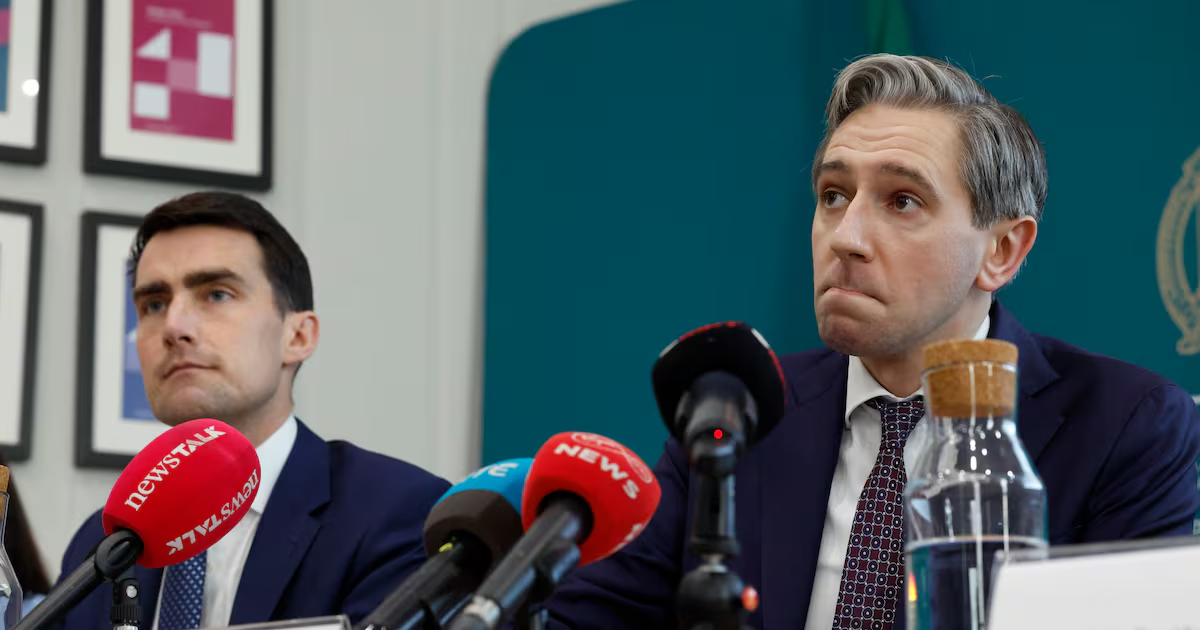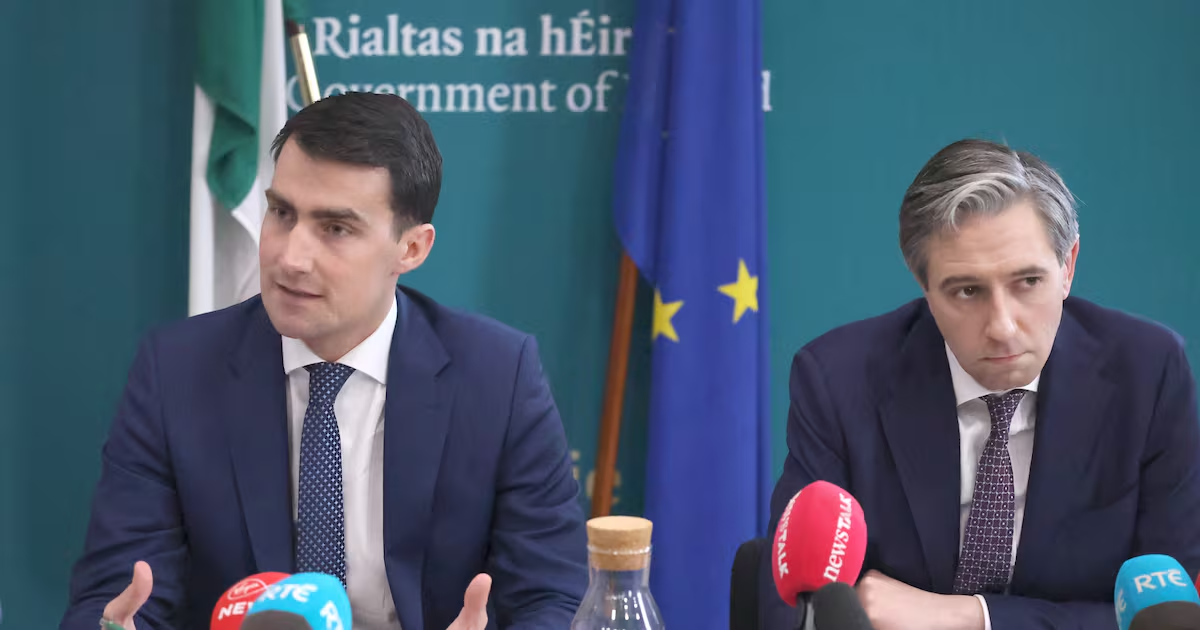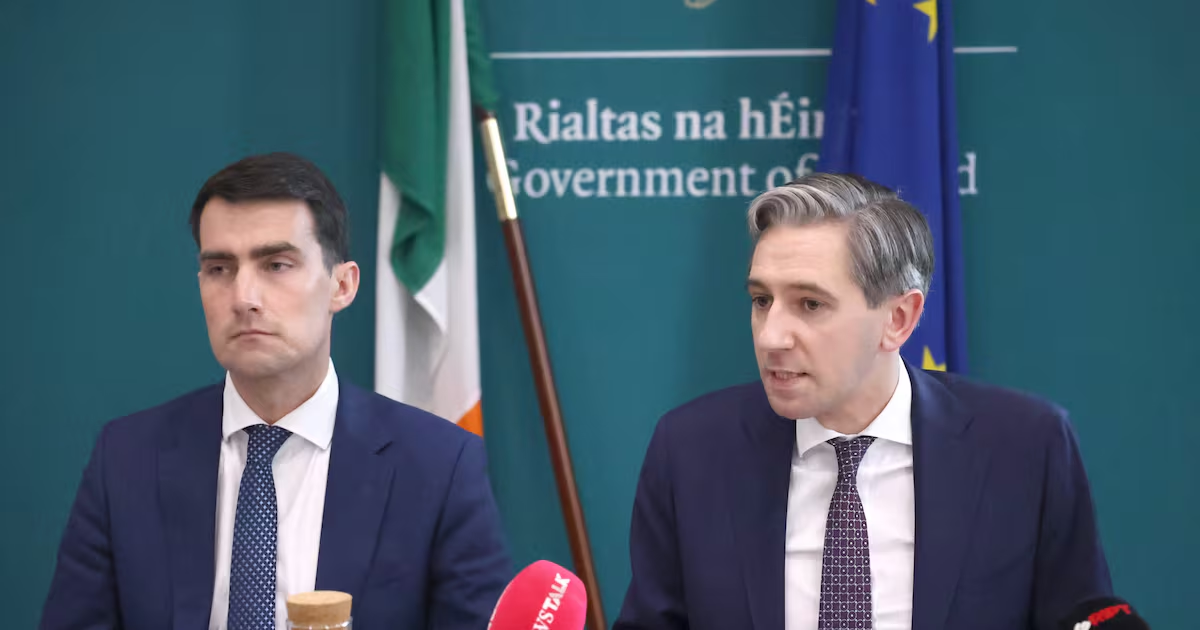
Stronger-than-expected tax revenue for the seven months to the end of July have strengthened the Government’s fiscal position ahead of the budget.The latest monthly exchequer returns show the Government collected a total of €59.6 billion in tax to the end of July, up €1.6 billion or 2.8 per cent on the same period last year. However, when once-off receipts connected to the Apple tax case, which boosted last year’s total, are excluded, total tax receipts this year were up by €3.4 billion or 6 per cent.The strong out-turn was driven by corporation tax which generated €1.3 billion in July, up marginally on the same month last year.Cumulatively, business tax receipts were €15 billion for the seven-month period, up €678 million year on year.This year will also see the first “top up” payments arising from the new global minimum rate of 15 per cent for large companies, meaning the end-year total is on course to exceed last year’s record €33 billion.Despite repeated warnings about the potential volatility of multinational profits, corporation tax receipts have continued to grow.Tax coffers were also boosted by income tax, which generated €3.3 billion in July and €21.9 billion for the seven months to July, up €1.5 billion (7.5 per cent) on the same period in 2025.Strong income tax receipts come on the back of a sustained period of jobs growth in the Irish economy. Separate figures released from the Central Statistics Office (CSO) show unemployment remains anchored near a historic low of 5 per cent. VAT receipts, which reflect consumer spending, were also up, rising by 17.5 per cent to €3.8 billion in July. The sales tax generated €16.3 billion for the seven months to the end of July, ahead of last year by €1.4 billion.On the spending side of the exchequer numbers, total gross voted expenditure for the seven months was €64.9 billion, which was €4.5 billion (7.4 per cent) ahead of last year but €1.2 billion (1.8 per cent) below profile.The Government is, however, forecasting overruns in departmental budgets of €700 million this year.Minister for Finance Simon Harris and Minister for Public Expenditure Jack Chambers have signalled a major clampdown on department spending amid a near doubling of public expenditure since 2019.The Government’s Medium Term Expenditure Framework, published last year, which seeks to put a 6 per cent cap on annual spending increases out to 2030.The Government’s recent spending review, which sets out the fiscal baseline for the upcoming budget, indicates that overall spending will be increased by €7 billion next year, comprising €5.9 billion in additional day-to-day spending and €1.1 billion in capital expenditure on infrastructure such as energy, water and transport.The latest exchequer data point to overall exchequer deficit of €0.6 billion in July. This compares to a surplus of €4.1 billion last year, a decrease of €4.7 billion. The year-on-year comparison was impacted by the Apple tax case, it said.
Tax receipts continue to roll in as Government tries to keep a lid on spending
Latest exchequer returns show Government collected €59.6 billion in tax so far this year
479 words~2 min read