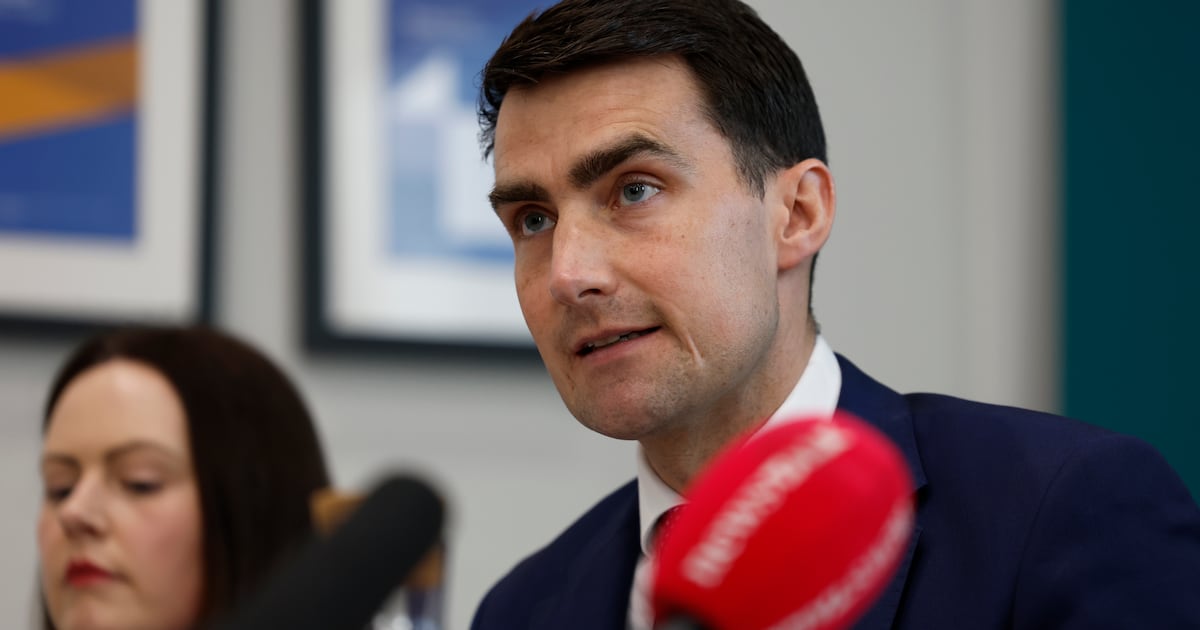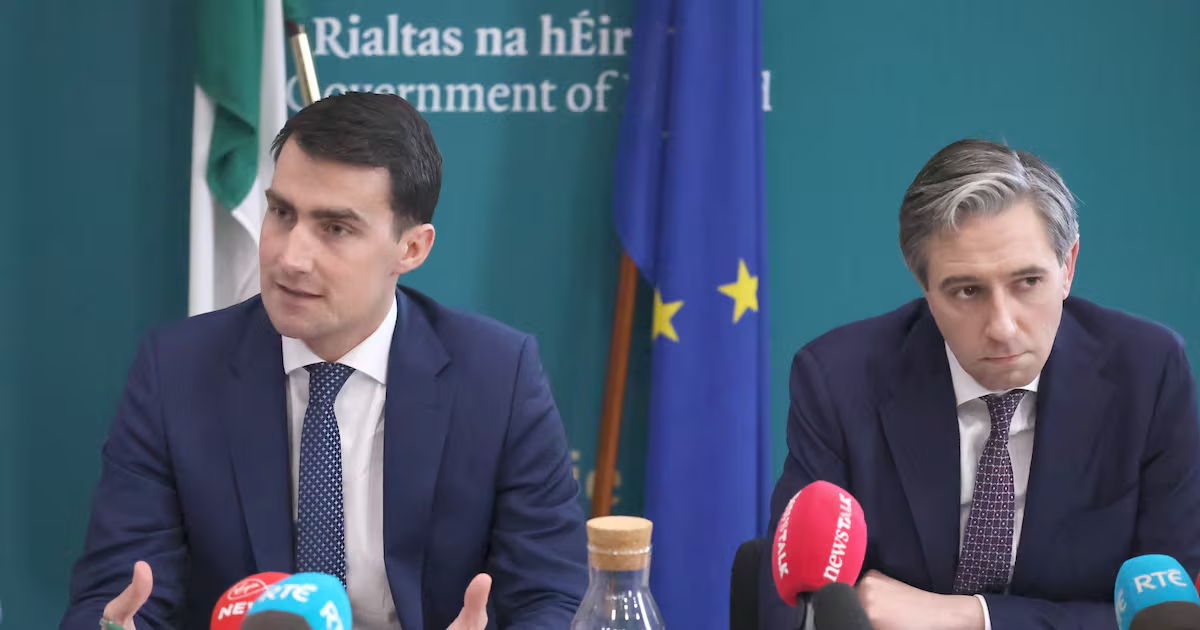
General government spending has jumped by 54 per cent since 2019Minister for Public Expenditure Jack Chambers and Tánaiste and Minister for Finance Simon Harris have promised a “fundamental change” in budgeting with new six per cent spending rule. Photograph: Stephen Collins/Collins Photos Fri Jul 03 2026 - 19:08 • 2 MIN READEvergreen tax receipts have insulated the public finances through one of the most volatile periods of economic history, one characterised by war, energy price shocks and a partial breakdown in global trade. But this tax cushion comes with moral hazard: spending has rocketed.Ministers can claim to be keeping a lid on it, strengthening spending protocols within departments, but the figures speak for themselves.General government spending has jumped by 54 per cent since 2019, from €86.9 billion to €133.8 billion last year. The Irish Fiscal Advisory Council (Ifac) says the Government has exceeded its annual spending target by an average €5.1 billion in each of the last three budgets.While part of the increase can be put down to a bigger population, an ageing population and to unforeseen factors like inflation, a significant portion stems from what the budgetary watchdog says is “bad planning” and “poor expenditure management”.[ Strong tax returns of €50bn strengthen Government’s budgetary positionOpens in new window ]Having a veritable mountain of tax receipts on one side of the ledger might be acting as a disincentive. Corporate tax receipts hit a record €33 billion last year - double the amount collected as recently as 2021 - glossing over the significant rise in spending.Minister for Finance Simon Harris and Minister for Public Expenditure Jack Chambers have promised a “fundamental change” in budgeting with new six per cent spending rule.The 9 per cent VAT rate has been welcomed by restaurants but does the hospitality sector actually need it? Listen | 39:12In their new Medium Term Fiscal and Structural Plan, they have pledged to limit the annual increase in public spending to 6 per cent a year for the next five budgets.The annual increase in spending will taper from 7.2 per cent this year to 5.4 per cent in 2029 and 5.2 per cent in 2030, equating to average annual increase over the period of 6 per cent. Chambers has in recent weeks written to Government departments warning them to rein in spending while indicating he plans to introduce enhanced oversight mechanisms before the budget.[ Ireland’s reliance on multinationals extends ‘far beyond’ corporation tax, warns watchdogOpens in new window ]And at the publication of the mid-year exchequer numbers on Friday, Chambers said: “As we move into the second half of the year, our focus will remain on ensuring that public funding is used effectively and delivers tangible outcomes for citizens, while continuing to manage the public finances in a sustainable and responsible manner.” Ifac is, however, warning that overruns in day-to-day public spending are likely to top €1.1 billion this year.“Current spending is growing at a fast pace up 6.8 per cent so far this year. Sizeable overruns are becoming apparent in health,” the council said in response to the latest figures. The other main focus of the exchequers was corporation tax which generated a positive €7.5 billion in June, marginally up on last year. This year will also see the first “top up” payments arising from the new global minimum rate of 15 per cent but the department said we would not see the first significant payments until next month. IN THIS SECTION
Buoyant tax receipts provide cover for runaway State spending
Ireland’s reliance on multinationals extends ‘far beyond’ corporation tax, warns watchdog
573 words~3 min read