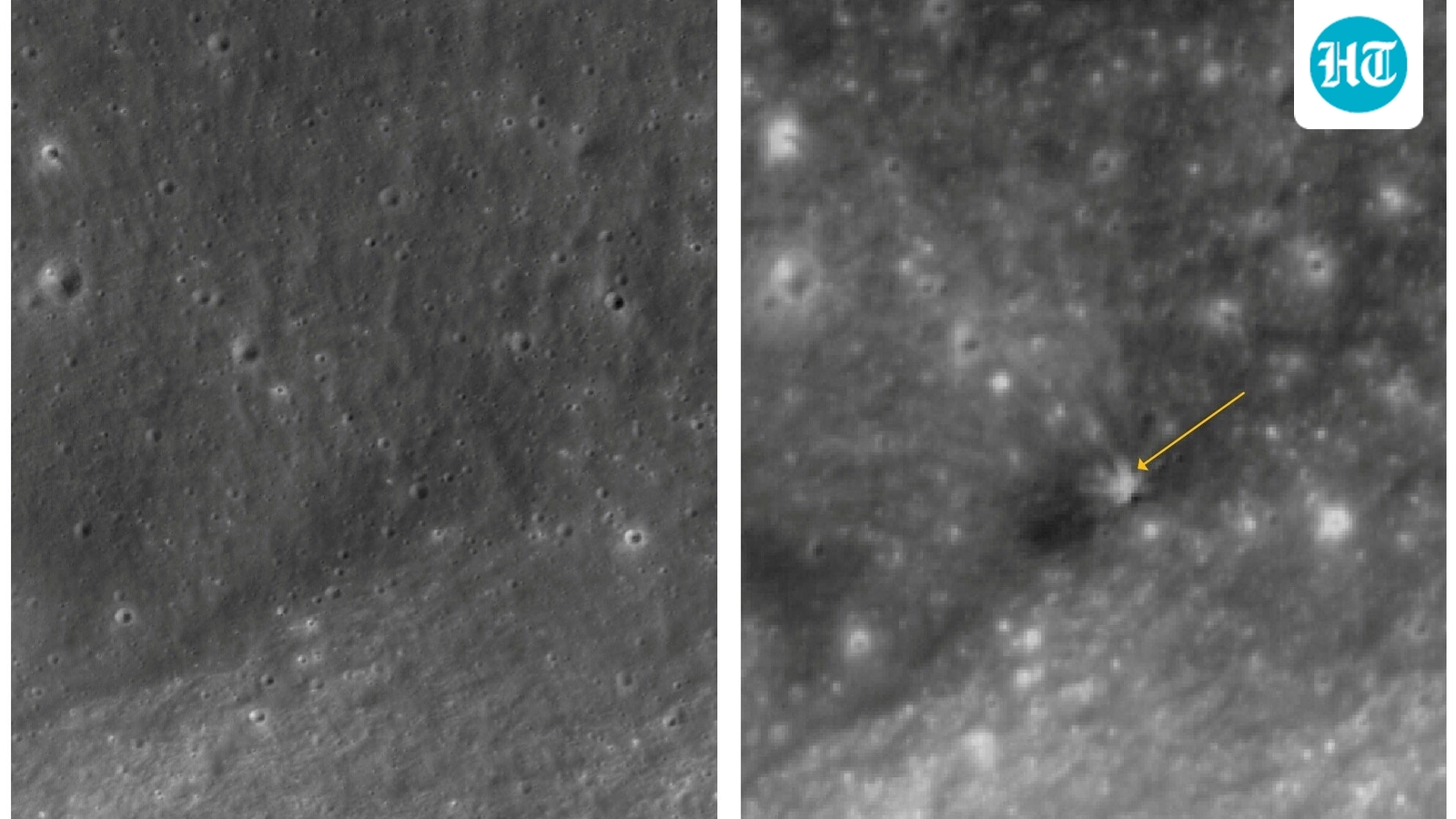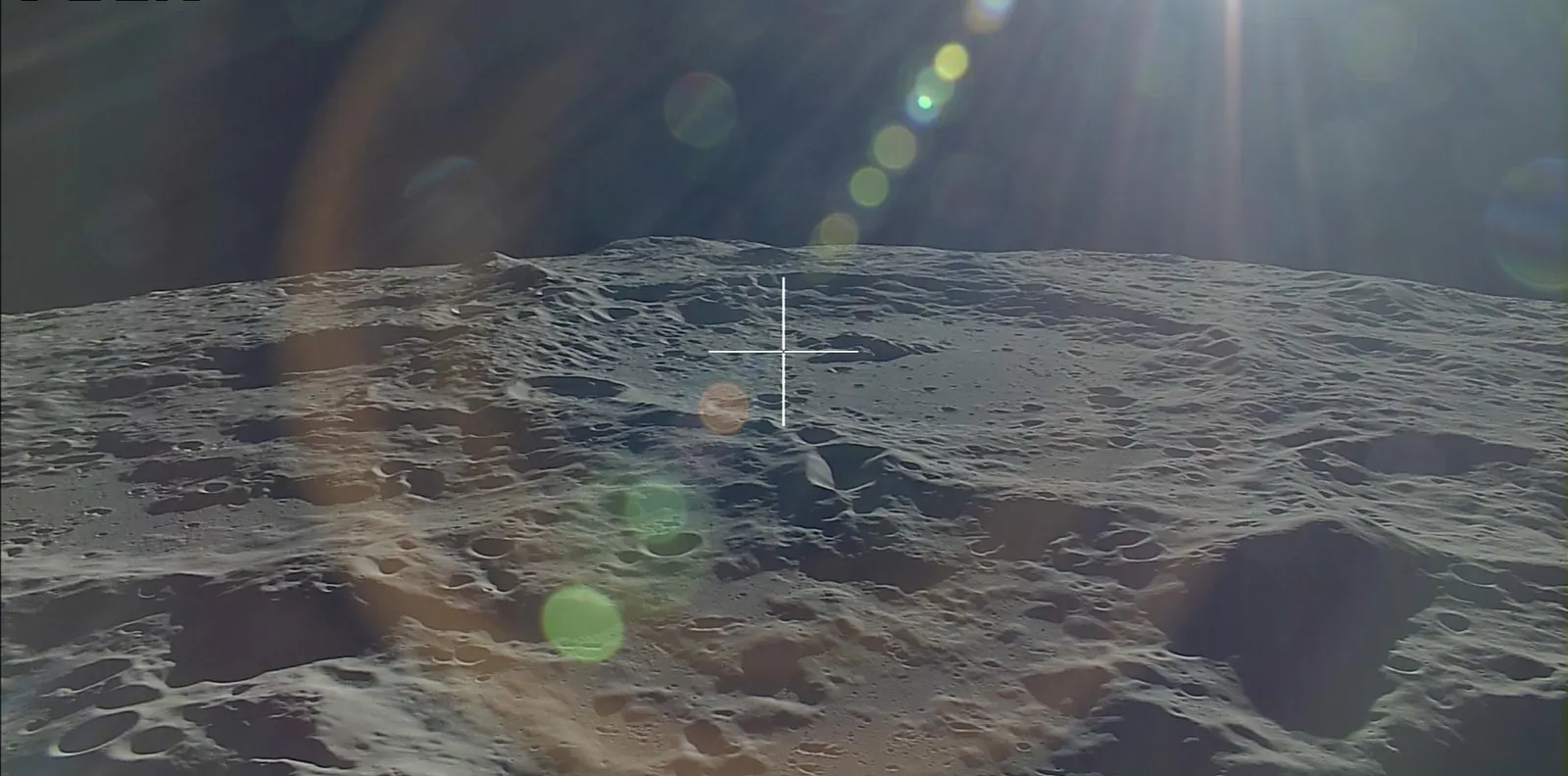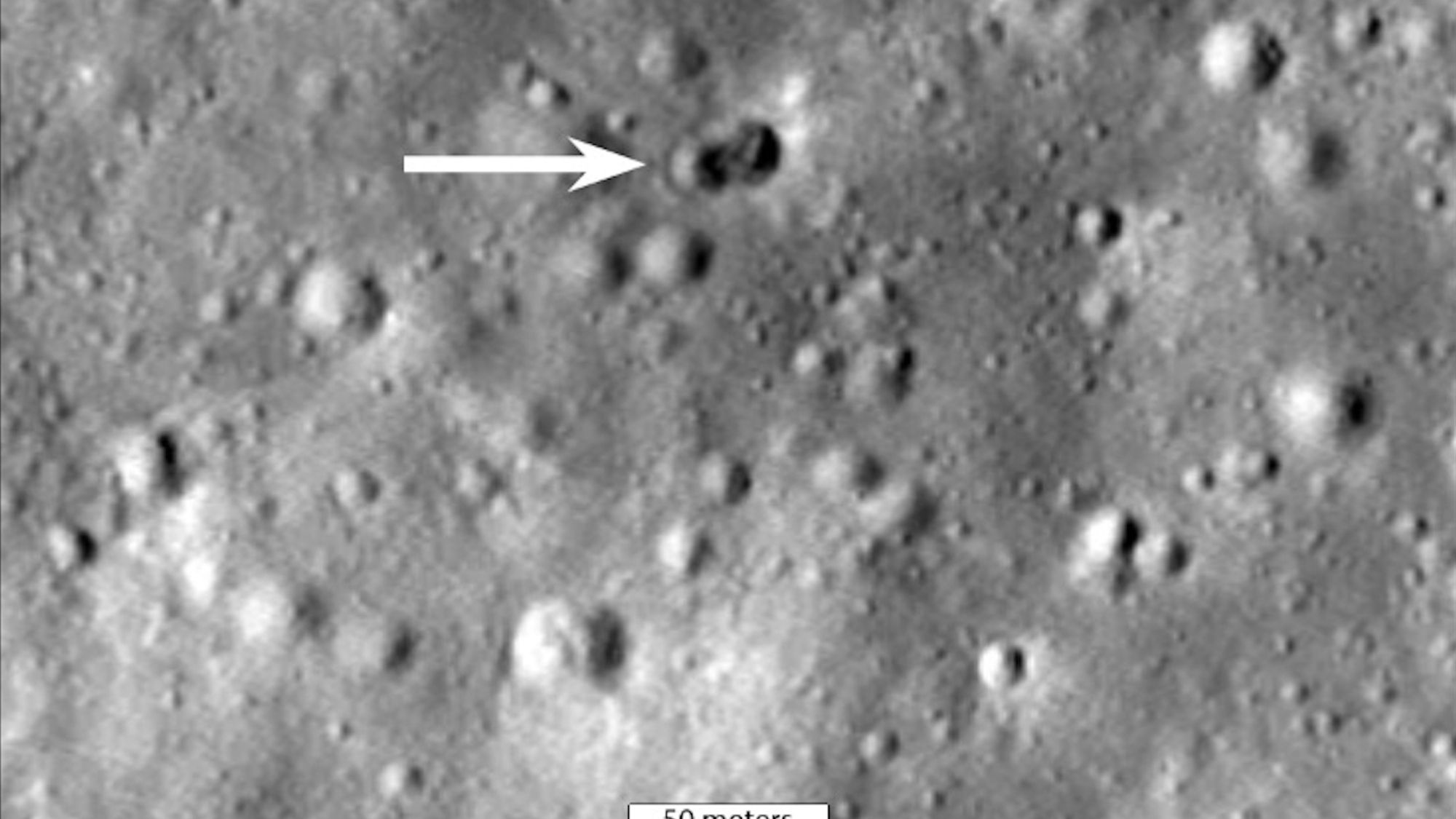
A rocket body, later identified as part of a Chinese Long March 3C rocket, hit the moon on March 4, 2022, creating a double crater roughly 95 feet (29 meters) wide, as seen in this photo taken by NASA's Lunar Reconnaissance Orbiter.
(Image credit: NASA/GSFC/Arizona State University)
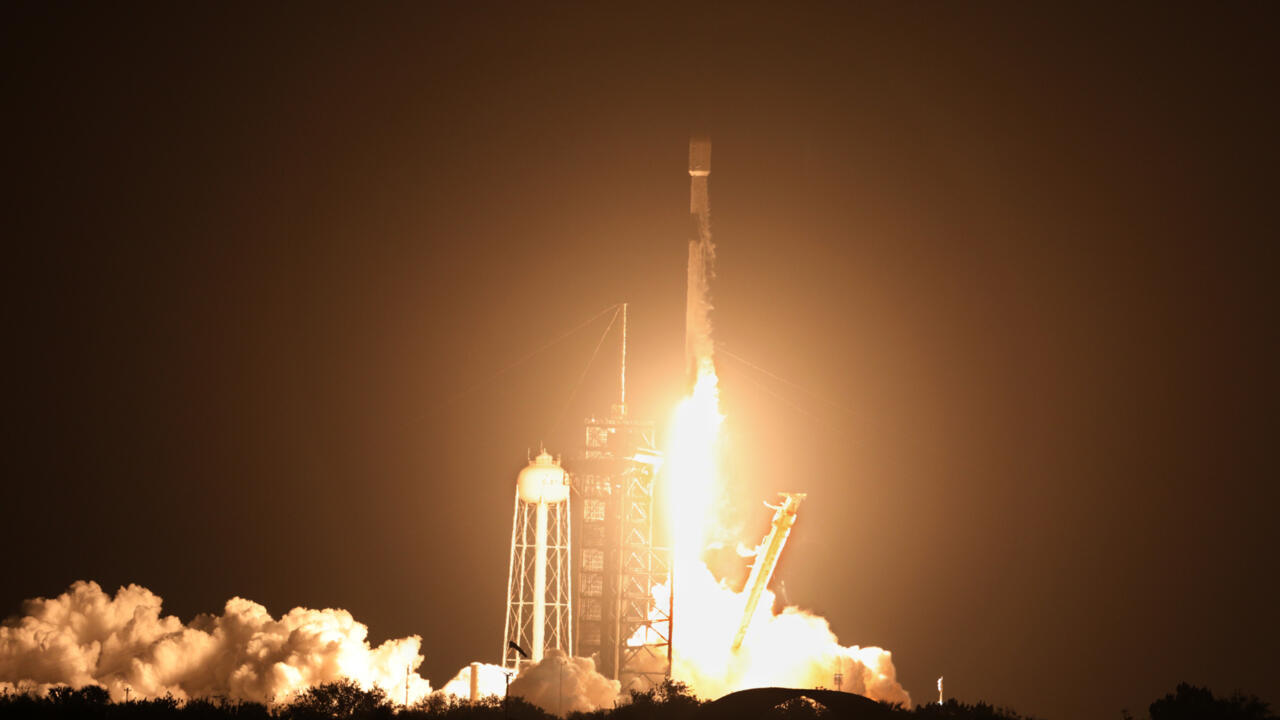
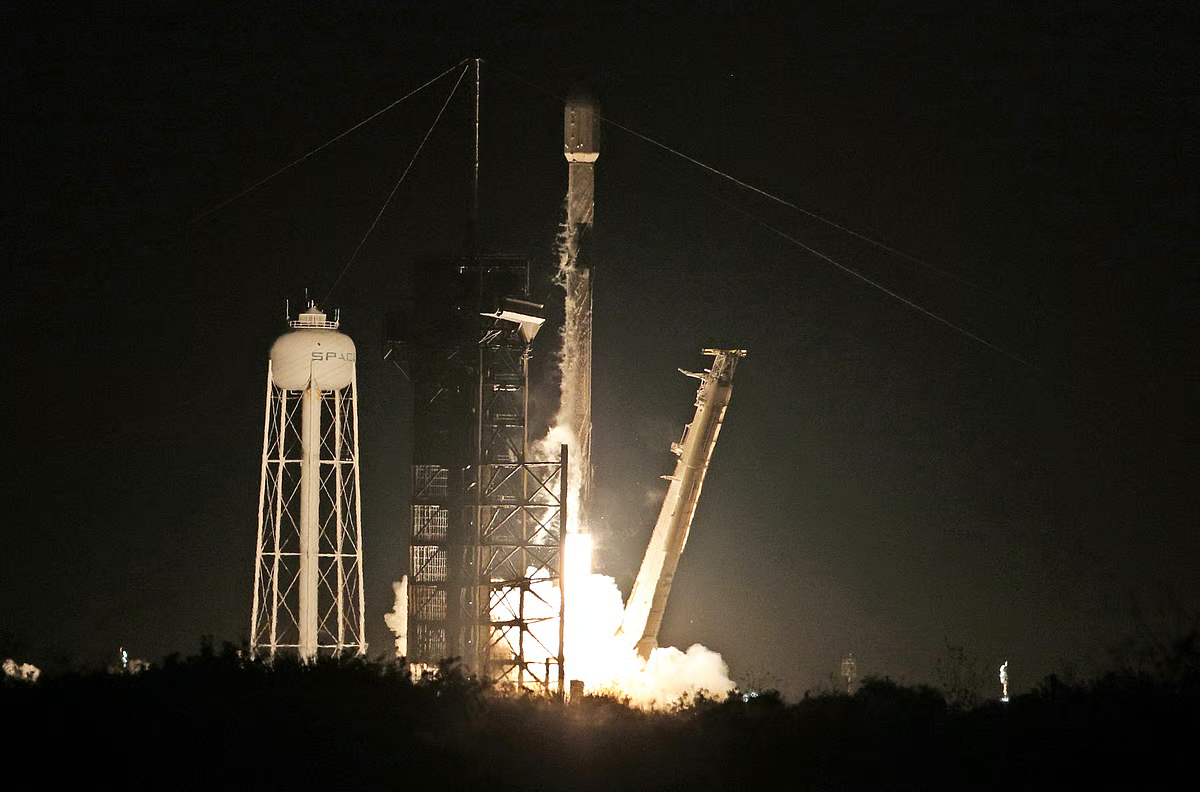
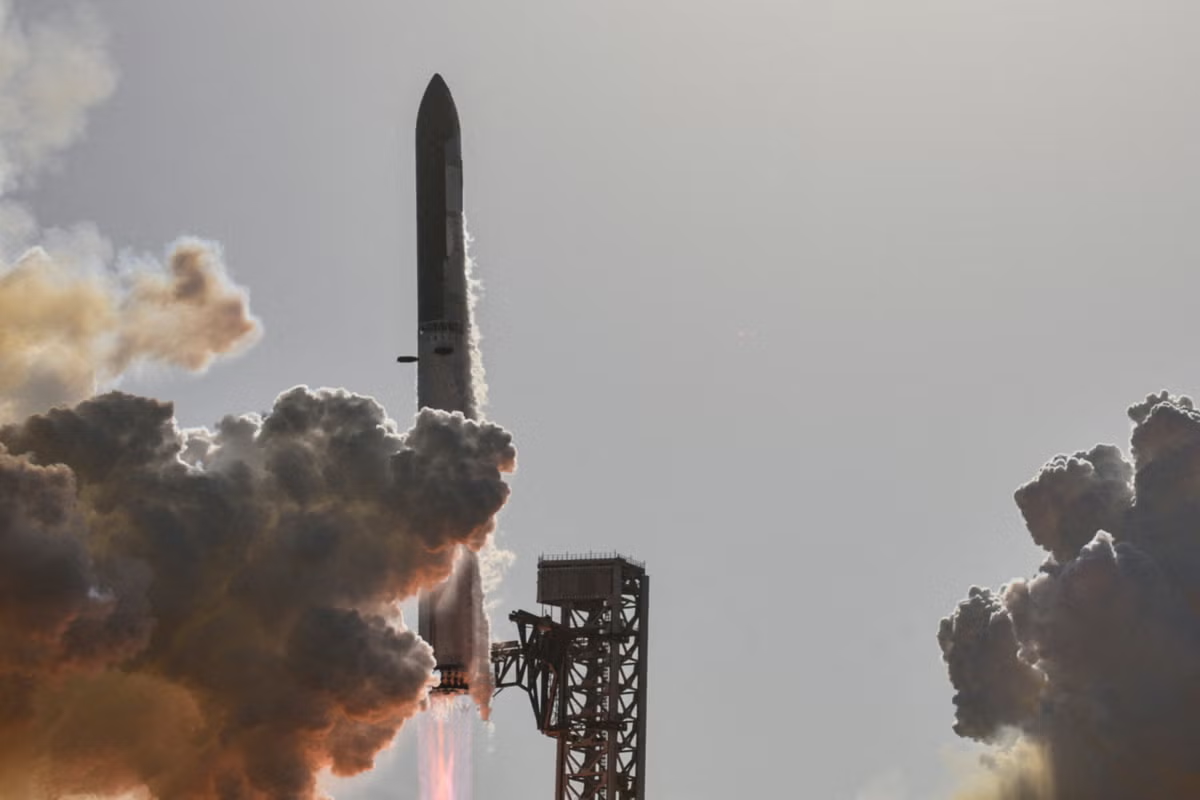
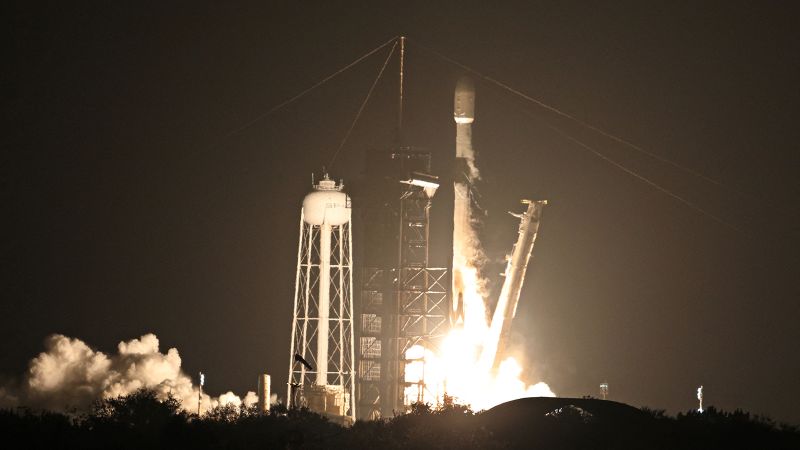
A spent rocket body hitting the moon made headlines this week, but the reality is that the unplanned collision by a SpaceX upper stage was just the latest in a long history of human-made objects meeting their end by impacting the lunar surface.Astronomers around the world kept their telescopes trained on the moon early Wednesday morning (Aug. 5), when the rocket stage from a January 2025 U.S. commercial lunar landing mission was calculated to strike the celestial body. Though the fate of the SpaceX Falcon 9 part was unintentional — solar activity and gravitational forces caused the stage to slam into the moon — the impact offered a rare opportunity to try to observe the flash from the impact and the plume of lunar material it sent flying.By noon (EDT) on Wednesday, there were no confirmed reports of the impact being caught on film, but a telescope in Chile spotted the debris plume, according to the Associated Press."This rare occurrence has decades of history, going back to the Apollo era," wrote Jared Isaacman, NASA's administrator, in a post to his social media accounts. "The reality is that meteoroids strike the lunar surface hourly, with impacts comparable to this upper stage occurring roughly every six days."Inventorying the impactsThe moon is peppered with the scattered metal remains of missions that missed their mark, came down too quickly or were purposefully sent careening into the regolith to learn more about the makeup of Earth's natural satellite.In fact, the very first mission to successfully fly by the moon was intended to be an impactor. The former Soviet Union's Luna 1 probe was designed to hit the moon but instead zoomed past its target and entered orbit around the sun on Jan. 2, 1959.Luna 2, launched nine months later, became humanity's first object to reach the lunar surface, purposefully slamming into Sinus Lunicus ("Bay of Lunik"), along the southeastern edge of Mare Imbrium, on Sept. 14, 1959.The U.S. followed suit, though not as NASA intended, with the Ranger 4 probe impacting the far side of the moon on April 26, 1962. The mission had included an impactor, but both it and its lander failed to operate due to a failure to deploy the spacecraft's solar arrays.Once humans began arriving on the moon with NASA's Apollo program, scientists found another reason to direct spent rocket and spacecraft stages into a collision course with the surface. Beginning with Apollo 11 in 1969 and concluding with Apollo 16 in 1972, seismometers were placed on the moon to measure natural "moonquakes" and the effects on the moon when the missions' Saturn SIV-B stages and Apollo lunar module descent stages made hard landings.The data collected helped geologists learn more about the interior makeup of the moon, including that a rocky mantle exists under the outer crust.