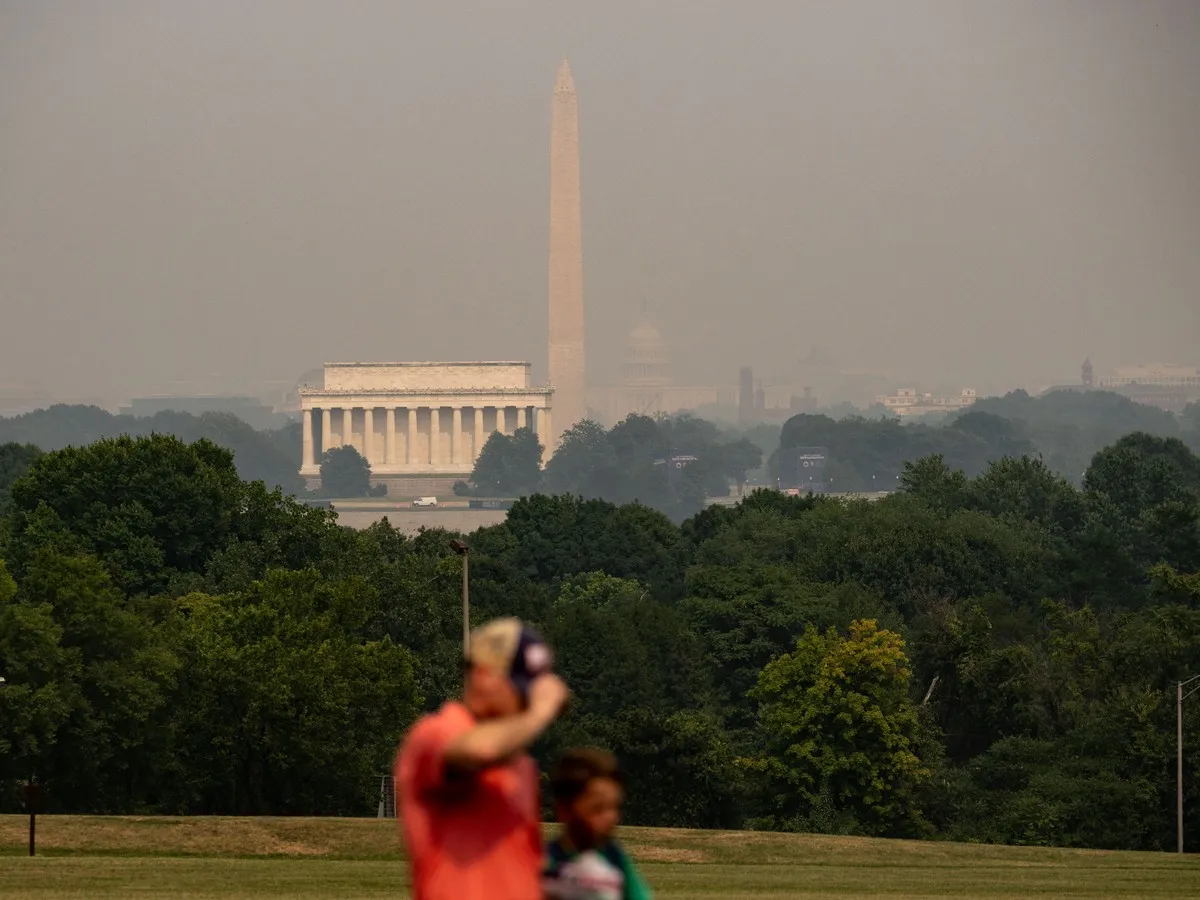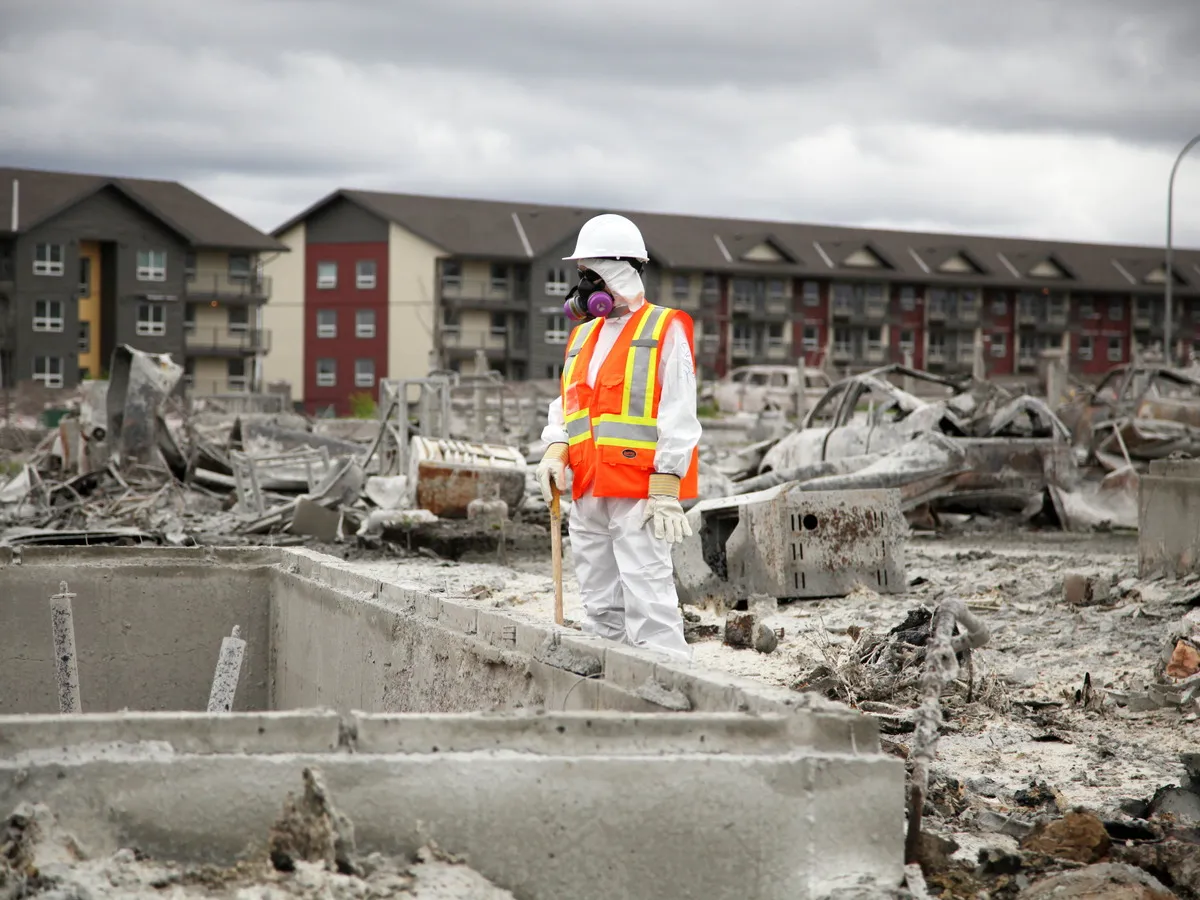
Skip to Content News Archives Economy Energy Oil & Gas Renewables Electric Vehicles Mining Commodities Agriculture Real Estate Mortgages Mortgage Rates Finance Banking Insurance Fintech Cryptocurrency Work Wealth Smart Money Wealth Management Investor Personal Finance Family Finance Retirement Taxes High Net Worth FP Comment Executive Women Puzzmo Newsletters Financial Times Business Essentials More Innovation Information Technology FP500 Podcasts Small Business Lives Told Tails Told Shopping Financial Post Store Obituaries Place a Notice Advertising Advertising With Us Advertising Solutions Postmedia Ad Manager Sponsorship Requests Classifieds Place a Classifieds ad Working Profile Settings My Subscriptions Saved Articles My Offers Newsletters Customer Service FAQ News Economy Energy Mining Real Estate Finance Work Wealth Investor FP Comment Executive Women Puzzmo Newsletters Financial Times Business Essentials HomeFP CommentOpinion: Who should pay for damage caused by forest fires?Right now Ottawa steps in as a sort of insurer of last resort. We need a system that prices risks properly and takes prevention seriouslyLast updated 29 minutes ago You can save this article by registering for free here. Or sign-in if you have an account.Canada already pays for disasters, and the bill is rising every year. Our choice is between foresight, reserves and discipline, or one disaster, one scramble, one program at a time. Photo by Olivia Condon/PostmediaWhen this summer’s forest fire season finally ends, the bill will arrive. Who pays, and how fast?Subscribe now to read the latest news in your city and across Canada.Exclusive articles from Barbara Shecter, Joe O'Connor, Gabriel Friedman, and others.Daily content from Financial Times, the world's leading global business publication.Unlimited online access to read articles from Financial Post, National Post and 15 news sites across Canada with one account.National Post ePaper, an electronic replica of the print edition to view on any device, share and comment on.Daily puzzles, including the New York Times Crossword.Subscribe now to read the latest news in your city and across Canada.Exclusive articles from Barbara Shecter, Joe O'Connor, Gabriel Friedman and others.Daily content from Financial Times, the world's leading global business publication.Unlimited online access to read articles from Financial Post, National Post and 15 news sites across Canada with one account.National Post ePaper, an electronic replica of the print edition to view on any device, share and comment on.Daily puzzles, including the New York Times Crossword.Create an account or sign in to continue with your reading experience.Access articles from across Canada with one account.Share your thoughts and join the conversation in the comments.Enjoy additional articles per month.Get email updates from your favourite authors.Create an account or sign in to continue with your reading experience.Access articles from across Canada with one accountShare your thoughts and join the conversation in the commentsEnjoy additional articles per monthGet email updates from your favourite authorsSign In or Create an AccountorCanada has no institution built to answer those questions. Ottawa is already Canada’s de facto insurer of last resort. When losses overwhelm a province, the federal government steps in, mainly through the Disaster Financial Assistance Arrangements (DFAA). Since 1970, that program has sent more than $14 billion (in nominal dollars) to provinces and territories. Most of it is recent: annual costs averaged $881 million over 2010-24.As natural disasters grow more complex, however, so do the claims. Final settlements can take up to a decade. The last cheque for the 1998 ice storm, for example, arrived in 2008. A framework built for an earlier era is being stressed by the frequency and scale of today’s crises.Get the latest headlines, breaking news and columns.By signing up you consent to receive the above newsletter from Postmedia Network Inc.A welcome email is on its way. If you don't see it, please check your junk folder.The next issue of Top Stories will soon be in your inbox.We encountered an issue signing you up. Please try againThe Parliamentary Budget Officer (PBO) projects disaster-related costs for the DFAA will double within 10 years, to $1.8 billion per year. A rising bill processed by an outdated financial model compounds the problem. Provinces and territories, which have their own assistance programs, ride the same curve with the same issues. Yet none has the risk pool or balance sheet to backstop its claims. That job is of a scale only Ottawa can handle.What about private insurance? The same disasters are forcing it to recalibrate. Losses covered by private insurers hit a record $9.4 billion in 2024, up from 12 times the annual averages of under $1 billion in the early 2000s. Insurers responded as would be expected: they raised premiums, tightened terms and re-priced risk. Even so, in 2023 and 2024, they paid out more than they collected in premiums on personal property. As a result, the market is now expanding where it can price risk more reliably, while retreating where it cannot.In Alberta’s hail-prone regions, some insurers have turned hail coverage into an optional add-on. In Québec, a major lender stopped offering mortgages in some flood zones. Across Canada, even as improved mapping and modelling have expanded flood coverage, 850,000 households are effectively uninsurable. Wildfire is heading the same way: one fire can generate mass claims that threaten the insurability of entire regions, as happened in Fort McMurray in 2016 and Jasper in 2024.Risks that private insurers won’t cover don’t simply disappear, of course. They first land on households and, later, on the federal books.The approach insurers take to risk is to price it, set money aside and invest in reducing it. The approach governments have taken is to price risk only partially, set aside a fraction of the uninsured losses that can reasonably be expected and fund prevention in fragments. The DFAA was modernized last year, but the changes remain piecemeal.The problem is not that Canada lacks a national disaster insurer. It is that it runs one by default, handing out money on an ad hoc basis after the disaster has struck, without a structure that sees, prices and manages the whole risk. The solution is not more money, but rather a serious assessment of the merits of a national reinsurer.Canada has in the past responded to challenges of similar scale with robust institutions: the Canada Mortgage and Housing Corporation to pool mortgage risk and the Canada Deposit Insurance Corporation (CDIC) to protect bank deposits. Other countries have extended the same logic to disasters. In France, every property policy carries catastrophe coverage, and the state reinsures it. New Zealand builds public natural-hazard coverage into nearly every home policy. Neither is a relief program. In both cases, a uniform charge is collected on nearly every home policy. Baseline protection is universal, automatic, reliable and priced.What might such a system look like in Canada? Begin with a public reinsurer, a national insurer for insurers. Behind the private coverage households buy, a national institution carries the extreme losses no private insurer can bear, funded by redirecting the spending Canada already commits to disaster relief. Private insurers have asked Ottawa for such an arrangement on flood risk. Extending their logic would provide coverage in every province against every peril.Balancing what should remain privately covered and what can’t be handled that way is difficult, but it can be done. Private insurers should remain responsible for the frequent, diversifiable losses they can price. Above that, a C.D. Howe study sketches two public layers: one for industry-wide losses between $2 billion and $10 billion per event, which likely strain insurers, and one beyond $10 billion, which could break them.As the public reinsurer manages losses, it prices risk properly and invests capital in flood defences, firebreaks and resilient rebuilding that shrink the losses it covers. It has its own backstop, too. When national reinsurance reaches its limits, global private reinsurance steps in. Like New Zealand’s public insurer and the U.K.’s Flood Re, it buys reinsurance on global markets, at market prices, for the top layer of the tail. Unpredictable relief becomes a predictable, managed cost, with reserves, stress tests, shorter payout cycles and public reporting.Canada already pays for disasters, and the bill is rising every year. At the moment, Ottawa, the provinces and individual Canadians each absorb a share without any of the risk having been properly priced. Our choice is between foresight, reserves and discipline, or one disaster, one scramble, one program at a time.Jimmy Lou is a 2025-26 Action Canada Fellow and co-author of “A National Household Resilience Strategy for Canada.” Joanna Klimczak is an investor and Industry Fellow at McGill University’s Desautels Faculty of Management. Join the Conversation This website uses cookies to personalize your content (including ads), and allows us to analyze our traffic. Read more about cookies here. By continuing to use our site, you agree to our Terms of Use and Privacy Policy.
Opinion: Who should pay for damage caused by forest fires?
Right now Ottawa steps in as an insurer of last resort. We need a system that prices risks properly and takes prevention seriously. Read on
1,439 words~7 min read