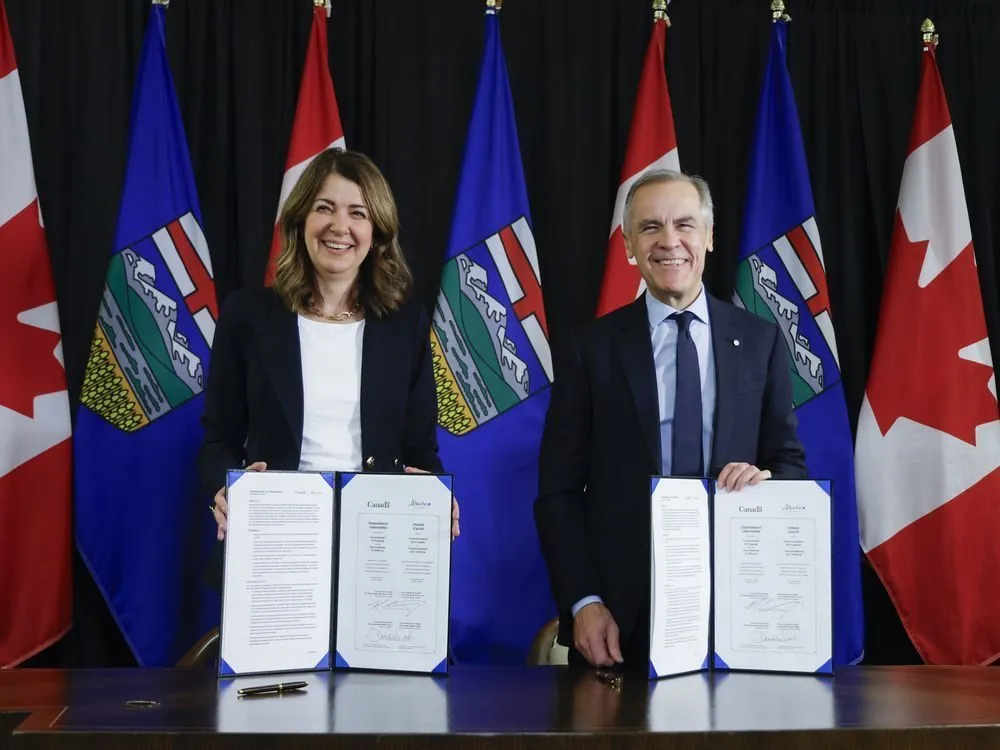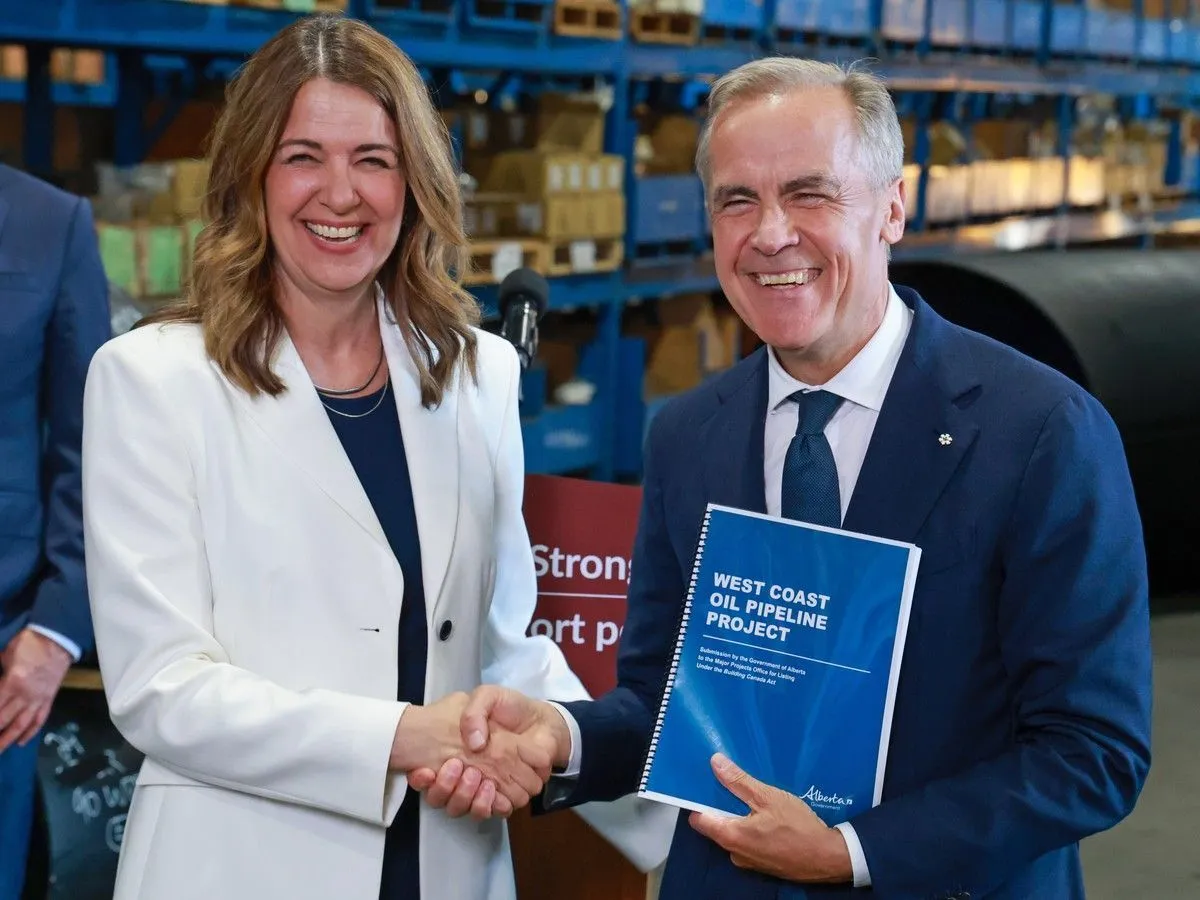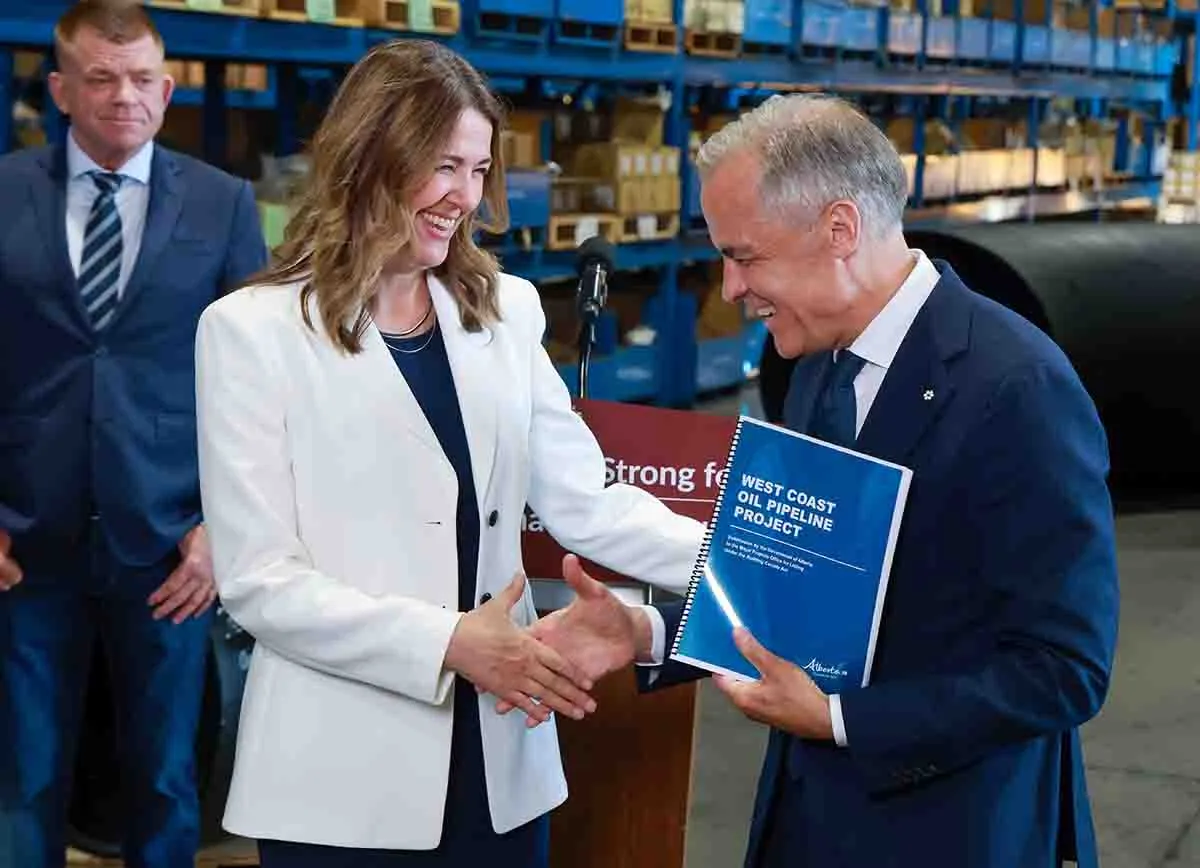
Skip to Content News Archives Economy Energy Oil & Gas Renewables Electric Vehicles Mining Commodities Agriculture Real Estate Mortgages Mortgage Rates Finance Banking Insurance Fintech Cryptocurrency Work Wealth Smart Money Wealth Management Investor Personal Finance Family Finance Retirement Taxes High Net Worth FP Comment Executive Women Puzzmo Newsletters Financial Times Business Essentials More Innovation Information Technology FP500 Podcasts Small Business Lives Told Tails Told Shopping Financial Post Store Obituaries Place a Notice Advertising Advertising With Us Advertising Solutions Postmedia Ad Manager Sponsorship Requests Classifieds Place a Classifieds ad Working Profile Settings My Subscriptions Saved Articles My Offers Newsletters Customer Service FAQ News Economy Energy Mining Real Estate Finance Work Wealth Investor FP Comment Executive Women Puzzmo Newsletters Financial Times Business Essentials HomeFP CommentOpinion: Thanks to Ottawa, you’ll pay for Alberta’s new pipelineBecause federal over-regulation has frightened off private investors a new pipeline will only get built if taxpayers finance itLast updated 1 hour ago You can save this article by registering for free here. Or sign-in if you have an account.Prime Minister Mark Carney and Alberta Premier Danielle Smith announced on Thursday, July 2, 2026, the submission of a West Coast Pipeline Project to the federal Major Projects Office. Photo by Gavin Young/ /PostmediaEarlier this month, the Alberta and federal governments jointly submitted a new oil pipeline proposal to the federal Major Projects Office. Why are two governments building a pipeline, with taxpayers assuming most of the cost and risk? Because under Canada’s current regulatory regime no private company wants to.Subscribe now to read the latest news in your city and across Canada.Exclusive articles from Barbara Shecter, Joe O'Connor, Gabriel Friedman, and others.Daily content from Financial Times, the world's leading global business publication.Unlimited online access to read articles from Financial Post, National Post and 15 news sites across Canada with one account.National Post ePaper, an electronic replica of the print edition to view on any device, share and comment on.Daily puzzles, including the New York Times Crossword.Subscribe now to read the latest news in your city and across Canada.Exclusive articles from Barbara Shecter, Joe O'Connor, Gabriel Friedman and others.Daily content from Financial Times, the world's leading global business publication.Unlimited online access to read articles from Financial Post, National Post and 15 news sites across Canada with one account.National Post ePaper, an electronic replica of the print edition to view on any device, share and comment on.Daily puzzles, including the New York Times Crossword.Create an account or sign in to continue with your reading experience.Access articles from across Canada with one account.Share your thoughts and join the conversation in the comments.Enjoy additional articles per month.Get email updates from your favourite authors.Create an account or sign in to continue with your reading experience.Access articles from across Canada with one accountShare your thoughts and join the conversation in the commentsEnjoy additional articles per monthGet email updates from your favourite authorsSign In or Create an AccountorA new pipeline from Alberta’s oilsands to the B.C. coast should be a major business opportunity. Global demand for oil is growing and Canada has the world’sthird-largest reserves, decades of expertise, world-class engineering firms and the political stability many major oil-producing countries lack. But for years, the federal government has deterred — or outright derailed — private-sector pipeline proposals.In 2014 the Harper government approved a proposal by Enbridge, an energy infrastructure company based in Calgary, to build the Northern Gateway pipeline, which would transport crude oil from Alberta to B.C.’s coast (sound familiar?) and expand access to Asian markets. But in 2016, arguing that the “Great Bear Rainforest is no place for a pipeline,” the Trudeau government cancelled the project, leaving Enbridge with $373 million in losses.Get the latest headlines, breaking news and columns.By signing up you consent to receive the above newsletter from Postmedia Network Inc.A welcome email is on its way. If you don't see it, please check your junk folder.The next issue of Top Stories will soon be in your inbox.We encountered an issue signing you up. Please try againAnother example: in 2017, after the Trudeau government imposed new regulatory hurdles, including a review of “upstream and downstream greenhouse gas emissions,” TransCanada Corporation withdrew its proposal for an Energy East pipeline that would have moved oil from the Prairies to the East Coast and opened access to European markets. Cancellation cost it nearly $1 billion.Fast-forward to today. Federal Bill C-48, which became law in 2019, currently bans large oil tankers from loading or unloading at ports from northern Vancouver Island to the Alaska border. As a result, potential pipeline investors must rule out geographic assets such as Prince Rupert, which is North America’s closest port to Asia, up to three days closer than other ports in the region, and the country’s deepest natural harbour, ideal for the large carriers used for long-haul Asian exports. But the law does not — and cannot — restrict international oil tankers travelling along B.C.’s northwest coast to and from U.S. terminals in Alaska, so only Canada is kept from exploiting this geographic advantage even as traffic from the U.S. and elsewhere continues to ply the same waters.Then there’s the industrial carbon tax. In May, Ottawa and Alberta agreed to raise it from $95 per tonne of CO2 emissions in 2026 to $140 by 2040. According to a recent study by Jack Mintz, as Alberta’s carbon tax rises to $140 per tonne, the province’s oil production will be heavily disadvantaged relative to U.S. producers. No other major energy-producing country imposes a comparable burden on carbon-intensive sectors.If it’s approved by the Major Projects Office, the Smith/Carney pipeline will be developed and operated by the Trans Mountain Corporation (which is now owned by the federal government) and the Alberta Petroleum Marketing Commission (a provincial Crown corporation). Pembina Pipeline, the only private-sector partner so far, would hold a 10 per cent stake during construction. Which means taxpayers will pay almost all project costs because government policies have made it economically unattractive for private investors to do so.Why should Canadians care?For starters, it’s their money. The Carney and Smith governments will use taxpayer dollars (an estimated $35.2 billion to $43.7 billion, so far) to develop the proposal and, if it’s approved, build the pipeline, including any cost overruns or losses.By discouraging investment, as its regulatory regime has done, the federal government all but guarantees there will be fewer projects and opportunities in an industry that pays (on average) more than twice what workers earn elsewhere. Our economy still relies heavily on fossil fuels and governments benefit greatly from royalties and tax revenues from the industry. And from an environmental perspective, oil production — if not maintained here at home — will simply shift to other countries with lower safety standards, resulting in greater damage to the global environment.In light of who’s proposing it — the Alberta and federal governments — this latest pipeline has a better chance of being built than private-sector proposals of the recent past. But make no mistake: the reason you’ll pay for this project is that the federal government made it so unattractive economically for private investors to fund major energy infrastructure in Canada. If the Carney government wants to restore confidence in Canada’s investment climate, it must remove unnecessary barriers and ensure bad policy no longer prices Canadian projects out of global markets.Julio Mejia and Elmira Aliakbari are analysts with the Fraser Institute. Join the Conversation This website uses cookies to personalize your content (including ads), and allows us to analyze our traffic. Read more about cookies here. By continuing to use our site, you agree to our Terms of Use and Privacy Policy.
Opinion: Thanks to Ottawa, you’ll pay for Alberta’s new pipeline
Because federal over-regulation has frightened off private investors, a new pipeline will only get built if taxpayers finance it. Read on.
1,264 words~6 min read