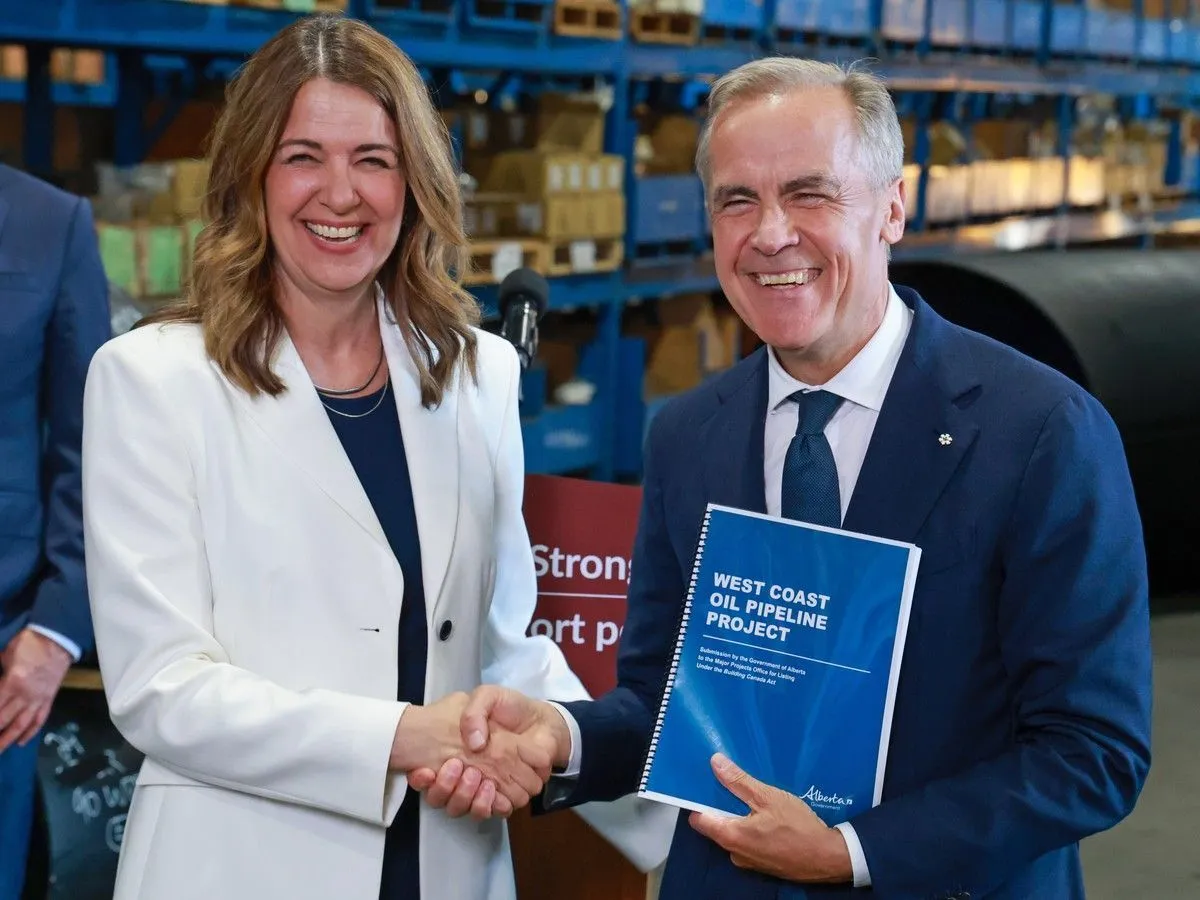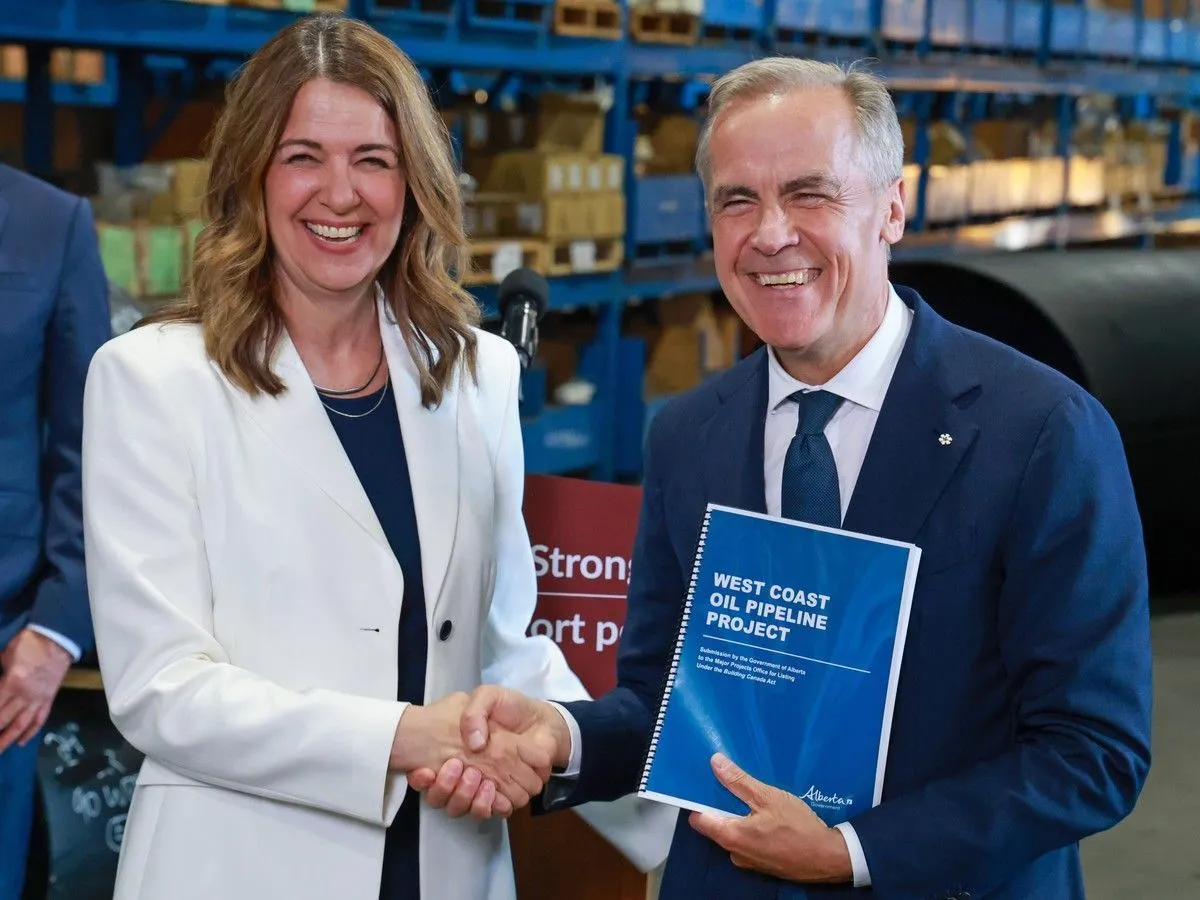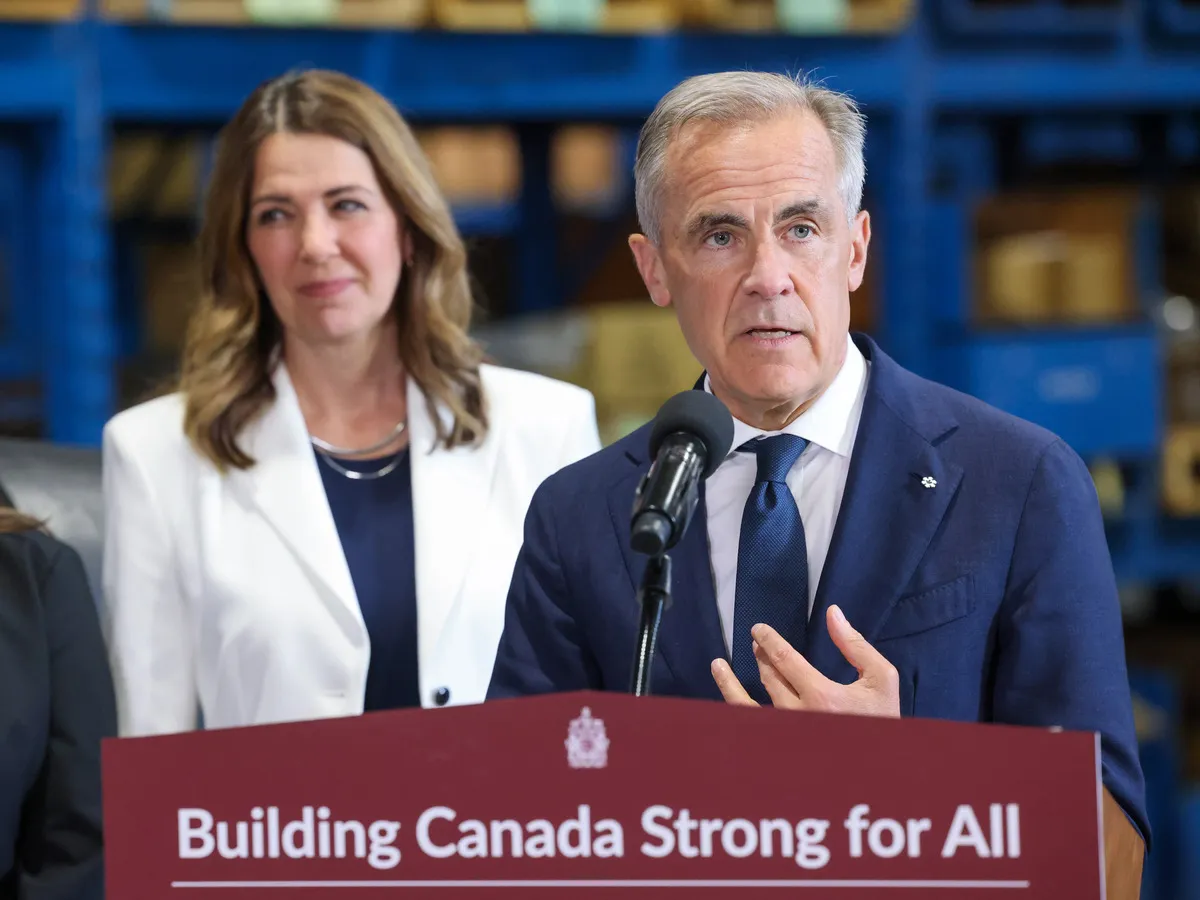
Skip to Content News Archives Economy Energy Oil & Gas Renewables Electric Vehicles Mining Commodities Agriculture Real Estate Mortgages Mortgage Rates Finance Banking Insurance Fintech Cryptocurrency Work Wealth Smart Money Wealth Management Investor Personal Finance Family Finance Retirement Taxes High Net Worth FP Comment Executive Women Puzzmo Newsletters Financial Times Business Essentials More Innovation Information Technology FP500 Podcasts Small Business Lives Told Tails Told Shopping Financial Post Store Obituaries Place a Notice Advertising Advertising With Us Advertising Solutions Postmedia Ad Manager Sponsorship Requests Classifieds Place a Classifieds ad Working Profile Settings My Subscriptions Saved Articles My Offers Newsletters Customer Service FAQ News Economy Energy Mining Real Estate Finance Work Wealth Investor FP Comment Executive Women Puzzmo Newsletters Financial Times Business Essentials HomeFP CommentTerence Corcoran: How the greens killed Canada's pipeline economyGovernments are having to buy pipelines because their own policies and their activist allies have killed the return to investing in themLast updated 5 minutes ago You can save this article by registering for free here. Or sign-in if you have an account.Prime Minister Mark Carney and Alberta Premier Danielle Smith announced the submission the West Coast Pipeline Project at TransAm Piping Products in Calgary on July 2. Photo by Gavin Young/Postmedia filesThe big question looming over the Ottawa-Alberta pipeline agreement announced last week is whether any real private-sector money will be invested in the project. When Premier Danielle Smith was asked the obvious question about the new $35- to $45-billion Trans Mountain project, the best she could do was waffle. In response to Power & Politics interviewer Catherine Cullen’s suggestion that it might be an entirely public project, Smith replied: “Well, I hope not.”Subscribe now to read the latest news in your city and across Canada.Exclusive articles from Barbara Shecter, Joe O'Connor, Gabriel Friedman, and others.Daily content from Financial Times, the world's leading global business publication.Unlimited online access to read articles from Financial Post, National Post and 15 news sites across Canada with one account.National Post ePaper, an electronic replica of the print edition to view on any device, share and comment on.Daily puzzles, including the New York Times Crossword.Subscribe now to read the latest news in your city and across Canada.Exclusive articles from Barbara Shecter, Joe O'Connor, Gabriel Friedman and others.Daily content from Financial Times, the world's leading global business publication.Unlimited online access to read articles from Financial Post, National Post and 15 news sites across Canada with one account.National Post ePaper, an electronic replica of the print edition to view on any device, share and comment on.Daily puzzles, including the New York Times Crossword.Create an account or sign in to continue with your reading experience.Access articles from across Canada with one account.Share your thoughts and join the conversation in the comments.Enjoy additional articles per month.Get email updates from your favourite authors.Create an account or sign in to continue with your reading experience.Access articles from across Canada with one accountShare your thoughts and join the conversation in the commentsEnjoy additional articles per monthGet email updates from your favourite authorsSign In or Create an AccountorHope is one thing, but the recent history of pipeline development in Canada suggests it will not take the Trans Mountain project very far. Trans Mountain is now owned by Ottawa, which was forced to buy it for $4.5 billion and cover more than $34 billion in construction costs.Get the latest headlines, breaking news and columns.By signing up you consent to receive the above newsletter from Postmedia Network Inc.A welcome email is on its way. If you don't see it, please check your junk folder.The next issue of Top Stories will soon be in your inbox.We encountered an issue signing you up. Please try againThanks mostly to green anti-fossil fuel activism and Indigenous challenges, Canadian energy companies have been unable to justify investing in new pipelines or expanding existing ones. The regulatory and political risks are simply too high.It’s a point Smith acknowledged: “You can well imagine why the industry is a little bit nervous … It takes commitment on the government’s part to de-risk the project.”According to basic principles of economics, carrying risk should primarily be the role of corporations and investors in the oil and gas industry. They assess risk and decide to put down money to move projects and economic growth forward. If the risks are too high, investment ceases.But when it comes to pipelines, industry has looked at the rising risks and refused to participate due to political attempts to block fossil fuel development and tackle climate change and other side issues.The first major Canadian pipeline rejection came in 2015 after President Barack Obama’s secretary of state, climate activist John Kerry, firmly rejected the initial expansion of the Keystone pipeline from Albert to the United States, known as the Keystone XL. Kerry cited climate change as the main reason for turning down the expansion. “This is a critical time for action on climate change,” he said. “The science is clear and widely accepted.”In 2017, President Donald Trump succeeded Obama and re-approved the expansion, but president Joe Biden killed it again in 2021 on his first day in office. The climate issue dominated the decision. Despite interventions by Trump, Keystone XL remains under climate guardianship — although a reduced XL expansion has just been proposed by South Bow Canada and a U.S. partner. How that project will evolve remains to be seen.Other pipelines have failed to breach the environmental and financial risk barricades. In 2016, Enbridge Inc. abandoned its Northern Gateway pipeline proposal to the B.C. West Coast after spending more than a decade and $400 million trying to get approval from governments and the courts. Though at times the project seemed to have government support, it faced 209 regulatory conditions, along with opposition from Indigenous groups and environmentalists. Enbridge ultimately withdrew and ate the costs.Another major failure — The TransCanada Energy East proposal to ship oil 4,500 kilometres from Alberta across the country to New York State — was abandoned in 2017, a decision Environmental Defence claimed as a major achievement: “Victory! Together We Stopped the Energy East Pipeline.”Earlier this week, Ontario Premier Doug Ford and Alberta’s Danielle Smith announced the Northern Shield pipeline project, a shorter 3,300-kilometre revival of the Energy East line, but no timeline or corporate partners were revealed — if they exist.While climate activists and political figures such as Steven Guilbeault and John Kerry have been major players in the economic war on pipelines, so has another political figure, Prime Minister Mark Carney. Which brings us to this latest demonstration that the future of Canadian pipelines remains in the hands of the environment movement. The Smith-Carney announcement is filled with generalized slogans surrounded by empty outlines of financial and regulatory pledges.Under Ottawa’s fossil fuel policies, nothing happens without major concessions to climate-control ideology. This latest project will not go forward without the $15- to $25-billion Pathways Alliance carbon capture and storage project that will remove carbon from Alberta’s oilsands production. Funding will be provided by taxpayers through direct government subsidies, tax credits and carbon-tax mechanisms.Would this be a good economic idea — pouring tens of billions of tax dollars into a pipeline, carbon capture and other costs associated with the Trans Mountain partnerships? Answering that question we have federal Natural Resources Minister Tim Hodgson, who implies total government control is not a problem.When CBC’s Cullen asked him why Ottawa was moving forward with the pipeline project even though as little as 10 per cent of it might be financed privately, Hodgson provided an explanation (see Nota Bene below) that rewrites the fundamentals of economic development. The two governments will act as entrepreneurs pumping up to $45 billion of government cash into the pipeline and will force the carbon capture project with billions more in government backing via a carbon tax.The green capture of Canadian pipeline economics remains complete. If past is prologue, as Shakespeare said, the future of the Trans Mountain project looks … too risky.From a CBC Power & Politics interview by host Catherine Cullen with federal Energy and Resources Minister Tim Hodgson following last week’s announcement of a new deal between Ottawa and Alberta to fund a $34- to $43-billion pipeline. Cullen: The initial indications of this project … is that it was going to be built with private money … Now the vast majority of this money, perhaps 90 per cent … is going to be public money … Why are you moving forward with this project?Hodgson: So I think, Catherine, Canadians understand that there are four things about this project as to why it needs to go forward.The first is national security. I think the announcement on July 1st that the U.S. doesn’t want to move forward with CUSMA was pretty clear. The old world that we were involved in no longer exists. We need to look after ourselves, we need to do more for ourselves than anyone can take away from us … This is part of building an economy for ourselves.The second is economic prosperity. This project is the most significant economic opportunity in the country today. It is the largest generator of GDP of any project we are looking at. It’s $16 billion a year for the people of Canada, that pays for health care, that pays for dental care, which pays for child care, which pays for subsidized post-secondary education at a time when affordability is on everybody’s mind.Thirdly, it brings Alberta into the fold with the rest of Canada from a sustainability standpoint … Today we have agreement on world-leading methane reductions. We have agreement on how we build carbon markets going forward. And we build the single biggest carbon capture and storage project in the world. Canada is a world leader in clean tech with this project going forward …Trans Mountain Pipeline is highly profitable. I am quite comfortable that this is a good investment for Canadian taxpayers. Join the Conversation This website uses cookies to personalize your content (including ads), and allows us to analyze our traffic. Read more about cookies here. By continuing to use our site, you agree to our Terms of Use and Privacy Policy.
Terence Corcoran: How the greens killed Canada's pipeline economy
Governments are having to buy pipelines because their own policies and activist allies have killed the return to investing in them. Read on.
1,682 words~8 min read