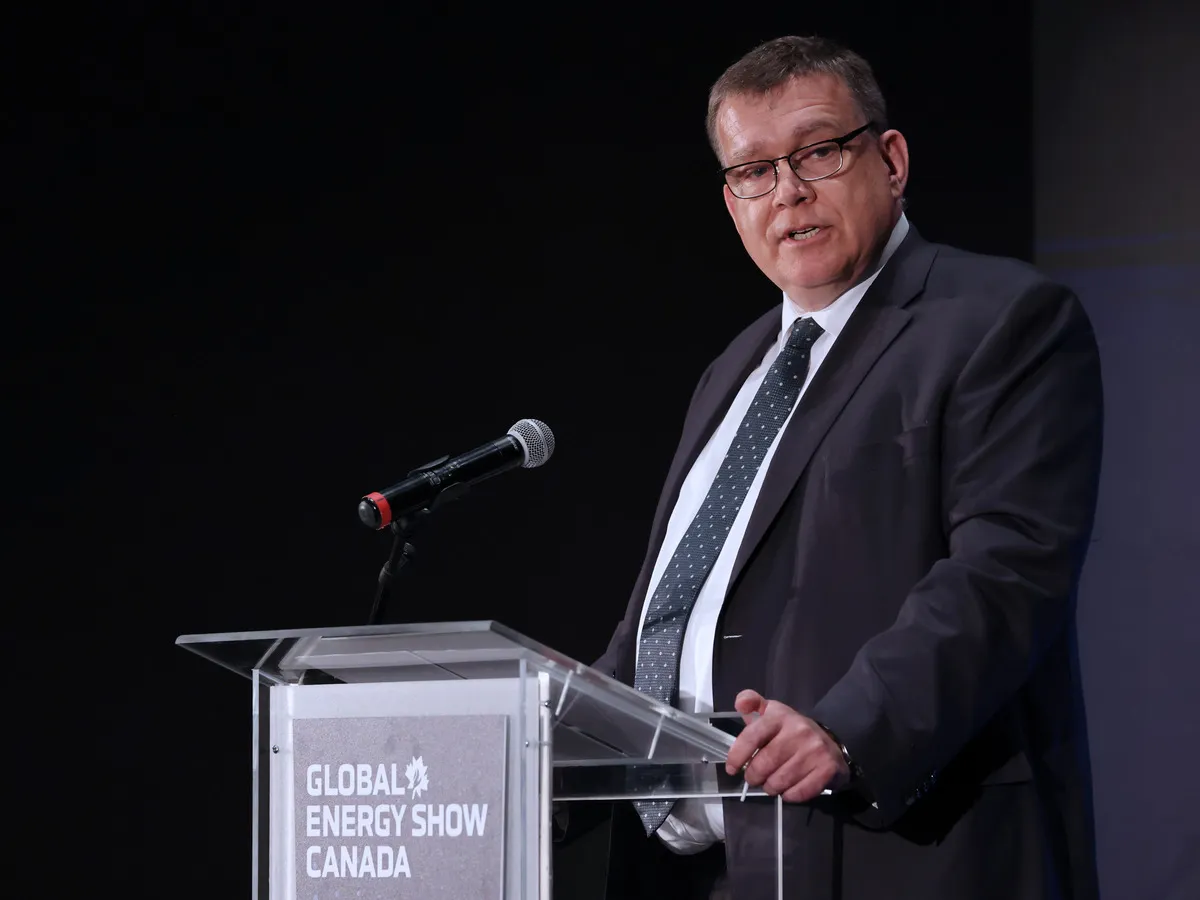
Skip to Content News Archives Economy Energy Oil & Gas Renewables Electric Vehicles Mining Commodities Agriculture Real Estate Mortgages Mortgage Rates Finance Banking Insurance Fintech Cryptocurrency Work Wealth Smart Money Wealth Management Investor Personal Finance Family Finance Retirement Taxes High Net Worth FP Comment Executive Women Puzzmo Newsletters Financial Times Business Essentials More Innovation Information Technology FP500 Podcasts Small Business Lives Told Tails Told Shopping Financial Post Store Obituaries Place a Notice Advertising Advertising With Us Advertising Solutions Postmedia Ad Manager Sponsorship Requests Classifieds Place a Classifieds ad Working Profile Settings My Subscriptions Saved Articles My Offers Newsletters Customer Service FAQ News Economy Energy Mining Real Estate Finance Work Wealth Investor FP Comment Executive Women Puzzmo Newsletters Financial Times Business Essentials HomeCommoditiesEnergyOil & GasCenovus rips Canada's oil pipeline plan as 'unfinanceable'The deal fails to address regulatory barriers to the industry’s capital spending, Cenovus CEO Jon McKenzie said TuesdayAuthor of the article:Last updated 23 hours ago You can save this article by registering for free here. Or sign-in if you have an account.Cenovus Energy CEO Jon McKenzie speaks at the Global Energy Show at the BMO Centre in Calgary on June 9, 2026. Photo by Gavin Young/PostmediaThe leader of one of Canada’s biggest oil companies blasted a government push for a massive carbon-capture project and carbon tax in exchange for an oilsands pipeline, calling it uneconomical.Subscribe now to read the latest news in your city and across Canada.Exclusive articles from Barbara Shecter, Joe O'Connor, Gabriel Friedman, and others.Daily content from Financial Times, the world's leading global business publication.Unlimited online access to read articles from Financial Post, National Post and 15 news sites across Canada with one account.National Post ePaper, an electronic replica of the print edition to view on any device, share and comment on.Daily puzzles, including the New York Times Crossword.Subscribe now to read the latest news in your city and across Canada.Exclusive articles from Barbara Shecter, Joe O'Connor, Gabriel Friedman and others.Daily content from Financial Times, the world's leading global business publication.Unlimited online access to read articles from Financial Post, National Post and 15 news sites across Canada with one account.National Post ePaper, an electronic replica of the print edition to view on any device, share and comment on.Daily puzzles, including the New York Times Crossword.Create an account or sign in to continue with your reading experience.Access articles from across Canada with one account.Share your thoughts and join the conversation in the comments.Enjoy additional articles per month.Get email updates from your favourite authors.Create an account or sign in to continue with your reading experience.Access articles from across Canada with one accountShare your thoughts and join the conversation in the commentsEnjoy additional articles per monthGet email updates from your favourite authorsSign In or Create an AccountorIn May, Canada’s government and Alberta agreed steps and a timeline for a potential new west coast oil pipeline. Prime Minister Mark Carney has said a huge carbon-capture project dubbed ‘Pathways’ is a central condition for that new oil infrastructure.But the deal fails to address regulatory barriers to the industry’s capital spending, Cenovus Energy Inc. chief executive Jon McKenzie said Tuesday.“Neither the Pathways project nor the west coast pipeline really make any sense” without that fundamental capital investment, he said at the Global Energy Show in Calgary.The Alberta-Canada deal didn’t address how the industry was going to ship an extra million barrels of oil a day while also spending capital on the Pathways project, which he said would cost as much as $30 billion, he said. No agreement on the project has been reached.In one of the oil industry’s strongest rebukes of the “grand bargain” Carney and Alberta Premier Danielle Smith have discussed — a pipeline tied to emissions-abatement policies — McKenzie told the audience that the current regulatory framework means the “pipeline is unfinanceable” by the private sector.The Alberta-Canada deal is partly aimed at fixing the province’s malfunctioning carbon market, and the province agreed to annual increases in the headline price on carbon. Its credits and offsets were trading last week at around $32 per metric tonne of CO2, according to Albert Ho, head of carbon intelligence for Carbon Assessors. That’s well short of target prices, and even down from about $40 per metric tonne when the deal was announced.McKenzie’s comments stood in stark contrast to an earlier speech from Canada’s Energy Minister Tim Hodgson, who touted the pact with Alberta as establishing “a carbon market that works” to give investors long-term certainty, and “a practical middle ground.”“It’ll show that energy production and emission reduction can move forward together” if Canada can cut carbon intensity in one of the world’s major oil-producing regions, he said.Smith’s Alberta government is currently the proponent of the new oil pipeline to the Pacific coast. Her deal with Carney says the pipeline could be designated a project of “national interest” and construction could start as soon as September 2027.Smith echoed Hodgson in a speech of her own. “There is increasing scrutiny and concern” about how energy is produced, she said, adding that Alberta would focus on “maintaining a stable, reliable supply of energy while continuing to reduce emissions and support innovation.”Cenovus’s McKenzie argued that the certainty the Alberta-Canada deal provides is that it shows Canada is “increasingly out of step and uncompetitive.”But “none of our customers have ever suggested or even asked about the carbon intensity of our crude,” McKenzie continued. If that was the case, pricing signals would be clear in the market, and government intervention wouldn’t be needed, he said.The escalating carbon tax scheduled over the next decade “will require the premature shut-in and reclamation of oil-producing projects that would otherwise be economic to produce,” McKenzie added. “Industry has been clear that the industrial carbon tax is insidious and it should be revoked.” Join the Conversation This website uses cookies to personalize your content (including ads), and allows us to analyze our traffic. Read more about cookies here. By continuing to use our site, you agree to our Terms of Use and Privacy Policy.
Cenovus rips Canada's oil pipeline plan as 'unfinanceable'
Cenovus Energy CEO Jon McKenzie blasted a government push for a carbon-capture project and carbon tax in exchange for a pipeline. Read more.
997 words~5 min read