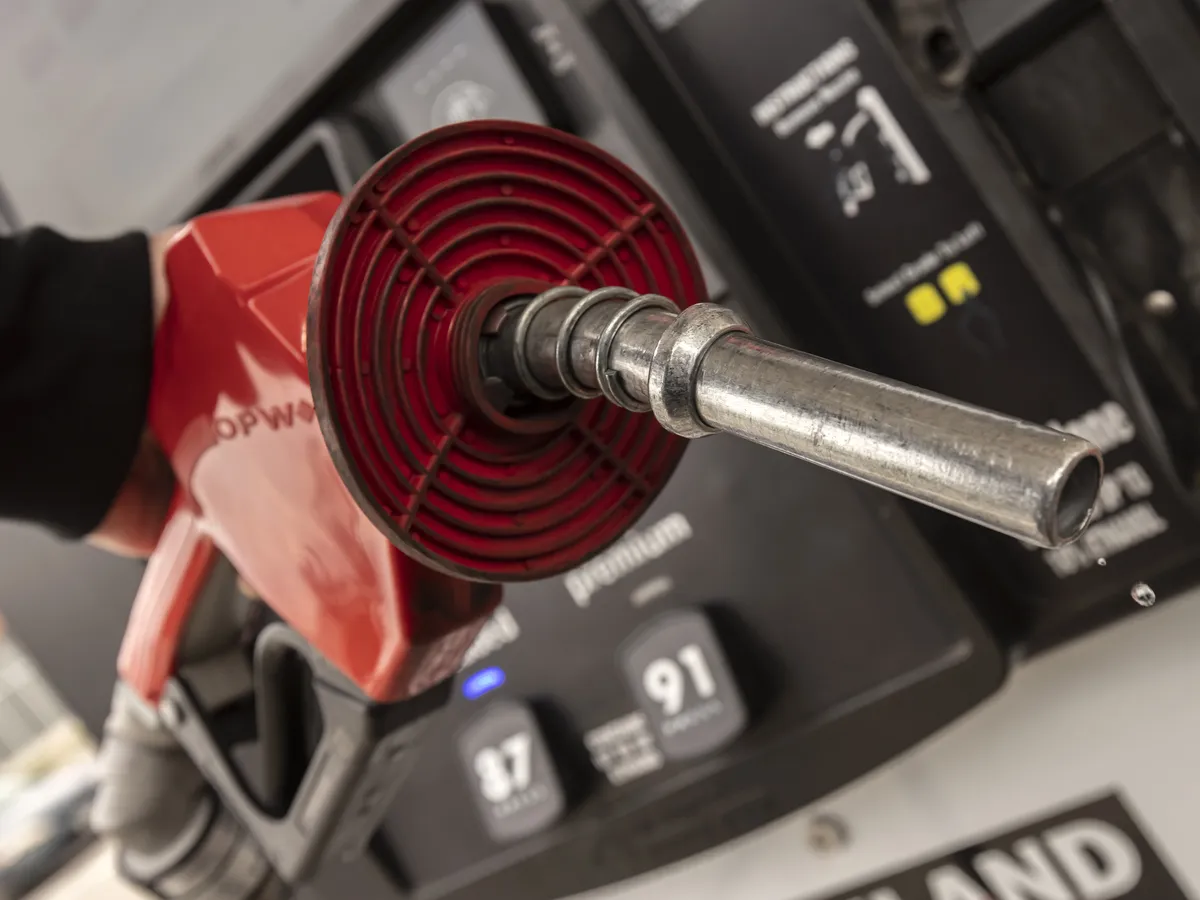
Skip to Content News Archives Economy Energy Oil & Gas Renewables Electric Vehicles Mining Commodities Agriculture Real Estate Mortgages Mortgage Rates Finance Banking Insurance Fintech Cryptocurrency Work Wealth Smart Money Wealth Management Investor Personal Finance Family Finance Retirement Taxes High Net Worth FP Comment Executive Women Puzzmo Newsletters Financial Times Business Essentials More Innovation Information Technology FP500 Podcasts Small Business Lives Told Tails Told Shopping Financial Post Store Obituaries Place a Notice Advertising Advertising With Us Advertising Solutions Postmedia Ad Manager Sponsorship Requests Classifieds Place a Classifieds ad Working Profile Settings My Subscriptions Saved Articles My Offers Newsletters Customer Service FAQ News Economy Energy Mining Real Estate Finance Work Wealth Investor FP Comment Executive Women Puzzmo Newsletters Financial Times Business Essentials HomeFP CommentOpinion: Will we see you in September, gas tax?In April, Ottawa temporarily suspended the gas tax. In 1973, a temporary freeze on oil prices led to a decade of price regulationLast updated 3 hours ago You can save this article by registering for free here. Or sign-in if you have an account.The value of a good like gas is what people will pay for it. We shouldn’t consume what has become a much more valuable resource as if it were still cheap. Photo by Peter J. Thompson/PostmediaIn April, after the latest Middle East war caused fuel prices to spike, the federal government suspended the excise tax on gasoline, diesel and jet fuel until Labour Day.Subscribe now to read the latest news in your city and across Canada.Exclusive articles from Barbara Shecter, Joe O'Connor, Gabriel Friedman, and others.Daily content from Financial Times, the world's leading global business publication.Unlimited online access to read articles from Financial Post, National Post and 15 news sites across Canada with one account.National Post ePaper, an electronic replica of the print edition to view on any device, share and comment on.Daily puzzles, including the New York Times Crossword.Subscribe now to read the latest news in your city and across Canada.Exclusive articles from Barbara Shecter, Joe O'Connor, Gabriel Friedman and others.Daily content from Financial Times, the world's leading global business publication.Unlimited online access to read articles from Financial Post, National Post and 15 news sites across Canada with one account.National Post ePaper, an electronic replica of the print edition to view on any device, share and comment on.Daily puzzles, including the New York Times Crossword.Create an account or sign in to continue with your reading experience.Access articles from across Canada with one account.Share your thoughts and join the conversation in the comments.Enjoy additional articles per month.Get email updates from your favourite authors.Create an account or sign in to continue with your reading experience.Access articles from across Canada with one accountShare your thoughts and join the conversation in the commentsEnjoy additional articles per monthGet email updates from your favourite authorsSign In or Create an AccountorBy coincidence, it was on Labour Day in 1973, at the height of the first OPEC oil crisis, that prime minister Pierre Trudeau called on the oil industry to freeze the price of oil sold in Canada until the following January, when he would meet with the provincial premiers to get agreement on longer-term oil pricing in Canada. Trudeau also imposed an export tax equal to the difference between Canada’s frozen price and the rapidly rising U.S. price, which moved with international prices. The resulting revenues were used to compensate eastern refiners who had to buy their crude oil on the world market, where prices were ballooning. You can imagine how well that went down in the producing provinces.It was the first time Ottawa had exercised its constitutional authority over energy pricing in interprovincial trade and commerce and, not surprisingly, it set off a protracted battle with Alberta over the fiscal treatment of oil and gas revenues. It also over time produced a morass of federal and provincial legislation to administer what was supposed to have been a temporary price freeze.Get the latest headlines, breaking news and columns.By signing up you consent to receive the above newsletter from Postmedia Network Inc.A welcome email is on its way. If you don't see it, please check your junk folder.The next issue of Top Stories will soon be in your inbox.We encountered an issue signing you up. Please try againToday’s governments may have a better window on international oil prices than their counterparts of 50 years ago did. But they are no better at predicting oil prices nor any more immune to policy folly.Prices naturally affect the behaviour of market players, and regulated prices often have perverse results. In the months and years following Labour Day 1973, Canada’s regulated oil-pricing system grew in complexity as Ottawa placated central-Canadian consumers by keeping domestic prices below the world price.At the federal-provincial meeting in January 1974, the premiers of Ontario, Quebec and Manitoba strenuously opposed any increase in the oil price. In March of that year, after initially caving to their demand, Trudeau achieved a compromise that raised the domestic price while keeping it well below the rising world price. Ottawa compensated oil importers for the difference. At first, the export tax covered the cost. By June 1975, however, Ottawa introduced an excise tax of 13.2 cents/litre (in today’s money) — though selling it as a stimulus to energy conservation.It was 11 years from Pierre Trudeau’s price freeze until a new Progressive Conservative government was elected that promised to rid Canada of administered oil prices. From 1974 through the end of 1984, the gross cash shortfall on domestic crude production relative to international prices exceeded $134 billion (in $2026). According to a 1995 study by Robert Mansell and Ronald Schlenker, from 1972-85 the net fiscal transfers from Alberta attributable to policy manipulation of oil and gas prices totalled $195 billion in today’s dollars. And some people wonder why many Albertans resent Ottawa!Since this spring’s price rise, talk radio shows and letters to editors reflect a growing sentiment that because we have so much oil we shouldn’t pay the world price for it. We can only hope this foolish notion will not grow legs with governments in Canada. The value of a good is what people will pay for it. We shouldn’t consume what has become a much more valuable resource as if it were still cheap. Higher domestic prices, including excise taxes, keep us from doing that.Robert Skinner is an executive fellow at the School of Public Policy, University of Calgary. Join the Conversation This website uses cookies to personalize your content (including ads), and allows us to analyze our traffic. Read more about cookies here. By continuing to use our site, you agree to our Terms of Use and Privacy Policy.
Opinion: Will we see you in September, gas tax?
In April, Ottawa temporarily suspended the gas tax. In 1973, a temporary freeze on oil prices led to a decade of price regulation. Read here
1,103 words~5 min read